
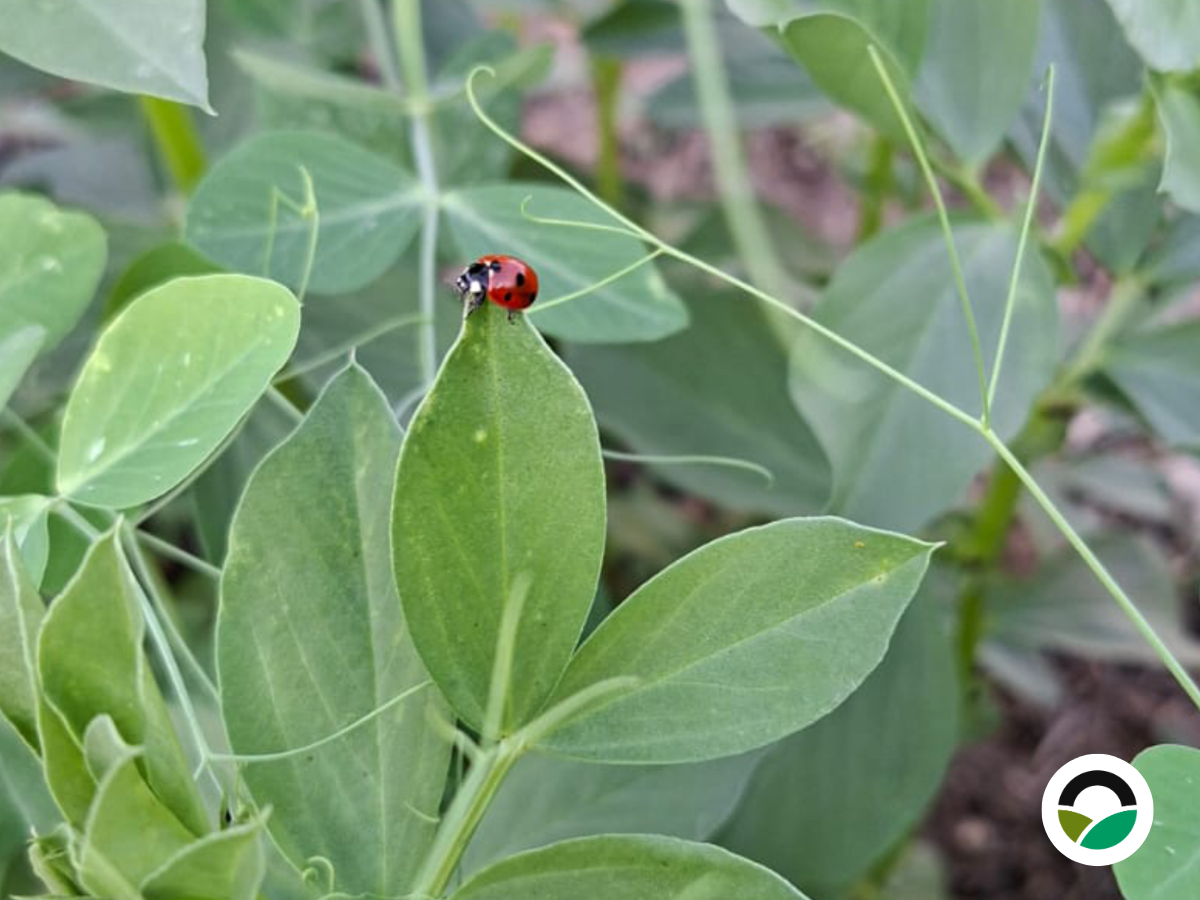
If you look closely at our fields, you’ll often spot tiny red dots moving slowly across leaves. Ladybugs may seem small and delicate, but they play a crucial role in maintaining a healthy, balanced ecosystem at Mavronero.
They are a natural sign that life is thriving.
A life cycle worth mentioning
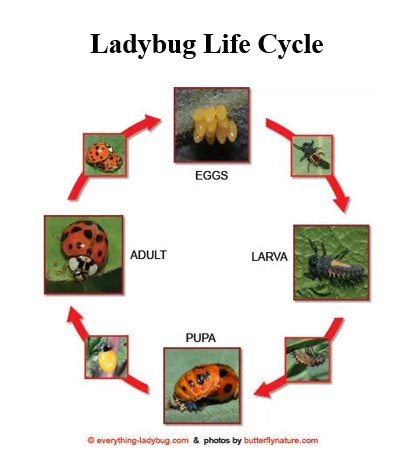
Ladybugs go through four distinct stages in their life cycle:
- Eggs
Laid in small clusters on the underside of leaves, often close to aphid colonies. - Larvae
This stage surprises many people. Ladybug larvae don’t look “cute” at all — they are elongated, dark, sometimes spiky, and often mistaken for pests.
However, this is when they are most beneficial. - Pupa
A short transformation phase where the larva becomes an adult. - Adult ladybug
The familiar red (or orange) beetle with black spots, ready to reproduce and continue the cycle.
Why larvae matter
Ladybug larvae are voracious predators. During this stage, a single larva can eat hundreds of aphids and other soft-bodied insects.
This makes them one of the most effective natural forms of pest control:
- No chemicals
- No intervention
- Just nature doing its work
Their presence helps protect plants naturally and supports organic farming practices.
Ladybugs and organic farming
At Mavronero, we don’t aim for a “perfect-looking” field — we aim for a living one.
Ladybugs are part of a wider web of beneficial insects that:
- Keep pest populations in balance
- Reduce the need for external inputs
- Indicate a healthy, biodiverse environment
Seeing ladybugs — at any stage of their life cycle — is always good news.
When and where you’ll find ladybugs
Ladybugs are especially active from early spring to late summer, when aphids and other soft-bodied insects are most abundant.
You’ll usually find them:
- On young shoots and tender leaves
- Near flowering plants that attract aphids
- In areas with diverse vegetation rather than monocultures
During colder months, adult ladybugs often seek shelter in bark, stones, dry leaves, or soil, entering a resting phase until conditions improve.
Their seasonal presence is closely linked to the natural rhythm of the land — another reason why biodiversity matters.
Sources
Lady Bug Life Cycle – Edgemont Community School
Lady Beetles in Biological Control – UC Integrated Pest Management (UC IPM)
