

Propagating fig trees from cuttings is a simple and traditional practice, well suited to Mediterranean climates. It requires very little equipment, minimal intervention, and a good understanding of seasonal timing.
At Mavronero, winter is the moment for this work — a quiet period when growth slows above ground, but essential processes continue beneath the soil.
Why winter is the right time
In winter, fig trees are dormant. Energy is stored in the wood rather than the leaves, making cuttings more resilient and better prepared to develop roots.
This slower rhythm reduces stress on the plant and increases the chances of successful propagation.
How fig tree propagation works
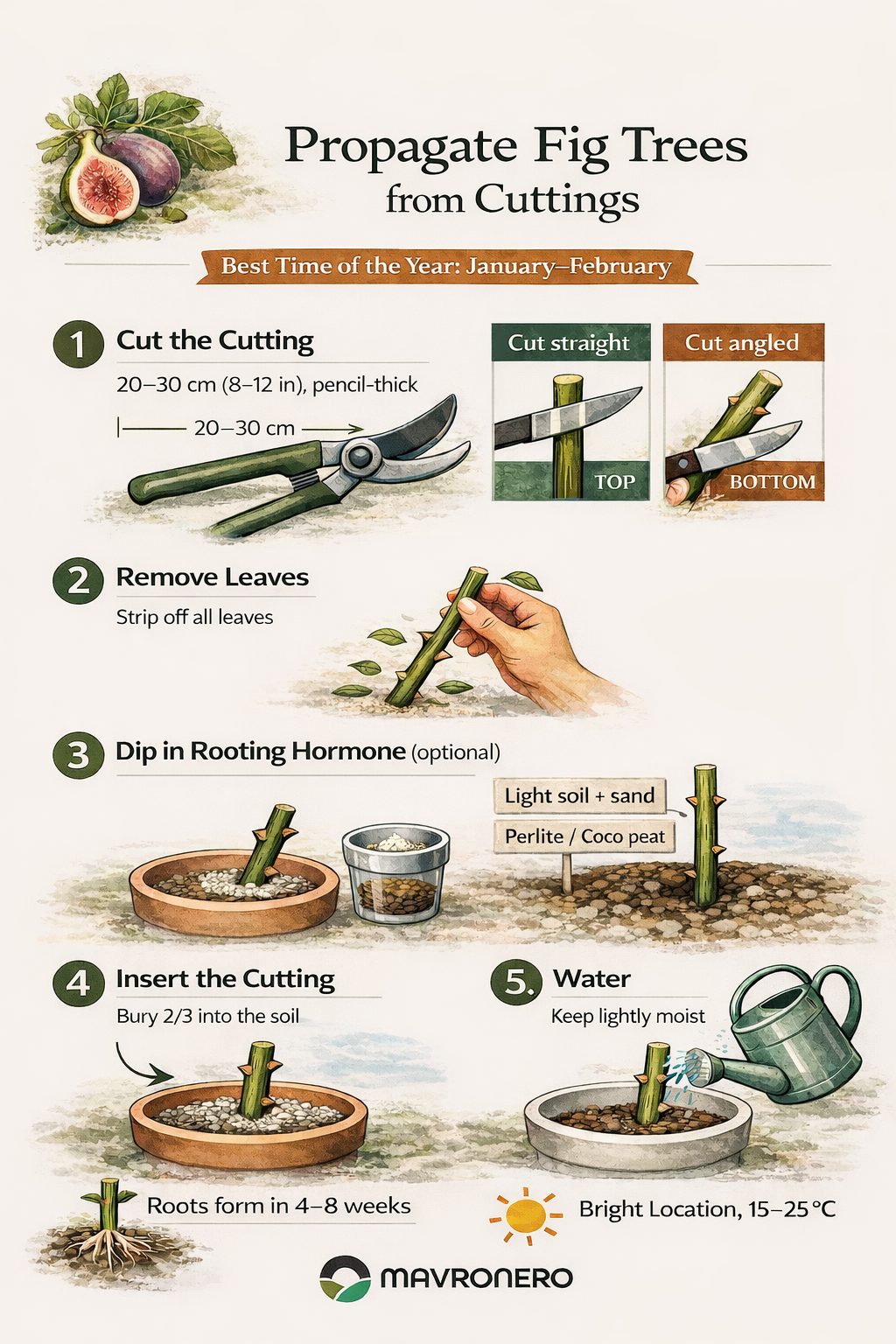
The process begins with selecting healthy, pencil-thick branches and cutting sections around 20–30 cm long.
Leaves are removed to prevent moisture loss, and the cutting is placed into light, well-draining soil — often a mix of soil and sand or perlite.
Rooting hormone can be used, but it is optional. With stable temperatures and gentle moisture, roots usually form within 4–8 weeks.
Low-intervention growing
This method reflects a broader approach to farming: working with natural cycles rather than forcing growth.
No artificial heat, no rapid results — just time, suitable conditions, and observation.
At Mavronero, these small practices help us maintain healthy plant systems while reducing external inputs.
Looking ahead
Fig trees propagated in winter are ready to grow strongly when spring arrives. What begins as a simple cutting becomes part of a longer cycle — one that connects seasons, soil, and careful human involvement.
Sometimes, the most effective actions in agriculture are also the quietest ones.
