
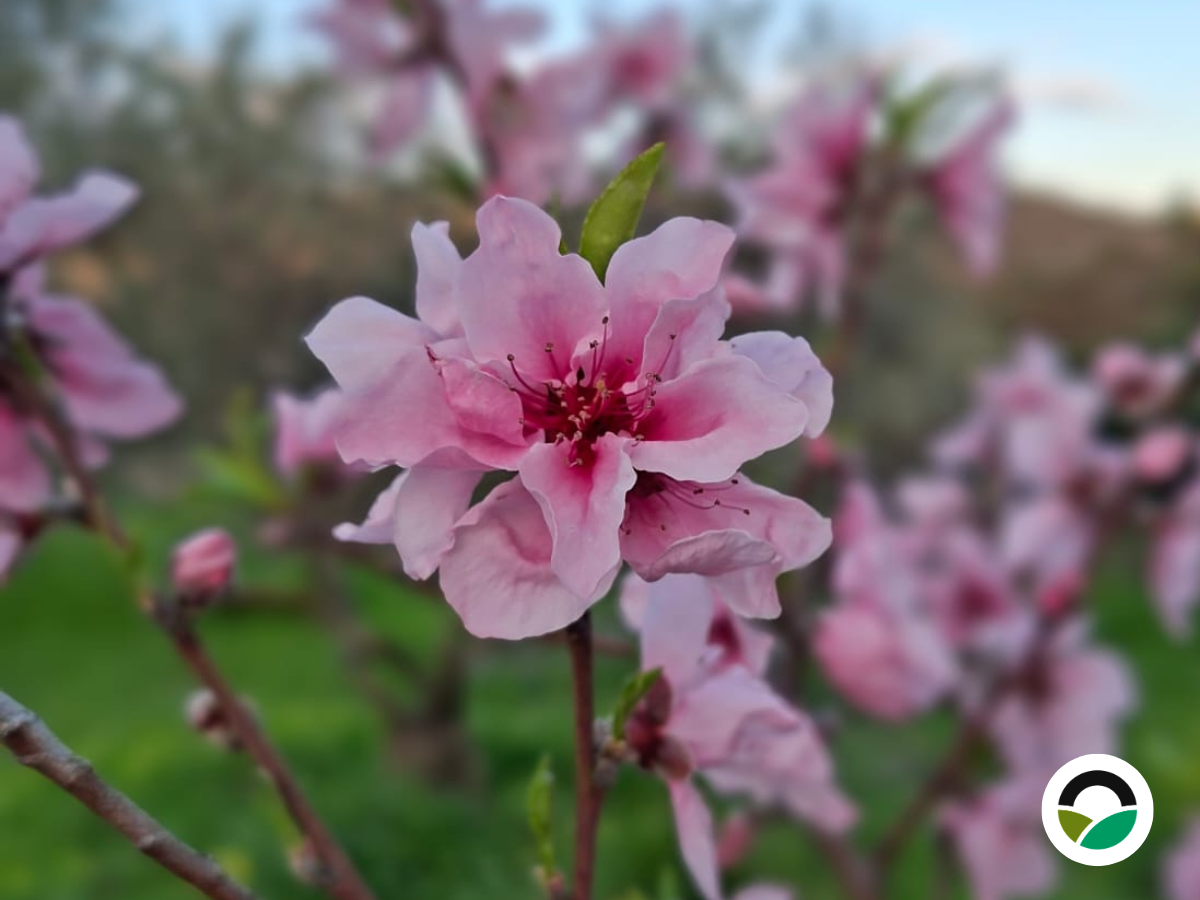
(Prunus persica)
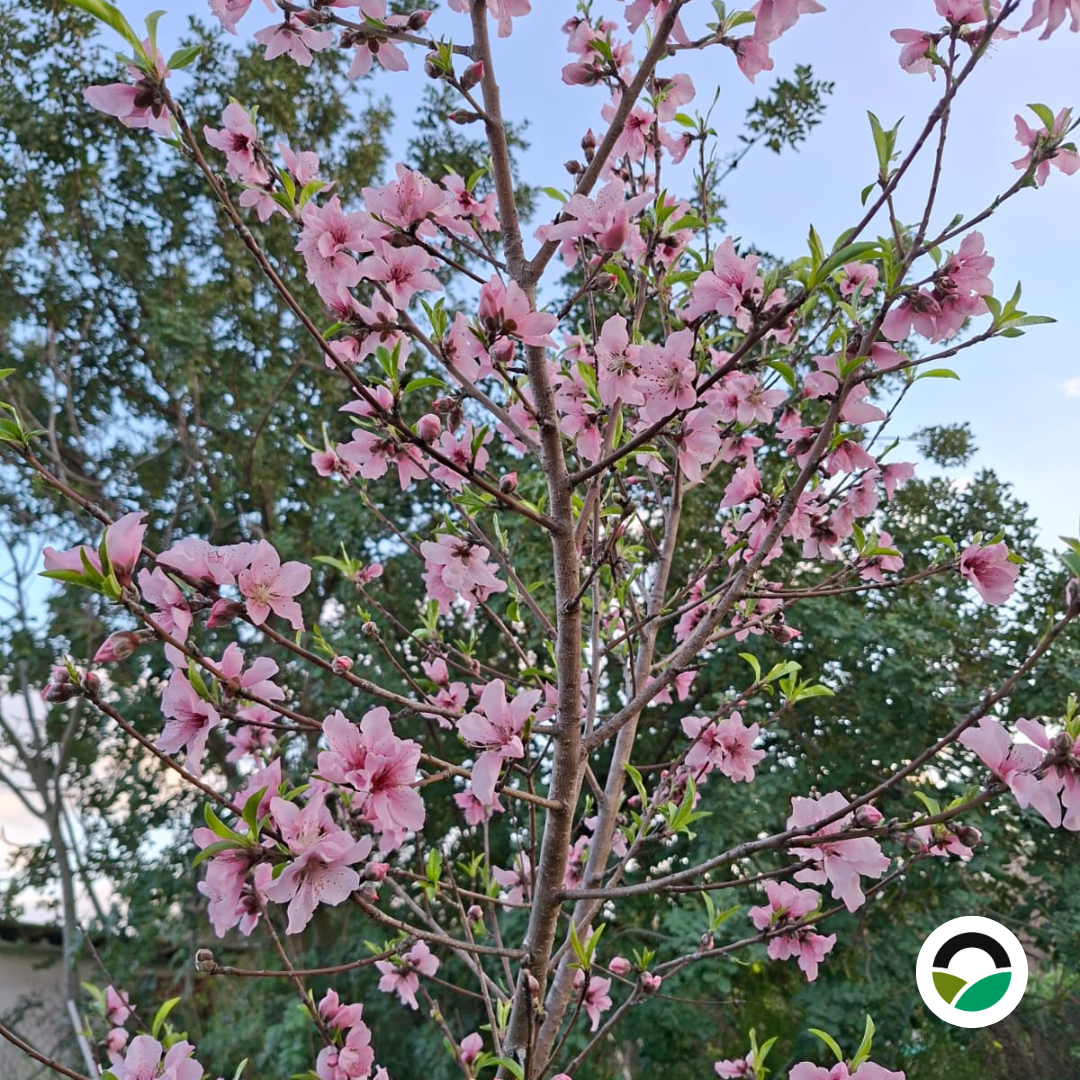
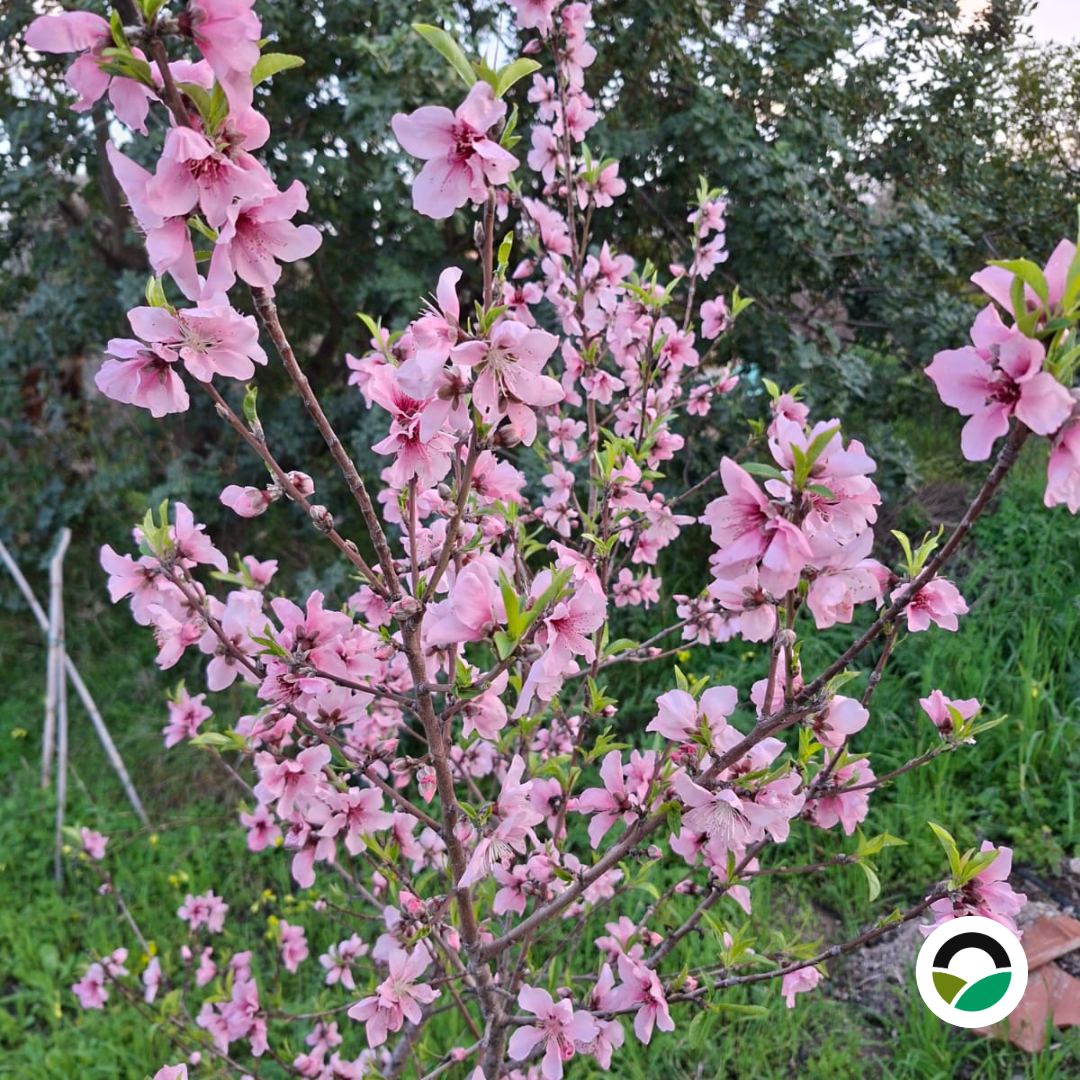
This season, a young peach tree (Prunus persica) has come into bloom behind the pumphouse at Mavronero, offering an unexpected display of soft pink blossoms.
Peach trees are among the earliest flowering fruit trees in Mediterranean climates. Their blossoms appear at the transition between winter and spring, often before the tree has developed its full foliage.
These early peach blossoms play an important ecological role: they provide nectar for insects emerging after winter and mark the beginning of the fruit-growing season in many Mediterranean landscapes.
In agricultural environments like Mavronero, flowering fruit trees briefly transform otherwise quiet spaces into vibrant seasonal habitats.
Botanical identity of the peach tree
Family: Rosaceae
Species: Prunus persica
Growth form: Deciduous fruit tree
The peach tree belongs to the genus Prunus, which includes other familiar fruit trees such as almonds, cherries, plums, and apricots.
Although widely associated with Mediterranean agriculture today, the species originally evolved in China and spread westward through ancient trade routes before becoming established across Europe and the Mediterranean basin.
Peach trees typically grow between 3 and 6 metres in height, forming an open canopy that allows sunlight to reach both leaves and developing fruit.
During late winter or early spring, flower buds formed during the previous growing season begin to open, producing clusters of delicate pink blossoms.
Characteristic features include:
- five-petaled pink flowers with a darker centre
- slender branches with closely spaced buds
- narrow lance-shaped leaves appearing after flowering
- early spring flowering before full leaf emergence
Botanical characteristics of peach blossoms
Peach blossoms are among the most recognizable flowers within the genus Prunus.
Each flower typically has five soft petals arranged around a dense cluster of stamens containing pollen.
The petals often display a gradient of colour, ranging from pale pink to deeper crimson tones near the centre. This contrast helps attract pollinating insects such as bees.
Unlike many flowering plants that bloom after leaves develop, peach trees often flower on nearly bare branches, making the blossoms highly visible and easily accessible to pollinators.
Each flower develops from buds formed during the previous summer, meaning the tree’s fruit potential is determined months before the actual flowering period.
Flowering and fruit development
Peach blossoms appear before the tree is fully leafed out, covering the branches in pink flowers for a short but striking period.
Pollination is mainly carried out by insects, particularly bees. After successful pollination, the flowers begin to transform into small green fruits.
Over the following months:
- the fruit gradually enlarges
- the skin develops colour and texture
- sugars accumulate in the flesh
In Mediterranean climates, peaches typically ripen between late spring and mid-summer, depending on the variety.
Botanically, peaches are classified as drupes, a type of fruit characterized by a hard central stone surrounded by soft edible flesh.
Peach trees in Mediterranean agriculture
Peach trees have become an important component of Mediterranean fruit cultivation.
Although not native to the region originally, the species adapted successfully to Mediterranean conditions due to its tolerance of warm summers and mild winters.
Peaches are now widely grown across southern Europe, particularly in regions with:
- good sunlight exposure
- well-drained soils
- moderate winter chilling
Traditional Mediterranean landscapes often combine fruit trees with other crops, natural vegetation, and grazing systems. In these mixed agricultural environments, peach trees contribute not only to fruit production but also to seasonal biodiversity.
Ecological role of flowering fruit trees
Even though peach trees are cultivated plants, they still play a role within local ecosystems.
Their early blossoms provide nectar and pollen for pollinators at a time when relatively few plants are flowering.
In Mediterranean agricultural landscapes, flowering fruit trees can support:
- early pollinator activity
- seasonal biodiversity
- habitat structure within cultivated areas
When agricultural landscapes retain natural vegetation and structural diversity, fruit trees can integrate naturally with surrounding ecosystems.
Cultivation and care of peach trees
Peach trees grow well in Mediterranean climates but require appropriate conditions and management to remain healthy and productive.
Sunlight
Peach trees require full sun exposure. Adequate sunlight supports healthy flowering, fruit development, and overall tree vigour.
Soil
Peach trees grow best in:
- well-drained soils
- sandy or loamy substrates
- moderately fertile soils
Heavy or poorly drained soils can increase the risk of root diseases.
Water
Young peach trees require regular watering during their establishment period, especially in dry spring conditions.
Once established, they tolerate moderate drought, although adequate water during fruit formation improves fruit size and quality.
Pruning
Annual pruning is important because peach trees produce fruit primarily on one-year-old shoots.
Pruning helps maintain:
- healthy new growth
- good air circulation
- sunlight penetration into the canopy
This improves both fruit production and disease prevention.
Seasonal growth cycle
In Mediterranean climates, peach trees follow a clear seasonal rhythm:
- late winter: flowering
- spring: fruit formation
- early summer: fruit ripening
- autumn: leaf fall
- winter: dormancy
Observations at Mavronero
Finding a flowering peach tree behind the pumphouse was an unexpected seasonal moment.
The bright pink blossoms contrast beautifully with the surrounding olive trees and natural vegetation, creating a temporary burst of colour within the landscape.
Moments like this highlight how agricultural and natural elements coexist within Mediterranean environments.
As spring progresses, the blossoms will fade, but if pollination has been successful, the first small peaches may soon begin to appear.
