
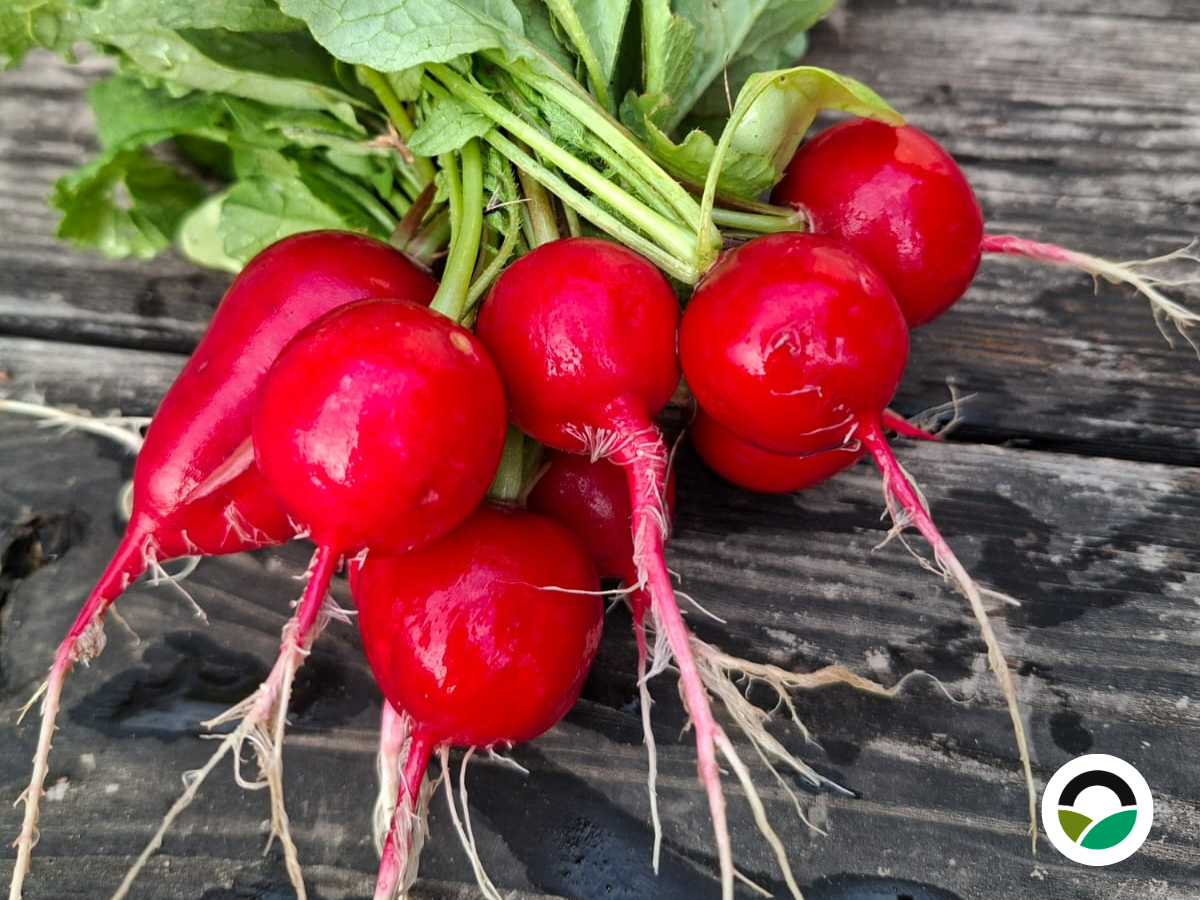
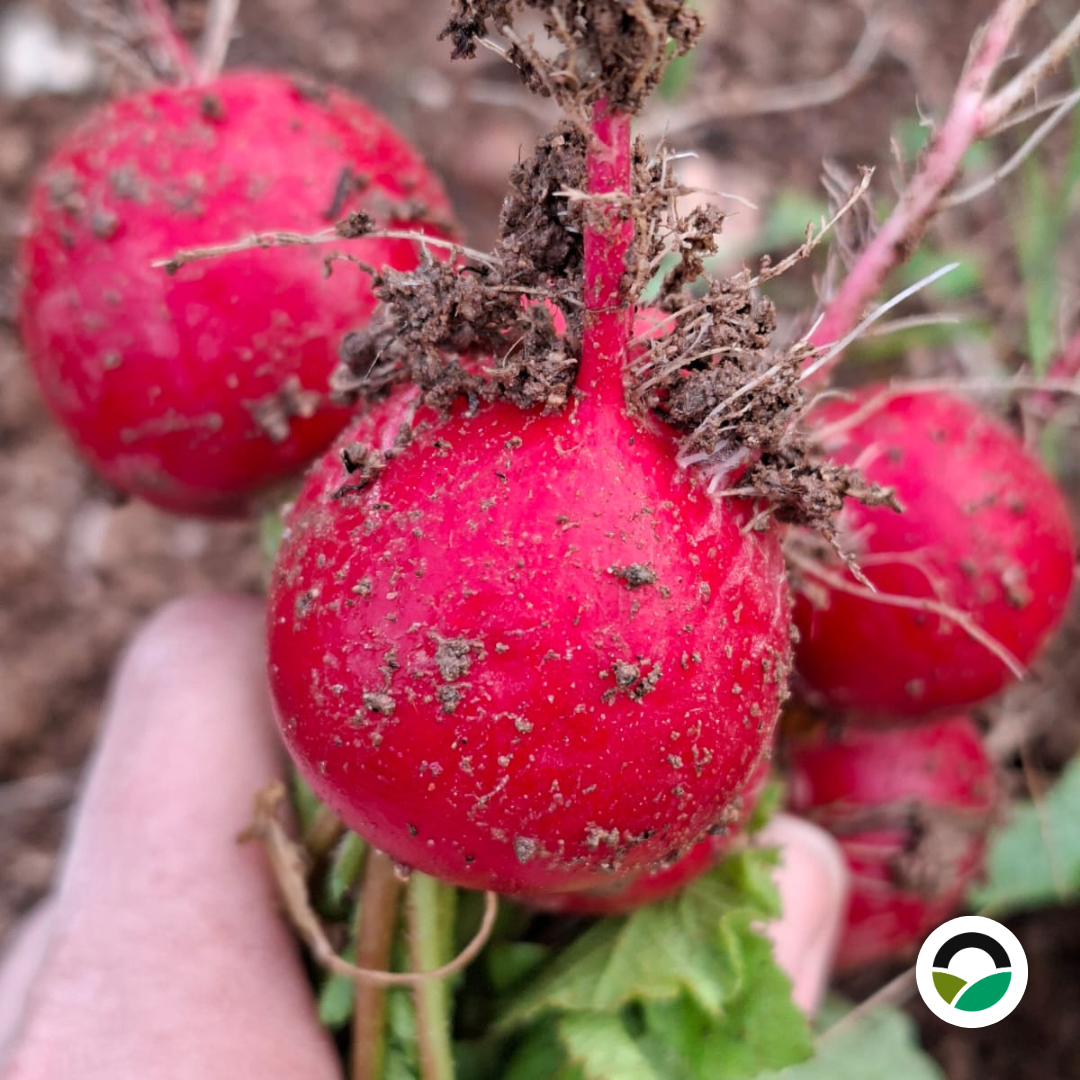
Freshly harvested radishes collected from the field after early spring rainfall.
(Raphanus sativus)
At Mavronero, the radishes planted approximately six to seven weeks ago have reached harvest stage. Seasonal rainfall provided favourable soil moisture, supporting rapid development and allowing the roots to mature naturally within a short period.
Radishes are among the fastest-growing crops in Mediterranean gardens. Their short growth cycle makes them particularly suitable for early spring cultivation, especially when natural precipitation reduces the need for irrigation. The plants developed evenly, producing small, bright red roots ready for collection.
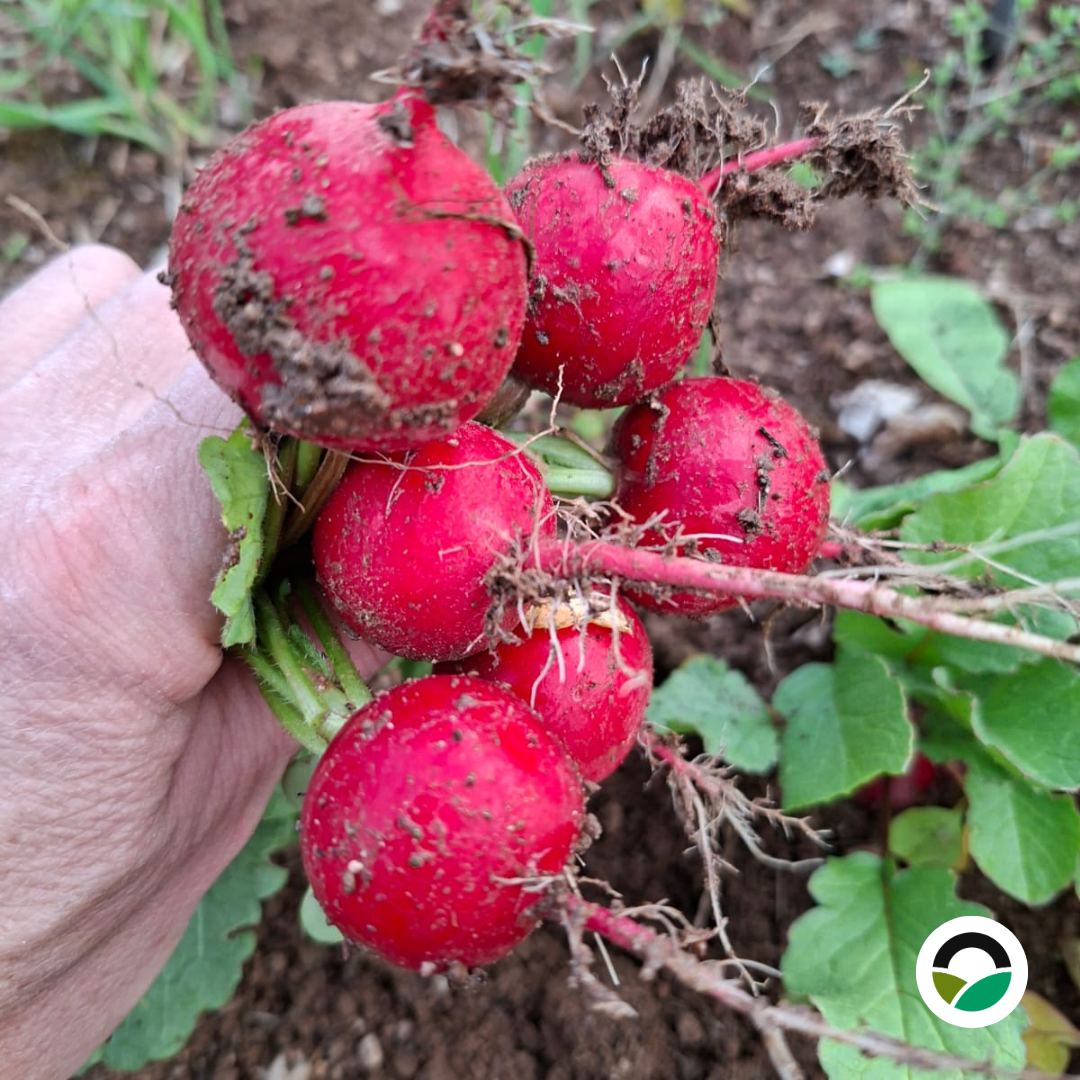
Harvesting was carried out manually by gently pulling the plants from the soil. The radishes showed compact, well-formed roots and healthy foliage, indicating balanced growth conditions. Because radishes develop close to the soil surface, harvesting requires minimal soil disturbance.
Botanical identity of radishes
Family: Brassicaceae
Species: Raphanus sativus
Growth form: Annual root vegetable
Radishes belong to the Brassicaceae family, which also includes cabbage, mustard, broccoli, and arugula. The edible portion is an enlarged taproot formed just below the soil surface.
Radishes are particularly valued for their short cultivation period and adaptability to cool-season growing conditions.
Characteristic features include:
- rapid growth cycle
- enlarged taproot development
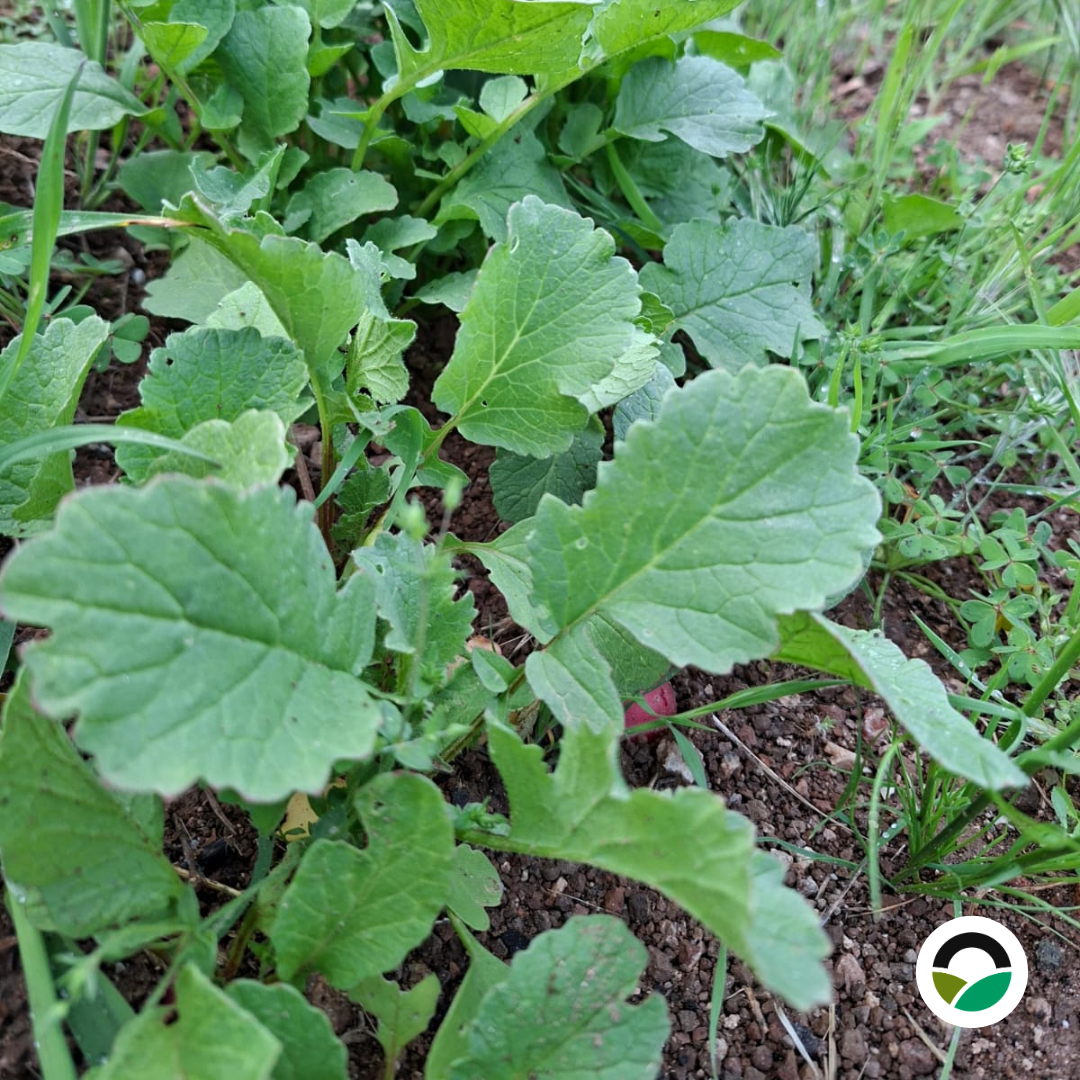
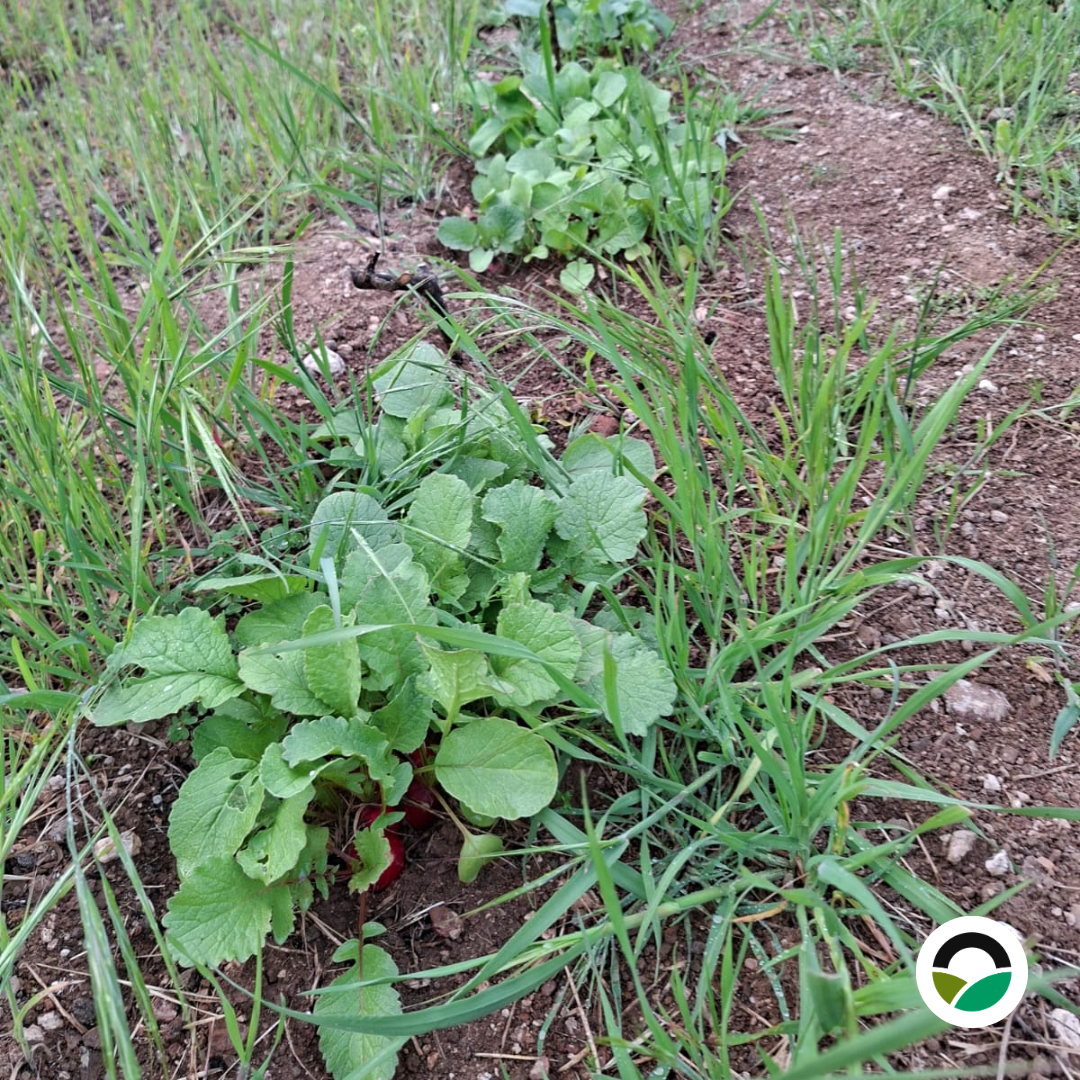
- lobed green leaves forming a rosette
- shallow root system
- tolerance to cool temperatures
Growth cycle of radishes
Radishes follow a short and efficient growth pattern:
- germination occurs within a few days after sowing
- leaf rosette develops quickly
- root enlargement begins shortly after emergence
- harvest is possible within 4–8 weeks depending on conditions
Adequate soil moisture during root formation is essential to prevent woody texture and promote uniform growth.
Radishes in Mediterranean cultivation
Radishes are well suited to Mediterranean climates, particularly during early spring and autumn. They benefit from:
- mild temperatures
- moderate rainfall
- loose, well-drained soil
- short cultivation windows between main crops
Because of their quick maturity, radishes are often used as transitional crops in diversified agricultural systems.
Culinary use of radishes
Radishes can be eaten raw or lightly cooked. Their crisp texture and mildly peppery flavour make them suitable for salads, side dishes, and simple preparations.
Fresh Radish Salad
Ingredients:
- fresh radishes
- olive oil
- lemon juice
- salt
- fresh herbs (optional)
Preparation:
Wash and slice the radishes. Mix with olive oil, lemon juice, and salt. Add chopped herbs if desired and serve fresh.
Radish and Yogurt Dip
Ingredients:
- finely chopped radishes
- yogurt
- olive oil
- garlic
- salt
Preparation:
Mix chopped radishes with yogurt, a small amount of olive oil, crushed garlic, and salt. Chill before serving.
Lightly Sautéed Radishes
Ingredients:
- whole radishes
- olive oil
- salt
- fresh parsley
Preparation:
Sauté whole radishes in a pan with olive oil for a few minutes until slightly tender. Season with salt and garnish with parsley.
Seasonal cycle at Mavronero
The radish harvest represents an early spring milestone at Mavronero. Quick-growing crops allow efficient use of seasonal rainfall and provide fresh produce while longer-term crops continue developing.
After harvest, the soil remains available for subsequent planting, supporting continuous seasonal productivity.
Observations at Mavronero
The recent rainfall significantly influenced growth speed and root quality. The radishes developed evenly, with bright colour and firm texture.
The combination of natural precipitation and mild temperatures created ideal conditions for this short-cycle crop. Such observations help guide future planting schedules.
Sources
FAO – Root vegetable cultivation
