
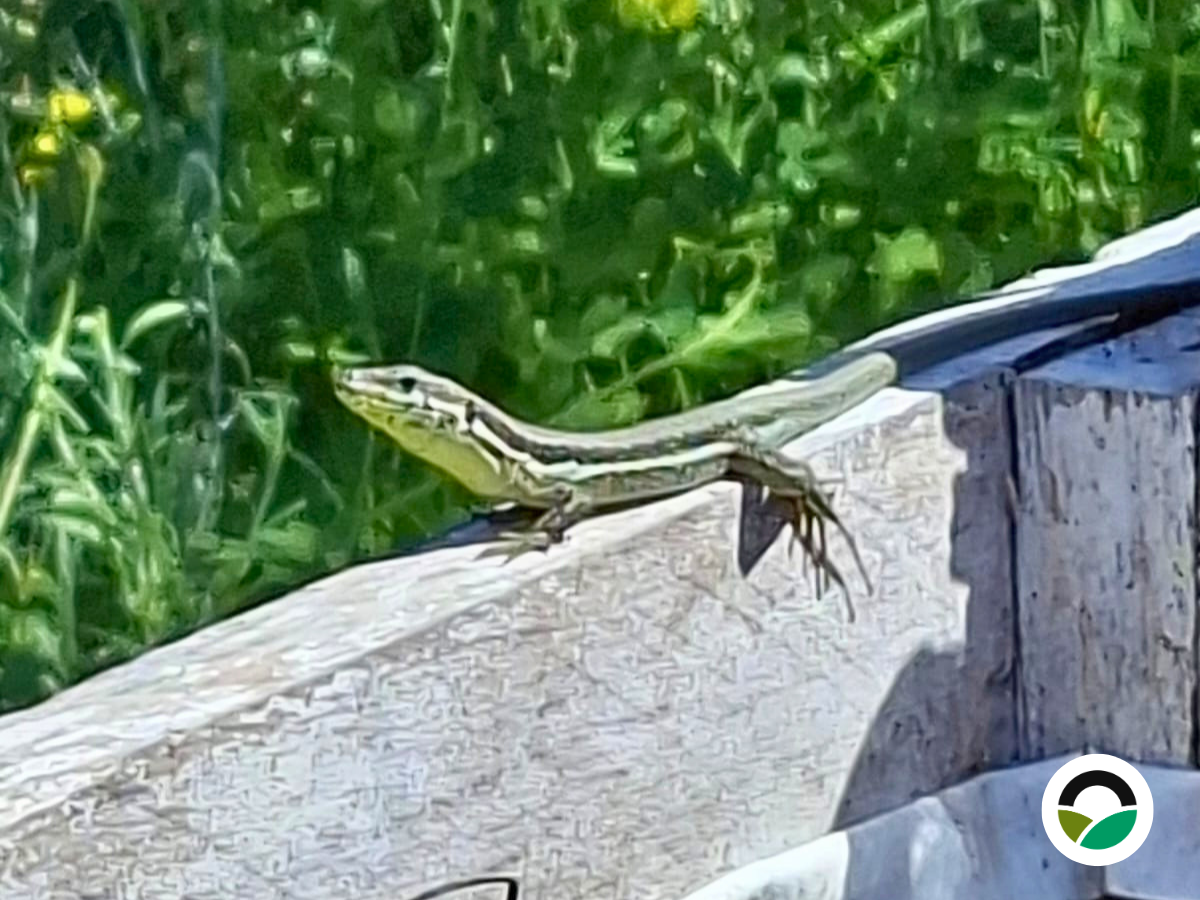
A small lizard was spotted at Mavronero calmly sunbathing on the edge of a raised bed. Completely undisturbed by nearby activity, it remained still while absorbing the warmth of the sun. Encounters like this are common during spring, when reptiles become more active as temperatures increase.
Sunbathing behaviour is essential for lizards, as they are ectothermic animals. They rely on external heat sources to regulate their body temperature, which allows them to move, hunt, and digest efficiently.
Observations like this highlight how farm environments provide microhabitats for small wildlife, especially where natural vegetation and warm surfaces such as wood and stones are available.
Species description
The lizard observed at Mavronero closely resembles species from the genus Podarcis, commonly known as Mediterranean wall lizards. These small reptiles are widely distributed across Mediterranean landscapes.
Typical characteristics include:
- slender elongated body
- long tail often exceeding body length
- smooth or slightly keeled scales
- brown, green, or striped coloration
- agile and quick movements when disturbed
Their coloration often blends with soil, vegetation, and wood, providing effective camouflage.
Habitat and distribution
Mediterranean wall lizards are commonly found in:
- olive groves
- stone walls and terraces
- gardens and agricultural fields
- shrublands and grasslands
- sunny open habitats with shelter
Raised beds, logs, and stones provide ideal basking locations where lizards can warm themselves safely.
Behaviour and thermoregulation
Lizards frequently bask in sunny spots during the morning and midday. This behaviour helps:
- raise body temperature
- increase mobility
- support digestion
- enable hunting activity
When disturbed, they typically retreat quickly into vegetation or crevices. However, in this case, the lizard remained calm and continued sunbathing, showing low perceived threat.
Diet
Mediterranean lizards are insectivorous and feed on:
- small insects
- flies
- beetles
- ants
- spiders
- larvae
By feeding on invertebrates, they contribute to natural pest control in agricultural environments.
Ecological role
Although small, lizards play an important role in Mediterranean ecosystems. Their presence indicates:
- availability of insect populations
- habitat diversity
- low disturbance levels
- suitable microclimates
They form part of the food web, acting both as predators of insects and as prey for birds and larger animals.
Observations at Mavronero
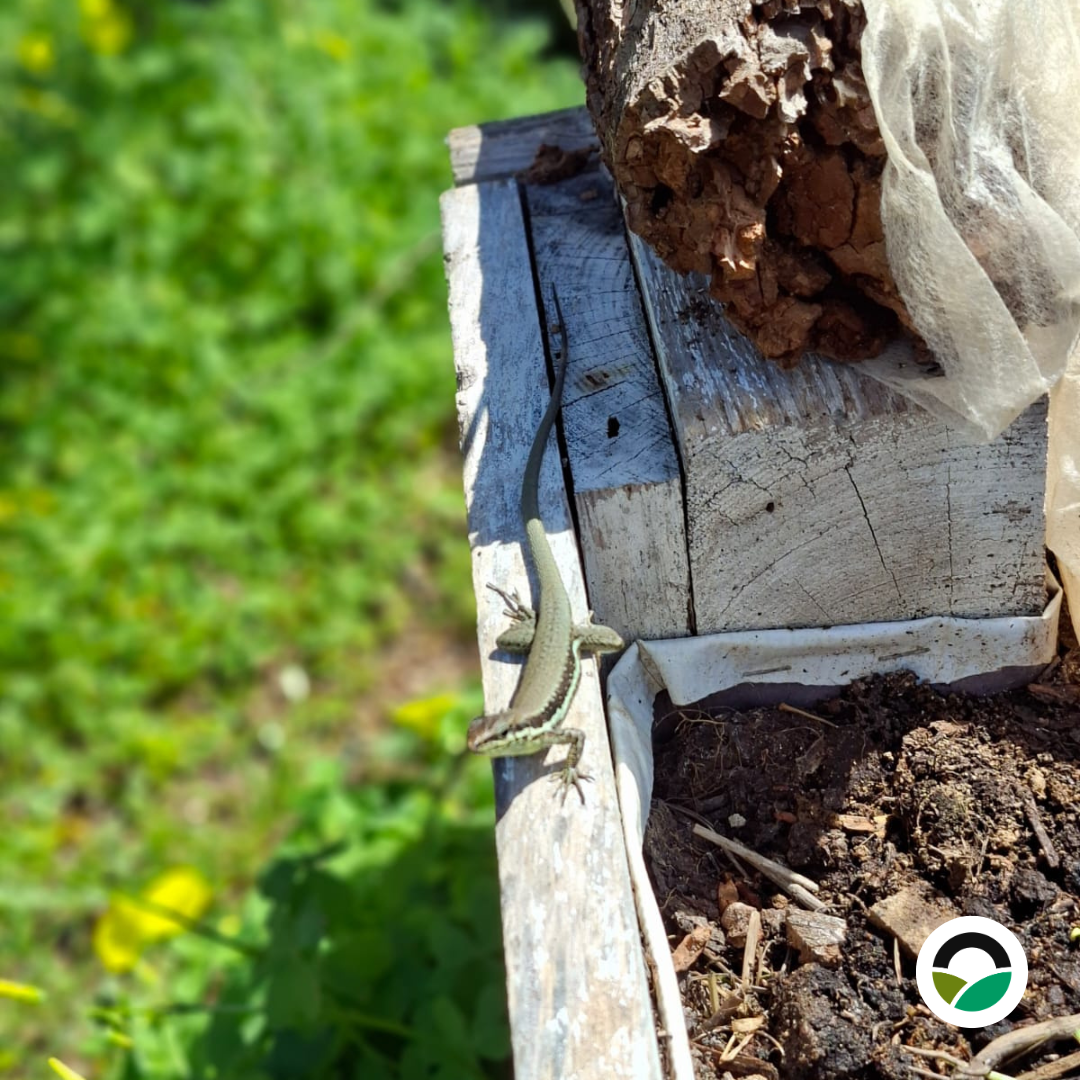
The lizard remained still on the wooden edge of the raised bed, taking advantage of the warm surface. Its relaxed posture suggested it was focused on thermoregulation rather than alert behaviour.
Moments like this demonstrate how small reptiles integrate naturally into farm landscapes. Even simple structures such as raised beds can become important microhabitats.
Encounters with wildlife like this remind us that agricultural areas can support biodiversity when natural elements are preserved.
Sources
IUCN Red List – Mediterranean reptiles
