
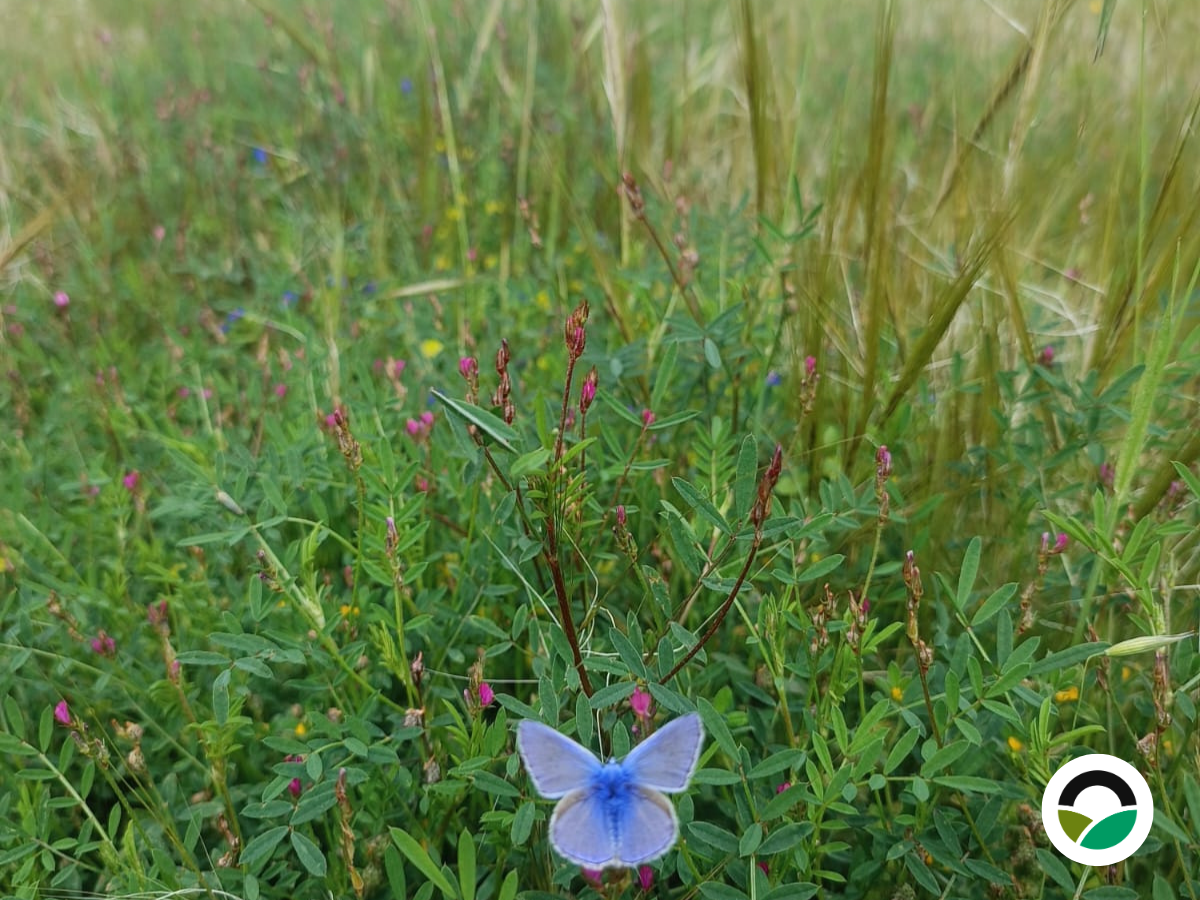
During spring, the landscape of Mavronero becomes a dynamic mosaic of vegetation, insects, and ecological interactions. Among the most delicate yet significant visitors is a small blue butterfly, commonly observed resting on low-growing plants. This species, identified as the Common Blue (Polyommatus icarus), reflects the richness and balance of Mediterranean ecosystems.
Morphological characteristics
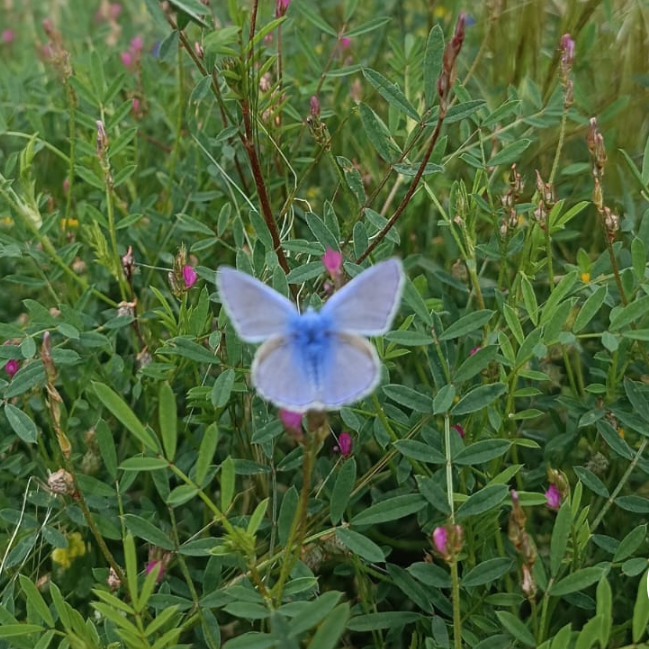
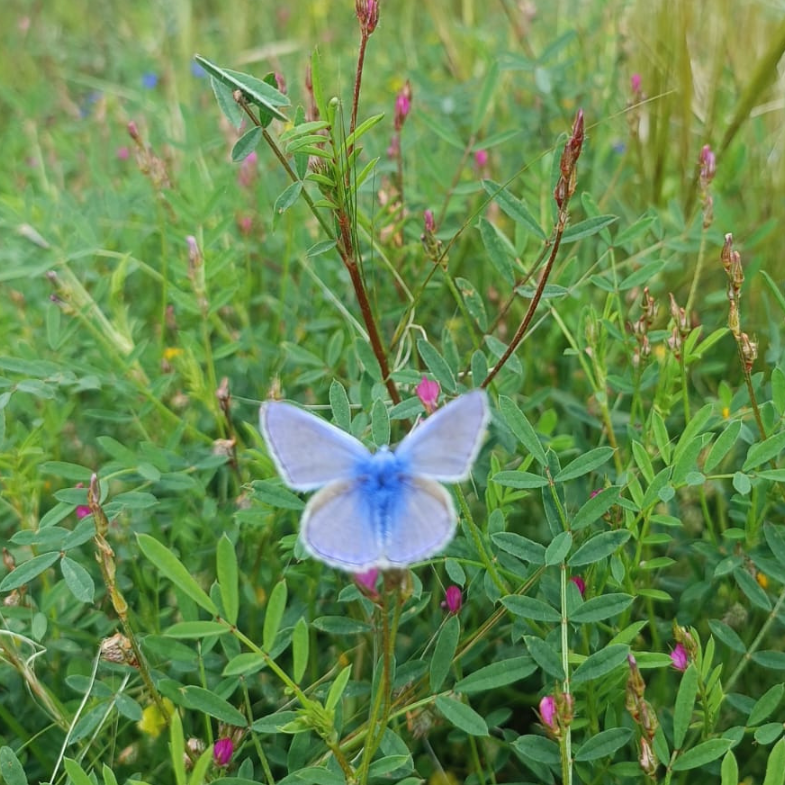
The Common Blue belongs to the Lycaenidae family, a group of small butterflies widely distributed across Europe. Sexual dimorphism is evident in this species. Males display a vivid blue coloration on the upper side of their wings, while females are generally brown with varying degrees of blue near the base.
Key characteristics include:
- wingspan of approximately 30–36 mm
- bright blue dorsal wing surface in males
- brown to bluish coloration in females
- pale grey underside with black spots and orange marginal markings
- slender body adapted for short, low flight patterns
These features allow the species to blend into grassland environments while remaining visually striking when wings are open.
Habitat and distribution
Polyommatus icarus is one of the most widespread butterfly species in Europe, extending across temperate and Mediterranean regions. It thrives in:
- grasslands and meadows
- agricultural edges and semi-natural farmland
- open scrublands
- disturbed soils with herbaceous vegetation
At Mavronero, its presence is closely linked to the abundance of wild legumes and low vegetation, which provide both food resources and suitable breeding conditions.
Ecological role
The Common Blue plays a significant role within local ecosystems, particularly as a pollinator and as part of a broader ecological network.
Its ecological functions include:
- pollination of wild herbaceous plants
- contribution to insect biodiversity
- serving as prey for birds and other predators
- supporting trophic interactions within the ecosystem
A notable aspect of its life cycle is its relationship with ants (myrmecophily). The larvae produce secretions that attract ants, which in turn provide protection against predators. This mutualistic interaction highlights the complexity of ecological relationships in Mediterranean habitats.
Life cycle and seasonal activity
The species exhibits multiple generations per year, especially in warmer climates. Its life cycle follows a clear seasonal pattern:
- spring: emergence of adults and mating activity
- late spring to summer: egg laying on host plants
- larval stage: feeding primarily on legumes
- pupation near ground level
- emergence of new adults in successive generations
This adaptability allows the species to respond quickly to favorable environmental conditions.
Observations at Mavronero
At Mavronero, individuals of Polyommatus icarus are frequently observed in areas where natural vegetation is preserved and soil disturbance is minimal. The combination of grasses, legumes, and flowering plants creates an ideal habitat.
The butterfly’s presence indicates:
- availability of host plants
- absence of intensive chemical use
- continuity of semi-natural habitats
- overall ecological stability
These observations reinforce the importance of maintaining biodiversity-friendly practices within the landscape.
Integration within the ecosystem
Although small in size, the Common Blue represents a key component of the ecosystem. Its dependence on specific plants and interactions with other species make it a valuable ecological indicator.
In Mavronero, the coexistence of cultivated areas and wild vegetation allows such species to persist. This balance supports a resilient system where agricultural activity and biodiversity are not in opposition, but interconnected.
Conclusion
The presence of the Common Blue butterfly at Mavronero is more than a seasonal detail. It reflects the underlying ecological processes that sustain life across the landscape. Observing such species provides insight into the health of the environment and highlights the importance of preserving natural interactions within Mediterranean ecosystems.
Sources
- Tolman, T., & Lewington, R. (2008). Collins Butterfly Guide: The Most Complete Guide to the Butterflies of Britain and Europe. HarperCollins.
- Kudrna, O., et al. (2011). Distribution Atlas of Butterflies in Europe. Gesellschaft für Schmetterlingsschutz.
- European Environment Agency (EEA). (2020). Grassland ecosystems and biodiversity in Europe.
- Dennis, R. L. H. (2010). A Resource-Based Habitat View for Conservation: Butterflies in the British Landscape. Wiley-Blackwell.
