
At Mavronero, cultivation extends beyond plant growth in the field. Harvesting, selection, preservation, and post-harvest handling are all considered integral parts of the agricultural process, influencing not only the quality of the final product but also the long-term efficiency and sustainability of the cultivation system itself.
This broader perspective is particularly visible in the management of aromatic plants, where harvesting methods and preservation techniques directly affect aroma retention, storage life, and future usability. Among these species, mint plays an important role within the cultivation landscape due to its vigorous growth, aromatic properties, ecological adaptability, and multiple practical applications.
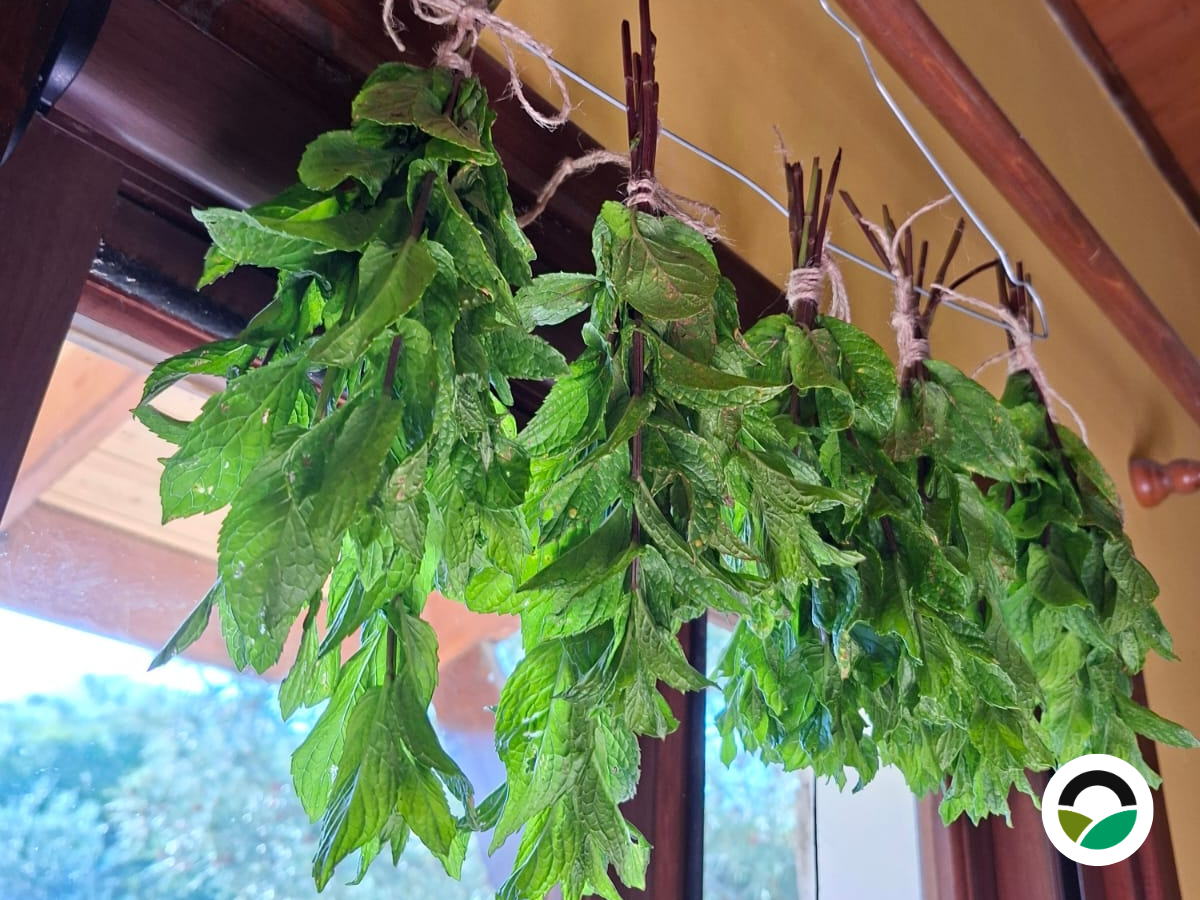
Recently, two cultivated beds of mint were harvested as part of an ongoing seasonal management process. Following the harvest, selected stems were prepared and arranged into small bouquets to be naturally air-dried indoors.
Although simple in appearance, this process combines practical cultivation knowledge with long-established preservation techniques that have been used for centuries throughout Mediterranean agricultural traditions.
Mint as an aromatic perennial species
Mint belongs to the Lamiaceae family, a group of aromatic plants characterized by their essential oil production, square stems, and highly fragrant foliage. The genus includes several cultivated and wild species that are widely valued for culinary, medicinal, and aromatic purposes.
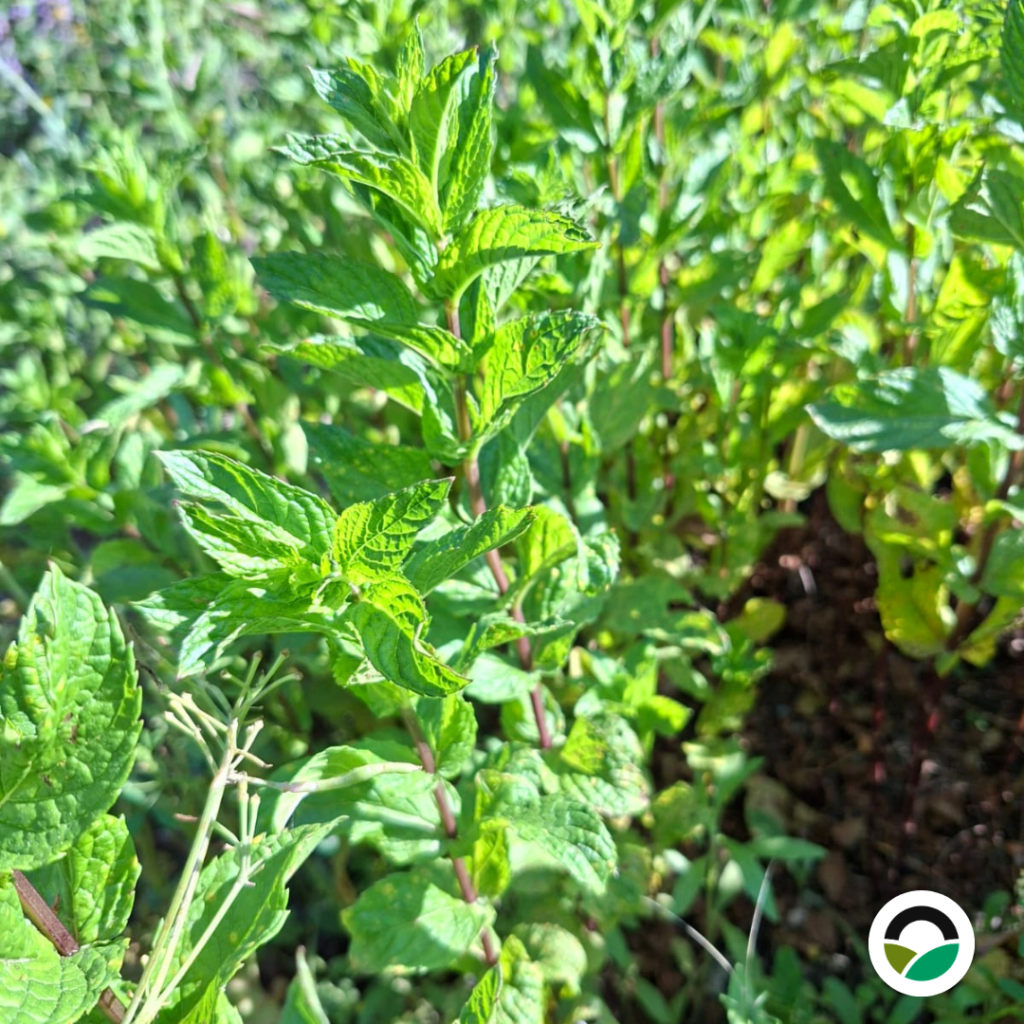
Under Mediterranean environmental conditions, mint demonstrates rapid vegetative growth during spring and early summer, especially when sufficient soil moisture and moderate temperatures are available. The plant spreads through underground rhizomes, allowing it to form dense beds with continuous regeneration capacity.
Its foliage contains volatile aromatic compounds such as menthol and menthone, which contribute to its distinctive scent and cooling sensory properties. The concentration and preservation of these compounds are strongly influenced by harvesting timing, environmental conditions, and post-harvest treatment.
For this reason, the management of mint at Mavronero focuses not only on cultivation but also on careful handling after harvest.
Harvesting the mint beds
The process began with the harvesting of two mint beds within the cultivation area.
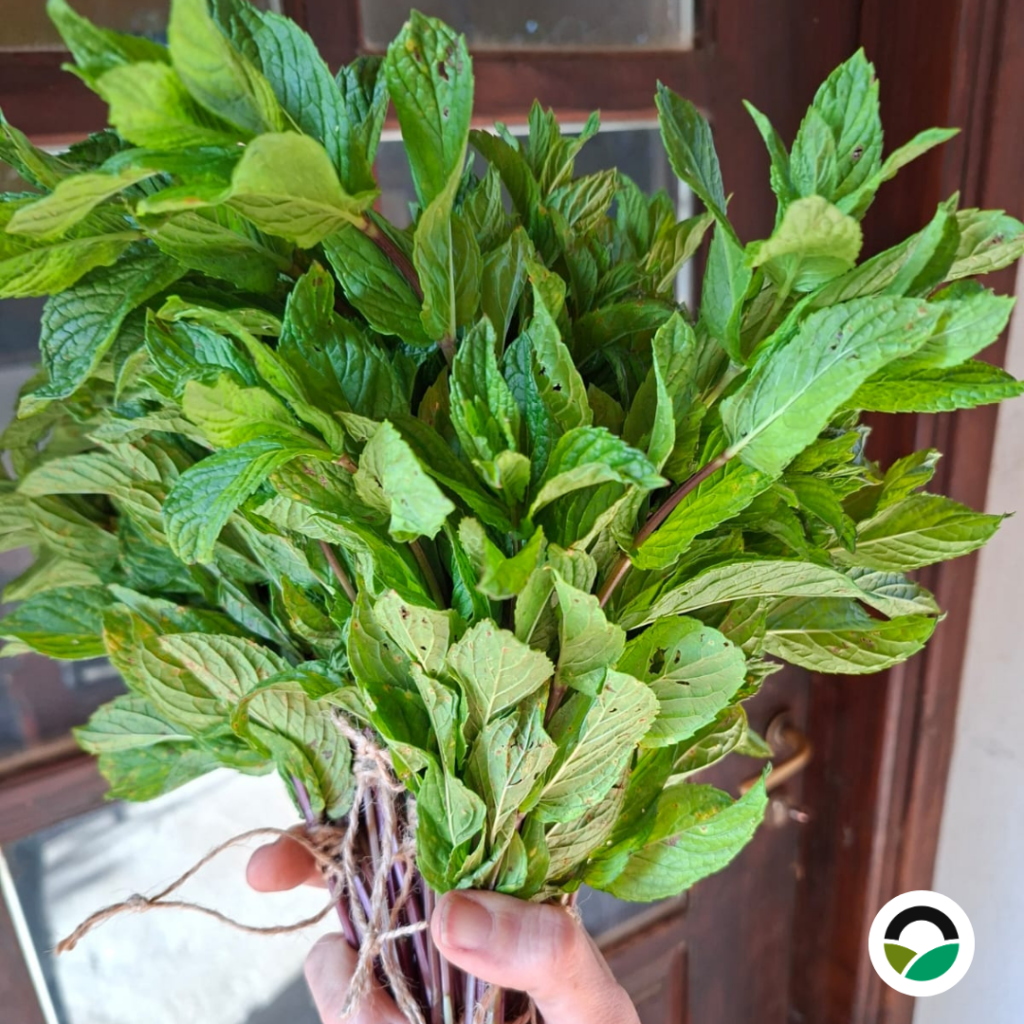
Rather than removing all available vegetation indiscriminately, attention was given to selecting healthier and greener stems with well-developed leaves and strong structural condition. Stems showing excessive aging, discoloration, or environmental damage were avoided during the selection process.
This selective approach serves several purposes simultaneously.
First, it improves the overall quality of the harvested material by prioritizing vigorous plant tissue with higher aromatic potential. Second, it supports the long-term health of the mint beds themselves, since partial harvesting allows the remaining plants to continue photosynthetic activity and regenerate new growth more efficiently.
Once selected, the stems were trimmed to approximately 15–20 centimeters in length. Maintaining relatively uniform stem sizes simplifies handling and improves consistency during the drying stage.
The harvesting process was carried out manually, allowing direct observation of plant condition, leaf quality, moisture levels, and overall vegetative density within the beds.
Manual harvesting also reduces mechanical damage to the leaves and stems, which is particularly important in aromatic species where bruising or excessive compression may accelerate the loss of volatile compounds.
Preparation of mint bouquets
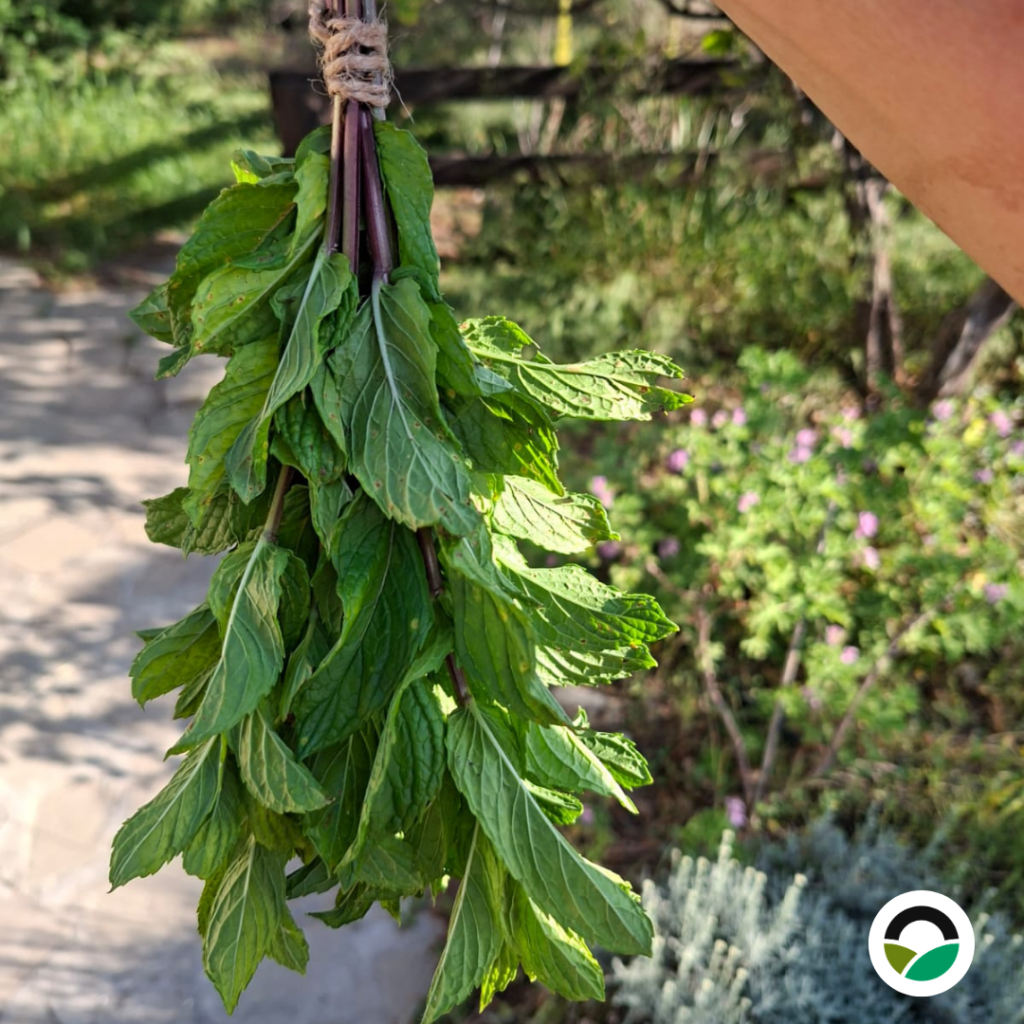
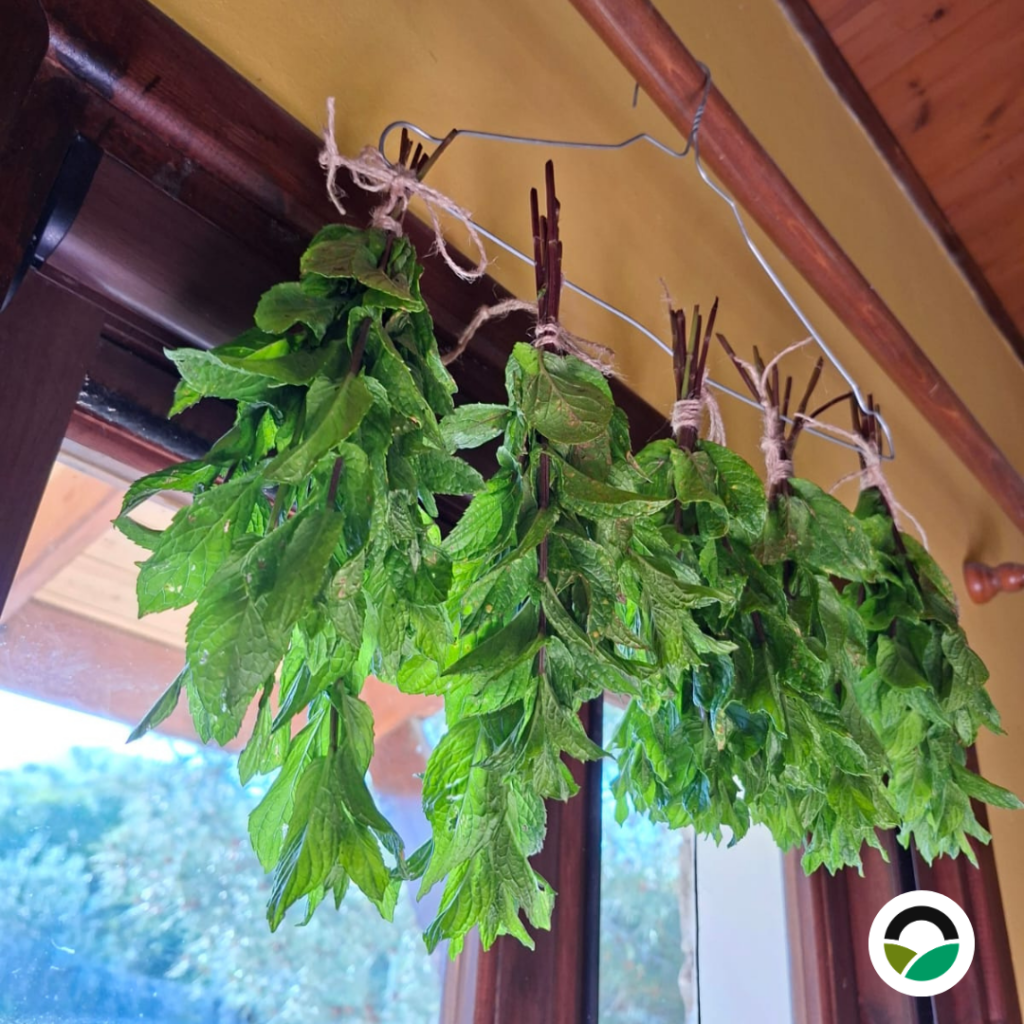
After harvesting and trimming, the selected mint stems were grouped into small bouquets and tied together using natural twine.
Creating smaller bundles is a practical and important aspect of natural drying systems. Dense or oversized bundles can restrict airflow between leaves, trapping moisture internally and increasing the possibility of uneven dehydration or fungal development.
By organizing the mint into compact but breathable bouquets, airflow is able to circulate more effectively throughout the plant material.
The bouquets were then suspended indoors in a shaded and naturally ventilated area. Hanging the stems upside down allows gravity and airflow to assist the gradual evaporation of moisture from the leaves and stems while helping preserve structural integrity during the drying process.
Environmental conditions during drying strongly influence the final quality of preserved herbs. Excessive humidity may slow dehydration and increase microbial risk, while direct sunlight can accelerate the degradation of pigments and volatile aromatic compounds.
For this reason, shaded environments with stable airflow are traditionally preferred for drying aromatic plants such as mint.
Natural air drying as a preservation system
Air drying represents one of the oldest known preservation methods for herbs and medicinal plants. Long before industrial dehydration systems existed, agricultural communities relied on controlled airflow and environmental conditions to reduce plant moisture content and extend storage life.
The principle behind the process is relatively straightforward. By gradually reducing water availability within plant tissues, microbial activity and decomposition processes slow significantly. This allows the plant material to remain usable for extended periods while retaining much of its aroma, structure, and functionality.
Unlike industrial drying methods that often depend on elevated temperatures and energy-intensive systems, natural air drying operates with minimal external inputs.
At Mavronero, this approach aligns with broader cultivation principles centered around low-intervention management, resource efficiency, and reduced dependency on highly processed preservation systems.
Although some volatile compounds inevitably decrease during drying, gradual dehydration helps maintain a significant portion of the plant’s aromatic profile when environmental conditions are properly managed.
Once fully dried, the mint can later be stored for a wide range of uses, including:
- herbal infusions
- culinary preparations
- aromatic mixtures
- natural household applications
- seasonal food preservation practices
- traditional herbal preparations
The preservation process therefore extends the functional lifespan of the harvest beyond its immediate seasonal availability.
Ecological and practical significance within the cultivation system
Beyond its practical use, the drying of mint reflects several ecological principles integrated into the cultivation philosophy at Mavronero.
The process combines manual harvesting, natural preservation techniques, reusable materials, and low-energy processing methods. Together, these practices reduce unnecessary resource consumption while maintaining a close relationship between cultivation activities and environmental conditions.
Mint itself also contributes to the ecological diversity of the cultivated landscape.
As a perennial aromatic species, it supports pollinator activity during flowering periods and occupies space within mixed cultivation areas that encourage biodiversity and vegetation complexity. Its dense vegetative growth additionally contributes to soil coverage and helps reduce exposed surface areas during active growth phases.
By harvesting part of the mint for drying rather than relying exclusively on fresh consumption, the cultivation system also becomes more temporally flexible. Surplus growth can be preserved and utilized later, reducing waste and supporting a more continuous relationship between production and consumption.
This type of seasonal preservation practice historically formed an essential component of Mediterranean agricultural systems, where drying herbs allowed communities to maintain access to aromatic and medicinal plants throughout the year.
Observation and continuity
The recent preparation of eleven mint bouquets represents a relatively small-scale activity within the broader cultivation system at Mavronero. However, it also illustrates how seemingly simple processes can connect multiple aspects of ecological agriculture simultaneously.
Harvesting decisions influence plant regeneration. Drying methods affect preservation quality. Environmental conditions shape both cultivation and storage outcomes.
Rather than treating these stages as isolated tasks, the process demonstrates an interconnected approach where cultivation, observation, harvesting, and preservation remain closely linked.
As the mint continues drying naturally indoors, the process becomes not only a method of preservation but also part of a longer seasonal cycle that extends the usefulness and presence of the harvest far beyond the field itself.
Conclusion
The harvesting and natural air drying of mint at Mavronero demonstrate how traditional preservation methods can remain relevant within contemporary ecological cultivation systems.
Through the selective harvesting of greener stems, the preparation of uniform bouquets, and the use of passive air drying techniques, the process supports both practical preservation goals and broader environmental considerations.
More importantly, it reflects an agricultural approach centered on observation, adaptability, resource efficiency, and long-term continuity between cultivation and post-harvest management.
In this context, drying mint is not simply a storage technique but part of a larger relationship between seasonal production, ecological awareness, and the careful use of cultivated resources.
Sources
- Food and Agriculture Organization (FAO) – Post-harvest management and preservation of aromatic plants
- Royal Horticultural Society (RHS) – Herb harvesting and drying methods
- Mediterranean Herbs and Medicinal Plants Research Studies
- Small-scale herb preservation and air-drying practices in Mediterranean agriculture
