
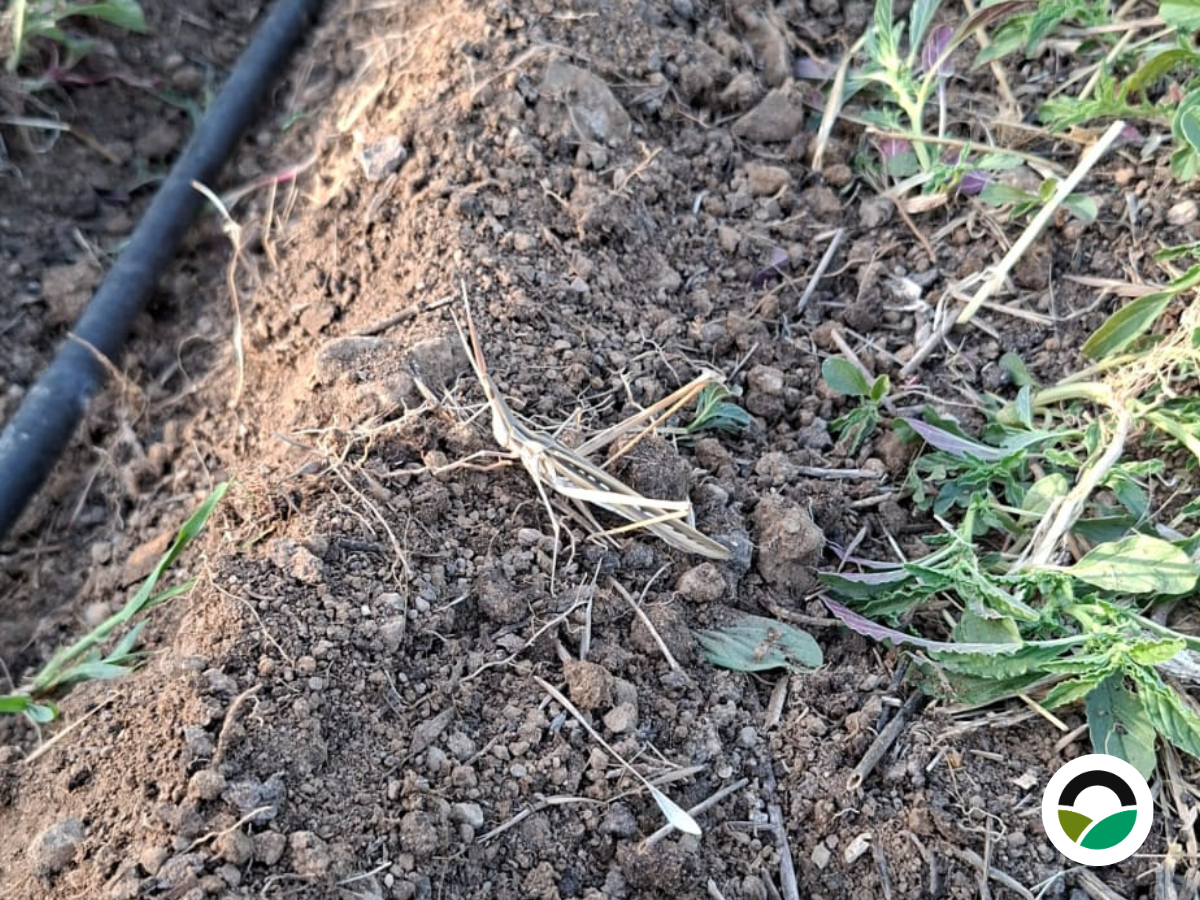
Long-headed grasshoppers are among the most distinctive insects found within Mediterranean grassland ecosystems. Their elongated bodies, narrow profiles, and exceptional camouflage allow them to remain almost invisible among dry grasses and herbaceous vegetation. At Mavronero, a probable long-headed grasshopper (Truxalis eximia cypria) was observed developing within seasonal vegetation growing between cultivated areas and olive groves.
This endemic Cypriot subspecies forms part of the island’s native invertebrate biodiversity and represents one of many species associated with Mediterranean agricultural landscapes where natural vegetation is allowed to coexist alongside cultivation.
Long-headed grasshoppers in Mediterranean ecosystems
Truxalis eximia cypria belongs to the family Acrididae, a group of grasshoppers widely distributed throughout Europe, North Africa, and Asia. The Cypriot subspecies is considered endemic to Cyprus and is adapted to the island’s seasonal climatic conditions.
Across Mediterranean environments, long-headed grasshoppers can commonly be found in:
- olive groves
- herbaceous vegetation systems
- agricultural field margins
- seasonal grasslands
- semi-natural habitats
- low-intervention cultivated landscapes
Their elongated head and body shape provide effective camouflage among grasses, helping them avoid predators while remaining active within open habitats.
Long-headed grasshoppers are primarily herbivorous and feed on a variety of grasses and herbaceous plants that develop during the spring growing season.
Ecological role and biodiversity value
Although often overlooked, grasshoppers contribute significantly to ecosystem functioning within Mediterranean landscapes.
Their ecological roles include:
- herbivore regulation within vegetation communities
- nutrient cycling through plant consumption
- prey availability for birds and reptiles
- support of food web dynamics
- seasonal biodiversity indicators
- contribution to ecosystem resilience
Many bird species, lizards, snakes, and predatory insects depend on grasshoppers as a food resource. Their seasonal abundance reflects vegetation productivity and habitat quality across cultivated and semi-natural environments.
At Mavronero, observations of insects such as Truxalis eximia cypria help document the biodiversity that develops naturally within agricultural systems where habitat continuity is maintained.
Seasonal vegetation and habitat continuity
Mediterranean grasslands experience strong seasonal fluctuations driven by rainfall and temperature. During spring, herbaceous vegetation develops rapidly, creating favourable conditions for numerous invertebrate species.
Long-headed grasshoppers are closely associated with these seasonal vegetation communities. Their camouflage, feeding behaviour, and reproductive cycles are strongly linked to the availability of grasses and herbaceous plants.
Environmental observations at Mavronero continue recording:
- endemic insect species
- seasonal vegetation development
- pollinator activity
- reptile and bird interactions
- herbaceous habitat dynamics
- biodiversity continuity within cultivated environments
These observations provide valuable insight into the ecological relationships that persist within low-intervention Mediterranean agricultural landscapes.
Environmental observations at Mavronero
The observation of a probable Truxalis eximia cypria highlights the ecological diversity supported by Mediterranean agricultural environments when natural vegetation is allowed to develop alongside cultivation.
Rather than functioning as isolated production systems, cultivated landscapes can support a wide range of native species through habitat continuity, seasonal vegetation growth, and reduced ecological disturbance.
At Mavronero, environmental monitoring continues documenting how insects, plants, birds, reptiles, and agricultural systems interact throughout the year, contributing to a broader understanding of Mediterranean biodiversity.
Conclusion
The long-headed grasshopper (Truxalis eximia cypria) forms part of Cyprus’ unique invertebrate fauna and represents an important component of Mediterranean grassland ecosystems.
Its presence within cultivated landscapes reflects the ecological value of maintaining seasonal vegetation, habitat diversity, and low-intervention land management practices. Observations such as these help reveal the complex relationships connecting agriculture, native wildlife, and biodiversity continuity across Mediterranean environments.
