
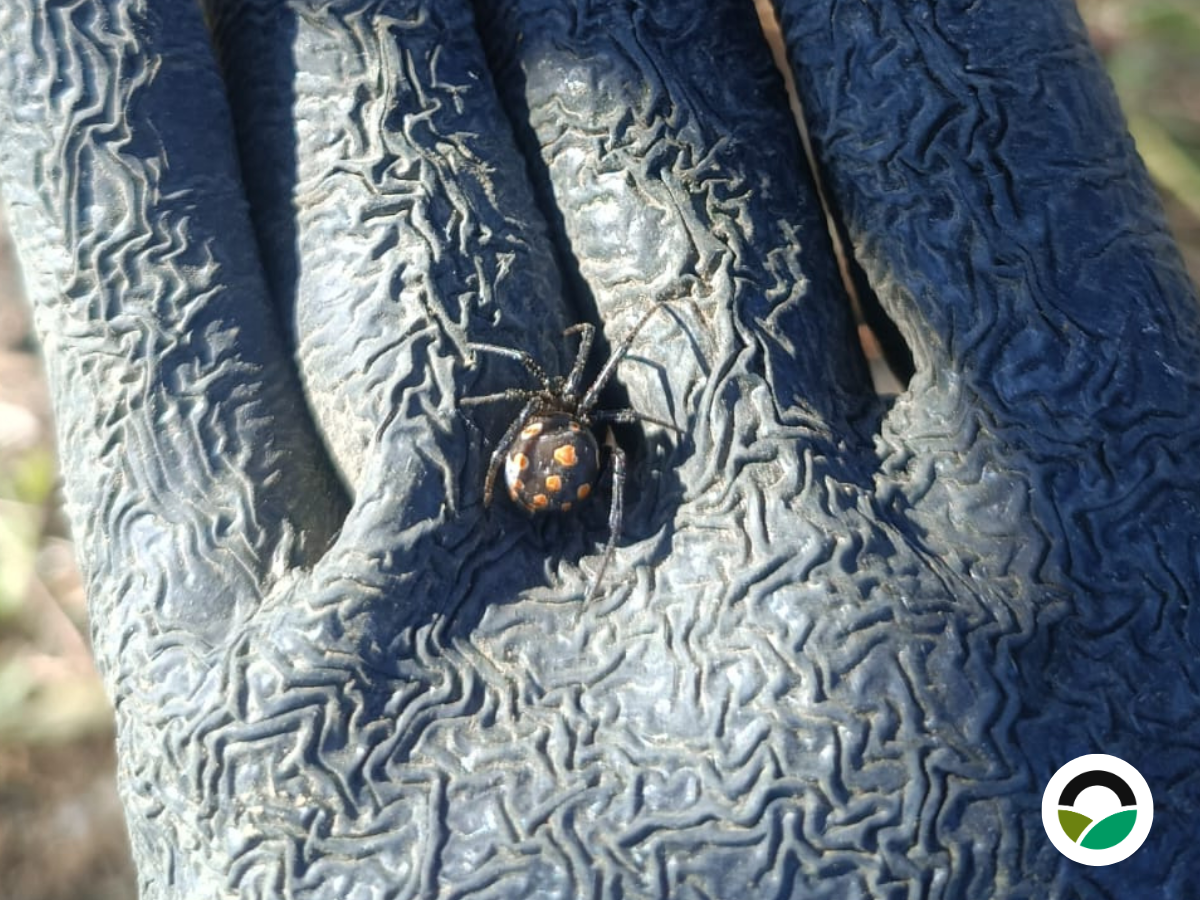
The European black widow (Latrodectus tredecimguttatus) is one of the most recognizable spider species found throughout Mediterranean ecosystems. Although often associated with its medically significant venom, this species forms a natural part of the invertebrate communities that develop within agricultural and semi-natural landscapes across Cyprus.
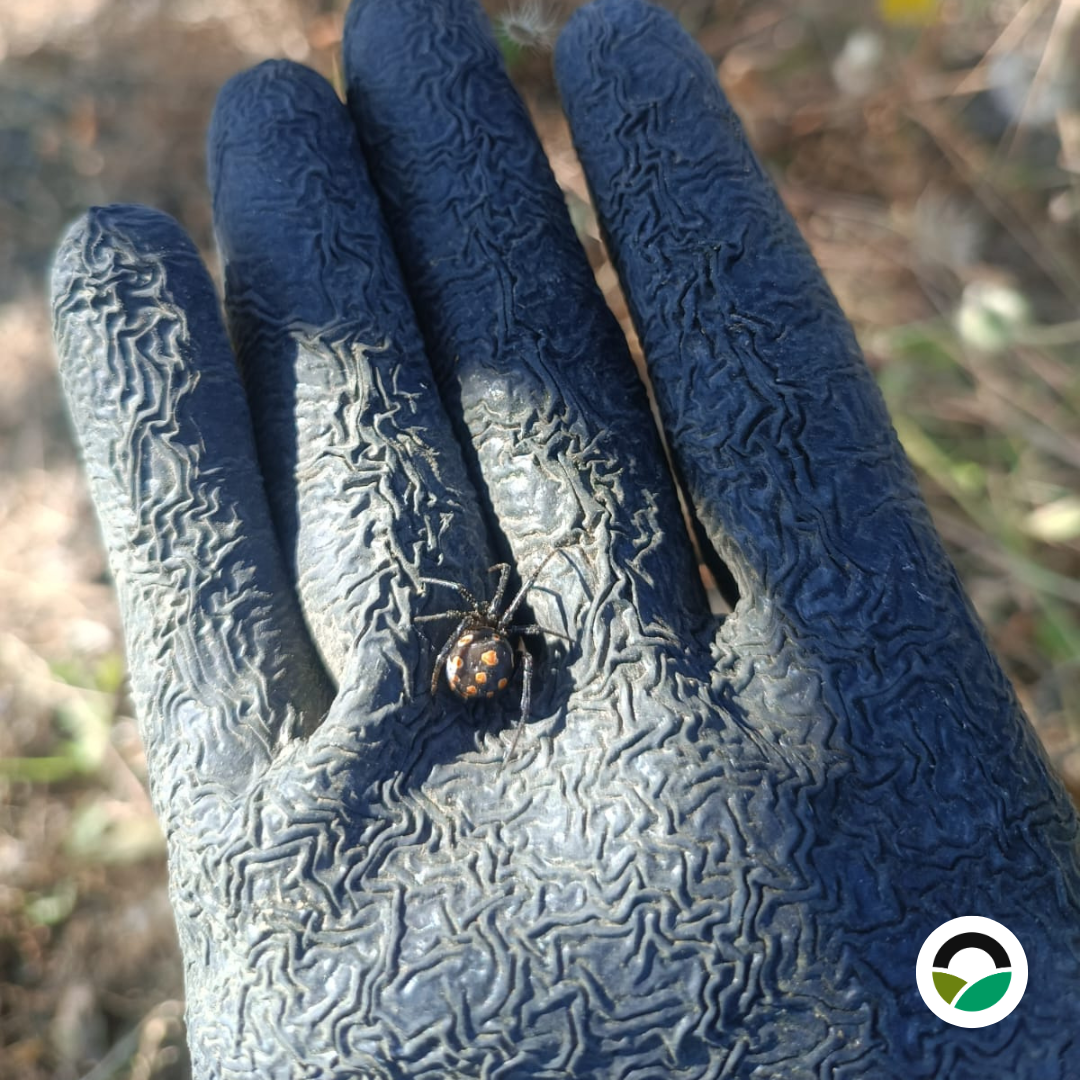
At Mavronero, a probable European black widow was observed within dry herbaceous vegetation growing among the olive groves. Such observations help document the diversity of native arthropods that coexist within low-intervention Mediterranean environments.
European black widows in Mediterranean ecosystems
The European black widow belongs to the cobweb spider family (Theridiidae) and is distributed throughout parts of Southern Europe, North Africa, the Eastern Mediterranean, and Western Asia.
Across Mediterranean environments, this species is commonly found in:
- olive groves
- dry grasslands
- herbaceous vegetation systems
- agricultural field margins
- stone-covered habitats
- semi-natural rural environments
European black widows typically construct irregular silk webs close to the ground, often beneath vegetation, within sheltered crevices, or among stones where prey activity is concentrated.
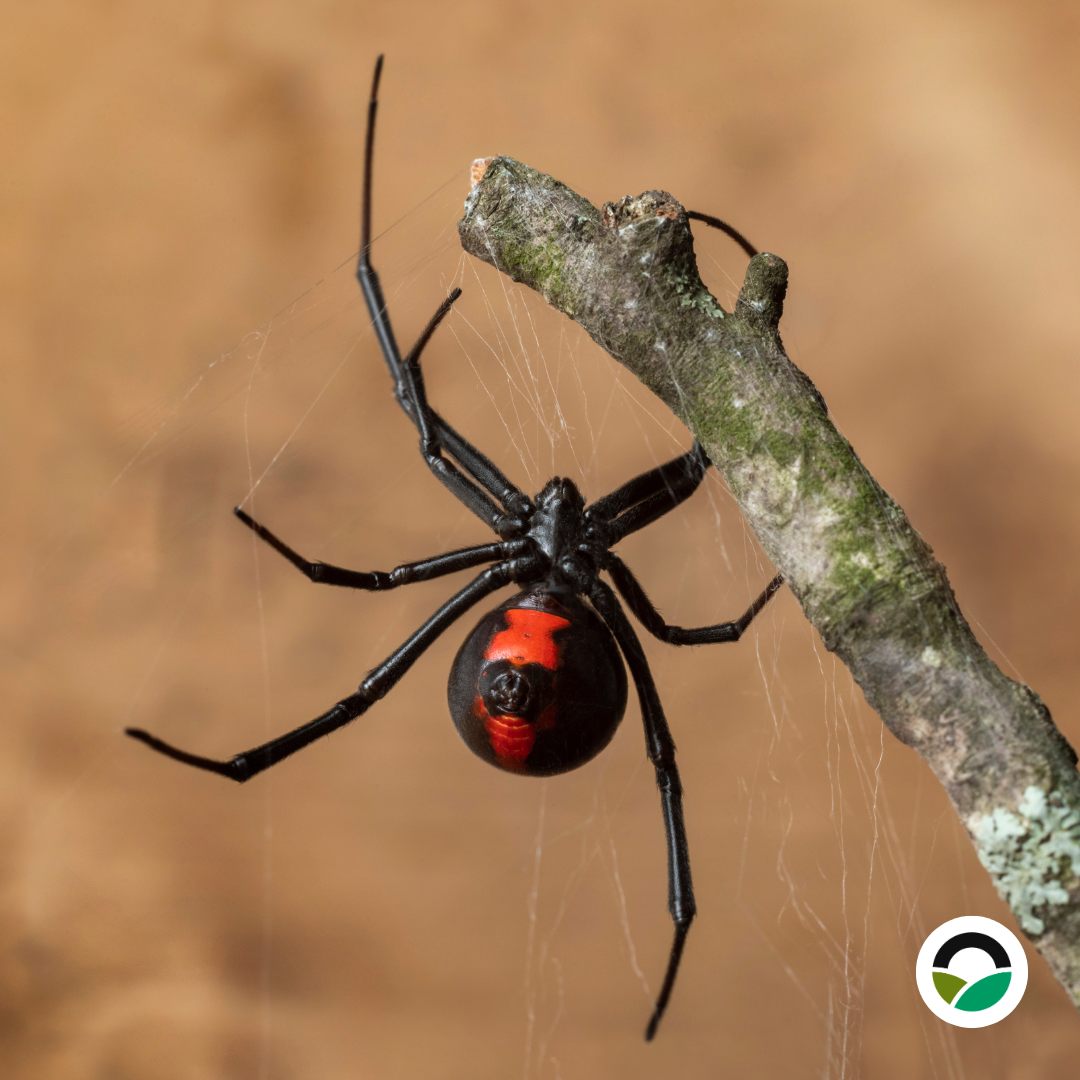
The species is most easily identified by its glossy black body and the characteristic red or orange markings found on the abdomen.
Biology and behaviour of the European black widow
The European black widow (Latrodectus tredecimguttatus) is a medium-sized spider belonging to the family Theridiidae. Adult females are considerably larger than males and are easily recognized by their rounded glossy black abdomen marked with distinctive red or orange spots.
Unlike actively hunting spiders, black widows rely on silk webs to capture prey. Their irregular three-dimensional webs are typically constructed close to the ground among grasses, stones, shrubs, and other sheltered locations where insects frequently pass.
The species feeds primarily on insects and other small arthropods that become entangled within the web. Once captured, prey is immobilized using venom and subsequently consumed. This feeding strategy allows the spider to function as an efficient predator within Mediterranean ecosystems.
European black widows are generally shy and non-aggressive animals. When disturbed, they typically attempt to retreat rather than defend themselves. Bites are uncommon and usually occur only when the spider is accidentally handled or trapped against the skin.
Although the venom of Latrodectus tredecimguttatus is considered medically significant, severe cases are uncommon and fatalities are extremely rare with modern medical treatment. The species is therefore best understood as an important native predator rather than solely through its reputation as a venomous spider.
Human interactions
Although Latrodectus tredecimguttatus possesses medically significant venom, the species is generally non-aggressive and avoids contact with humans whenever possible. Bites are uncommon and typically occur only when the spider is accidentally disturbed or trapped. As with many native predators, its ecological importance within Mediterranean ecosystems greatly outweighs the risks associated with occasional encounters.
Ecological role and biodiversity value
As a specialized predator, the European black widow occupies an important position within Mediterranean food webs. By regulating populations of insects and other small invertebrates, the species contributes to ecological balance and biodiversity stability across cultivated and semi-natural environments.
Despite their reputation, black widows are important predators within Mediterranean ecosystems.
Their ecological contributions include:
- natural regulation of insect populations
- control of small arthropod communities
- support of ecological balance within food webs
- contribution to invertebrate biodiversity dynamics
- maintenance of predator-prey relationships
- participation in healthy ecosystem functioning
Like many spider species, European black widows help regulate populations of insects and other invertebrates that develop within vegetation systems and cultivated environments.
Predatory arthropods form an important component of Mediterranean biodiversity and contribute to the stability of ecological communities across both natural and agricultural habitats.
Habitat continuity within cultivated landscapes
Mediterranean agricultural environments often contain a mosaic of cultivated and naturally developing habitats. Olive groves, field margins, herbaceous vegetation, stone walls, and uncultivated patches provide shelter and hunting opportunities for numerous invertebrate species.
At Mavronero, environmental observations continue documenting biodiversity interactions involving:
- native spider species
- predatory arthropods
- insect population dynamics
- seasonal vegetation development
- ecological interactions within olive groves
- biodiversity continuity in cultivated landscapes
The presence of species such as the European black widow reflects the habitat diversity that develops when natural vegetation is allowed to coexist alongside agricultural activity.
Environmental observations at Mavronero
The Mediterranean landscape surrounding Mavronero supports a wide variety of invertebrates, reptiles, birds, flowering plants, and seasonal wildlife interactions.
Observations of native spider species provide valuable insight into the ecological relationships operating within these environments. Rather than existing as isolated agricultural systems, cultivated landscapes often function as interconnected ecosystems where predators, pollinators, plants, and wildlife interact continuously.
Through ongoing environmental monitoring, Mavronero continues documenting the biodiversity supported by low-intervention land management and seasonal habitat continuity.
Conclusion
The European black widow (Latrodectus tredecimguttatus) forms an important part of Mediterranean invertebrate biodiversity. Although best known for its venom, its ecological significance lies in its role as a natural predator contributing to balanced and functioning ecosystems.
Observations such as this help reveal the complexity of Mediterranean agricultural landscapes and highlight the diverse wildlife communities that continue to develop alongside cultivation at Mavronero.
