
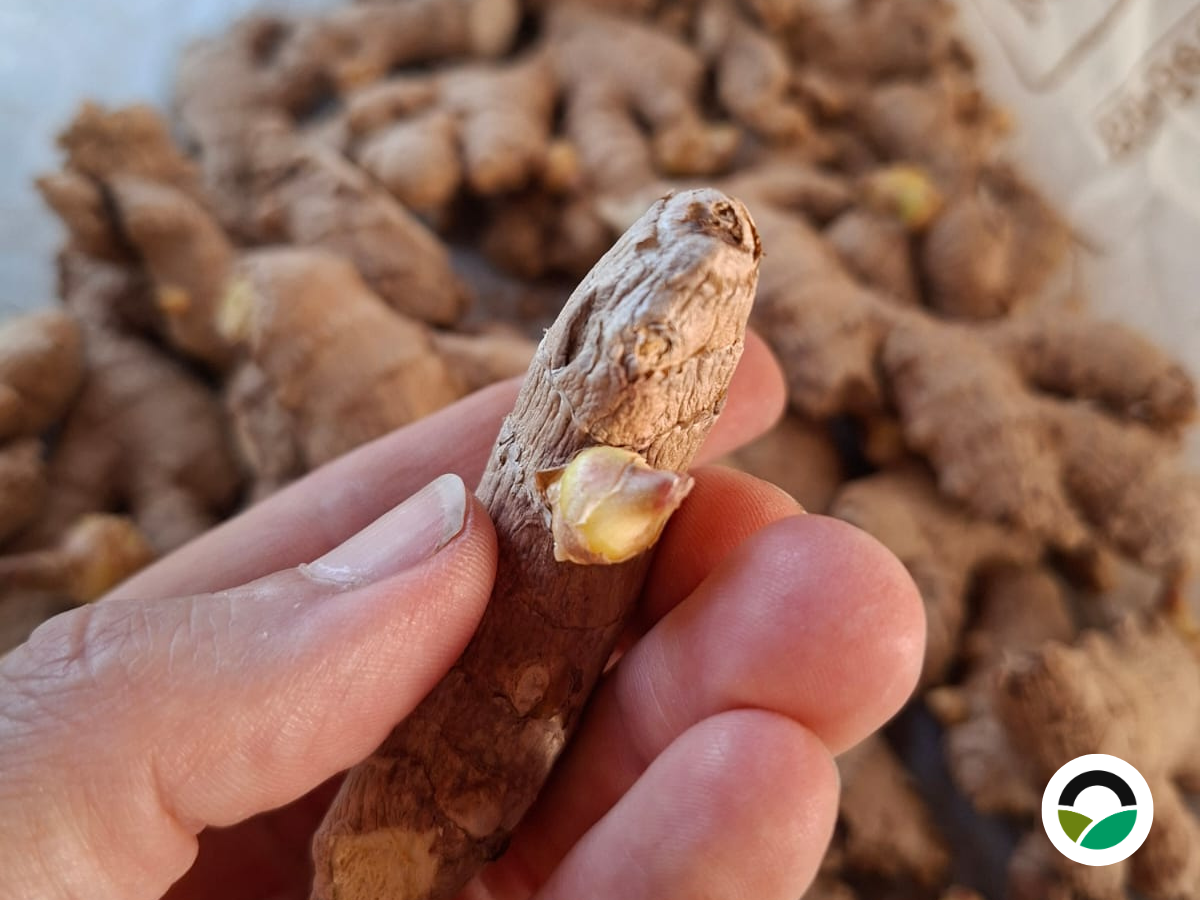
Ginger (Zingiber officinale) is a tropical plant cultivated worldwide for its aromatic rhizomes, which are widely used in food production, traditional medicine, and herbal preparations. Although most commonly associated with humid tropical regions, ginger can also be successfully cultivated in Mediterranean environments when suitable growing conditions are provided.
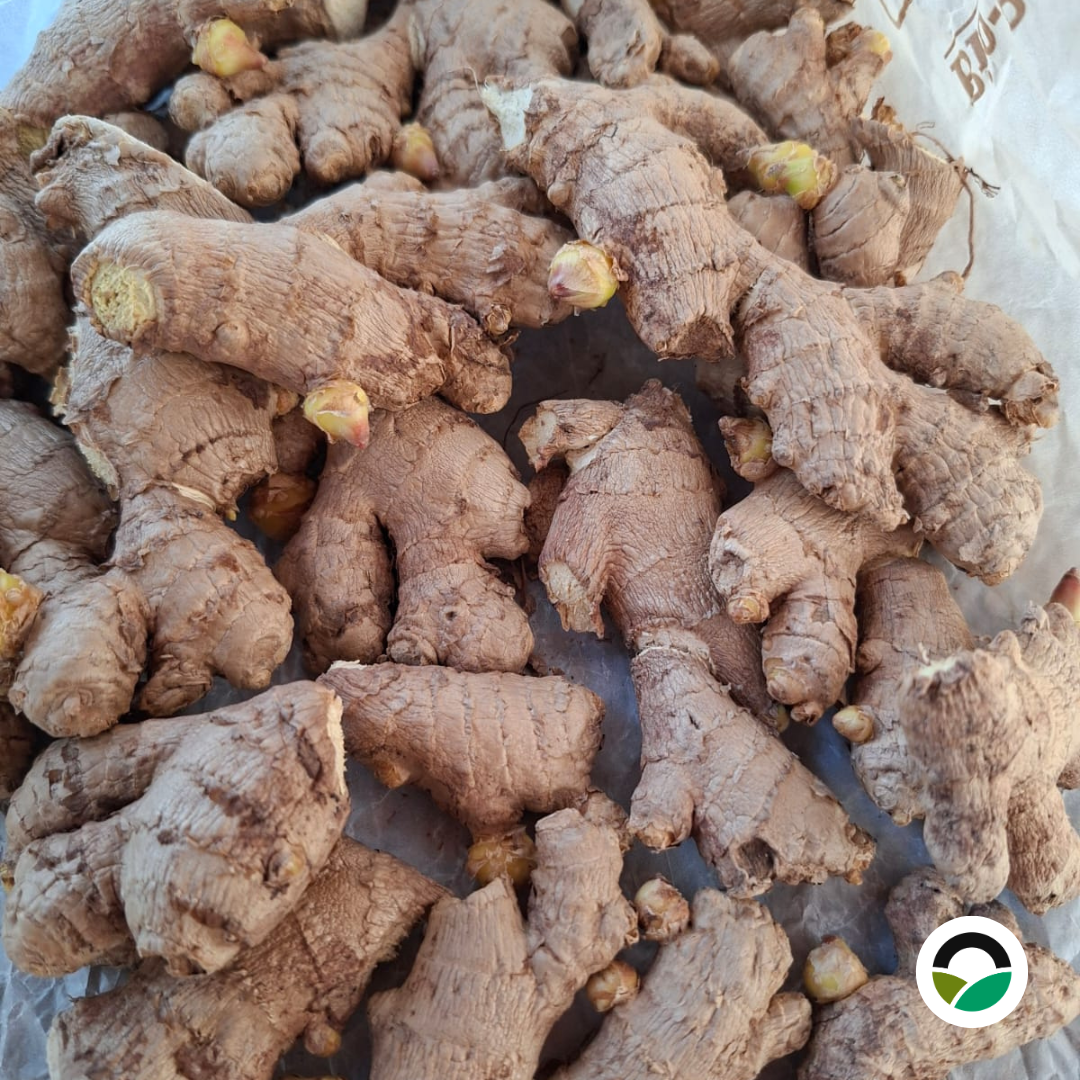
At Mavronero, organic ginger was recently planted in raised beds near the farmhouse. The planting process involved preparing rhizome sections with active growing buds, marking the beginning of a new cultivation cycle.
Ginger propagation and cultivation
Unlike many agricultural crops that are grown from seeds, ginger is propagated vegetatively through rhizomes. Rhizomes are underground stems that store nutrients and contain dormant buds capable of producing new shoots and roots.
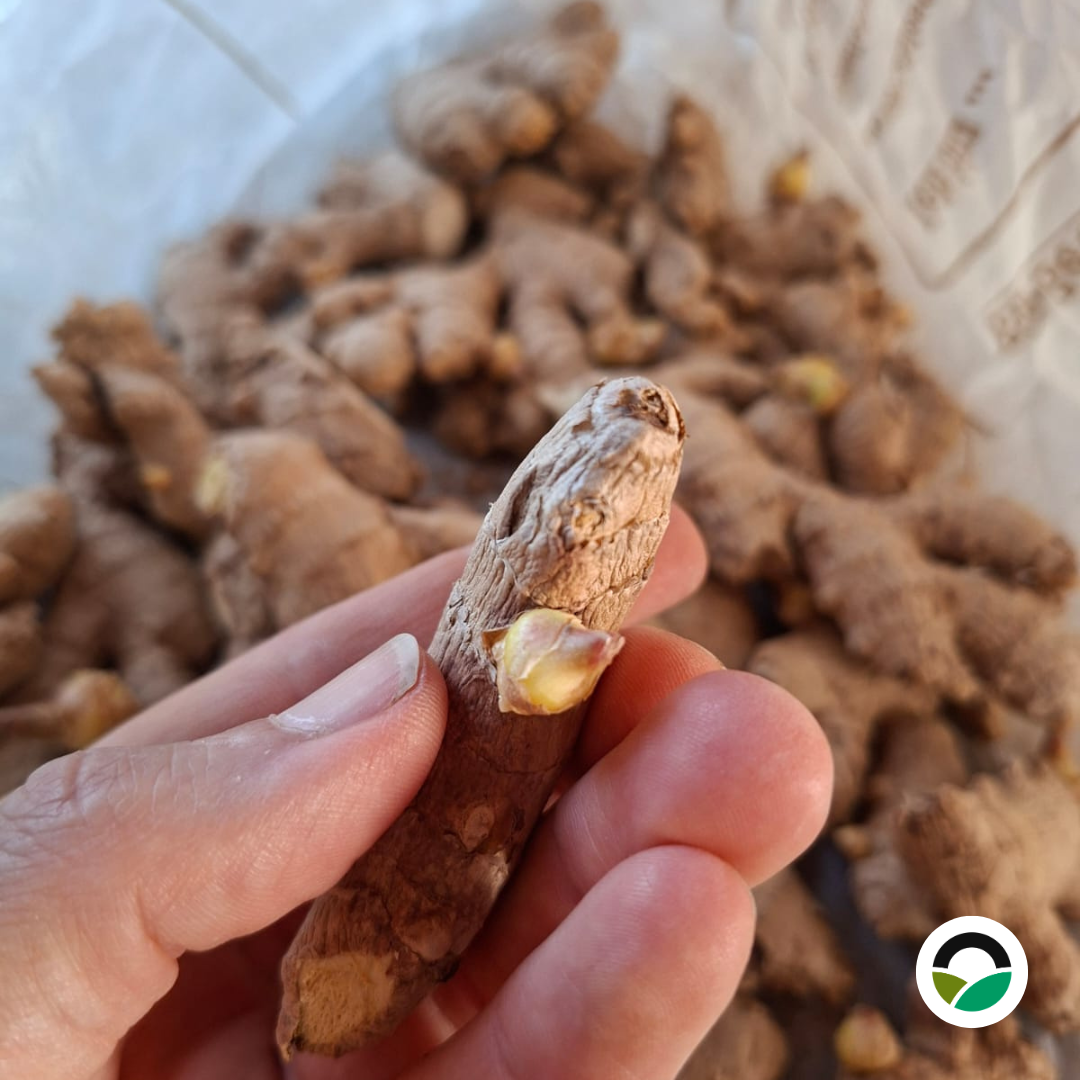
Before planting, mature rhizomes are commonly divided into smaller sections. Each section should contain at least one healthy growing bud capable of developing into a new plant.
The planting process generally includes:
- selecting healthy rhizomes
- dividing rhizomes into smaller sections
- ensuring each section contains a viable bud
- allowing cut surfaces to dry before planting
- placing rhizomes in moist, well-drained soil
Allowing freshly cut rhizomes to dry for a short period helps reduce the risk of fungal infection and improves establishment after planting.
At Mavronero, the rhizomes were prepared using this traditional method before being planted approximately 5–10 cm below the soil surface.
Growing requirements of ginger
Ginger naturally grows in warm environments with moderate humidity and protection from intense sunlight.
Successful cultivation generally requires:
- warm temperatures
- partial shade
- regular soil moisture
- well-drained soil conditions
- protection from prolonged drought
Raised beds can provide favourable growing conditions by improving drainage and allowing better management of soil quality and moisture levels.
Under suitable conditions, new shoots typically emerge several weeks after planting and continue developing throughout the growing season.
Biological characteristics of ginger
Ginger belongs to the family Zingiberaceae, a group of flowering plants native to tropical regions of Asia.
The harvested portion of the plant is the rhizome, which serves several biological functions:
- nutrient storage
- vegetative reproduction
- seasonal survival
- production of new shoots and roots
Through vegetative propagation, new plants are genetically identical to the parent plant, allowing growers to maintain desirable characteristics across successive growing seasons.
This method of reproduction has been used for centuries and remains the primary cultivation technique for ginger worldwide.
Ecological role and agricultural value
Although ginger is primarily cultivated for food and medicinal uses, its cultivation also contributes to diversified agricultural systems.
Crop diversification can provide several benefits, including:
- increased agricultural resilience
- improved use of growing space
- greater crop diversity within food systems
- reduced dependence on a limited number of crop species
- opportunities for local food production
Diversified cultivation systems can help strengthen long-term agricultural sustainability by reducing vulnerability to environmental and market fluctuations.
Agricultural observations at Mavronero
The recent ginger planting forms part of ongoing efforts to explore a variety of crops suitable for cultivation within Mediterranean conditions.
Environmental observations at Mavronero continue documenting:
- crop establishment and development
- seasonal agricultural cycles
- plant adaptation to local conditions
- sustainable cultivation practices
- biodiversity associated with cultivated areas
Monitoring crop development from planting through harvest provides valuable insight into the productivity and adaptability of different species within Mediterranean agricultural landscapes.
Ginger cultivation and sustainable farming
Small-scale cultivation methods often rely on simple propagation techniques that have been used by farming communities for generations.
The preparation of rhizomes before planting demonstrates how traditional agricultural knowledge continues to remain relevant within contemporary farming systems.
By combining practical cultivation experience with environmental observation, farms can maintain productive growing systems while supporting long-term sustainability and local food production.
Conclusion
The planting of organic ginger (Zingiber officinale) at Mavronero marks the beginning of a new growing cycle based on vegetative propagation through rhizomes.
By dividing rhizomes with active buds and planting them in carefully prepared raised beds, growers can produce new plants using methods that have been practiced for centuries.
As the first shoots emerge in the coming weeks, ongoing observations will help document the development of this crop under Mediterranean growing conditions and contribute to a broader understanding of sustainable agricultural production.
