
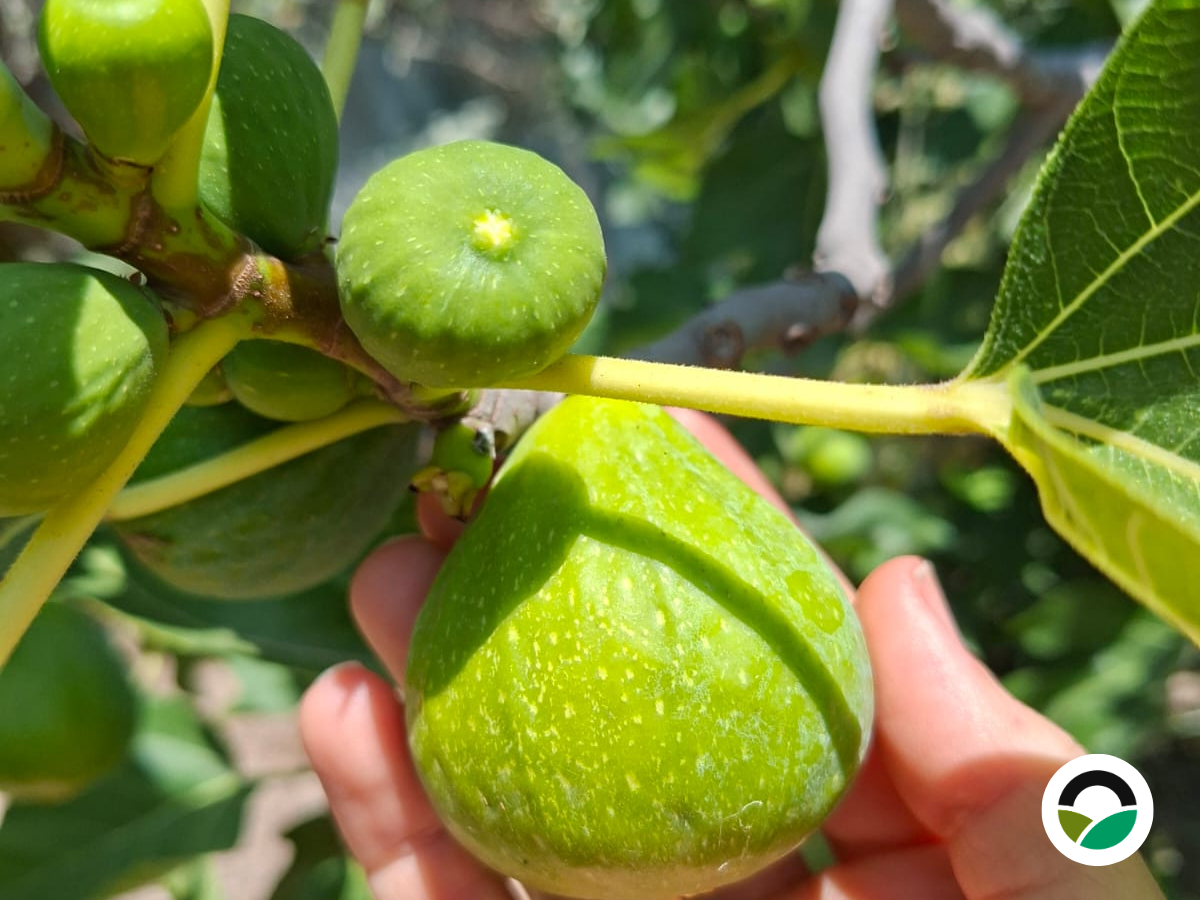
The first figs of the season have begun ripening at Mavronero, marking another stage in the annual cycle of Mediterranean fruit production.
Fig trees (Ficus carica) are among the most characteristic fruit-bearing species of the Mediterranean region. Adapted to hot, dry summers and mild winters, they have been cultivated for thousands of years and continue to play an important role in both agricultural and natural landscapes.
At Mavronero, the appearance of ripe figs signals the transition from spring growth into the productive summer season.
The fig tree in Mediterranean agriculture
The common fig (Ficus carica) is native to the Mediterranean and Western Asia and is one of the earliest fruit trees known to have been cultivated by humans.
Its long history of cultivation is linked to several characteristics:
- drought tolerance
- adaptation to poor soils
- ability to produce abundant fruit
- suitability for low-input farming systems
- importance as a traditional food source
These qualities have allowed fig trees to remain widespread throughout Mediterranean agricultural landscapes for centuries.
Fruit development and ripening
Fig fruits begin developing shortly after spring growth resumes.
During the growing season, the fruits gradually increase in size while accumulating sugars and moisture. As ripening progresses, several visible changes occur:
- enlargement of the fruit
- softening of the skin
- increased sugar concentration
- colour changes depending on the variety
- development of characteristic aroma and flavour
The fig observed at Mavronero has reached a stage suitable for harvesting and consumption, while many additional fruits remain on the tree at earlier stages of development.
This staggered ripening pattern allows harvesting to continue over several weeks.
Ecological importance of fig trees
Beyond their agricultural value, fig trees provide important ecological benefits.
Their fruits are consumed by a wide range of wildlife species, including:
- birds
- insects
- small mammals
- reptiles in some environments
The availability of ripe figs during summer helps support local food webs at a time when resources can become limited in dry Mediterranean habitats.
Mature fig trees also provide:
- shade
- nesting opportunities
- shelter for wildlife
- habitat diversity within agricultural landscapes
Figs and biodiversity
Fruit-bearing trees contribute significantly to biodiversity within working agricultural environments.
At Mavronero, biodiversity observations frequently reveal interactions between cultivated plants and wildlife. Seasonal fruit production attracts different species throughout the year, creating connections between agriculture and ecosystem functioning.
The ripening of figs is therefore not only an agricultural event but also part of a broader ecological process that supports the farm’s diverse biological community.
Seasonal observations at Mavronero
Environmental monitoring at Mavronero continues documenting seasonal changes across the farm.
Current observations include:
- ripening figs
- developing carob pods
- flowering vegetables
- maturing tomatoes
- active pollinator populations
- seasonal insect activity
Together, these observations help illustrate the dynamic nature of Mediterranean farming systems, where multiple stages of growth and productivity occur simultaneously.
Traditional value of figs
Throughout the Mediterranean, figs have long been valued as a nutritious and easily preserved food.
Historically they were:
- eaten fresh during summer
- dried for long-term storage
- used in traditional recipes
- traded locally between communities
Many traditional farming landscapes still contain mature fig trees that continue producing fruit decades after planting.
Their persistence reflects both their agricultural usefulness and their cultural importance within Mediterranean rural life.
Traditional Mediterranean uses and recipes
For thousands of years, figs have been an important part of Mediterranean diets. Their natural sweetness, nutritional value, and ability to be preserved have made them a staple food in rural communities across the region.
Fresh figs are commonly eaten directly from the tree during the summer harvest season, while surplus fruits are often dried for consumption throughout the year.
Traditional fig-based recipes include:
- fresh figs with local cheeses
- dried figs with nuts and honey
- fig jam and preserves
- fig cakes and pastries
- breads containing dried figs
- salads with figs, olive oil, and herbs
- traditional Mediterranean desserts
- homemade fig syrup
In Cyprus and other Mediterranean countries, ripe figs are often enjoyed as a simple seasonal snack, highlighting the fruit’s natural flavour without extensive preparation.
The harvest of fresh figs remains a seasonal tradition that connects modern agriculture with centuries of Mediterranean food culture.
Conclusion
The first ripe figs of the season at Mavronero mark an important moment in the annual agricultural cycle.
As fruits continue to mature over the coming weeks, the fig trees will provide food for both people and wildlife while contributing to the biodiversity and productivity of the farm.
Observations such as these help document the seasonal rhythms of Mediterranean agriculture and the ecological relationships that connect cultivation, harvest, and biodiversity.
