
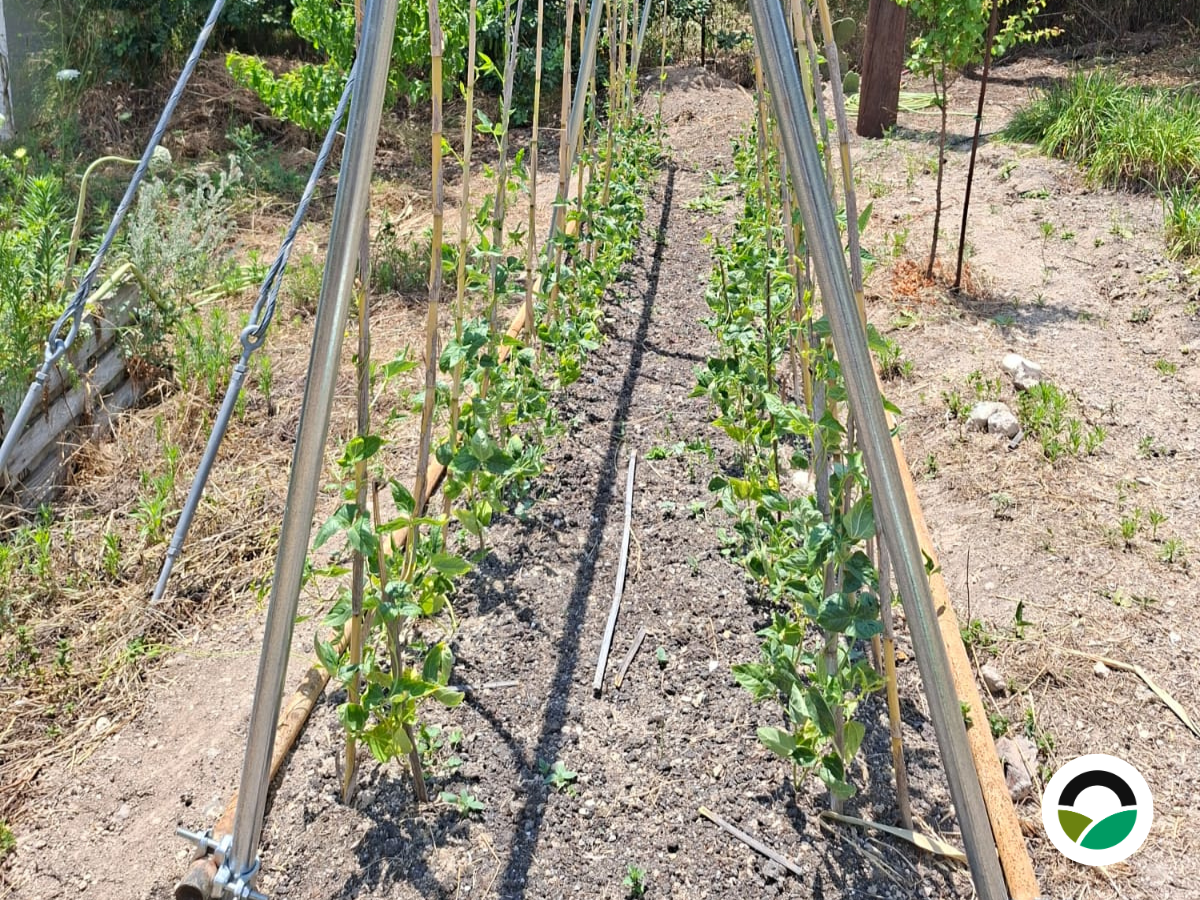
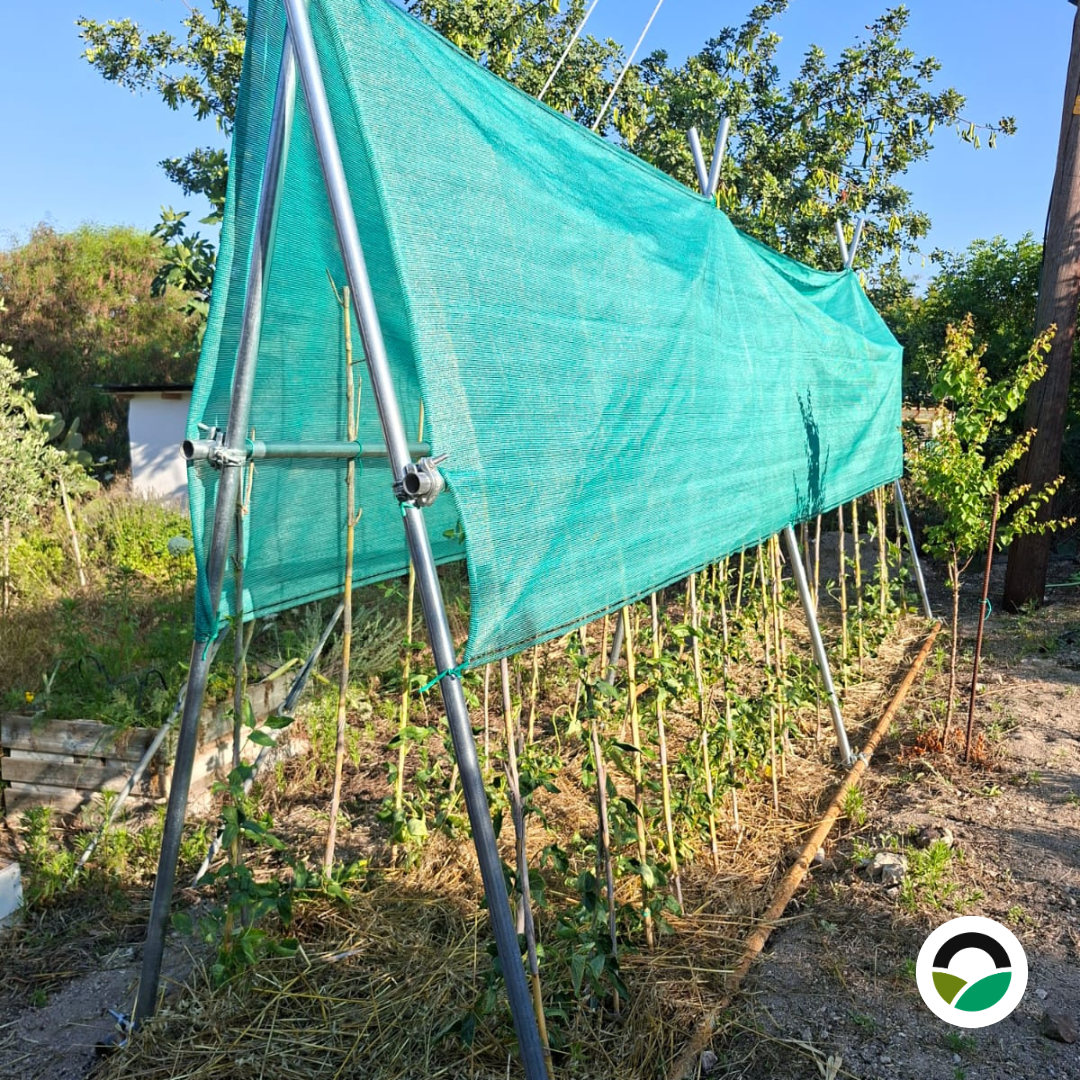
A new shade structure has recently been installed over the yard long bean bed at the Mavronero farmhouse.
The installation forms part of ongoing efforts to help crops adapt to Mediterranean summer conditions, where high temperatures, strong sunlight, and increased water demand can place additional stress on vegetable production.
Combined with mulching and vertical supports, the new shade net aims to create a more favourable growing environment during the hottest months of the year.
Supporting crops during summer
Yard long beans are warm-season plants that generally perform well in high temperatures. However, prolonged periods of intense sunlight and heat can increase water loss and place stress on young plants.
To help improve growing conditions, several measures have been implemented:
- installation of a vertical support structure
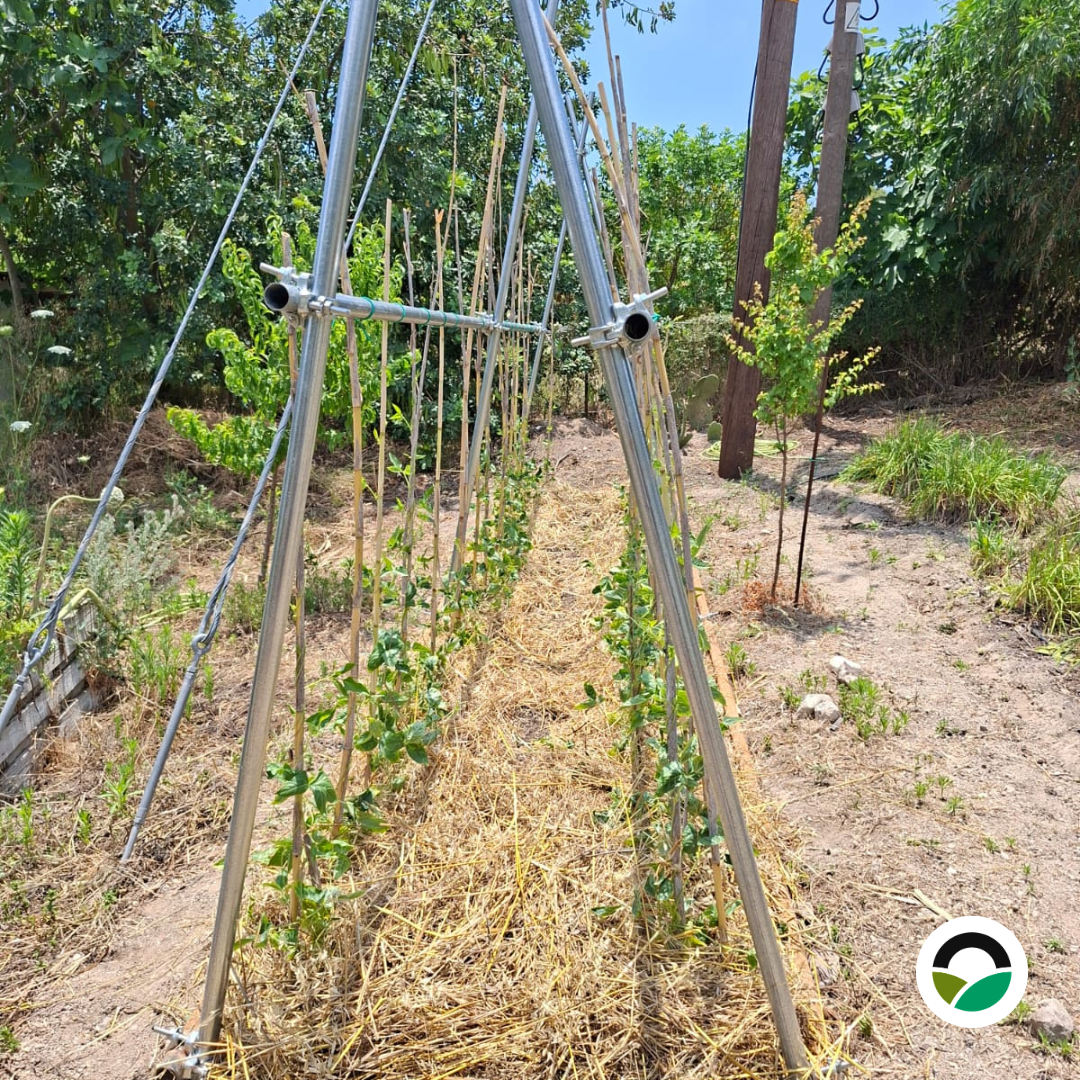
- application of straw mulch
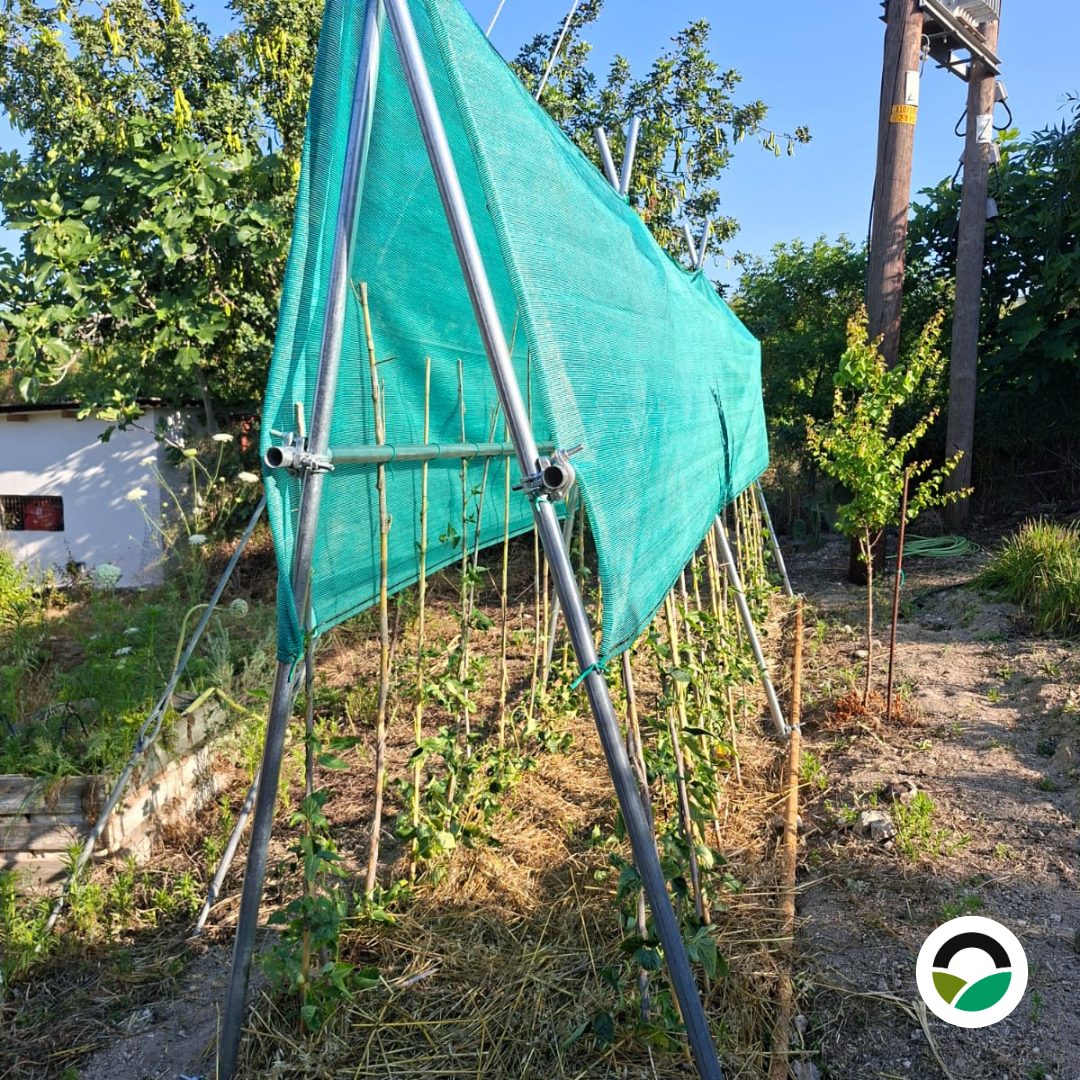
- addition of overhead shade netting
Together, these interventions help create a more stable microclimate around the crop.
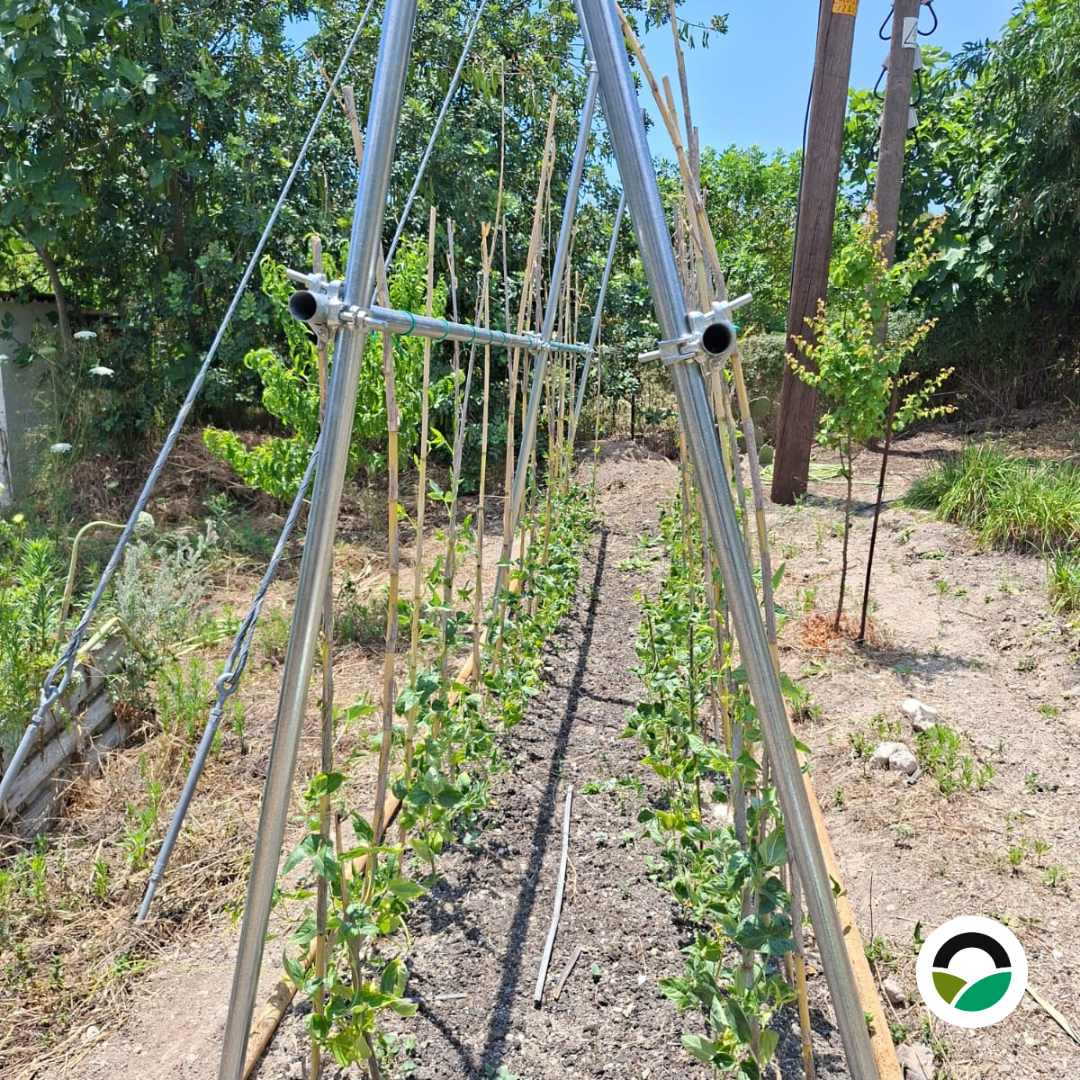
Benefits of mulching
The bed has been covered with straw mulch, providing several practical benefits:
- reduced soil moisture loss
- lower soil surface temperatures
- suppression of competing weeds
- gradual addition of organic matter
Mulching is widely used in sustainable farming systems to improve water efficiency during dry periods.
The role of shade netting
The most recent addition has been the installation of shade netting above the crop.
Partial shading can help:
- reduce heat stress
- lower evaporation rates
- protect plants during extreme temperature events
- improve overall growing conditions
Shade structures are increasingly used in Mediterranean agriculture as farmers adapt to warmer and drier growing seasons.
Conclusion
The installation of a shade structure over the yard long bean bed represents a simple but important adaptation to summer growing conditions.
Together with mulching and plant supports, the new setup is designed to reduce environmental stress and support healthy crop development throughout the season.
As temperatures continue to rise across the Mediterranean region, small-scale measures such as these can play an important role in improving crop resilience and sustainable food production.
