
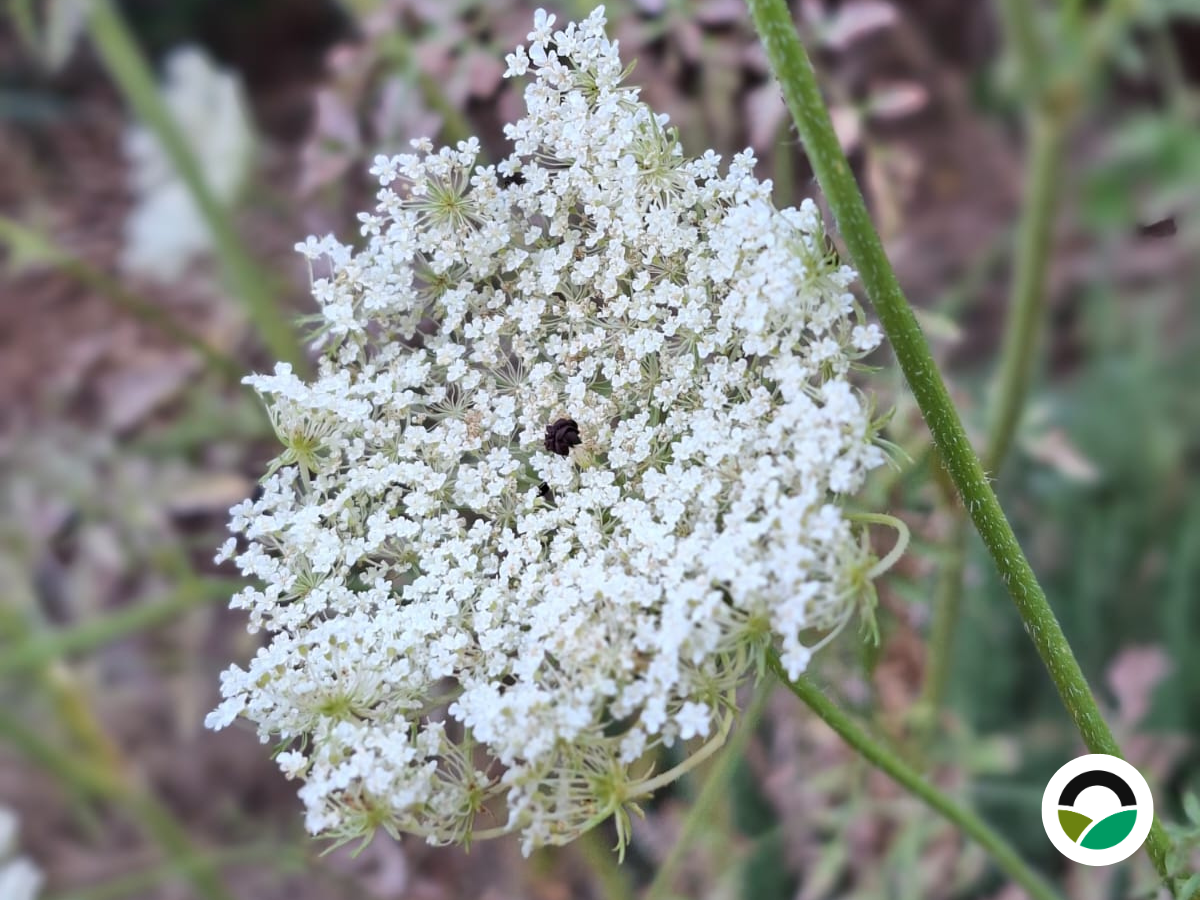
Even during the hottest months of the Mediterranean summer, when many wild plants have already completed their life cycle, wild carrot (Daucus carota) continues to flower.
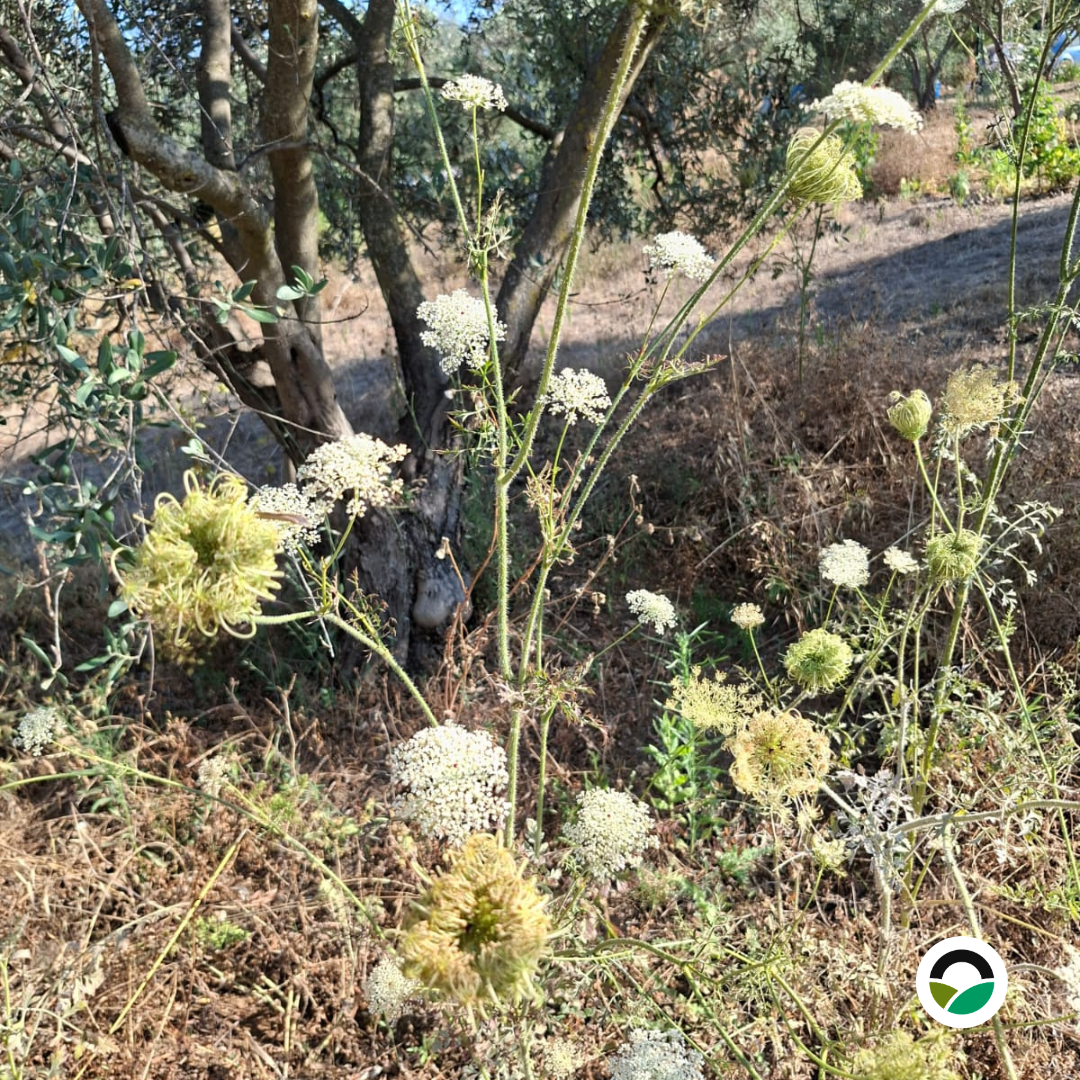
At Mavronero Farm it is among the few remaining flowering species, providing nectar and pollen for insects when floral resources become increasingly scarce.
Although often overlooked, this native plant plays an important ecological role while also having a long history of traditional medicinal use.
What is wild carrot?
Wild carrot (Daucus carota) belongs to the carrot family (Apiaceae), one of the most important plant families in Mediterranean ecosystems.
It is the wild ancestor of the cultivated carrot found in kitchens around the world.
The species is easily recognised by:
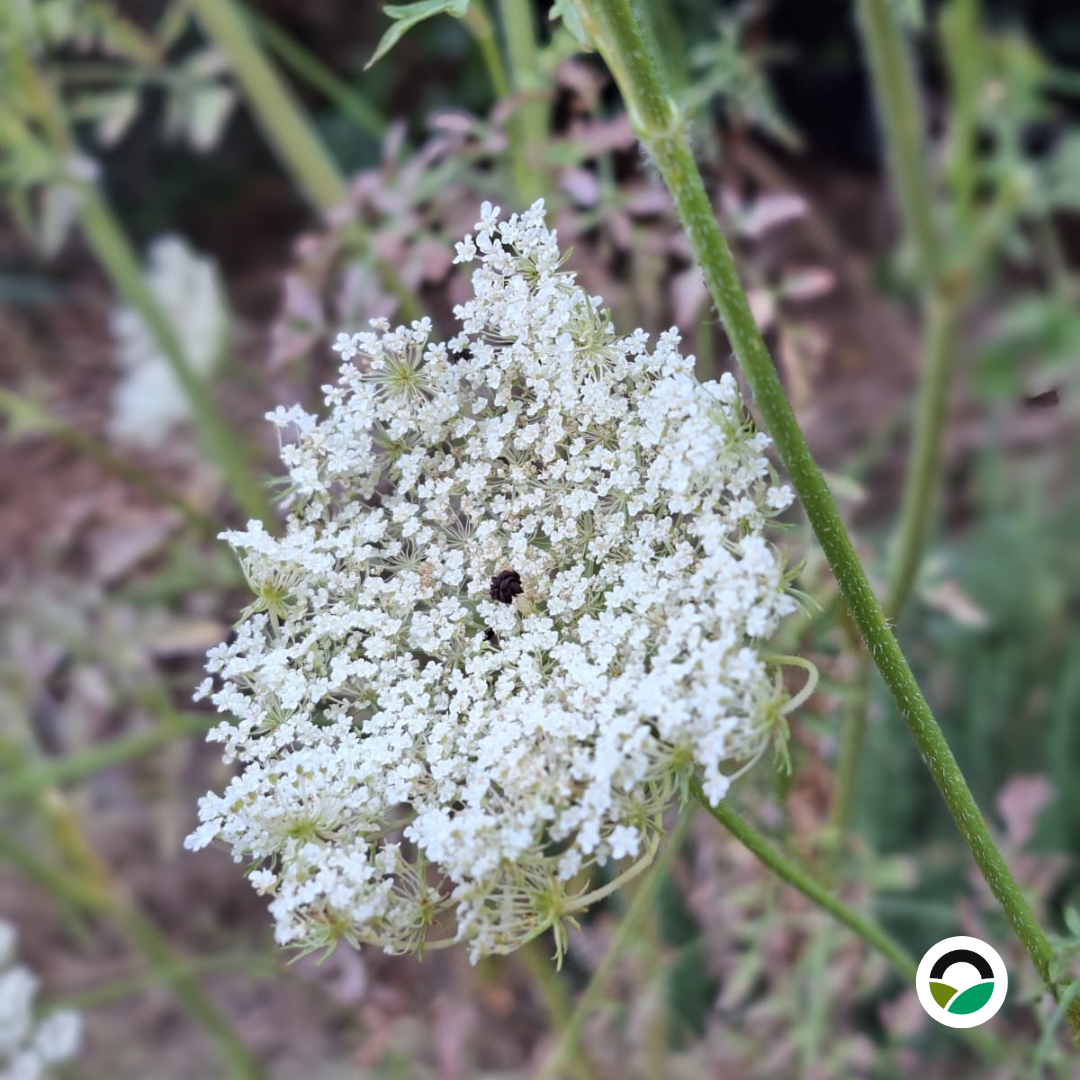
- delicate white umbrella-shaped flower heads (umbels)
- finely divided feathery leaves
- tall slender stems
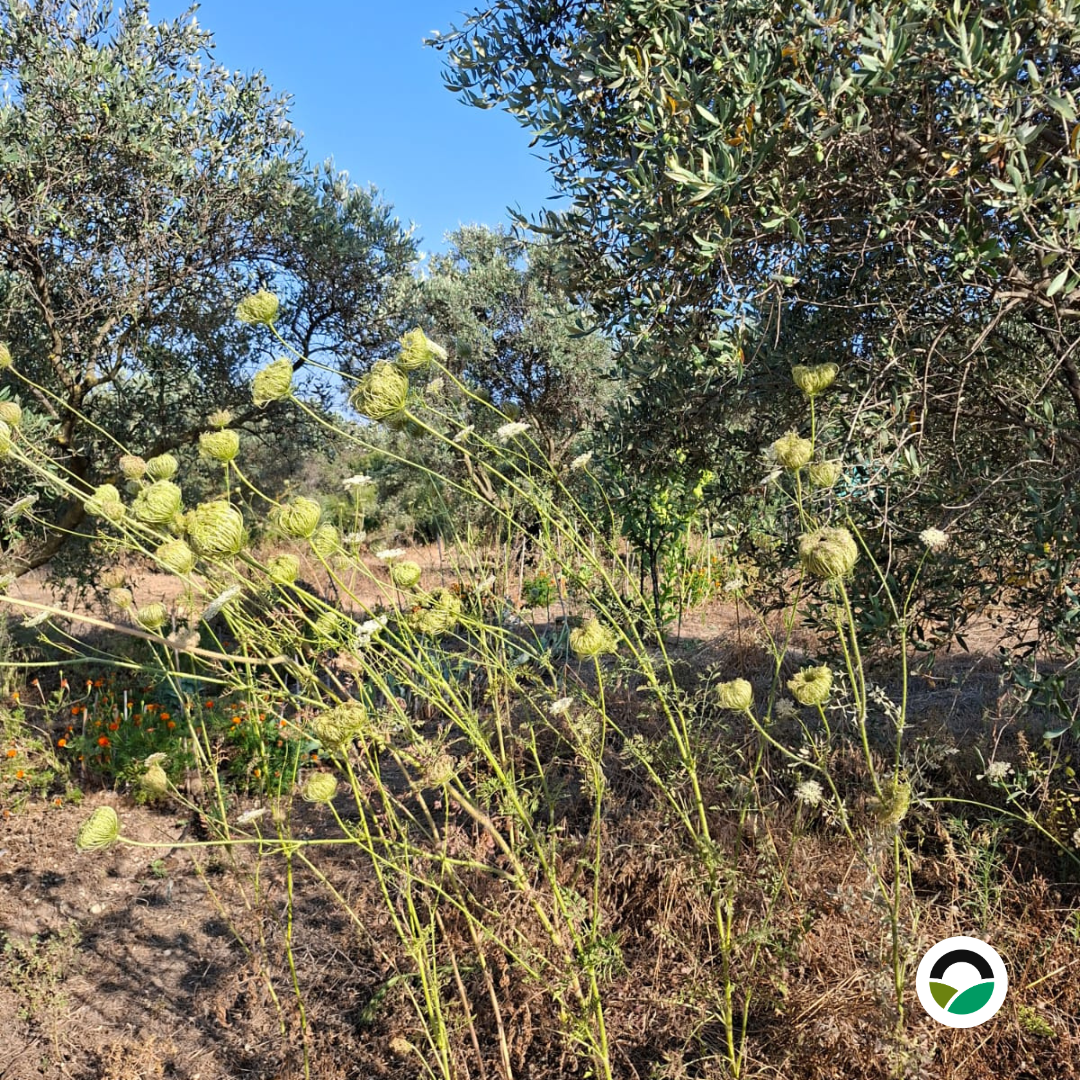
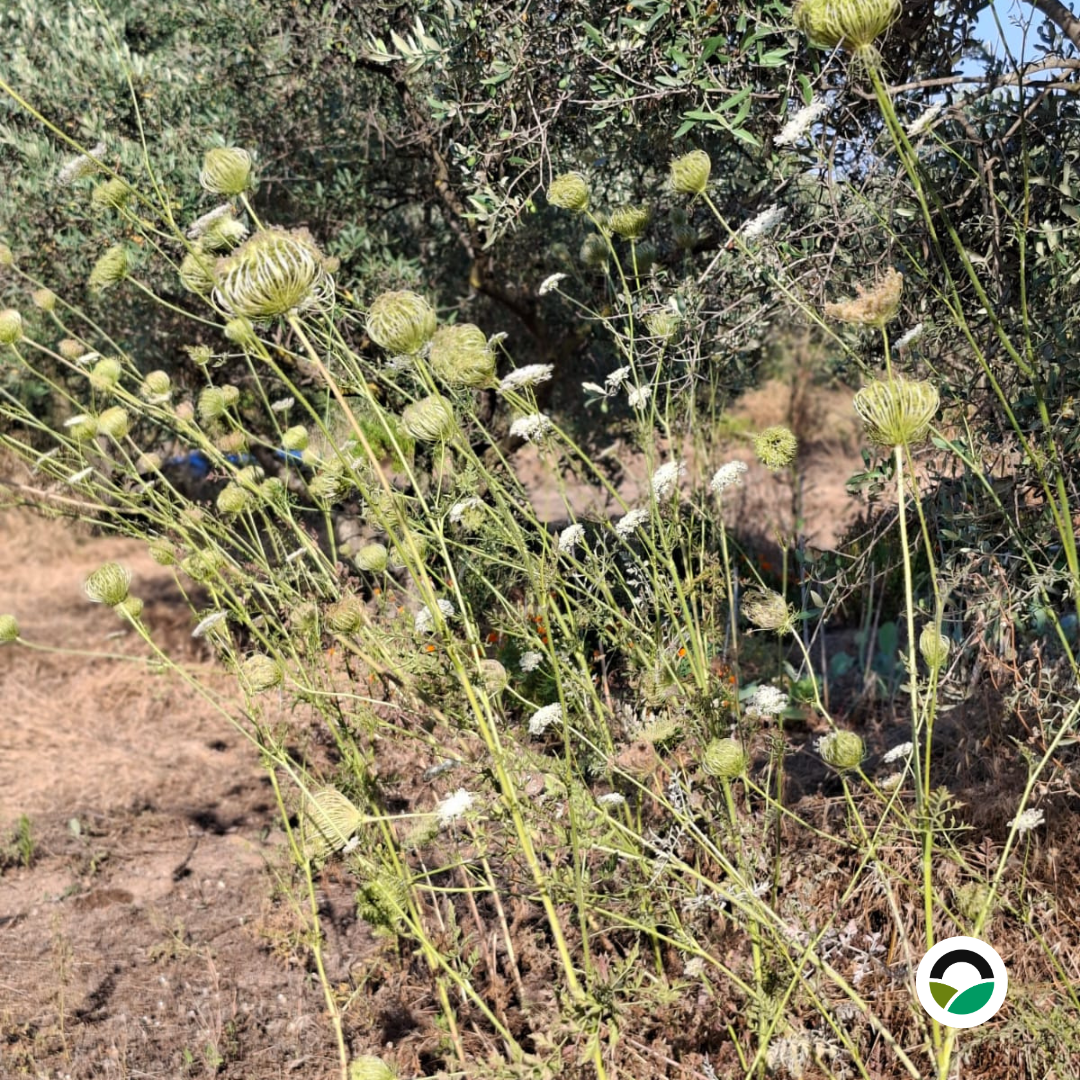
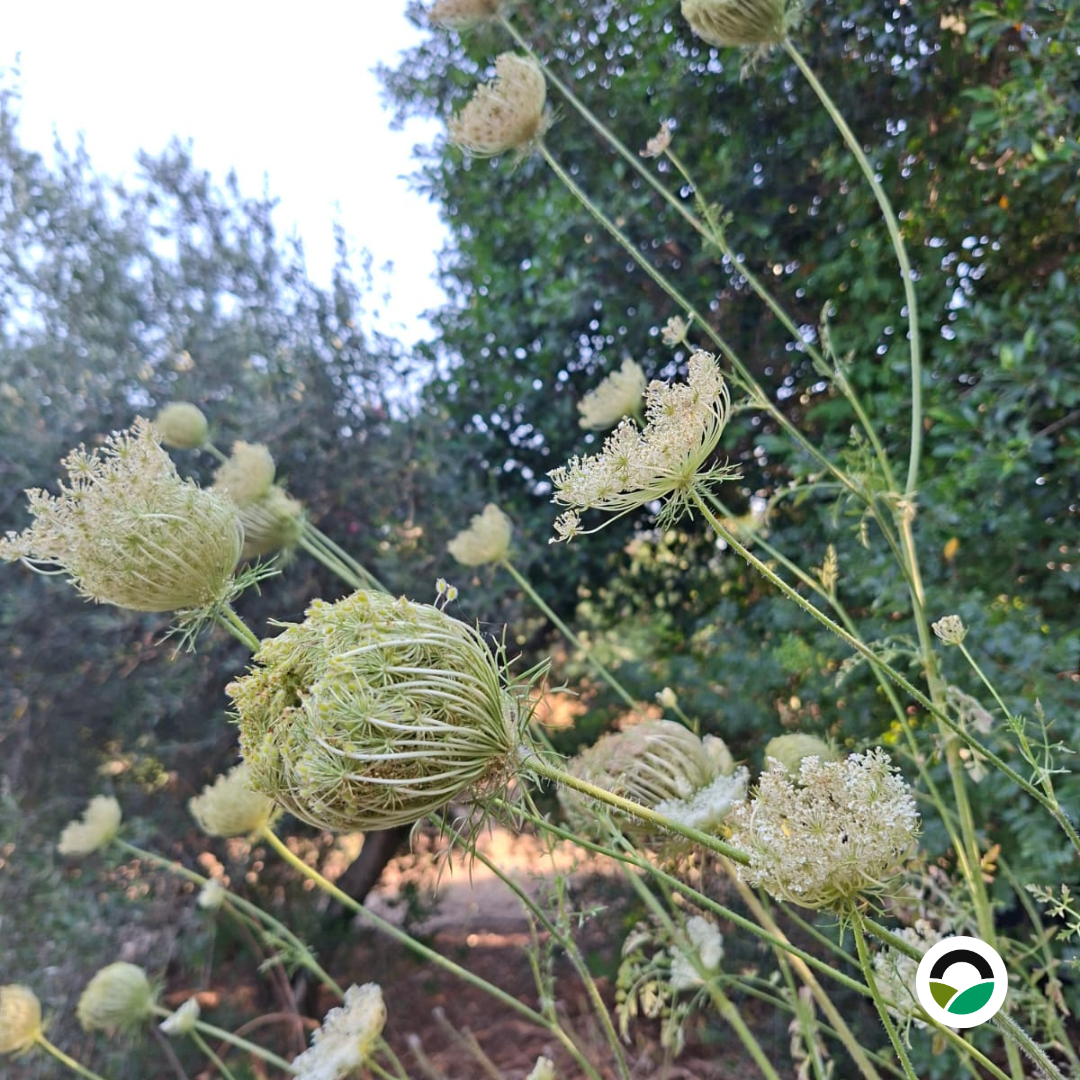
- distinctive seed heads that curl into a bird’s nest shape after flowering
- a long taproot
Where does it grow?
Wild carrot is widely distributed throughout Europe, North Africa and western Asia.
In Cyprus it commonly grows in:
- olive groves
- field margins
- river terraces
- abandoned farmland
- dry grasslands
- roadsides
- open Mediterranean scrub
It thrives in sunny locations with well-drained soils and tolerates long periods of summer drought.
An important plant for pollinators
Each flower head contains hundreds of tiny individual flowers that bloom together.
These attract a remarkable diversity of insects including:
- honey bees
- solitary bees
- hoverflies
- butterflies
- beetles
- parasitic wasps
- numerous native pollinators
Because it flowers well into summer, wild carrot becomes an especially valuable food source when many other wildflowers have already disappeared.
Traditional medicinal uses
Wild carrot has been used in traditional herbal medicine for centuries.
Historically, different parts of the plant have been used, including:
- the root
- the seeds
- the leaves
Its seeds contain aromatic essential oils and have traditionally been associated with digestive and diuretic herbal preparations.
Today, the plant continues to be studied for its naturally occurring bioactive compounds.
Seeds that protect the next generation
After flowering, the umbrella-shaped flower heads gradually close into a compact structure that resembles a bird’s nest.
Inside, the seeds mature before eventually being dispersed by wind, animals or passing movement.
This unusual seed head protects the developing seeds until they are ready for dispersal.
Observations at Mavronero
At Mavronero Farm, wild carrot is one of the few native plants that continues flowering during the peak of summer.
Its flowers attract a constant stream of beneficial insects, while later in the season its seeds and roots provide an opportunity to observe another important stage of its life cycle.
Species like this demonstrate how native vegetation quietly supports biodiversity even during the driest months of the year.
Why native wild plants matter
Native plants have evolved alongside local insects, birds and wildlife over thousands of years.
By preserving species such as wild carrot, Mediterranean farms provide food, shelter and breeding habitats that strengthen ecosystem resilience.
Healthy agricultural landscapes depend not only on cultivated crops but also on the wild species growing between them.
Interesting facts
- Wild carrot is the ancestor of the modern cultivated carrot.
- Each flower head contains hundreds of tiny flowers.
- The seed head curls inward after flowering, forming a “bird’s nest.”
- The taproot is white rather than orange.
- It flowers during some of the hottest weeks of the Mediterranean summer.
- Its flowers attract dozens of different insect species.
- The seeds naturally disperse during late summer and autumn.
Conclusion
Wild carrot is far more than a common roadside plant.
Its long flowering season, value for pollinators, traditional medicinal history and remarkable seed structures make it one of the Mediterranean’s most important native wildflowers.
At Mavronero, protecting plants like Daucus carota helps maintain the biodiversity that supports healthy, resilient ecosystems throughout the year.
