
Some harvests begin years before the first fruit appears.
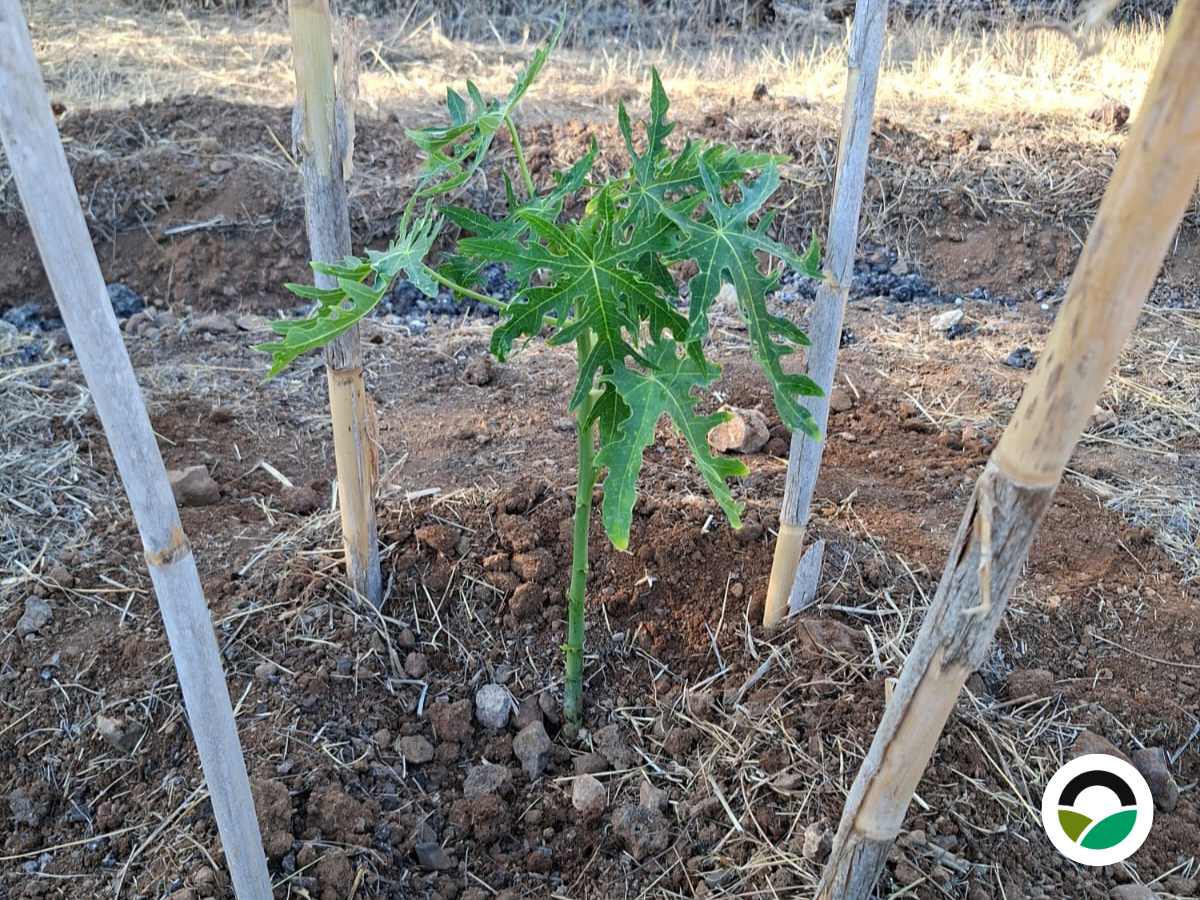
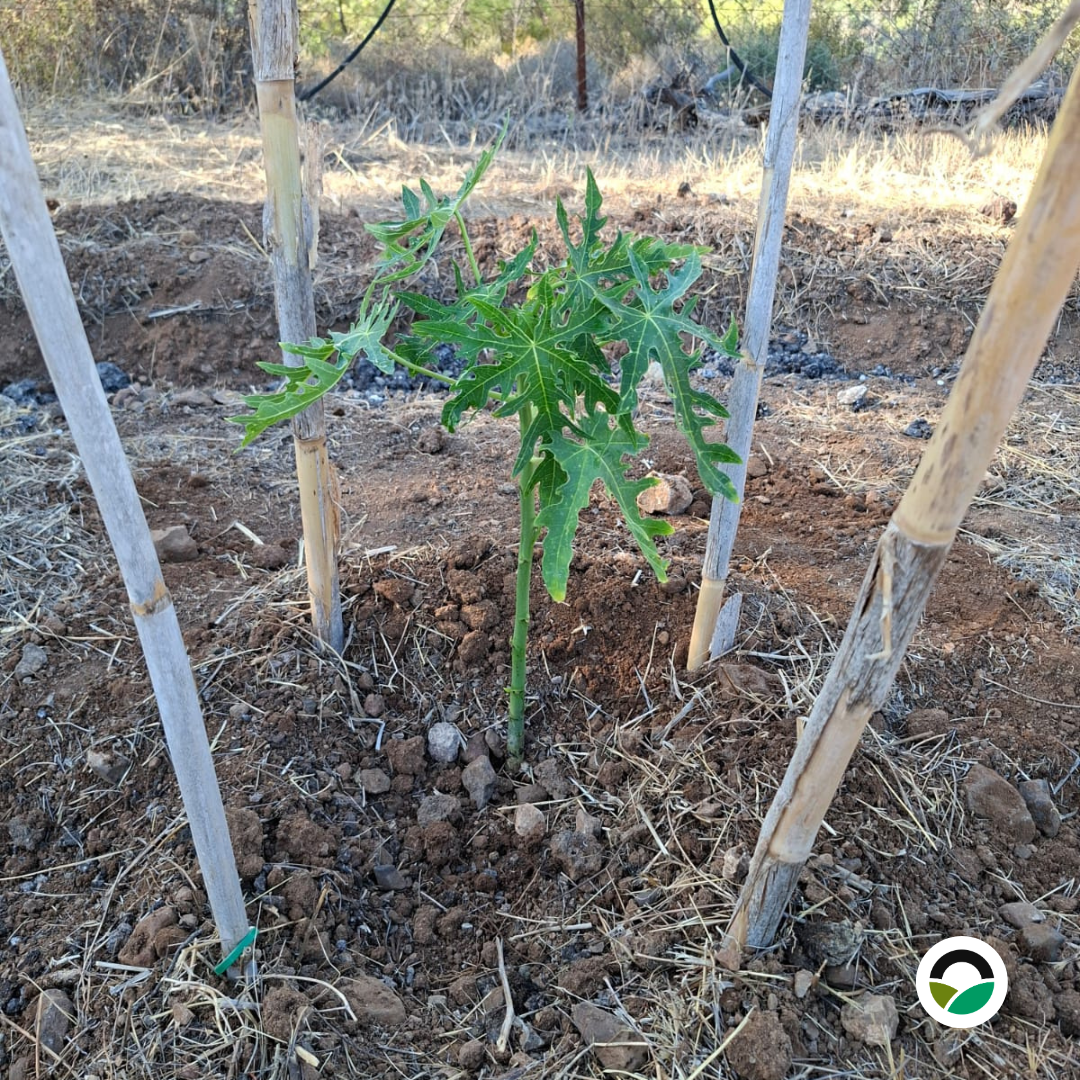
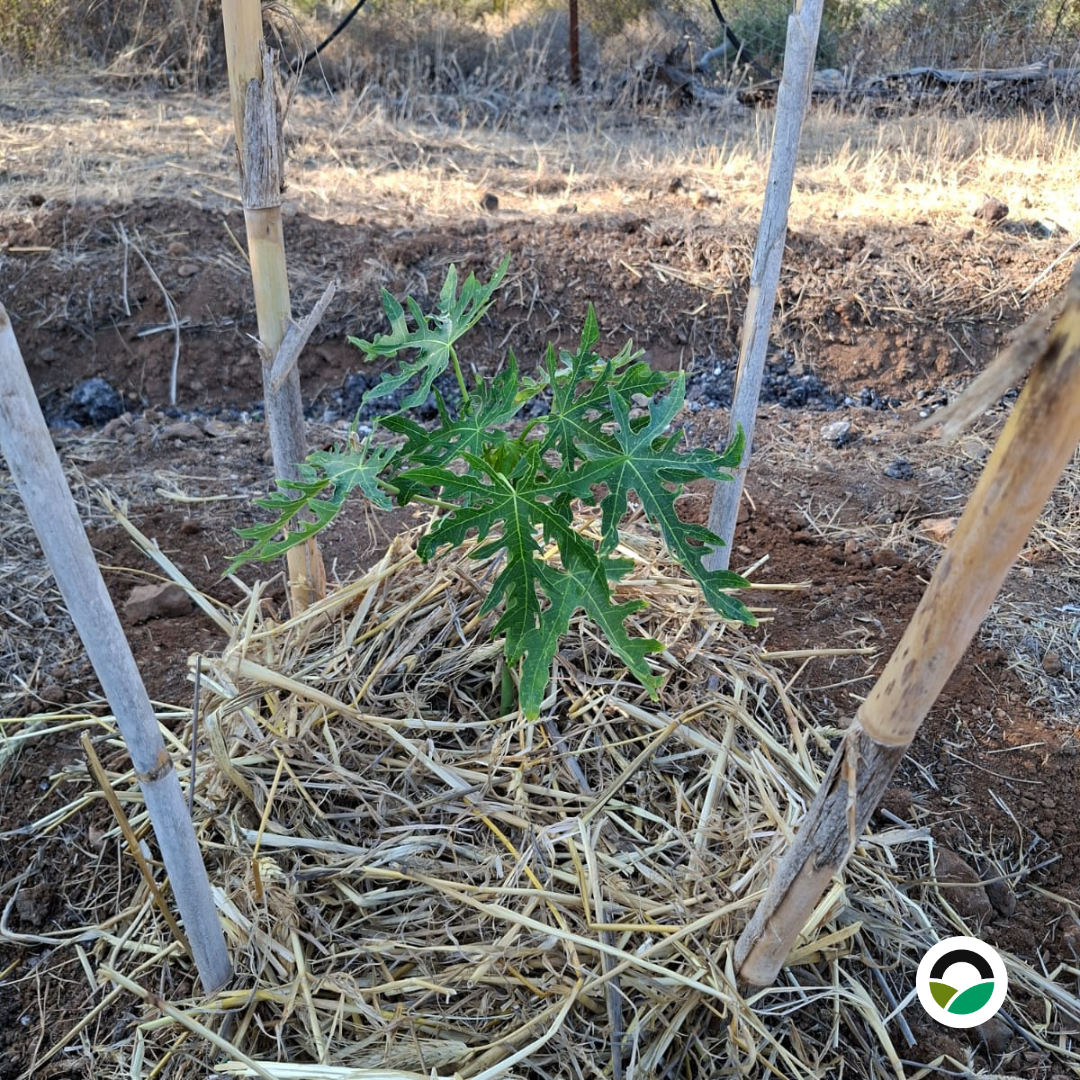
Last week, we planted five young papaya trees (Carica papaya) across two areas of Mavronero Farm: two at the Big Farm (River Terrace) and three at the Honey Moon Farm.
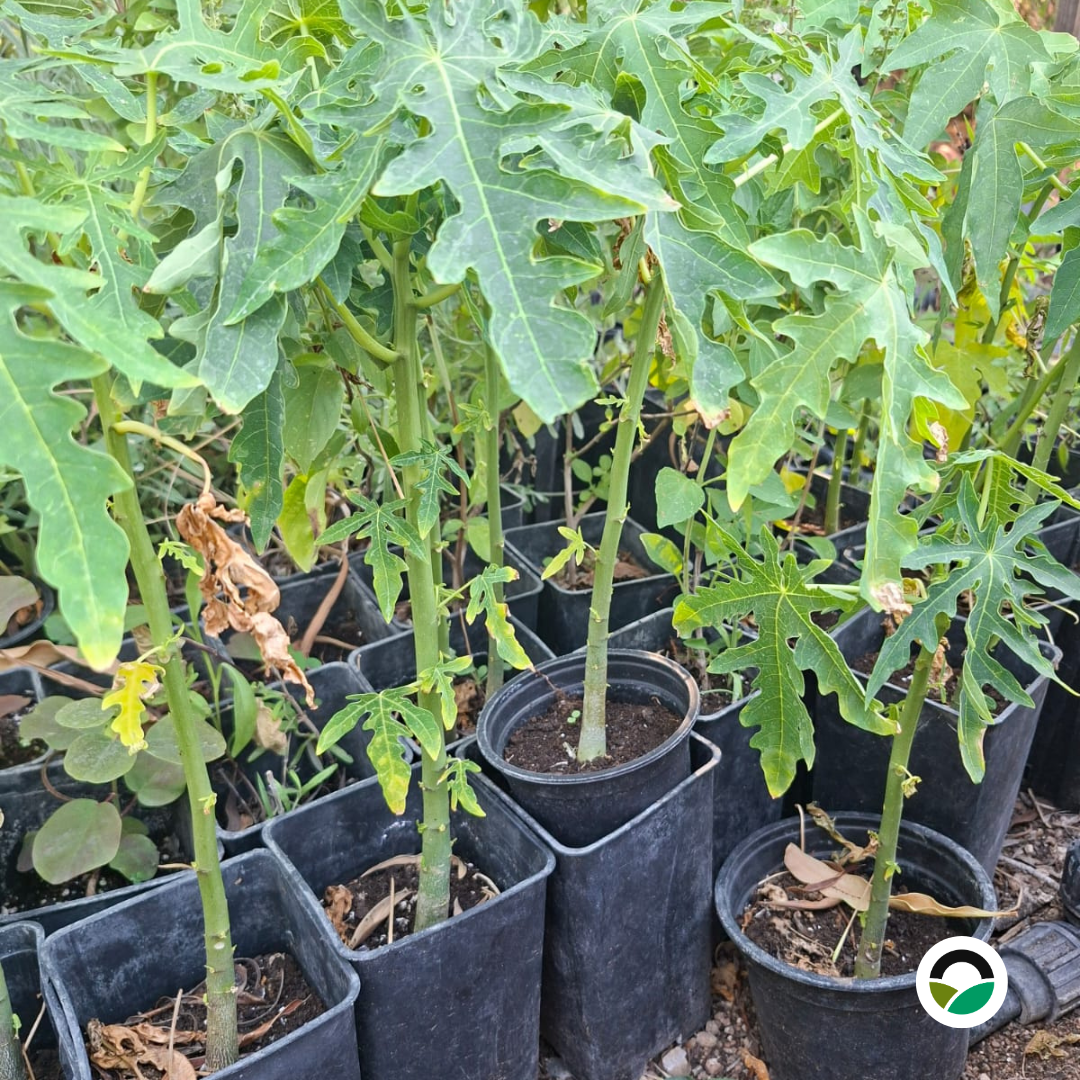
These trees were grown from seed, sown in March and carefully nurtured for several months in our farmhouse nursery before being transplanted into their permanent locations. While we may not harvest their fruit until 2027, planting them now is an investment in the future of the farm.
Growing papayas from seed
Unlike many commercial orchards that rely on purchased seedlings, these papaya trees began their journey from seed at Mavronero Farm.
Over several months they developed healthy root systems in the nursery, where they were monitored, watered and protected before being ready for field planting.
Raising young trees ourselves allows us to observe their development from the earliest stages while gradually adapting them to local growing conditions.
Helping young trees through the Mediterranean summer
Establishing young trees during Cyprus’ hot summer requires extra care.
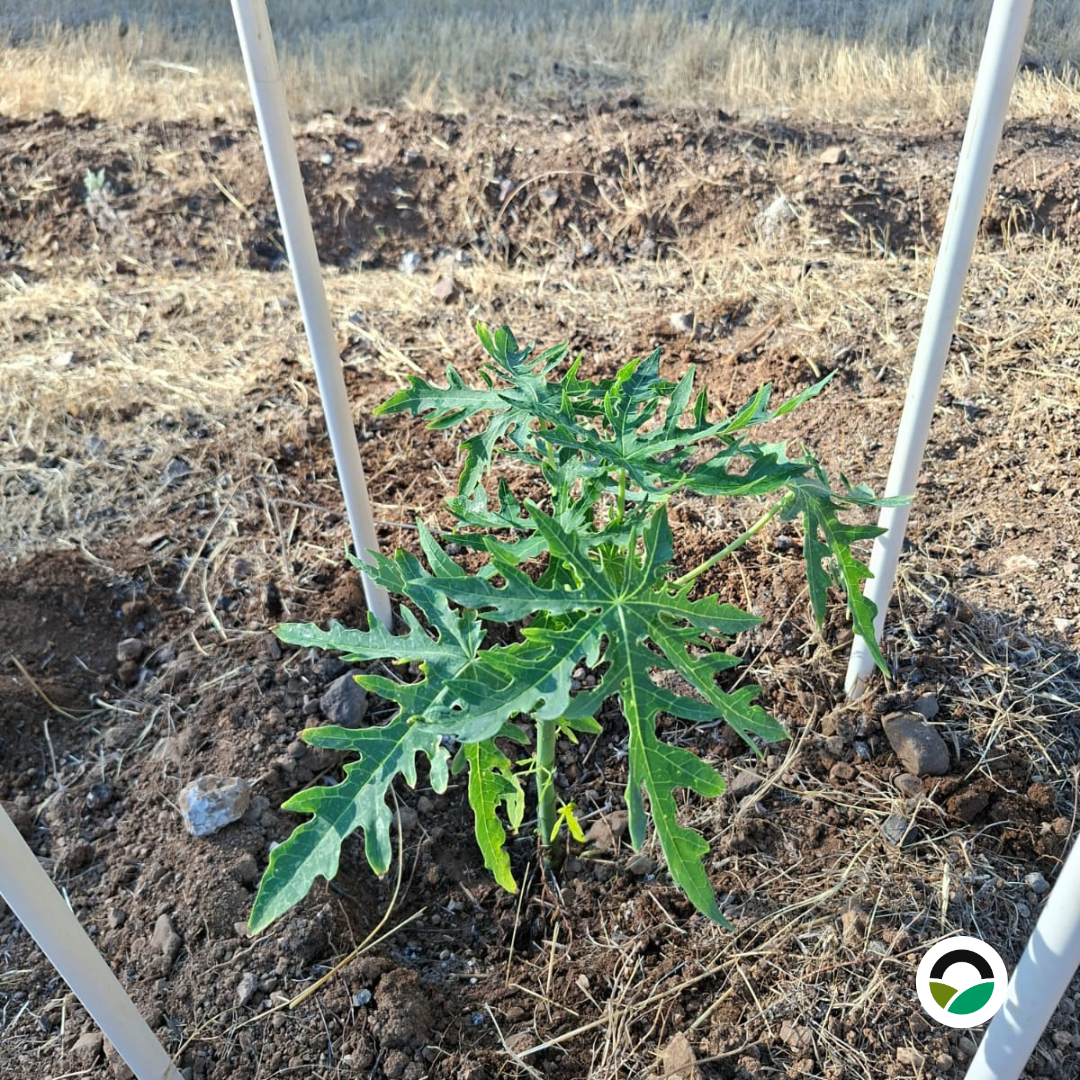
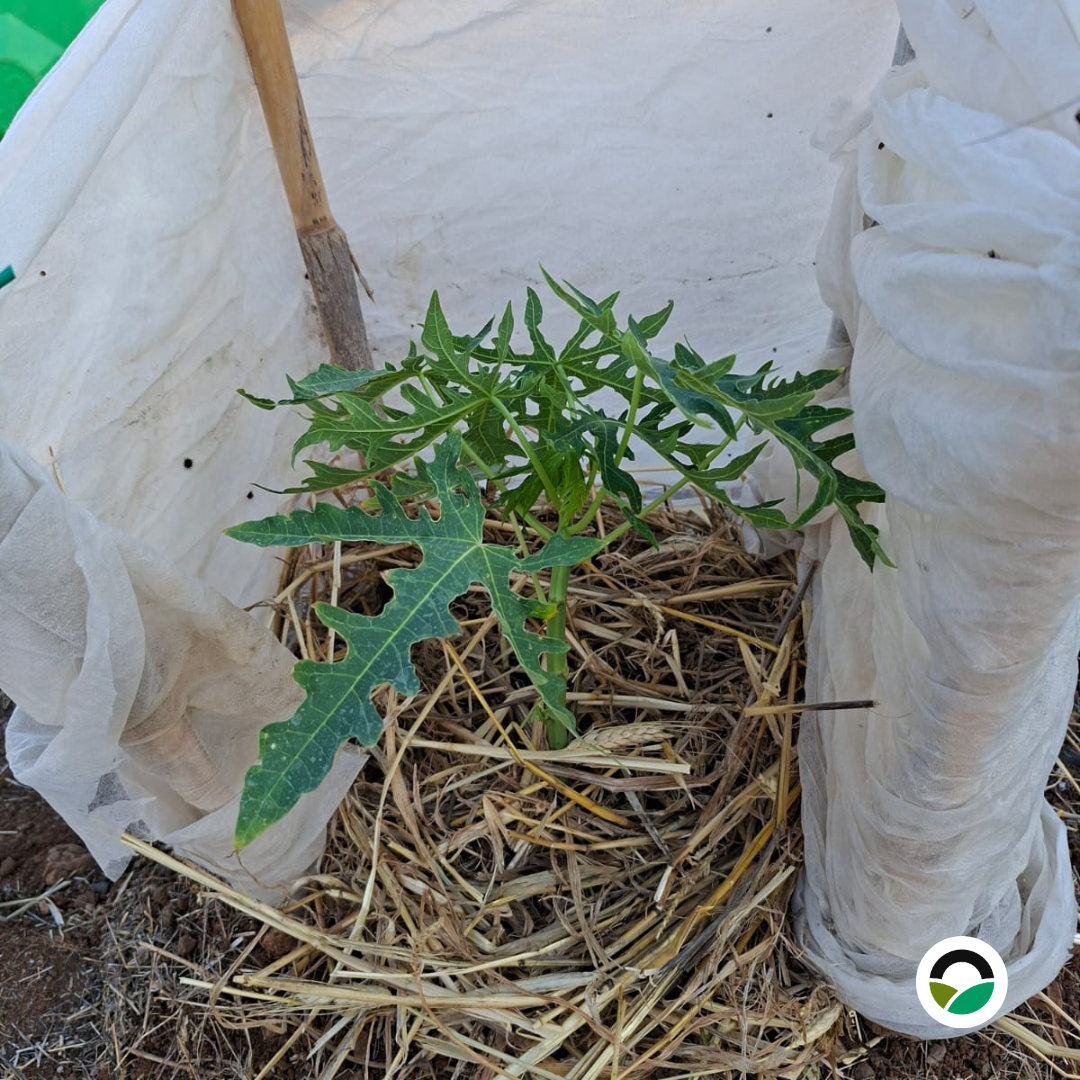
To reduce heat stress, temporary shade cloth was installed around several of the newly planted papayas, protecting their tender leaves from intense midday sunlight while they establish their roots.
Each tree was also surrounded with a thick layer of organic straw mulch. Mulching helps conserve soil moisture, moderate soil temperature, suppress weeds and gradually improve soil health as it decomposes.
These simple regenerative practices significantly improve the chances of successful establishment during the hottest weeks of the year.
Why grow papaya in Cyprus?
Papaya (Carica papaya) is a tropical fruit tree that performs well in warm, frost-free climates with long sunny seasons.
Although it requires protection during its earliest stages, once established it can produce fruit continuously under favourable conditions.
Diversifying crops with species adapted to warmer climates also helps farms become more resilient as Mediterranean weather patterns continue to change.
Observations at Mavronero
The newly planted papayas are adapting well during their first days in the field.
The combination of temporary shade, mulch and careful irrigation helps minimise transplant shock while encouraging healthy root development beneath the soil surface.
Over the coming months, these trees will continue to be monitored as they establish themselves. With a little patience—and a bit of luck—we hope to enjoy our first home-grown papayas in 2027. 🤞
Growing for the future
Regenerative farming is built on long-term thinking.
Every tree planted today contributes to future harvests, healthier soils, greater biodiversity and increased resilience for the entire farm ecosystem.
Planting fruit trees is not only about producing food—it’s about creating landscapes that will continue to thrive for years to come.
Interesting facts
Papaya (Carica papaya)
- Native to tropical Central America but now cultivated throughout tropical and subtropical regions worldwide.
- Papaya can begin producing fruit as early as 9–18 months after planting under favourable conditions.
- The fruit is naturally rich in vitamin C, vitamin A, fibre and antioxidants.
- Papaya contains papain, a natural enzyme widely used to aid digestion.
- Organic mulch helps young papaya trees retain moisture and establish stronger root systems during hot weather.
Conclusion
Planting these five young papaya trees is another step in the long-term development of Mavronero Farm.
From seeds sown in March to carefully protected young trees growing in the field, this project reflects the patience, observation and regenerative practices that guide our work. With healthy soils, thoughtful care and a little time, today’s seedlings may become tomorrow’s harvest.
Sources
- Royal Botanic Gardens, Kew – Plants of the World Online (Carica papaya)
- FAO – Good practices for sustainable fruit production
- University of Florida IFAS Extension – Papaya Growing Guide
- CABI Digital Library – Carica papaya Crop Information
- World Agroforestry (ICRAF) – Tree management in tropical agroforestry systems
