
Young trees require the right conditions to establish strong root systems and thrive in the years ahead. At Mavronero, every planting is an opportunity to improve biodiversity, experiment with new species and apply regenerative farming practices that support long-term resilience.
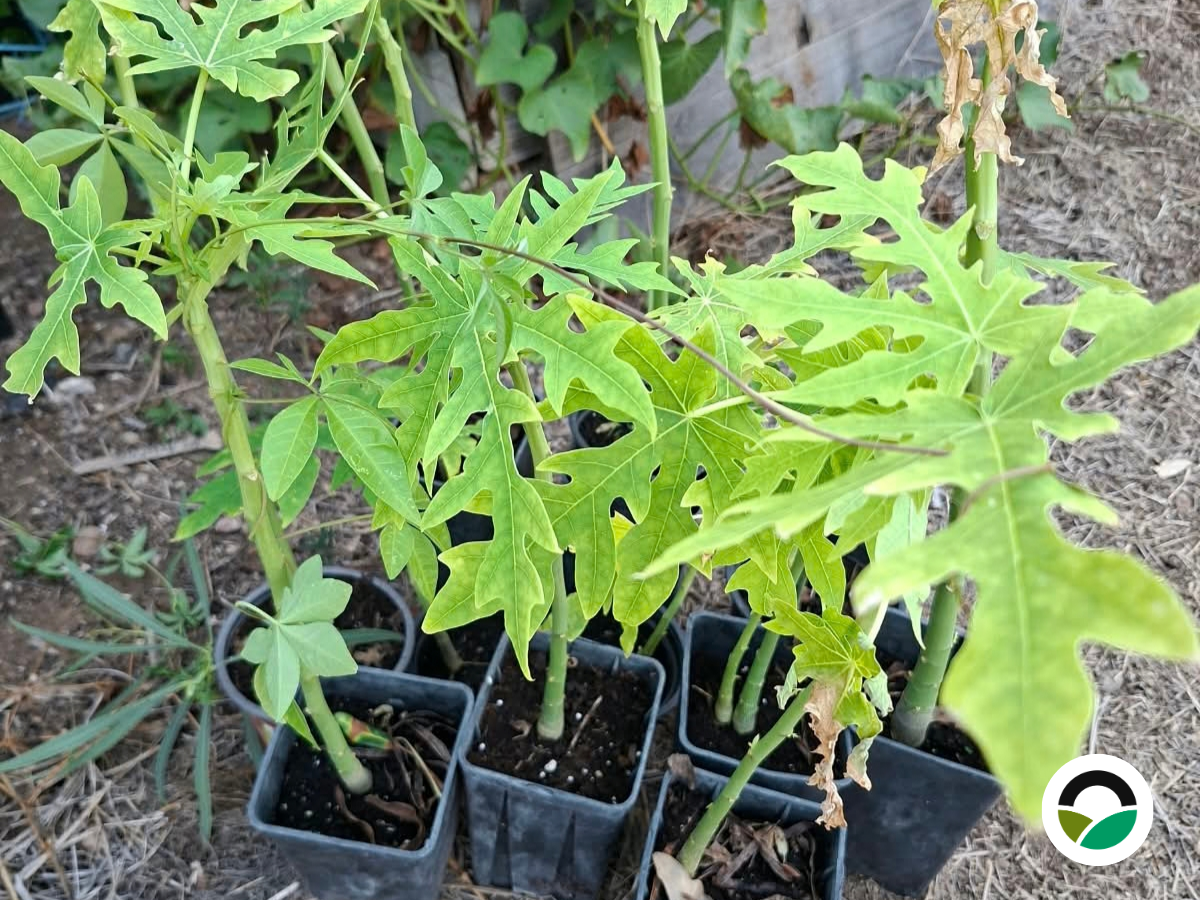
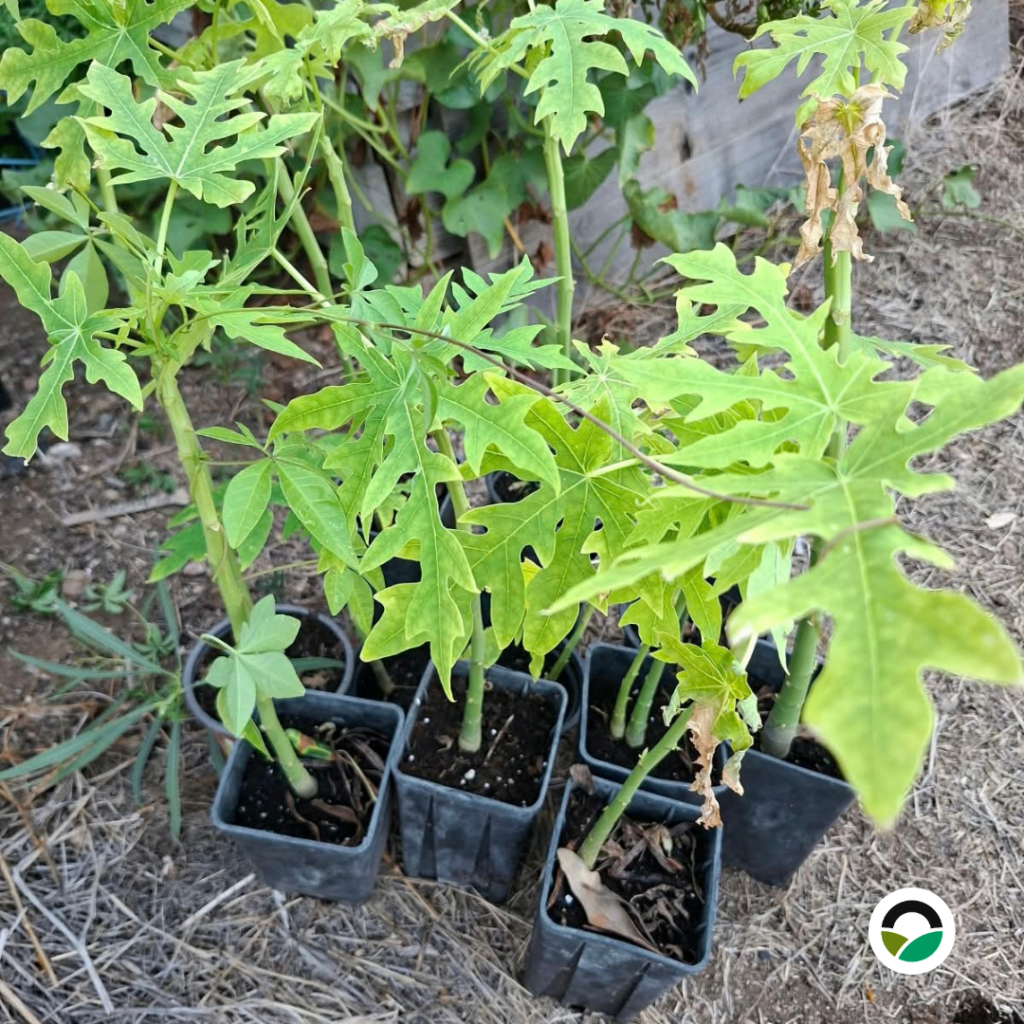
Recently, several young papaya trees that had been growing in our farmhouse nursery were ready for the next stage of their journey. While they had been carefully looked after, they had outgrown their nursery pots and needed more space to continue developing.
Why transplant papaya trees?
Papaya (Carica papaya) is a fast-growing tropical fruit tree that develops best when planted in well-drained, fertile soils with plenty of sunlight. Young trees can remain in containers for their first months, but leaving them in small pots for too long can restrict root development and reduce plant vigour.
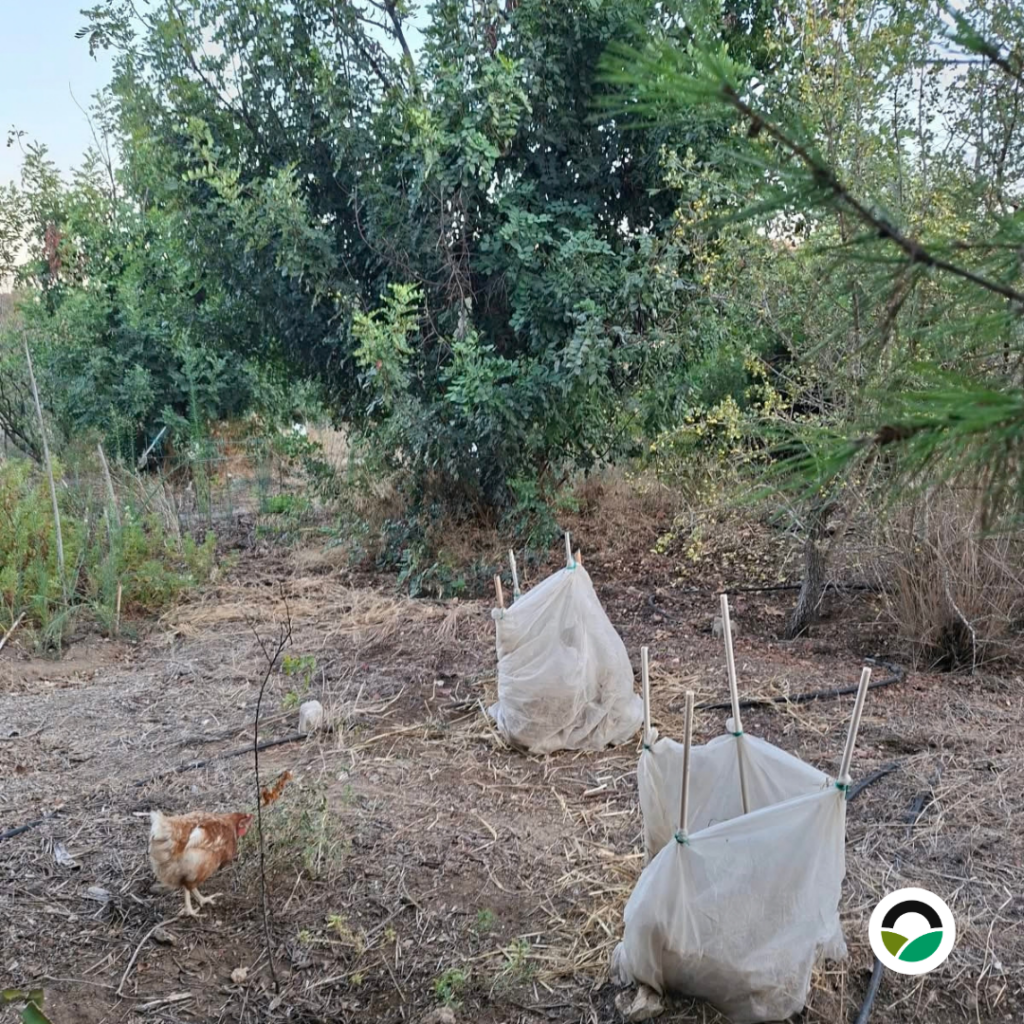
To give them the best possible start, five young papaya trees were transplanted into the ground around the farmhouse. Several others were moved into larger containers, where they will likely spend their first winter inside a greenhouse. Keeping these additional plants provides a backup in case the newly planted trees are affected by colder winter nights.
Preparing the planting site
Successful tree establishment depends on careful preparation as much as the planting itself.
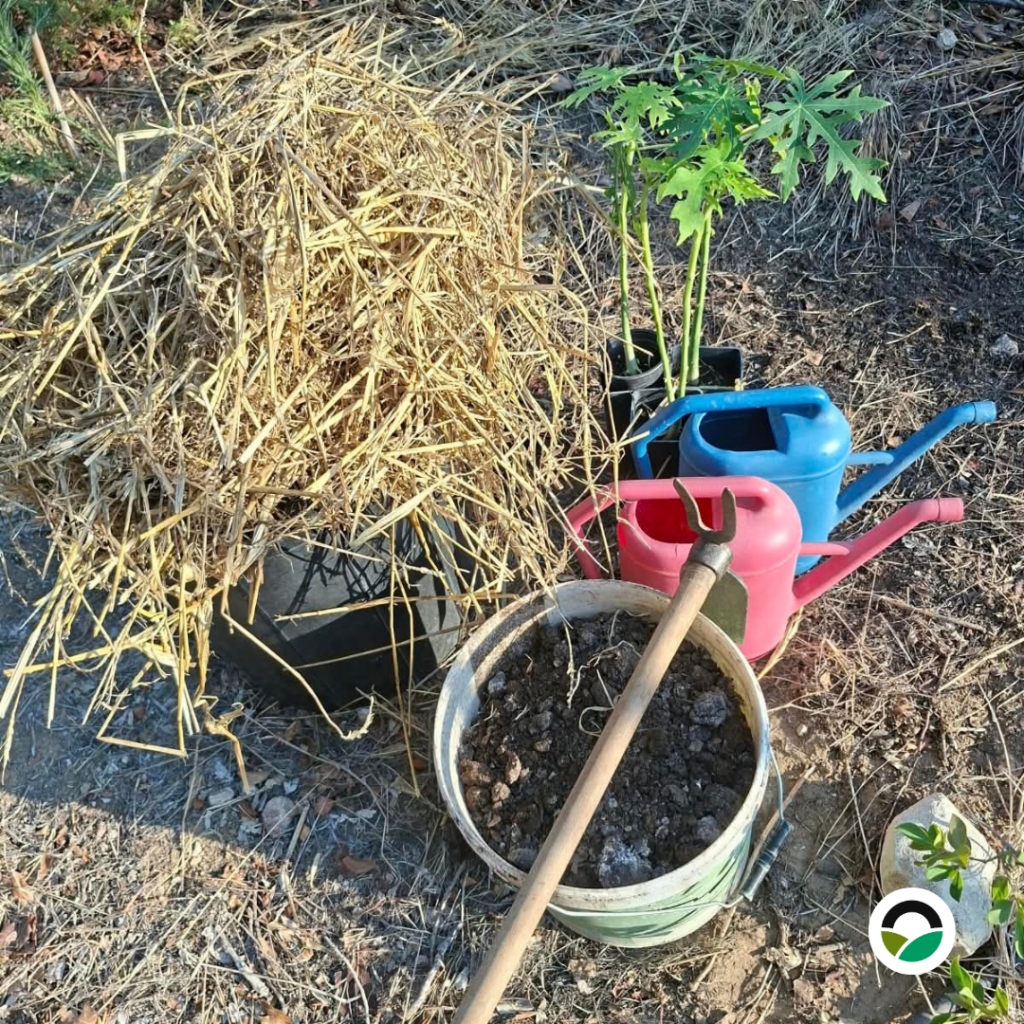
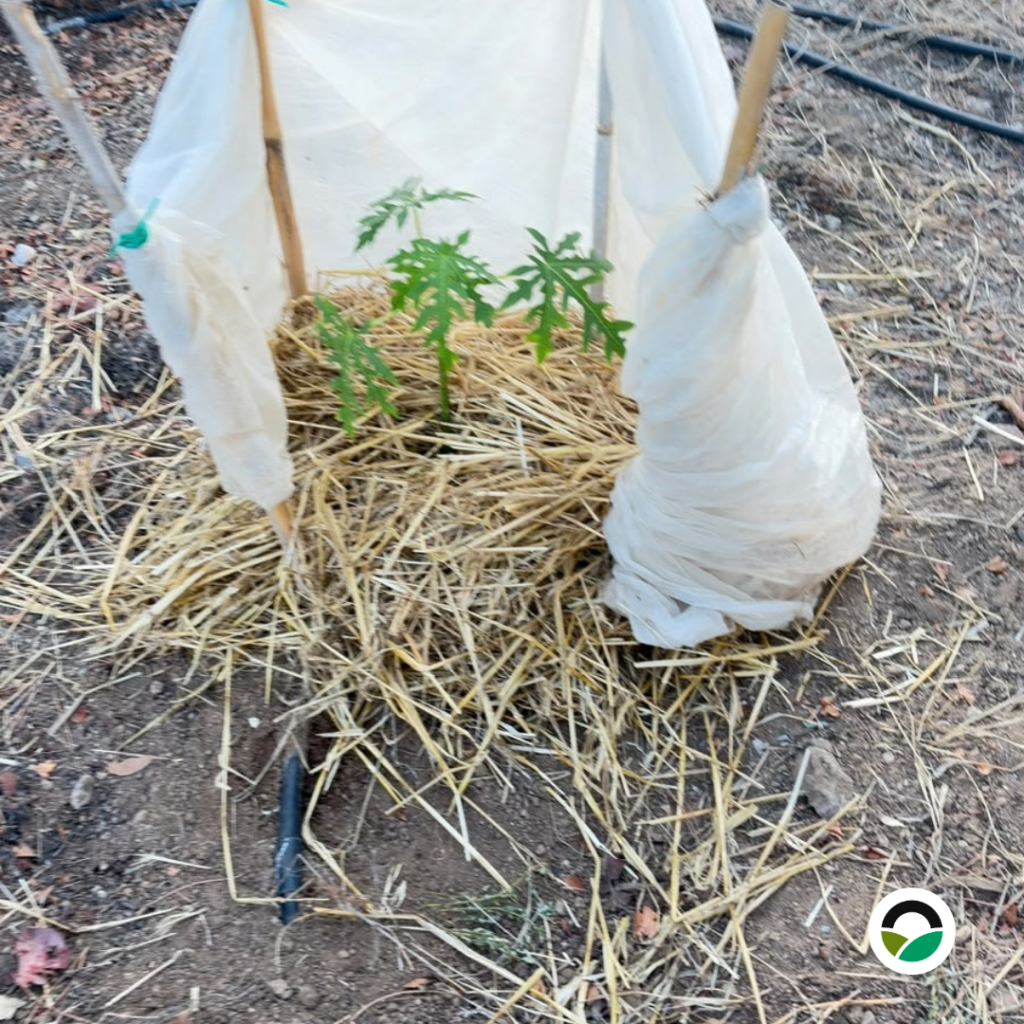
Each planting hole was enriched with mushroom compost to improve soil fertility and increase organic matter. After planting, the young trees received a deep watering to help settle the soil around their roots.
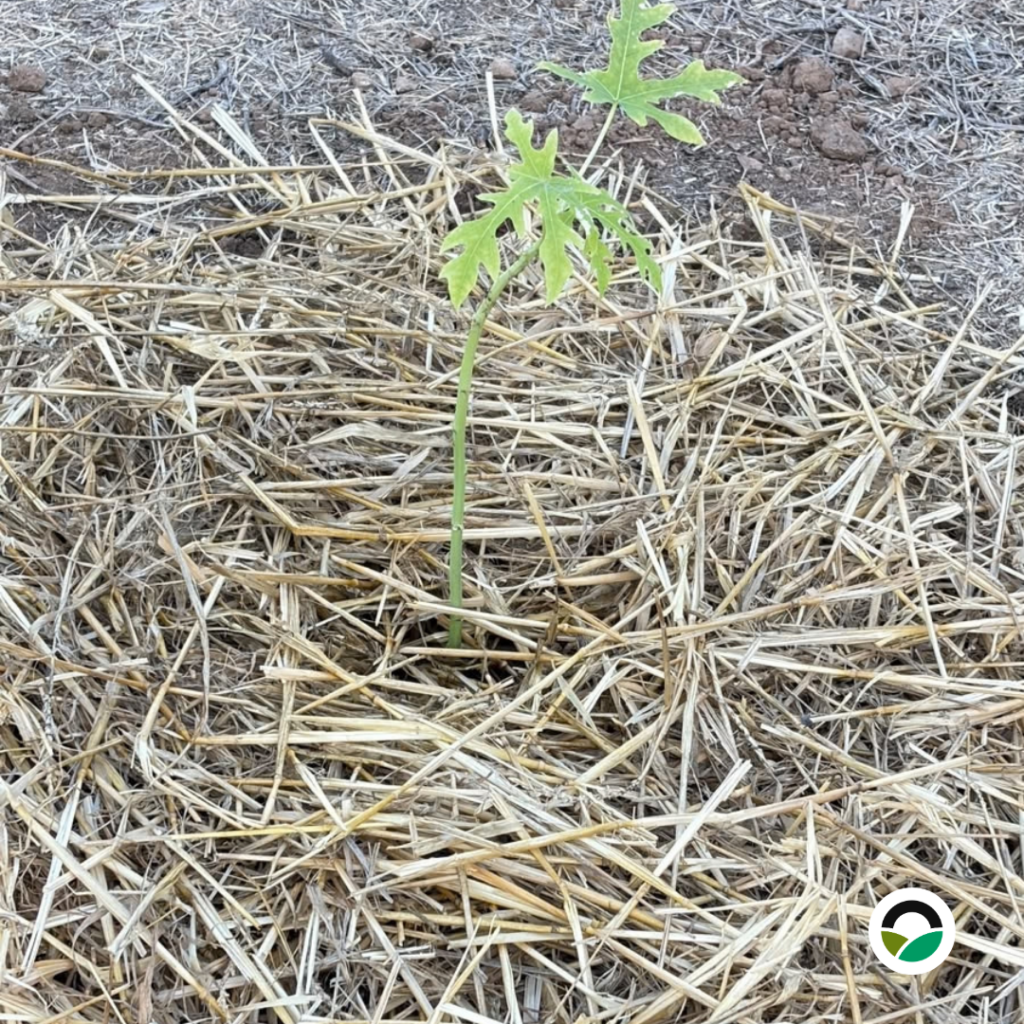
A layer of straw mulch was then added around each tree to reduce evaporation, regulate soil temperature and gradually improve soil structure as it decomposes.
Finally, temporary fleece supported by wooden stakes was installed to provide light shade during the first weeks after transplanting. This simple protection reduces transplant stress by limiting direct sunlight while the trees establish their new root systems.

Learning through observation
Growing subtropical species in the Mediterranean is a continuous learning process. Every planting provides valuable observations about how different species respond to local soils, seasonal weather and management techniques.
One encouraging example can already be found on our river terrace, where a papaya tree planted earlier this summer has established successfully and is showing vigorous new growth. Its development gives us confidence that, with the right care and patience, papayas can become another successful addition to the diversity of Mavronero.
Supporting biodiversity through diversity
Introducing new tree species is part of our long-term vision of creating a resilient and diverse agricultural landscape. A greater diversity of crops not only increases ecological resilience but also creates habitats, improves soil health and allows us to explore species that may become increasingly suitable as climates continue to change.
Every tree planted today represents an investment in the future of the farm. By combining careful observation with regenerative farming practices, we continue building a healthier ecosystem that benefits both nature and the people who depend on it.
Conclusion
Planting a tree is only the beginning of its journey. Careful site preparation, healthy soils, organic matter, mulching and temporary protection all contribute to successful establishment during the most vulnerable stage of a young tree’s life.
At Mavronero, every planting helps us better understand how different species adapt to our landscape while contributing to a more diverse and resilient farm. Through observation, experimentation and regenerative farming practices, we continue creating an ecosystem that will flourish for many years to come.
Sources
Royal Horticultural Society. Planting Trees and Shrubs.
University of California Agriculture and Natural Resources. Planting Landscape Trees.
World Agroforestry (CIFOR-ICRAF). Agroforestry Practices and Tree Establishment.
USDA Natural Resources Conservation Service. Mulching for Soil Health and Water Conservation.
