
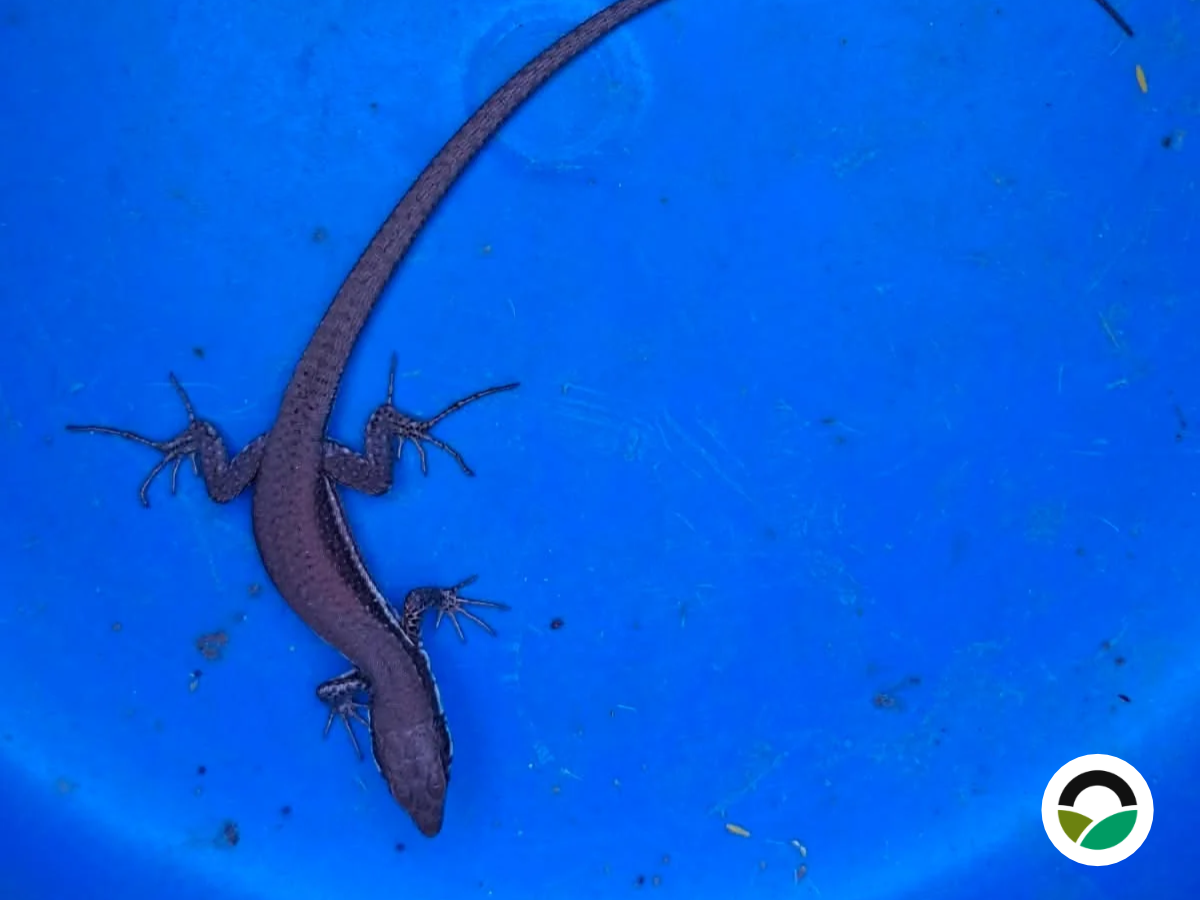
A lizard accidentally trapped in a bucket at Mavronero reminds us that even everyday farming equipment can pose risks to wildlife, and that small changes in how we work can help prevent them.
An unexpected visitor at Mavronero
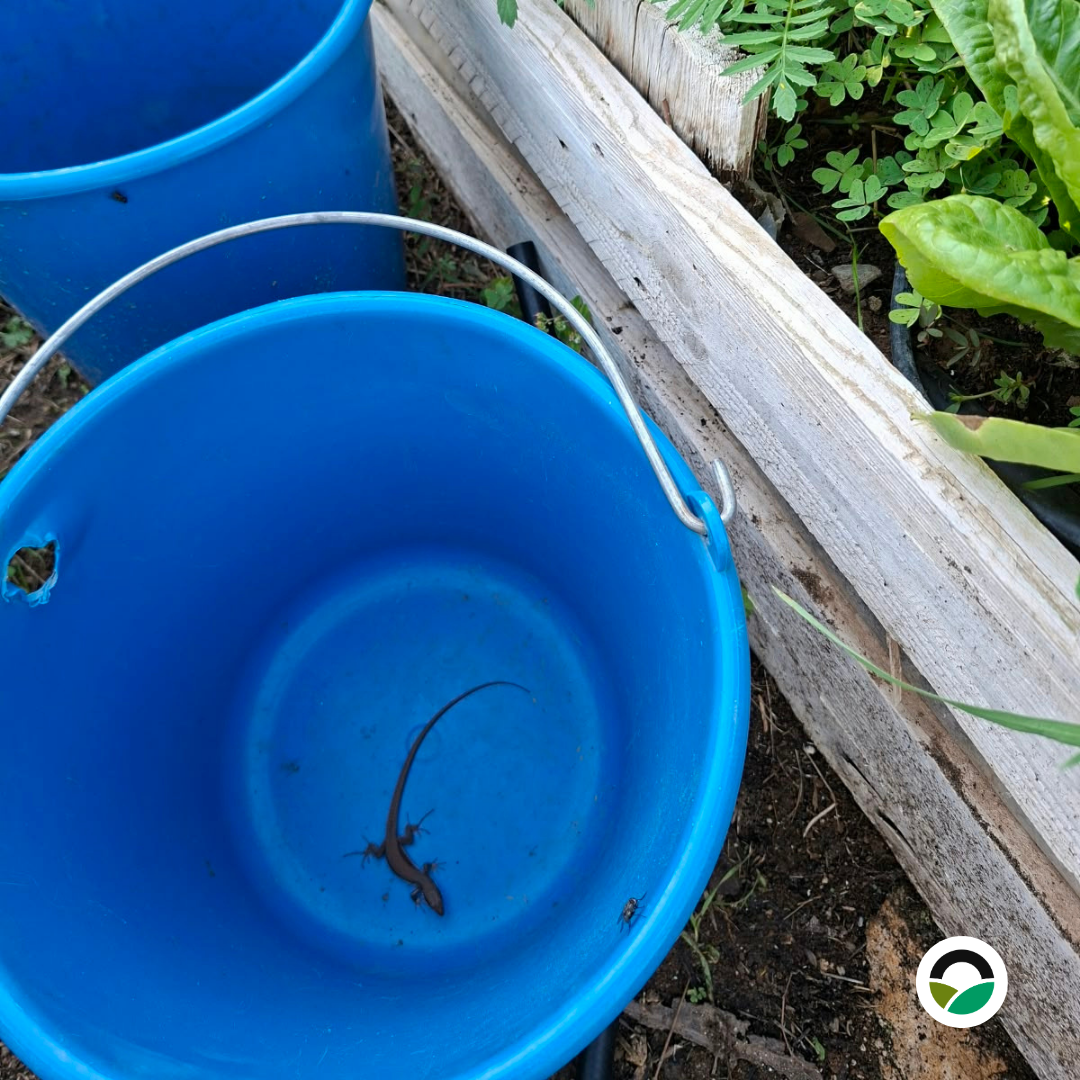
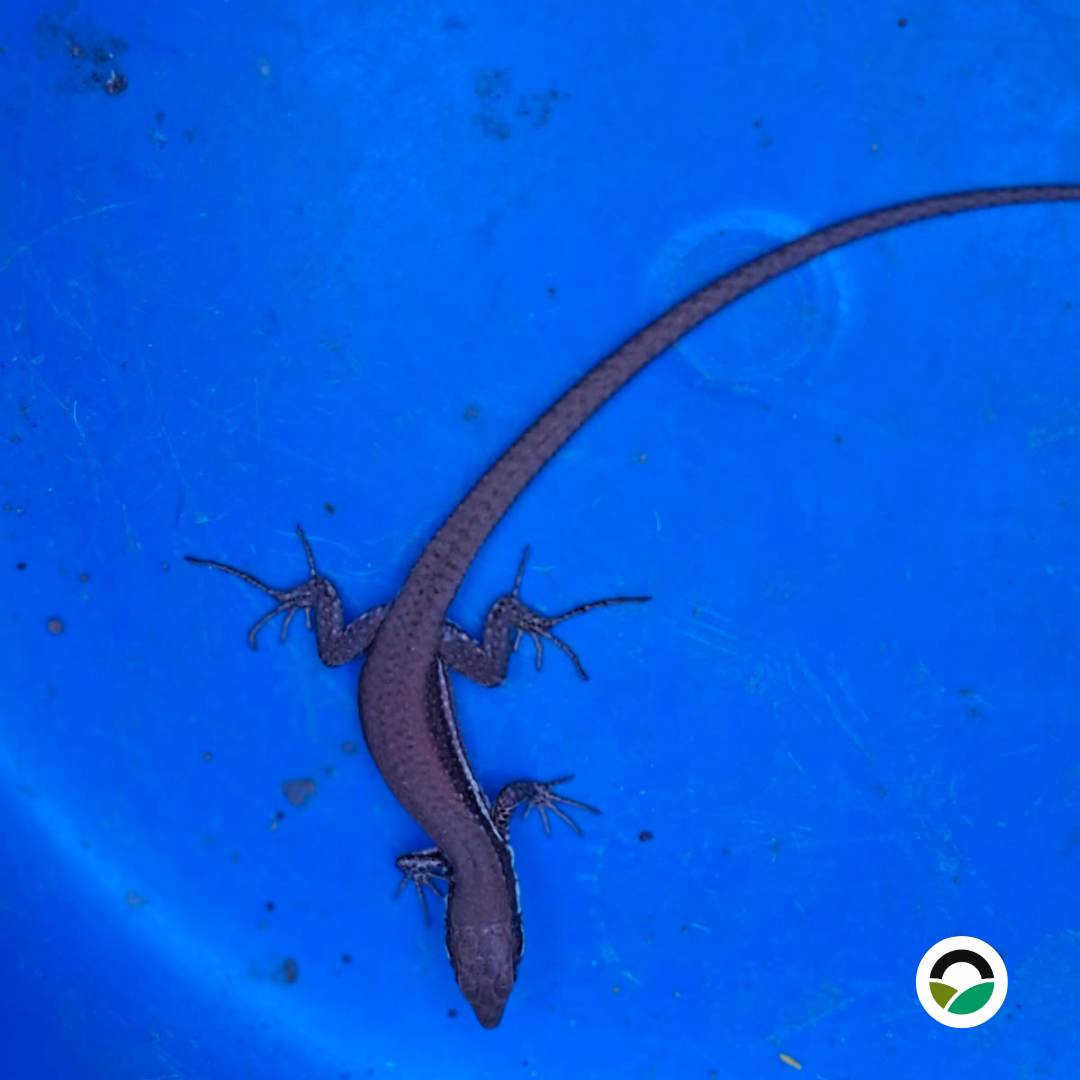
During our everyday work around the garden, we recently discovered a small lizard trapped inside one of our buckets.
Fortunately, it was found in time and released unharmed.
It was a small but important reminder that the tools and materials we use every day can sometimes become accidental traps for the wildlife sharing our environment.
Buckets, containers and other small farm tools left outdoors may look harmless, but small animals can fall inside while exploring, searching for shelter or looking for water. Smooth, steep sides can make it difficult or impossible for them to climb back out.
It also got us thinking: perhaps storing our buckets upside down when they are not in use is a simple habit worth adopting!
Which animals can become trapped?
Lizards are not the only animals that can find themselves in these situations. Depending on the environment, a variety of small wildlife may become trapped in containers, openings or discarded materials.
Some examples include:
- Lizards and other reptiles: They may enter buckets, pipes or other containers while looking for shelter or exploring their surroundings.
- Frogs and toads: Amphibians can fall into water containers, drains and uncovered pits, particularly when searching for damp places.
- Small mammals: Mice, shrews and other small mammals may become trapped in containers, storage areas or holes with steep sides.
- Birds: Young birds and smaller species can become caught in loose netting, wire or other materials around gardens and agricultural areas.
- Insects: Beetles and other ground-dwelling insects can fall into deep containers and may be unable to escape.
These encounters are not always easy to notice. An animal may remain hidden inside a container or beneath equipment until someone moves it.
Everyday farming equipment that can pose a risk
Many potential hazards are not specific to farms. They are also found in gardens, orchards and other outdoor spaces. However, agricultural work often involves equipment and materials that remain outside for extended periods.
A few examples deserve particular attention:
Buckets, barrels and water containers
Open buckets, barrels and tanks can trap small animals if they fall inside and cannot climb out. Empty containers can be just as problematic as those containing water.
Whenever possible, store buckets upside down, keep containers covered and make sure water tanks have secure lids. Where appropriate, a stable escape ramp with a rough surface can also help animals climb out.
Nets, mesh and strings
Nets used to protect crops, support climbing plants or cover fruit trees can become entanglement hazards. Birds, reptiles and small mammals may become caught in loose or damaged mesh.
Keep netting properly secured and regularly inspect it for trapped animals. Remove unnecessary pieces of string, wire and damaged mesh rather than leaving them around the garden.
Drains, pipes and uncovered holes
Open drains, irrigation pipes, trenches and other ground openings can become accidental traps. Small animals may fall in while moving through the farm and become unable to escape.
Keeping openings covered when not in use and checking excavations before filling them can help reduce these risks.
Garden and maintenance machinery
Lawn mowers, strimmers and hedge trimmers can injure animals sheltering in long grass, beneath shrubs or among vegetation.
Before using machinery, check the area carefully, particularly around dense vegetation, hedges and undisturbed corners of the garden.
Piles of branches, leaves and garden waste
Compost heaps, piles of firewood and accumulated garden waste can provide shelter for wildlife. However, moving or disturbing these materials without checking first can put animals at risk.
Take a moment to inspect piles before turning, moving or disposing of them.
Small changes can make a difference
Making a farm safer for wildlife does not necessarily require major changes or additional equipment. Often, a little more awareness and a few simple habits can help prevent accidental harm.
At Mavronero, this experience has encouraged us to think about some practical precautions:
- Store buckets, pots and other open containers upside down when not in use.
- Keep water tanks and larger containers securely covered.
- Check buckets and equipment before moving or using them.
- Secure loose netting, mesh, wires and strings.
- Cover drains and openings whenever possible.
- Inspect vegetation before mowing, trimming or clearing it.
- Check piles of branches, leaves and garden waste before disturbing them.
- Make regular wildlife checks part of everyday farm maintenance.
If an animal is found trapped, assess the situation carefully. Avoid handling unfamiliar wildlife unnecessarily, especially reptiles, and seek help from a local wildlife rescue or qualified professional if the animal is injured, exhausted or difficult to release safely.
Sharing the farm with wildlife
A farm is more than the crops we grow and the work we carry out. It is also an environment shared with many other living creatures.
While we cannot eliminate every potential hazard, we can become more aware of how our everyday activities affect the wildlife around us.
The little lizard we found at Mavronero was lucky. Its unexpected visit gave us a useful reminder to look at familiar tools and routines from another perspective.
Sometimes, protecting wildlife starts with something as simple as turning a bucket upside down.
🌿 Small actions, thoughtful habits and a little extra care can help make our farm a safer place for all its inhabitants.
