
Broccoli is a well-known vegetable from the cabbage family and one of the most nutritious crops commonly grown in gardens and small farms.
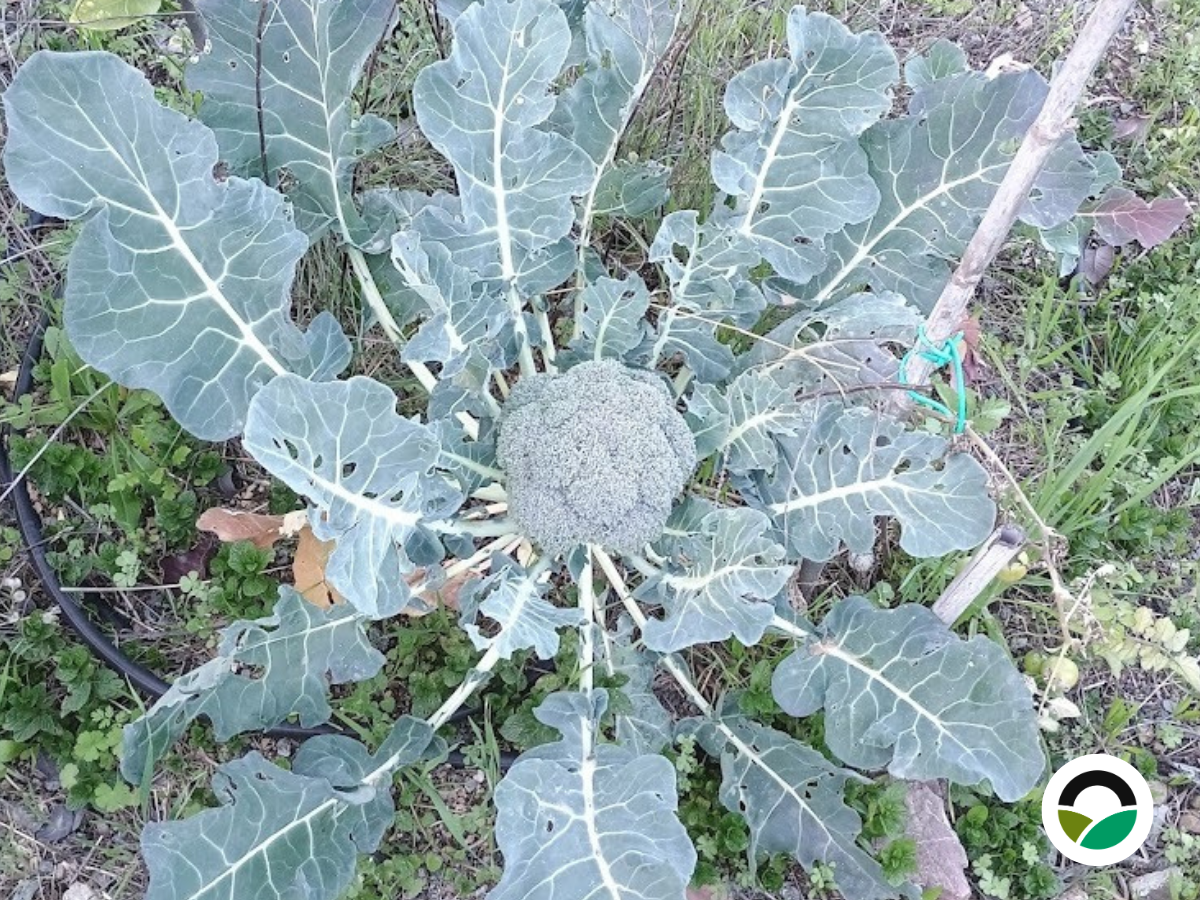
At Mavronero Farm, one of our broccoli plants from last year recently produced a new head again this season. Instead of finishing its cycle after the first harvest, the plant continued growing and developed fresh shoots.
This small observation illustrates how resilient some plants can be when they are allowed to remain in the soil and complete their natural growth cycle.
Plant description
Broccoli (Brassica oleracea var. italica) belongs to the Brassicaceae family, which also includes cabbage, kale, cauliflower, and Brussels sprouts.
The plant develops large blue-green leaves arranged around a thick central stem. The edible part is the immature flower head, a dense cluster of small buds that is harvested before flowering.
If the head is left unharvested, the buds open into small yellow flowers, which are highly attractive to pollinators.
Growth habit and harvest
Broccoli is typically grown as a cool-season crop, producing its main head during spring or autumn depending on the planting time.
After harvesting the central head, the plant often continues producing smaller lateral shoots along the stem. These secondary heads are usually smaller but can extend the harvest period significantly.
In climates with mild winters, some plants may survive longer than expected and continue producing new growth.
At Mavronero Farm we occasionally leave plants in the soil after harvest to observe their behavior. In this case, one of the plants from the previous year remained healthy and produced a new head again this season.
Cultivation conditions
Broccoli grows best under moderate temperatures and fertile soil conditions.
Soil
The plant prefers rich, well-drained soil with a high organic matter content. Compost helps maintain soil structure and provides nutrients throughout the growing cycle.
Sunlight
Full sun is ideal, although broccoli can tolerate partial shade in warmer climates.
Water
Consistent moisture is important, particularly during head formation. The soil should remain evenly moist but not waterlogged.
Spacing
Plants typically require 40–60 cm between them to allow proper leaf development.
Harvest
The main head should be harvested while still compact and before the flower buds begin to open.
Nutritional value
Broccoli is widely recognized for its high nutritional content.
It contains:
- Vitamin C
- Vitamin K
- Folate
- Potassium
- Fiber
- Antioxidants such as sulforaphane
Sulforaphane has been studied extensively for its potential anti-inflammatory and protective health properties.
Because of its nutrient density, broccoli is often considered one of the most beneficial vegetables for a balanced diet.
Culinary uses
Broccoli is versatile and can be prepared in many different ways.
Garlic and olive oil broccoli
A simple Mediterranean preparation.
Ingredients
- Fresh broccoli
- Olive oil
- Garlic
- Salt
- Lemon juice (optional)
Preparation
- Cut broccoli into florets.
- Steam or boil lightly for 3–4 minutes.
- Heat olive oil in a pan with sliced garlic.
- Add the broccoli and sauté briefly.
- Finish with salt and a little lemon juice.
Roasted broccoli
Roasting enhances the vegetable’s flavor and creates a slightly crisp texture.
Ingredients
- Broccoli florets
- Olive oil
- Salt
- Black pepper
Preparation
- Preheat the oven to 200°C.
- Toss broccoli with olive oil, salt, and pepper.
- Spread on a baking tray.
- Roast for 15–20 minutes until lightly browned.
Broccoli flowers and biodiversity
If broccoli heads are not harvested, the plant eventually produces small yellow flowers.
These flowers attract bees and other pollinating insects.
Allowing some plants to flower can therefore contribute to biodiversity in ecological gardens and support local pollinator populations.
Curiosities
- Broccoli was first cultivated in ancient Rome.
- The name comes from the Italian word broccolo, meaning “the flowering crest of cabbage.”
- It became widely cultivated in Europe during the 16th century.
- Today it is grown worldwide as one of the most popular vegetable crops.
Notes from Mavronero
Gardening often reveals unexpected behaviors.
The broccoli plant that produced a new head this season reminds us that some crops can continue growing far beyond their typical harvest period.
By occasionally leaving plants in the soil after harvest, we can observe how they respond to local conditions and better understand their natural growth patterns.
Sometimes the most interesting results come simply from allowing plants a little more time.
Further reading
University of California agriculture & natural resources – broccoli production
