
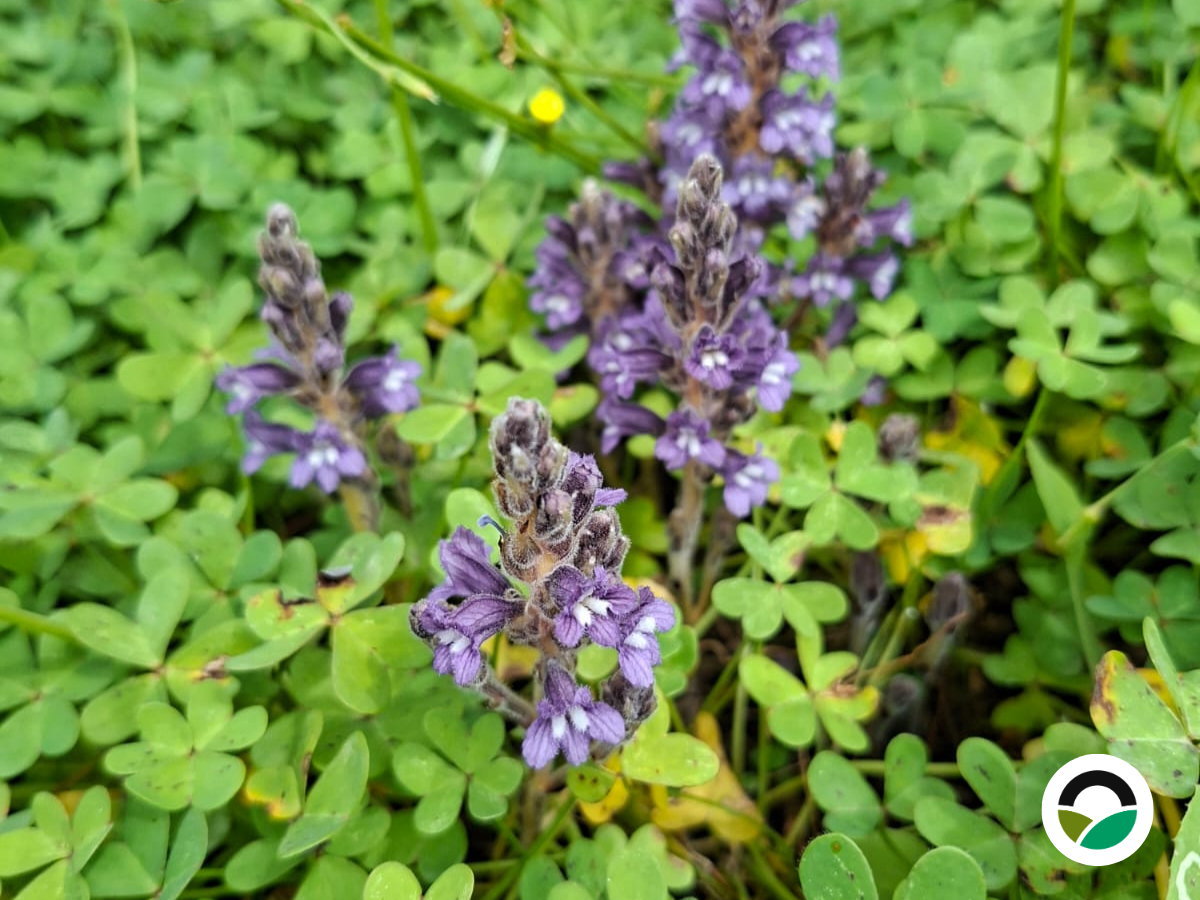
Most flowering plants produce their own energy through photosynthesis. Broomrape (Orobanche sp.) follows a completely different strategy.
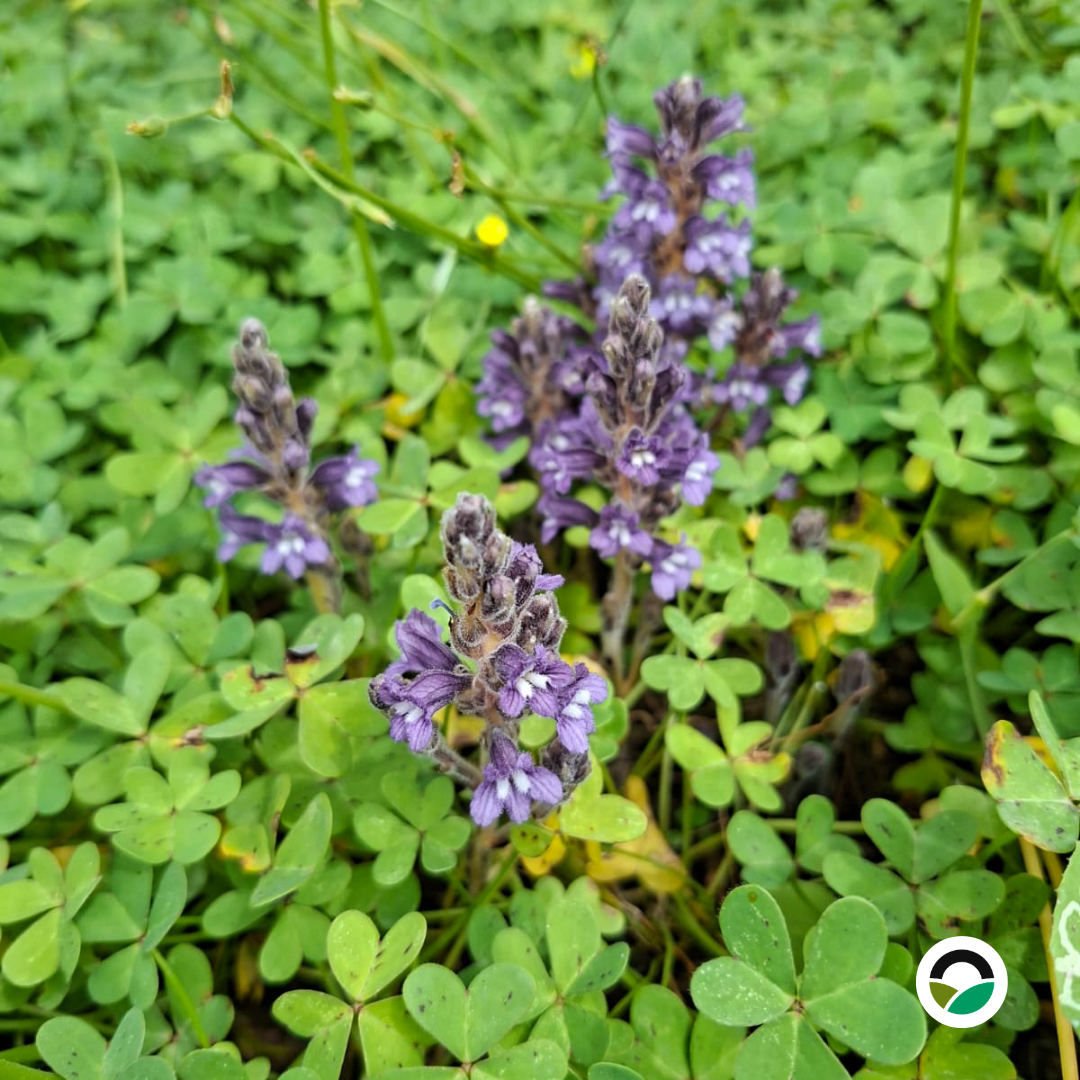
During the spring of 2026, we documented several broomrape plants flowering naturally at Mavronero Farm. Emerging among native vegetation with their distinctive purple flower spikes, these unusual plants demonstrate one of the Mediterranean’s most specialised botanical adaptations.
Unlike green plants, broomrape contains little or no chlorophyll and relies entirely on neighbouring plants for water and nutrients. Although this lifestyle may seem unusual, it is a natural part of Mediterranean biodiversity and has evolved over millions of years.
The exact species observed has not been confirmed, but it belongs to the genus Orobanche, commonly known as broomrape.
A plant without photosynthesis
Broomrape belongs to the family Orobanchaceae, a group of flowering plants that have evolved a fully parasitic lifestyle.
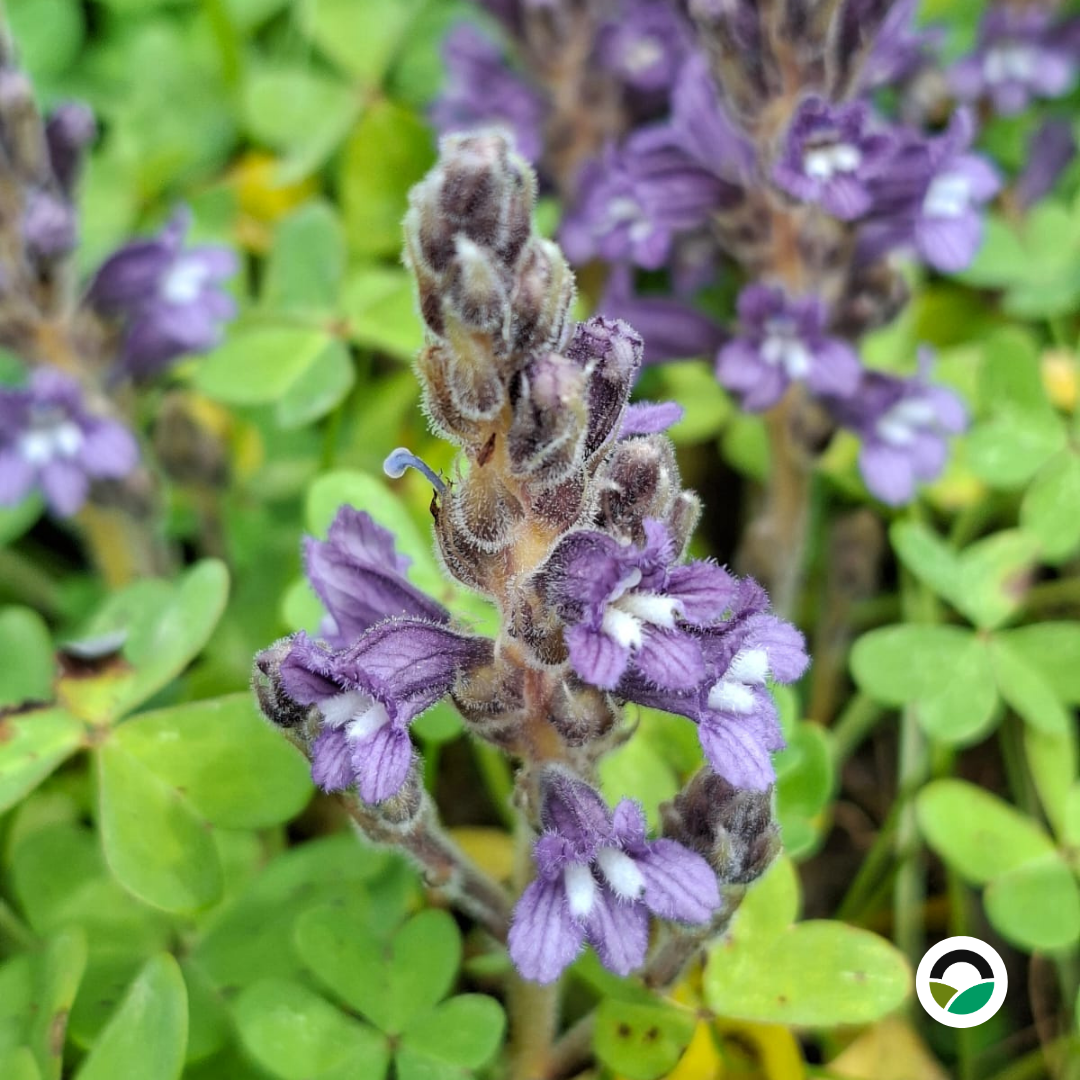
Instead of developing green leaves, broomrape produces pale stems topped with dense spikes of purple, pink or yellowish flowers, depending on the species. Since it cannot photosynthesise, it depends entirely on host plants to survive.
Using specialised structures called haustoria, broomrape connects to the roots of nearby plants, absorbing water and dissolved nutrients while completing its own life cycle.
Despite this dependence, broomrape is a naturally occurring component of healthy Mediterranean ecosystems.
A highly specialised adaptation
Parasitic plants represent one of the most remarkable evolutionary strategies found in nature.
By eliminating the need for photosynthesis, broomrape invests its energy in reproduction, producing thousands of tiny seeds that can remain dormant in the soil until suitable host plants are present.
This extraordinary adaptation allows the genus Orobanche to survive in dry, nutrient-poor Mediterranean environments where many other species struggle.
Each species has evolved alongside particular host plants, creating long-term ecological relationships within native plant communities.
Supporting biodiversity
Although parasitic, broomrape forms part of natural ecological processes rather than disrupting them.
Its flowers provide nectar and pollen for a variety of insects, while its presence reflects the complexity and diversity of Mediterranean plant communities.
Healthy ecosystems are built upon interactions between many different organisms. Parasitic plants, pollinators, shrubs, grasses and trees all contribute to maintaining ecological balance.
Protecting these interactions is one of the foundations of regenerative farming.
Why native plants matter in regenerative agriculture
Regenerative agriculture is about working with natural ecosystems rather than simplifying them.
Native plants with specialised ecological roles contribute to resilient landscapes by supporting biodiversity, maintaining natural processes and increasing ecosystem stability.
Documenting species such as broomrape helps us better understand the diversity that exists alongside cultivated areas and highlights the importance of conserving entire ecological communities—not only the most familiar plants.
Observations at Mavronero
These photographs were taken during the spring of 2026 while documenting the seasonal flora surrounding Mavronero Farm.
Several broomrape plants were observed growing naturally among other native Mediterranean vegetation. Their absence of green leaves and striking purple flowers immediately distinguished them from neighbouring species.
Although often overlooked because of their unusual appearance, these plants are valuable indicators of the ecological complexity that characterises healthy Mediterranean landscapes.
Recording species like broomrape contributes to a more complete understanding of the biodiversity that regenerative farming seeks to protect.
Interesting facts
Broomrape (Orobanche sp.)
- Native to Europe, North Africa and western Asia, including Cyprus.
- Belongs to the family Orobanchaceae.
- A fully parasitic flowering plant with little or no chlorophyll.
- Cannot photosynthesise and depends entirely on host plants.
- Connects to host roots through specialised structures called haustoria.
- Produces thousands of tiny seeds capable of remaining dormant in soil.
- Flowers mainly during spring.
- Plays a natural role in Mediterranean ecosystems despite its parasitic lifestyle.
Hidden diversity beneath our feet
Mediterranean ecosystems are sustained by an extraordinary diversity of life strategies.
While many plants capture energy from sunlight, others have evolved entirely different ways to survive. Broomrape reminds us that biodiversity includes not only familiar trees and wildflowers but also highly specialised species that contribute to the complexity of natural ecosystems.
Protecting native vegetation means preserving all of these ecological relationships.
At Mavronero Farm, every seasonal observation helps build a deeper understanding of the biodiversity that supports resilient Mediterranean landscapes.
Conclusion
Broomrape may not resemble a typical wildflower, but it represents one of nature’s most remarkable evolutionary adaptations.
Its unique relationship with neighbouring plants demonstrates the complexity of Mediterranean ecosystems and the many ways species have evolved to survive under challenging environmental conditions.
By documenting native flora throughout the seasons, we continue to uncover the extraordinary biodiversity that makes regenerative landscapes both resilient and ecologically rich.
