

Species of the Month – April 2026
Acoustic monitoring at Mavronero provides continuous insight into local bird activity. Each month, we analyse detection data to better understand species presence, behavioural intensity and ecological patterns.
During the period 12/04/2026 – 19/04/2026, the most actively detected species was:
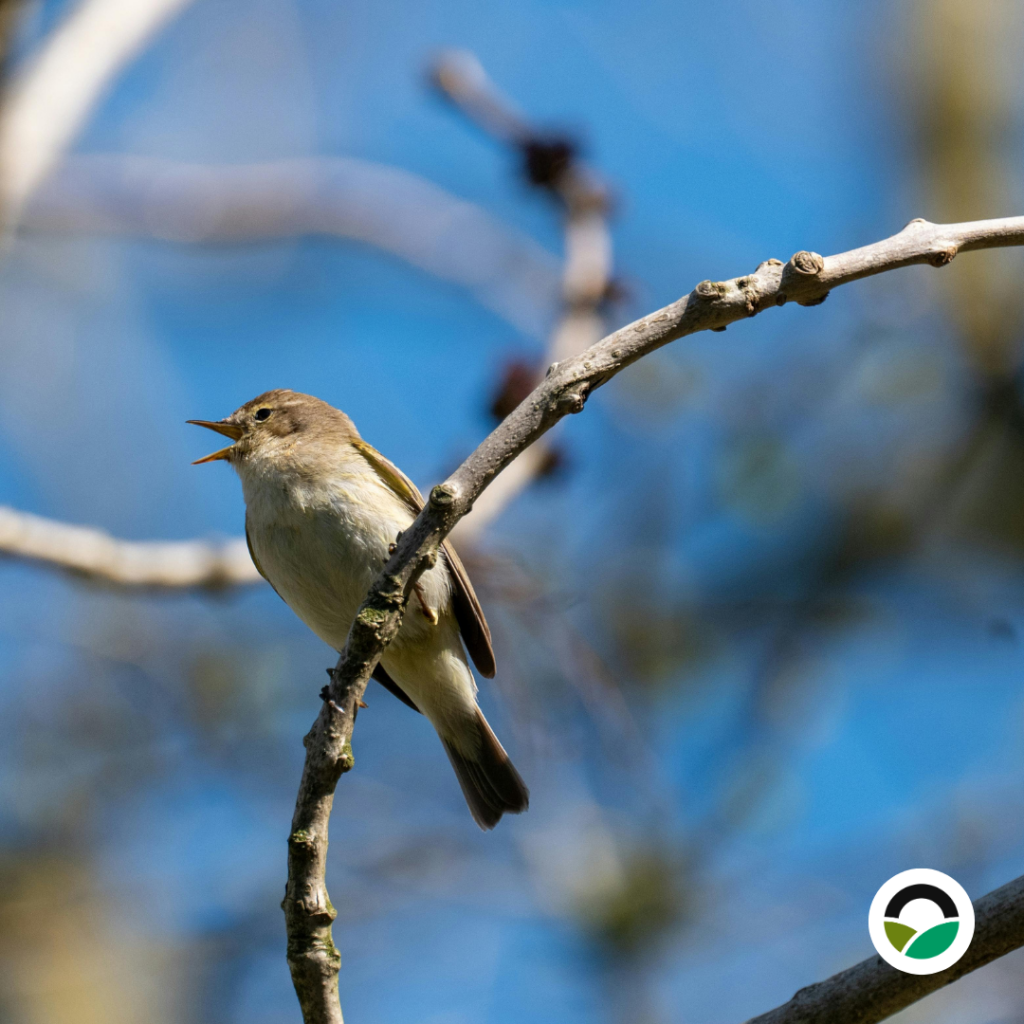
Cetti’s Warbler (Cettia cetti): 4.003 detections recorded within 7 days
This high detection frequency highlights intense vocal activity and strong presence within the monitored acoustic environment.
About the species
The Cetti’s Warbler is a small passerine bird widely distributed across southern Europe, North Africa and parts of western Asia. It is typically associated with dense vegetation near water sources, such as reed beds, riverbanks and wetlands.
Ecologically, the species plays an important role as an insectivore, contributing to the regulation of invertebrate populations within its habitat. Its presence is often linked to well-preserved riparian ecosystems and dense undergrowth.
Behaviourally, Cetti’s Warbler is highly territorial and extremely vocal, especially during the breeding season. Despite its frequent singing, it is rarely seen due to its secretive nature and preference for dense vegetation cover.
The species is classified as Least Concern (IUCN), with stable populations across most of its range.
Key ecological characteristics:
- Habitat preference: Dense vegetation near water (reed beds, wetlands, riverbanks)
- Feeding behaviour: Insectivorous (small invertebrates)
- Social structure: Solitary and territorial
- Vocal characteristics: Loud, explosive and repetitive song
Detection data at Mavronero
The species was identified through the permanent acoustic monitoring system installed at Mavronero.
(For detailed methodology, see our article on bird detection and acoustic monitoring.)
During the analysed period:
- 4.003 detections
- High and consistent daily activity
- Repeated vocalisation peaks across consecutive days
Compared to previous periods, detection frequency shows a clear increase, consistent with seasonal breeding behaviour and intensified territorial vocalisation.
This dataset allows analysis of:
- Activity intensity
- Temporal distribution
- Persistence across consecutive days
Interpreting the data
What does 4.003 detections in 7 days indicate?
- High local abundance
- Strong vocal activity linked to territorial behaviour
- Stable and continuous habitat occupation
Cetti’s Warbler is known for its powerful and frequent song, particularly during breeding season, which explains the elevated detection levels.
Short-term variation may be influenced by:
- Breeding season dynamics
- Territorial defence behaviour
- Vegetation density and habitat structure
- Weather conditions affecting vocal activity



Why this species matters
Even common species provide important ecological signals.
Changes in detection frequency may indicate:
- Habitat quality and vegetation density
- Availability of food resources
- Seasonal breeding activity
- Environmental disturbance
As a species closely associated with dense riparian vegetation, Cetti’s Warbler can serve as an indicator of habitat condition and ecosystem health.
Long-term monitoring transforms daily bird activity into measurable ecological insight.
Conclusion
At Mavronero, consistent acoustic monitoring strengthens science-based environmental management.
The Cetti’s Warbler demonstrates how vocal behaviour can provide valuable information about seasonal dynamics and habitat use.
Listening systematically allows patterns to emerge — and patterns are the foundation of ecological understanding.
