
A brief glimpse into an extraordinary life cycle
During recent observations at Mavronero, an adult cicada was recorded among the bean plants shortly after emerging from its juvenile stage.
The insect was seen repeatedly moving its wings and attempting to take flight, but appeared unable to do so successfully. Earlier rainfall may have played a role, as newly emerged cicadas require time for their wings and body to fully expand, harden, and dry before they can fly effectively.
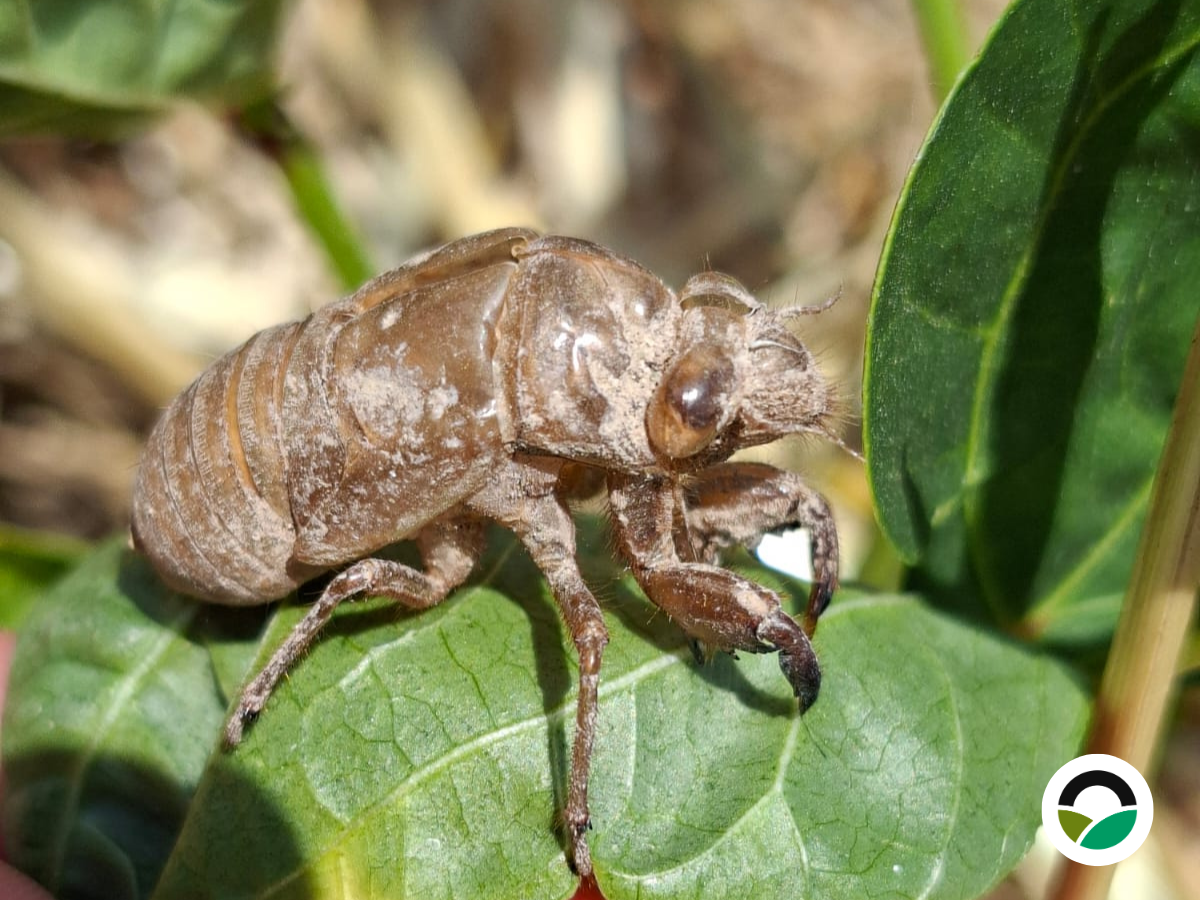
Nearby, an empty cicada shell was also found attached to a leaf, providing evidence of a recent emergence event.
The shell left behind
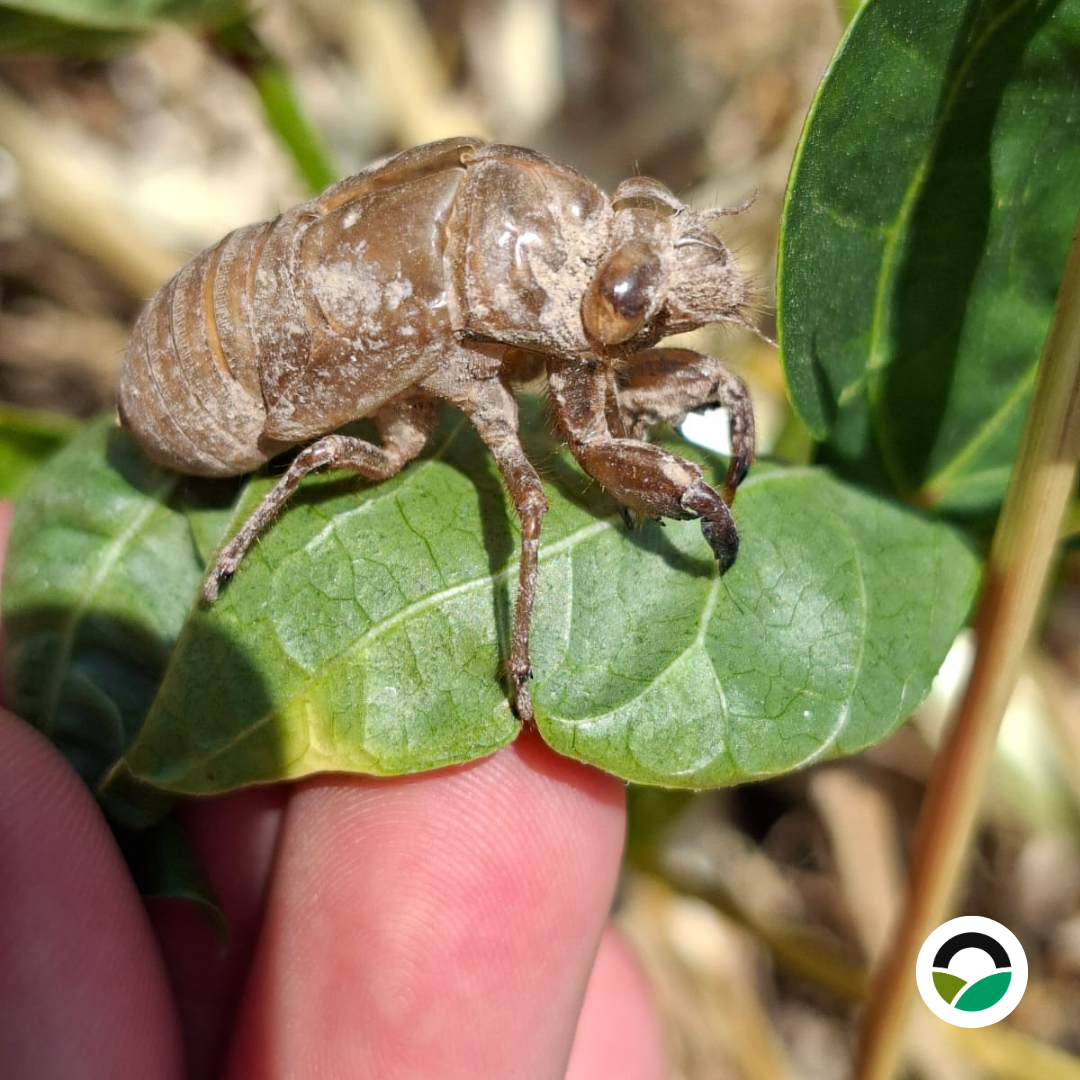
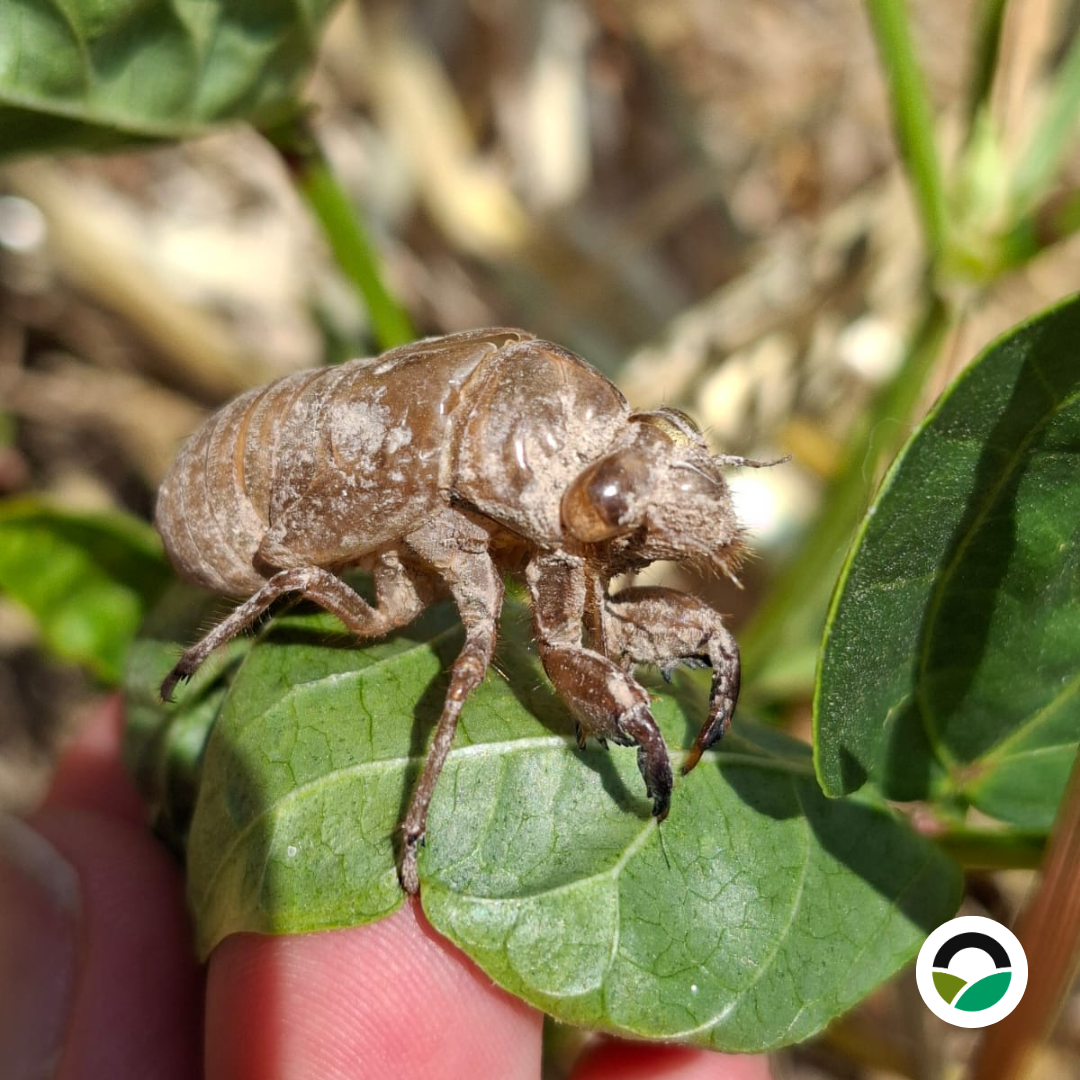
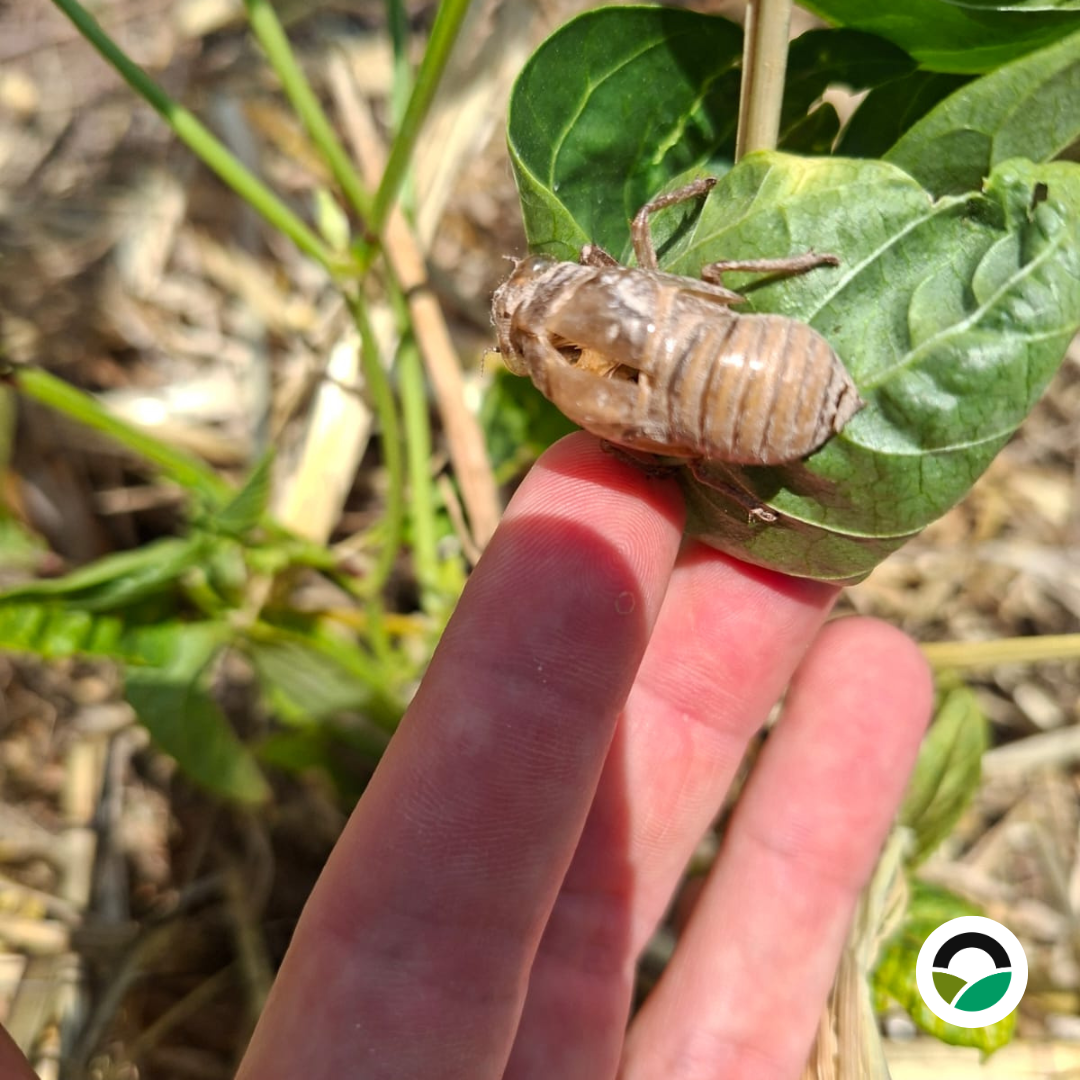
The brown shell is not a dead insect but the discarded exoskeleton of the cicada’s juvenile stage, known as an exuvia.
For most of their lives, cicadas live underground as nymphs, feeding on fluids from plant roots. Depending on the species, this underground stage can last several years before the insect finally emerges above the surface.
When the time is right, the nymph climbs onto vegetation and splits its outer skin. The adult cicada slowly emerges, leaving the empty shell attached to the plant.
At Mavronero, the exuvia was discovered on a bean plant, offering a rare opportunity to observe this process at close range.
Why newly emerged cicadas may struggle to fly
The transition from nymph to adult is a vulnerable stage in a cicada’s life.
After emerging, the insect must pump fluids into its wings and allow its new exoskeleton to harden. During this period, cicadas are unable to fly and remain exposed to weather conditions and predators.
Rain, high humidity, or physical damage can sometimes delay the drying process. In the video recorded at Mavronero, the cicada was observed moving its wings repeatedly, suggesting it was still completing this important stage of development.
Although it was not possible to determine the exact cause, recent rainfall may have contributed to the delay.
An insect heard more often than seen
Cicadas are among the most familiar sounds of Mediterranean summers.
Adult males produce their characteristic calls using specialised structures called tymbals, creating the loud buzzing sounds that often dominate warm afternoons across rural landscapes.
Despite being common throughout the region, much of their life remains hidden underground, making direct observations of emergence events relatively uncommon.
Biodiversity on the farm
Observations such as this highlight the diversity of wildlife that exists within agricultural landscapes.
From pollinating insects and birds to spiders and cicadas, many species use the habitats found around fields, gardens, trees, and uncultivated areas.
Recording these encounters helps document the ecological richness of Mavronero while providing opportunities to better understand the natural processes taking place throughout the farm.
Conclusion
The cicada observed at Mavronero and the empty shell left behind offer a small but fascinating glimpse into one of nature’s most remarkable transformations.
After spending years underground, a cicada emerges for a relatively short adult life above the surface. The discarded exoskeleton serves as a reminder of this hidden journey and of the complex life cycles that continue to unfold across Mediterranean landscapes.
Sources
The information presented in this article is based on direct observations made at Mavronero and supported by the following references:
