
Coin-marked snakes are among the non-venomous snake species commonly associated with Mediterranean agricultural landscapes and semi-natural habitats across Cyprus. These reptiles play an important ecological role within cultivated environments by participating in natural predator-prey relationships and helping regulate populations of small vertebrates and other animals.
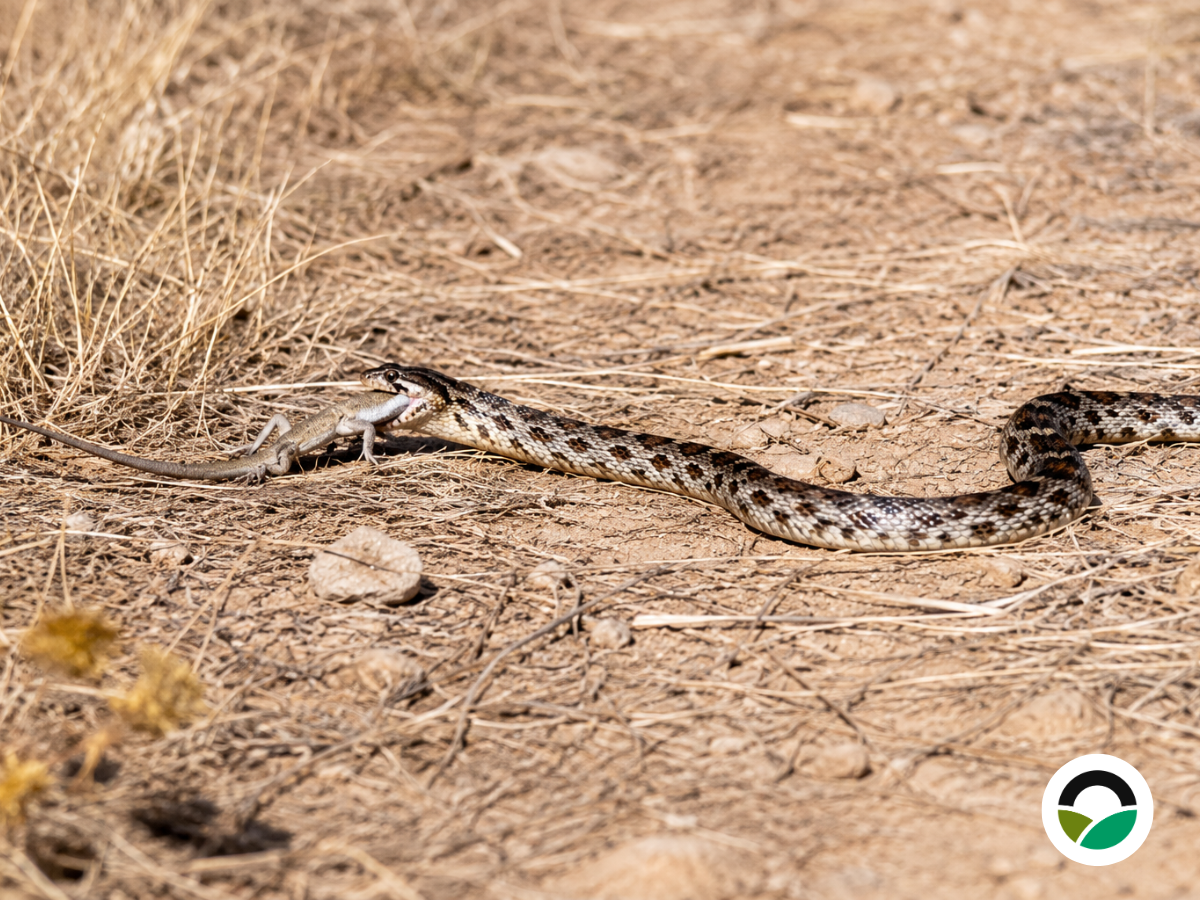
At Mavronero, a probable coin-marked snake (Hemorrhois nummifer) was observed moving through dry seasonal grassland while carrying a recently captured lizard prey. The observation took place within low-intervention olive grove surroundings where herbaceous vegetation, stone-covered ground, shrubs, and open habitat corridors support seasonal reptile activity.
The coin-marked snake belongs to the colubrid snake family (Colubridae), a group containing many active hunting snake species distributed throughout Mediterranean ecosystems. Unlike ambush predators, coin snakes are highly mobile daytime hunters that actively search for prey across open landscapes.
Coin-marked snakes within Mediterranean ecosystems
Coin-marked snakes are strongly adapted to warm and relatively dry environments. Across Cyprus and other Eastern Mediterranean regions, they can be found in:
- olive groves
- rocky hillsides
- dry grasslands
- agricultural edges
- shrubland habitats
- semi-natural rural environments
Their coloration and dorsal patterning provide camouflage among dry vegetation, stones, and seasonal Mediterranean terrain.
These snakes feed on a variety of small animals including:
- lizards
- geckos
- small rodents
- young birds
- insects and other small vertebrates
By controlling populations of small reptiles and rodents, coin-marked snakes contribute to ecological balance within cultivated and semi-natural environments.
Ecological importance for farmers and cultivated landscapes
Snake species within Mediterranean agricultural systems are often misunderstood despite their ecological value. Non-venomous snakes such as the coin-marked snake contribute to natural biological regulation processes by reducing populations of animals that may otherwise increase excessively around cultivated land.
Within traditional Mediterranean olive landscapes, reptile diversity often reflects broader habitat quality and ecological continuity. Stone walls, herbaceous vegetation, open soil, seasonal flowering plants, and low-disturbance environments create suitable conditions for reptiles and other wildlife species.
At Mavronero, environmental observations continue documenting biodiversity interactions connected to:
- reptile movement within olive landscapes
- predator-prey ecological relationships
- seasonal wildlife adaptation
- biodiversity continuity in cultivated habitats
- coexistence between agriculture and native fauna
These observations form part of wider environmental documentation activities focused on Mediterranean ecosystem dynamics and low-intervention land management.
Predator-prey behaviour observation
The observed snake was recorded carrying a small lizard prey locally referred to as “kourkoudas.” Such interactions are common within Mediterranean food webs, where reptiles occupy both predator and prey roles depending on species, age, and habitat conditions.
Daytime hunting activity increases during warmer periods when reptiles become more active across open grasslands and agricultural environments. Coin-marked snakes rely on speed, camouflage, and active searching behaviour rather than venom to capture prey.
Observations of direct feeding behaviour provide valuable insight into the functioning ecological relationships that continue developing within cultivated Mediterranean landscapes.
Reptile biodiversity at Mavronero
The Mediterranean landscape surrounding Mavronero supports a variety of reptile and wildlife species associated with relatively undisturbed agricultural ecosystems.
Environmental observations at Mavronero continue recording:
- native reptiles
- seasonal flowering plants
- pollinator activity
- birds and nesting behaviour
- herbaceous vegetation systems
- ecological interactions within olive landscapes
Rather than separating cultivation from surrounding biodiversity, these observations highlight how agricultural landscapes can continue supporting complex ecological systems when habitat continuity and relatively low-intensity management practices are maintained.
Conclusion
The coin-marked snake (Hemorrhois nummifer) forms an important part of Mediterranean ecological systems and traditional agricultural landscapes across Cyprus.
Its presence within the Mavronero landscape reflects broader biodiversity relationships involving reptiles, prey species, seasonal vegetation, and cultivated environments.
Observations of natural predatory behaviour help document the ecological complexity that continues to develop within Mediterranean olive grove ecosystems and reinforce the important role that native snake species play within balanced agricultural landscapes.
Note: The featured image used in this article was generated with AI for illustrative purposes.
