
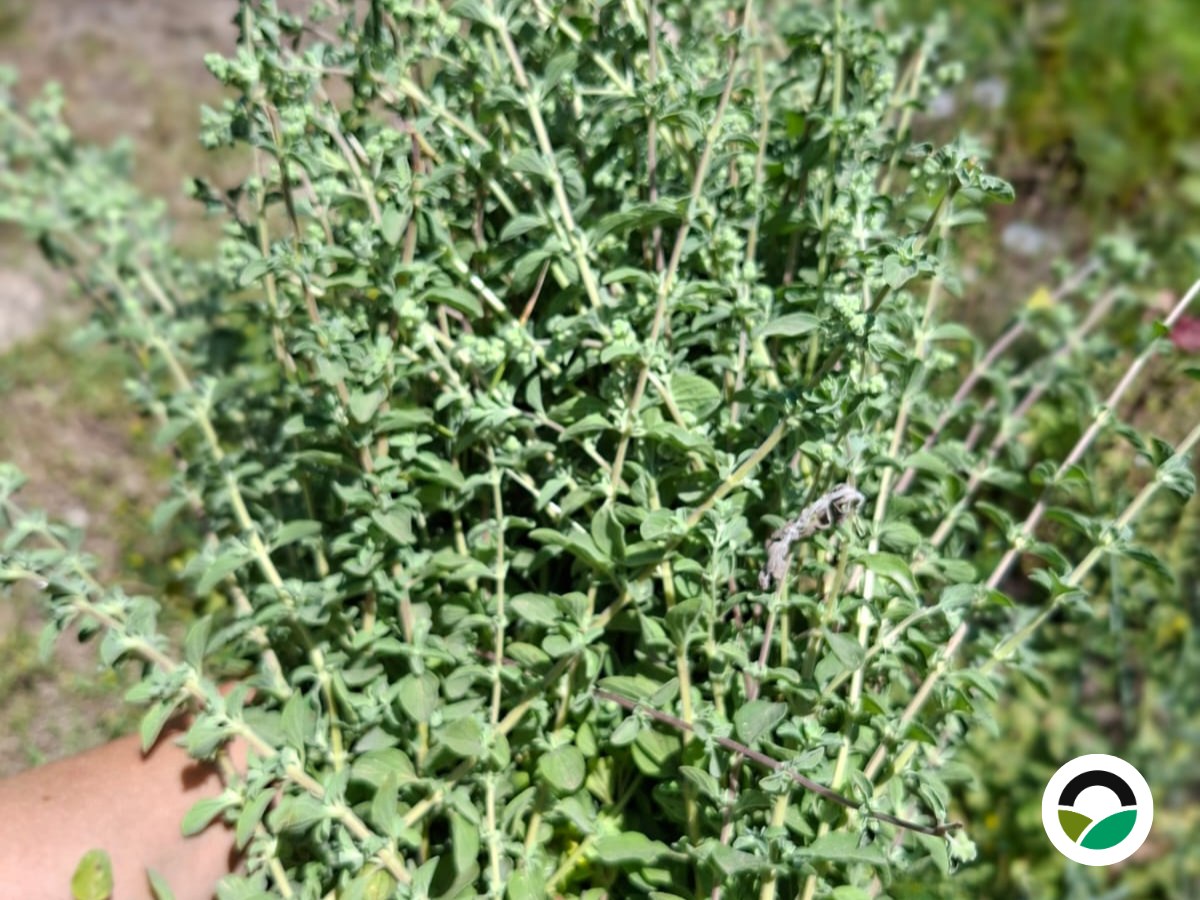
Cyprus Oregano (Origanum cordifolium)
Category: Flora
Summary: Discover Cyprus oregano (Origanum cordifolium), a rare aromatic plant found only in Cyprus. With its heart-shaped leaves, purplish shoots and delicate flowers, this distinctive species is a remarkable part of the island’s native flora.
URL slug: cyprus-oregano-origanum-cordifolium
SEO title: Cyprus Oregano (Origanum cordifolium): A Rare Native Plant
Meta description: Discover Cyprus oregano (Origanum cordifolium), an aromatic plant endemic to Cyprus, its botanical characteristics, natural habitat and conservation importance.
Tags: Cyprus Oregano, Origanum cordifolium, Native Plants, Endemic Plants, Mediterranean Flora, Biodiversity, Plant Conservation
A rare aromatic plant from Cyprus
When we think of oregano, we usually imagine a familiar Mediterranean herb used to flavour food. But the genus Origanum includes many different species, some of which have very restricted natural distributions.
One remarkable example is Cyprus oregano, scientifically known as Origanum cordifolium. Unlike the oregano commonly used in cooking, this species is endemic to Cyprus, meaning it occurs naturally nowhere else in the world.
Its heart-shaped leaves, purplish stems and delicate flowers make it a distinctive member of the island’s native flora. However, its importance goes beyond its appearance: its limited distribution makes the protection of its natural habitat particularly important. Government of Cyprus
What is Cyprus oregano?
Cyprus oregano is an aromatic subshrub belonging to the Lamiaceae family, which also includes familiar plants such as mint, rosemary, sage and thyme.
It grows approximately 40–60 cm tall and develops branching stems that can have a purplish colour. Its leaves grow in opposite pairs along the stems and have a characteristic heart-shaped form.
Although it belongs to the same genus as culinary oregano, Origanum cordifolium is a distinct species with its own appearance, habitat requirements and conservation needs. Government of Cyprus
Botanical characteristics
Heart-shaped leaves
One of the easiest ways to recognise this species is by its leaves. They are relatively small, firm and heart-shaped, with pointed tips. Their shape is also reflected in the plant’s scientific name.
Purplish stems and delicate flowers
The young stems are rounded or slightly square-shaped and often display a purplish colour. The flowers grow in elongated, hanging clusters, with purple or pinkish bracts surrounding small flowers that may be white or pink.
When does it flower?
Cyprus oregano flowers from June to August, bringing colour to its natural rocky habitats during the summer months. Government of Cyprus
Why is it called Cyprus oregano?
The scientific name Origanum cordifolium offers a clue to the plant’s appearance and the origins of its name.
The name Origanum is traditionally associated with the ancient Greek words oros, meaning mountain, and ganos, meaning brightness, beauty or splendour. The combination evokes the beauty of plants growing in mountainous landscapes.
The species name cordifolium comes from the Latin words cordis, meaning heart, and folium, meaning leaf. It refers directly to the distinctive shape of the leaves.
Together, these names describe an aromatic plant whose heart-shaped foliage makes it easy to distinguish from many other species in the genus. Government of Cyprus
Where does Cyprus oregano grow?
Unlike many Mediterranean aromatic plants that grow across a wide geographical area, Origanum cordifolium has a very restricted natural distribution.
It is found in western Cyprus, particularly in the Paphos Forest area and the Roudias and Xeros valleys. It grows on moist, shady, rocky slopes, often near streams and along road banks, at elevations of approximately 250–925 metres.
These conditions make its habitat quite different from the dry, open ground where many people expect to find Mediterranean herbs. The combination of suitable rock formations, moisture and shade provides the particular conditions this species needs to grow. (Kew Science; Cyprus Ministry of Agriculture)
Cyprus oregano and biodiversity
A plant found nowhere else
Endemic species are an important part of a region’s natural heritage. Because Origanum cordifolium occurs naturally only in Cyprus, protecting its populations also means preserving a unique part of the island’s biodiversity.
According to Cyprus’s Department of Environment and Ministry of Agriculture, the species has been recorded at five locations in the Paphos Forest area. Its restricted distribution makes the conservation of these sites particularly important.
Its role in the local ecosystem
Like other flowering plants, Cyprus oregano contributes to the diversity of its natural habitat. Its flowers form part of the seasonal resources available to insects and other organisms.
However, detailed information about the specific pollinators and ecological relationships of this species is limited in the sources consulted. It is therefore better to recognise its contribution to native plant diversity without attributing particular interactions that have not been documented.
Why is the plant vulnerable?
Origanum cordifolium is classified as Vulnerable (VU) in the IUCN Red List information referenced by Kew Science.
The Cyprus Ministry of Agriculture identifies wildfires and overgrazing by mouflons in some areas as threats to the species. Because its natural range is so limited, damage to the habitats where it grows can have a significant impact on its populations.
Protecting these rocky habitats and preventing fires are important steps towards preserving this distinctive Cypriot plant. (Kew Science; Cyprus Ministry of Agriculture)
Can Cyprus oregano be used as a herbal tea?
Although the word oregano is commonly associated with culinary herbs and traditional herbal infusions, it is important to distinguish this species from more familiar types of oregano.
The Cyprus Ministry of Agriculture reports that it has not identified documented information about the traditional uses of Origanum cordifolium. For that reason, there is not enough reliable information to recommend it as a herbal tea or to describe established medicinal uses.
What do we know about its aromatic properties?
Research has examined the essential oil produced by the aerial parts of Origanum cordifolium. One published study identified α-terpineol as its main essential-oil component, followed by other aromatic compounds.
These findings help researchers understand the plant’s chemical composition, but they do not establish that it is safe or effective as a tea or medicinal preparation.
For this reason, we should not assume that Cyprus oregano has the same traditional uses or properties as common culinary oregano. Its aromatic character is scientifically documented, but its traditional applications remain insufficiently recorded. (Journal of Ethnopharmacology; Cyprus Ministry of Agriculture)
Growing and protecting Cyprus oregano
Because Origanum cordifolium is a rare endemic plant with specific habitat requirements, its conservation deserves particular attention.
Understanding its natural growing conditions
In the wild, the species grows on moist, shady, rocky slopes, often close to streams and on igneous rocks. These conditions are important when considering its habitat and conservation.
It should not automatically be treated like common garden oregano, which is often grown in sunny, relatively dry conditions. The needs of this particular species are linked to the environments in which it naturally occurs.
Protecting wild populations
The most important conservation measures include protecting its natural habitat, reducing the risk of wildfires and avoiding damage to existing populations.
As a species with a restricted distribution, it should not be collected from the wild for home use or herbal preparations. Preserving native plants in their natural environment helps maintain the biodiversity that makes Cyprus’s landscapes distinctive.
If cultivating this species is being considered, it is advisable to seek guidance from local botanical or conservation specialists about suitable propagation methods and any applicable restrictions.
Interesting facts about Cyprus oregano
- Scientific name: Origanum cordifolium.
- Plant family: Lamiaceae, the mint family.
- Natural distribution: Endemic to Cyprus.
- Typical height: Approximately 40–60 cm.
- Distinctive feature: Heart-shaped leaves and often purplish stems.
- Flowering period: June to August.
- Natural habitat: Moist, shady, rocky slopes, often near streams.
- Conservation status: Vulnerable (VU), according to the IUCN classification referenced by Kew Science.
- Main identified threats: Wildfires and overgrazing in some locations.
- Traditional uses: No documented traditional uses were identified by the Cyprus Ministry of Agriculture.
Conclusion: A unique part of Cyprus’s natural heritage
Cyprus oregano (Origanum cordifolium) is much more than an unusual member of the oregano genus. It is an aromatic plant found naturally only in Cyprus, distinguished by its heart-shaped leaves, purplish stems and delicate summer flowers.
Its restricted distribution and vulnerability highlight the importance of protecting the habitats where it grows. Although research has investigated its aromatic compounds, its traditional uses remain poorly documented, making it important to distinguish scientific findings from assumptions about herbal benefits.
Learning about plants such as Cyprus oregano helps us appreciate the diversity of Mediterranean flora and understand why conserving native and endemic species is an essential part of protecting our natural heritage.
