

Species of the Month – March 2026
Acoustic monitoring at Mavronero provides continuous, non-invasive insight into local bird activity. Each month, detection data is analysed to better understand species presence, behavioural intensity and ecological patterns within the monitored area.
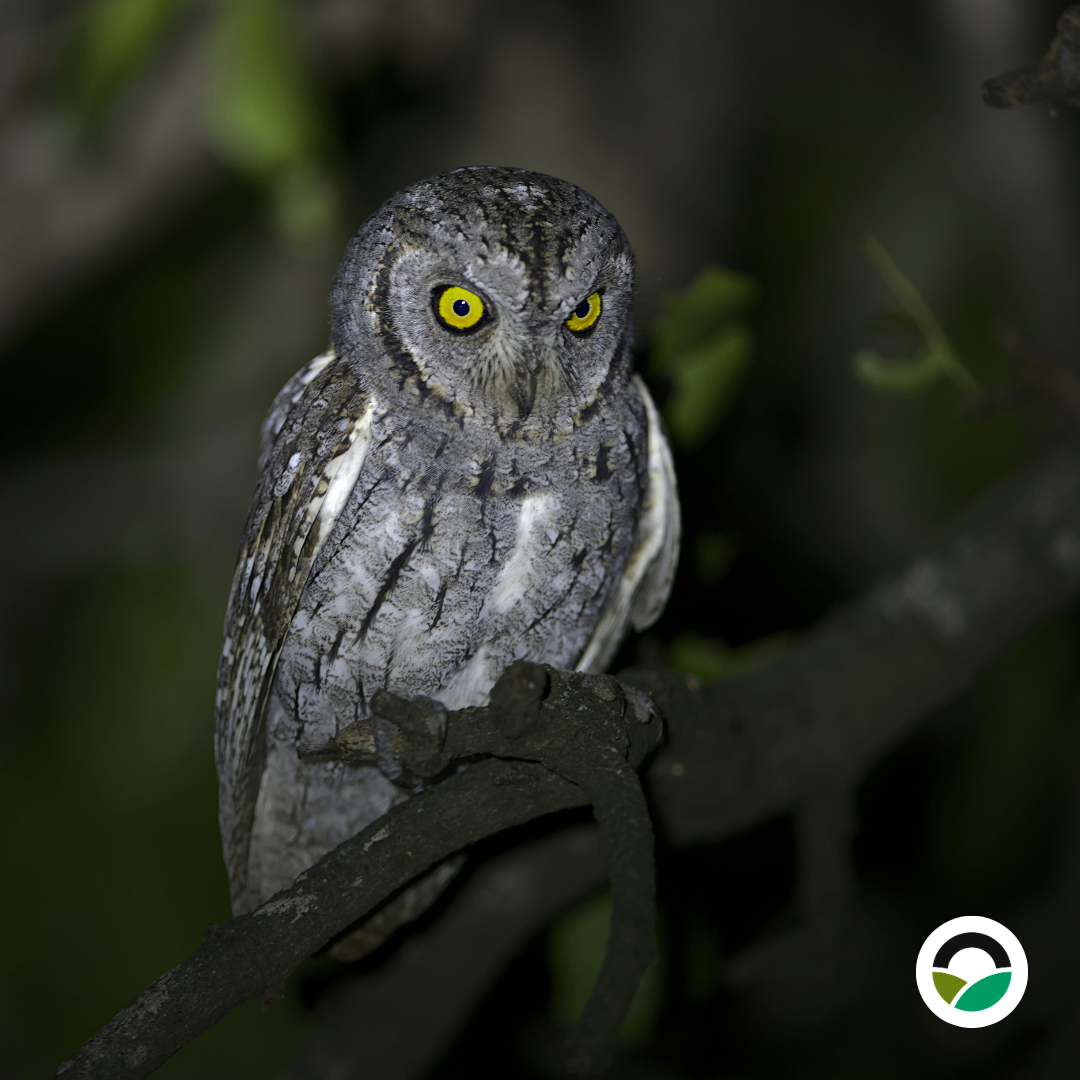
During the period 22/03/2026 – 27/03/2026, the most actively detected species was: Eurasian Scops-Owl (Otus scops)
204 detections recorded within 5 days
This detection pattern highlights increased nocturnal activity and seasonal presence within the monitored acoustic radius.
About the species
The Eurasian Scops-Owl is a small migratory owl distributed across southern Europe, North Africa and parts of western Asia. It typically inhabits open woodlands, olive groves, agricultural landscapes and Mediterranean scrub environments.
Ecologically, the species plays an important role as an insect predator, contributing to natural pest control. Its diet consists mainly of large insects such as beetles, moths and grasshoppers, which it hunts during nighttime activity.
Behaviourally, the Eurasian Scops-Owl is highly vocal, especially during the breeding season. Its distinctive, repetitive whistling call makes it particularly suitable for acoustic detection. The species is primarily nocturnal and often remains hidden during daylight hours, making sound-based monitoring especially valuable.
The species is classified as Least Concern (IUCN), although its migratory nature means its presence can vary seasonally depending on climate and habitat conditions.
Key ecological characteristics:
- Habitat preference: Open woodland, agricultural landscapes and Mediterranean vegetation
- Feeding behaviour: Insectivorous (beetles, moths, grasshoppers)
- Social structure: Mostly solitary during breeding season
- Vocal characteristics: Repetitive whistling call, primarily nocturnal
Detection data at Mavronero
The species was identified through the permanent acoustic monitoring system installed at Mavronero.
(For detailed methodology, see our article on bird detection and acoustic monitoring.)
During the analysed period:
- 204 detections
- Concentrated nocturnal activity patterns
- Consistent presence across consecutive nights
Compared to previous periods, the detection frequency suggests seasonal arrival and increased breeding-related vocal behaviour.
This dataset enables analysis of:
- Activity intensity
- Temporal distribution patterns
- Persistence across consecutive days
Interpreting the data
What does 204 detections in 5 days indicate?
- Active nocturnal presence
- Strong vocal behaviour linked to seasonal activity
- Stable short-term habitat occupation
The Eurasian Scops-Owl is known to vocalise frequently during territory establishment and breeding periods. The recorded detections align with expected seasonal behaviour for migratory owls arriving in Mediterranean regions during spring.
Short-term variation may be influenced by:
- Seasonal migration timing
- Breeding behaviour
- Night-time weather conditions
- Insect availability


Why this species matters
Even species detected primarily at night provide important ecological signals.
Changes in detection frequency may indicate:
- Seasonal migration patterns
- Habitat suitability for breeding
- Insect population dynamics
- Environmental stability
Long-term acoustic monitoring allows nocturnal species — often difficult to observe visually — to be integrated into biodiversity assessment.
Conclusion
At Mavronero, continuous acoustic monitoring strengthens science-based environmental management and biodiversity understanding.
The Eurasian Scops-Owl demonstrates how sound-based monitoring reveals hidden nocturnal activity and seasonal ecological patterns.
Listening systematically allows patterns to emerge — and patterns are the foundation of ecological understanding.
