
Even during the hottest weeks of the Mediterranean summer, nature continues to surprise us.
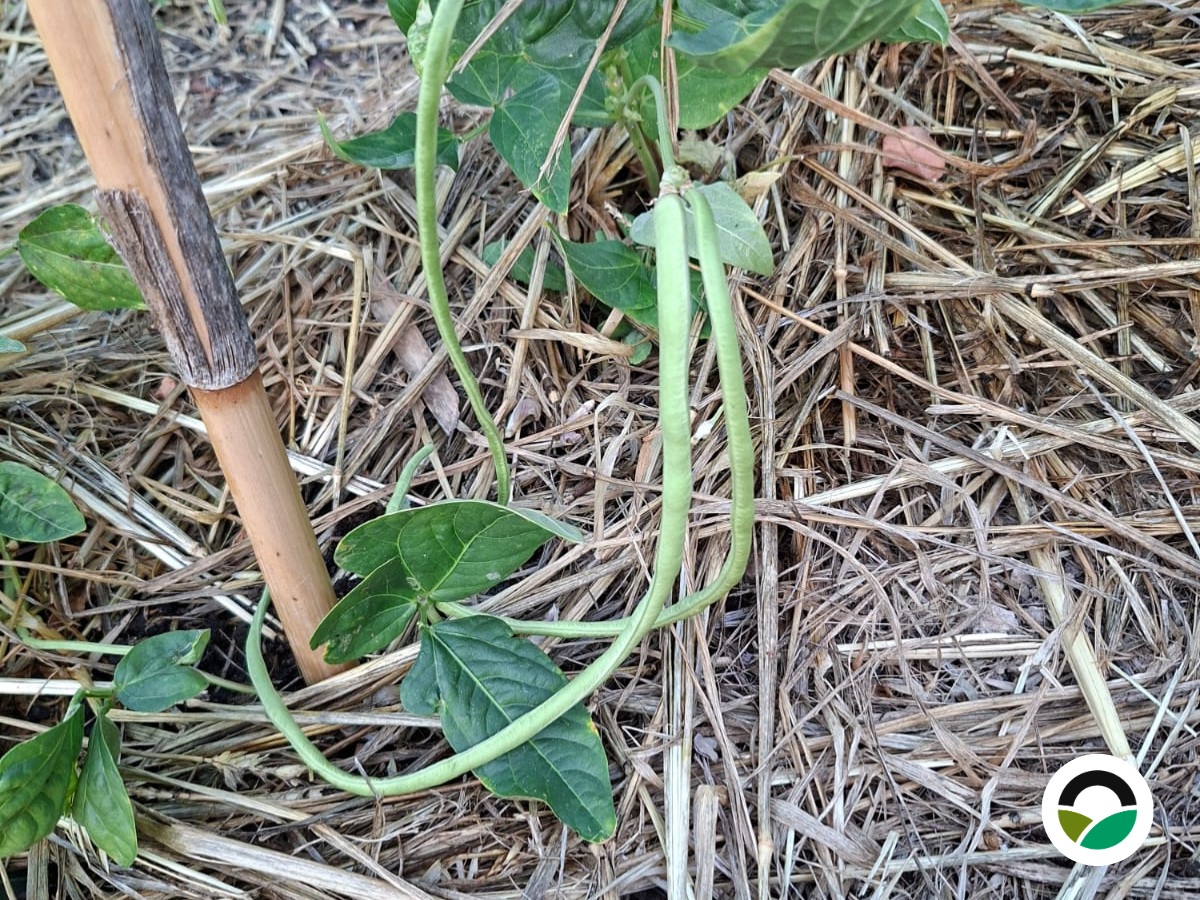
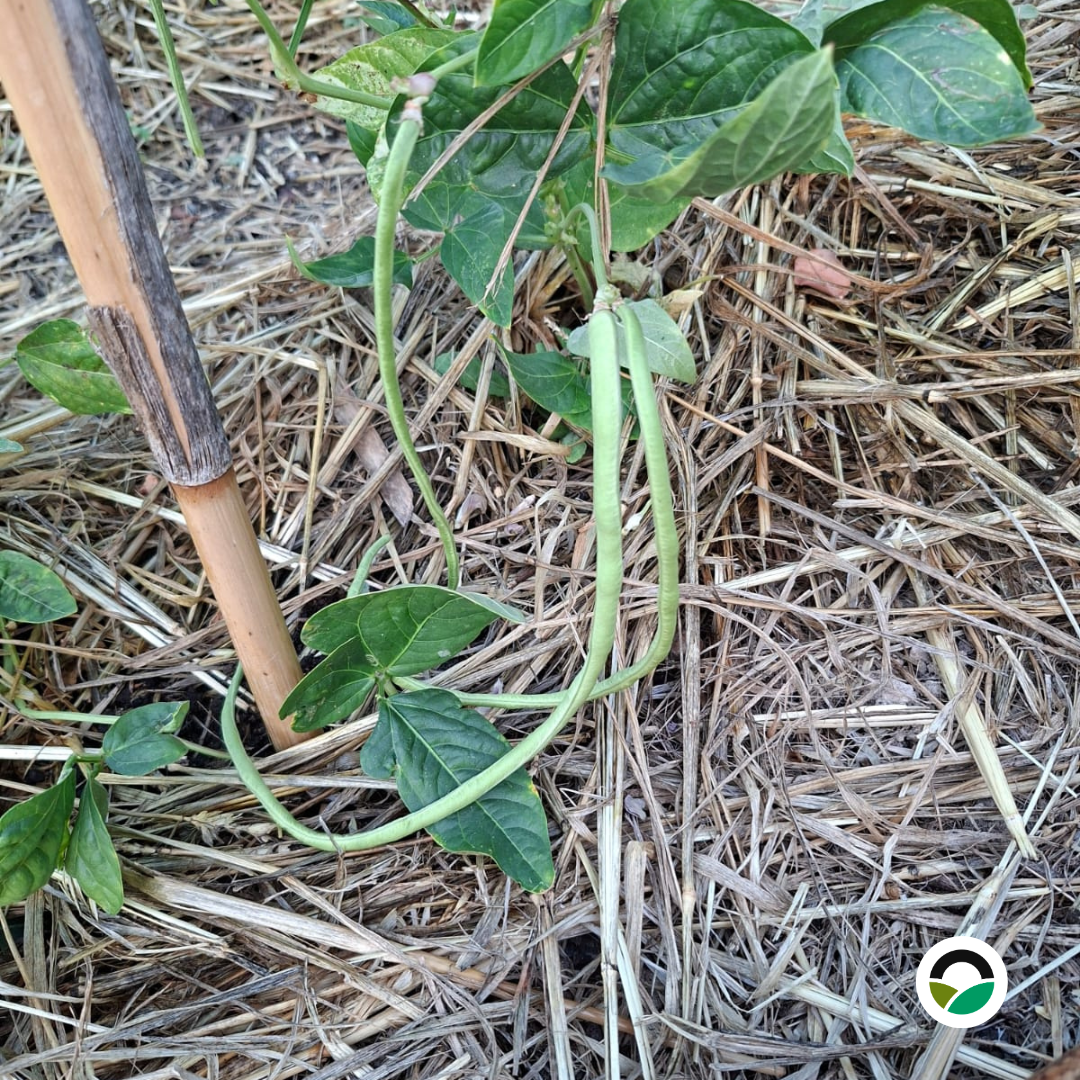
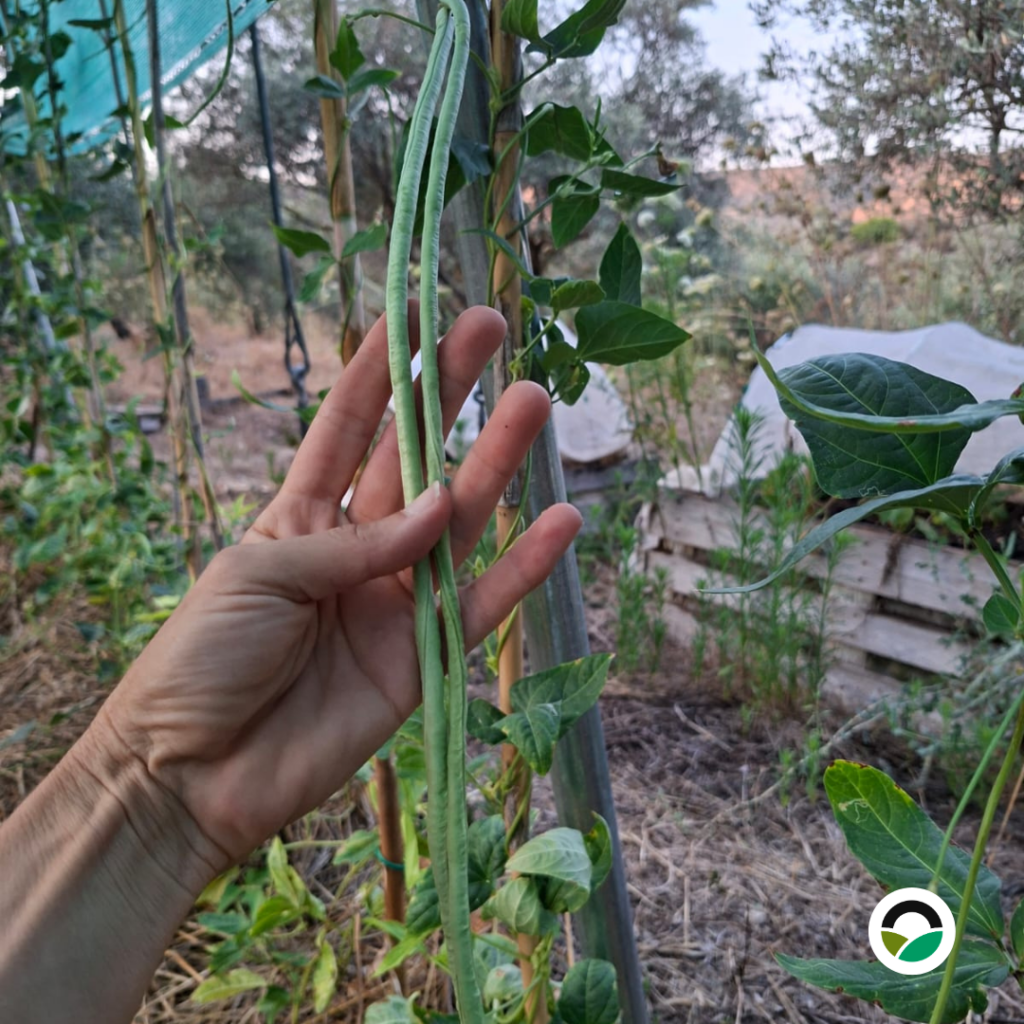
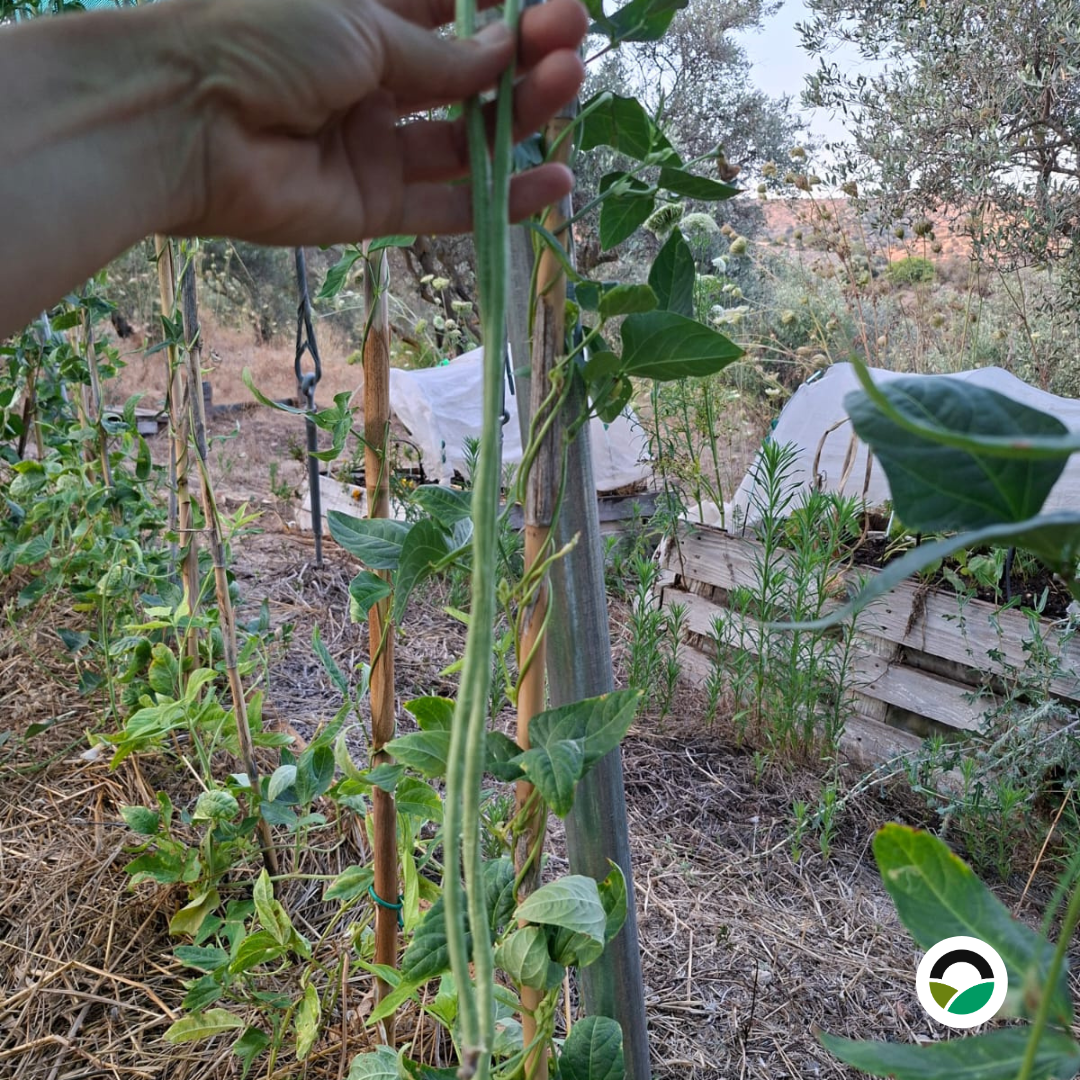
At Mavronero Farm, we have harvested our first yard long beans (Vigna unguiculata subsp. sesquipedalis) of the season. The harvest is still small, but each pod represents the success of simple regenerative farming practices that help crops cope with extreme summer conditions.
Rather than relying on intensive irrigation or artificial cooling, we focused on protecting the plants by working with the environment.
What are yard long beans?
Yard long beans are a climbing variety of cowpea belonging to the legume family (Fabaceae).
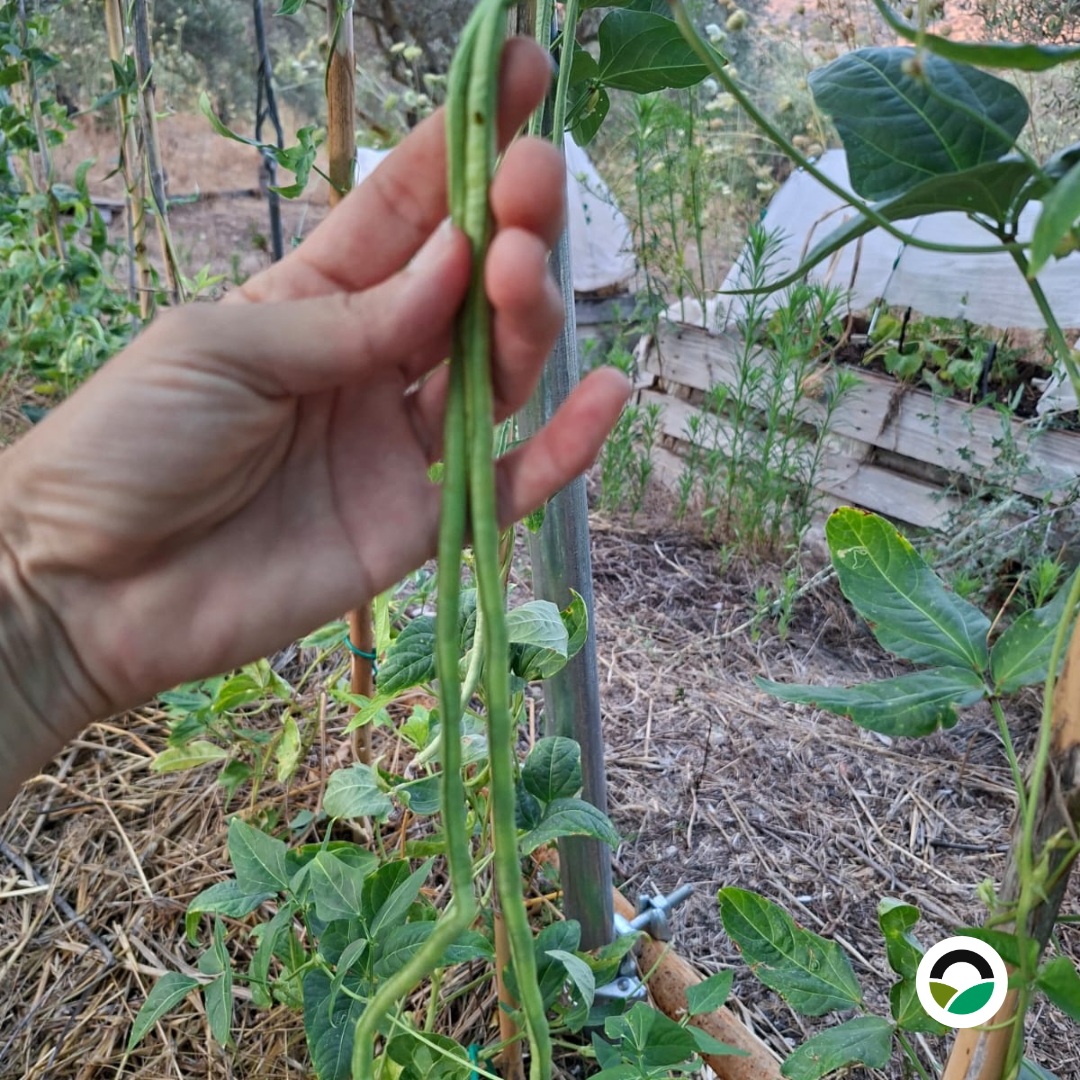
Originally cultivated in Asia but well adapted to warm climates, they are valued for their exceptionally long, tender pods, which can reach 50–90 cm in length.
The plants are recognised by:
- vigorous climbing vines
- long slender green pods
- purple or white flowers depending on the variety
- rapid growth during warm weather
- excellent drought tolerance once established
Like many legumes, they naturally improve soil health while producing nutritious edible beans.
How we protected them from the summer heat
Mediterranean summers are becoming increasingly challenging for vegetable production.
To help these beans establish and continue producing during periods of intense heat, we used two simple regenerative techniques:
- a thick layer of organic mulch around the plants
- shade cloth during the hottest hours of the day
These practices helped:
- reduce soil temperature
- minimise water evaporation
- maintain more stable soil moisture
- protect leaves from excessive sun stress
- encourage continued flowering and pod development
Instead of fighting the climate, these techniques help plants adapt naturally to seasonal conditions.
A soil-improving crop
Beyond producing food, yard long beans contribute to healthier soils.
Like other legumes, they form a natural partnership with nitrogen-fixing bacteria that live in nodules on their roots. These microorganisms convert atmospheric nitrogen into forms that plants can use.
This natural process helps:
- enrich soil fertility
- reduce dependence on synthetic fertilisers
- support neighbouring crops
- improve long-term soil health
- strengthen regenerative growing systems
Healthy soils are one of the foundations of resilient agriculture.
A modest harvest with a promising future
Our first harvest consists of only a handful of pods, but the plants are still actively flowering.
Each new flower has the potential to become another bean, and with continued care we hope production will increase throughout the coming weeks.
In regenerative farming, early harvests are often less important than building healthy plants capable of producing consistently over time.
Observations at Mavronero
The beans shown here were grown in beds protected with mulch and seasonal shade.
Compared with more exposed plants, they continued growing steadily despite prolonged periods of high summer temperatures.
These observations reinforce an important lesson: relatively small management decisions can have a significant impact on crop resilience.
Why mulch and shade matter
Protecting crops during summer is not only about increasing yields.
These practices also:
- conserve water
- reduce heat stress
- encourage healthier soil biology
- improve plant resilience
- support more sustainable food production
As Mediterranean climates become hotter and drier, these simple techniques are becoming increasingly valuable.
Interesting facts
- Yard long beans belong to the cowpea species (Vigna unguiculata).
- Their pods can grow up to 90 cm long.
- They thrive in warm climates with plenty of sunlight.
- They are naturally drought tolerant once established.
- As legumes, they improve soil through nitrogen fixation.
- Young pods are harvested while still tender.
- Continuous harvesting encourages the production of new pods.
Conclusion
Our first yard long beans may not fill a basket yet, but they represent something equally valuable: proof that thoughtful, regenerative practices can help crops thrive even during the hottest part of the Mediterranean summer.
By combining mulch, shade and healthy living soils, we are creating growing conditions that work with nature rather than against it—one harvest at a time.
