
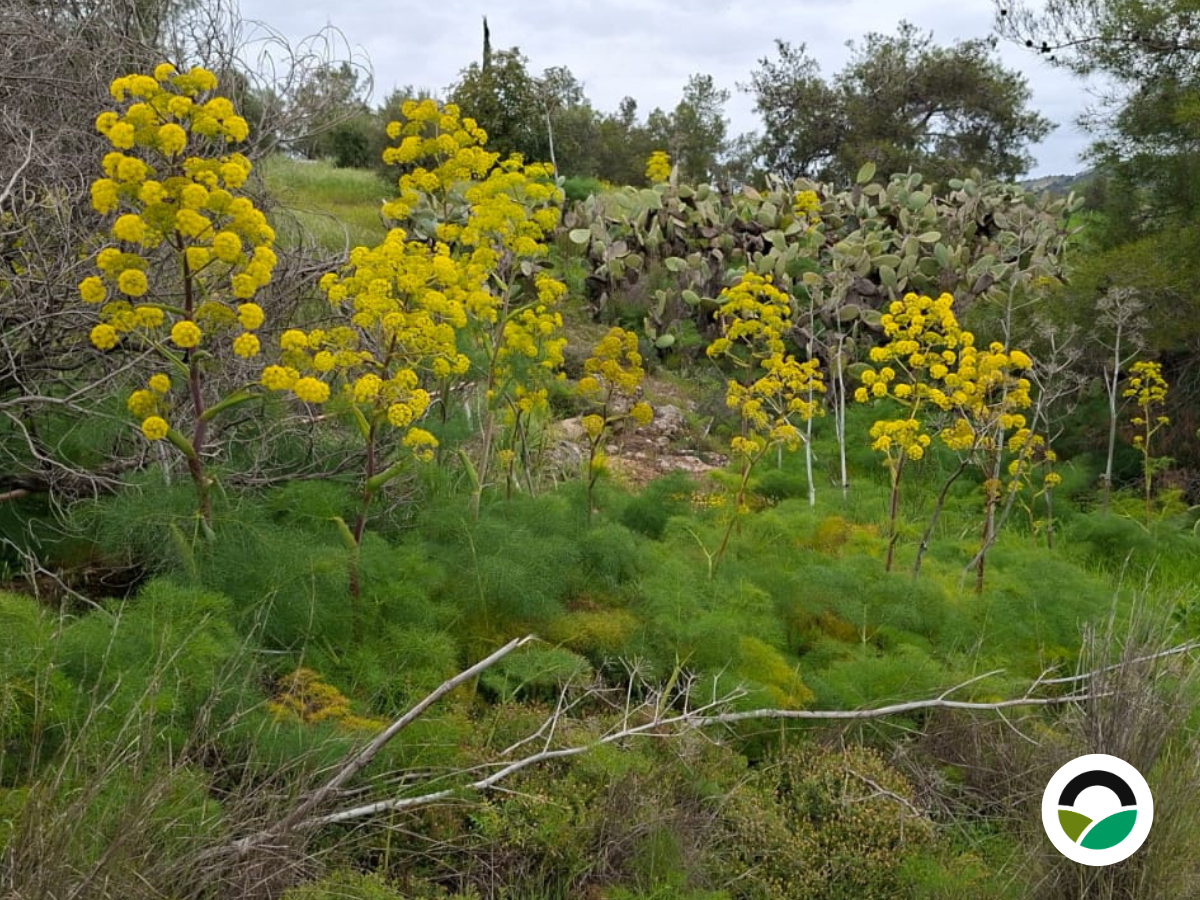
Tall flowering giant fennel plants are currently in full bloom at Mavronero, creating bright yellow accents across the Mediterranean landscape. Their umbrella-shaped flower clusters rise above seasonal grasses and shrubs, marking a distinctive phase of spring vegetation.
Giant fennel is a characteristic species of Mediterranean ecosystems, particularly common in open areas such as olive groves, slopes, and natural grasslands. Its rapid vertical growth and large inflorescences make it one of the most visually striking wild plants during this period.
Botanical identity
- Family: Apiaceae
- Species: Ferula communis
- Growth form: Herbaceous perennial
- Height: up to 2–3 metres
- Flowering period: spring
The plant develops dense basal foliage during winter and early spring. Later, tall hollow stems emerge, supporting large compound umbels of yellow flowers.
Morphological characteristics
Giant fennel is easily recognizable due to:
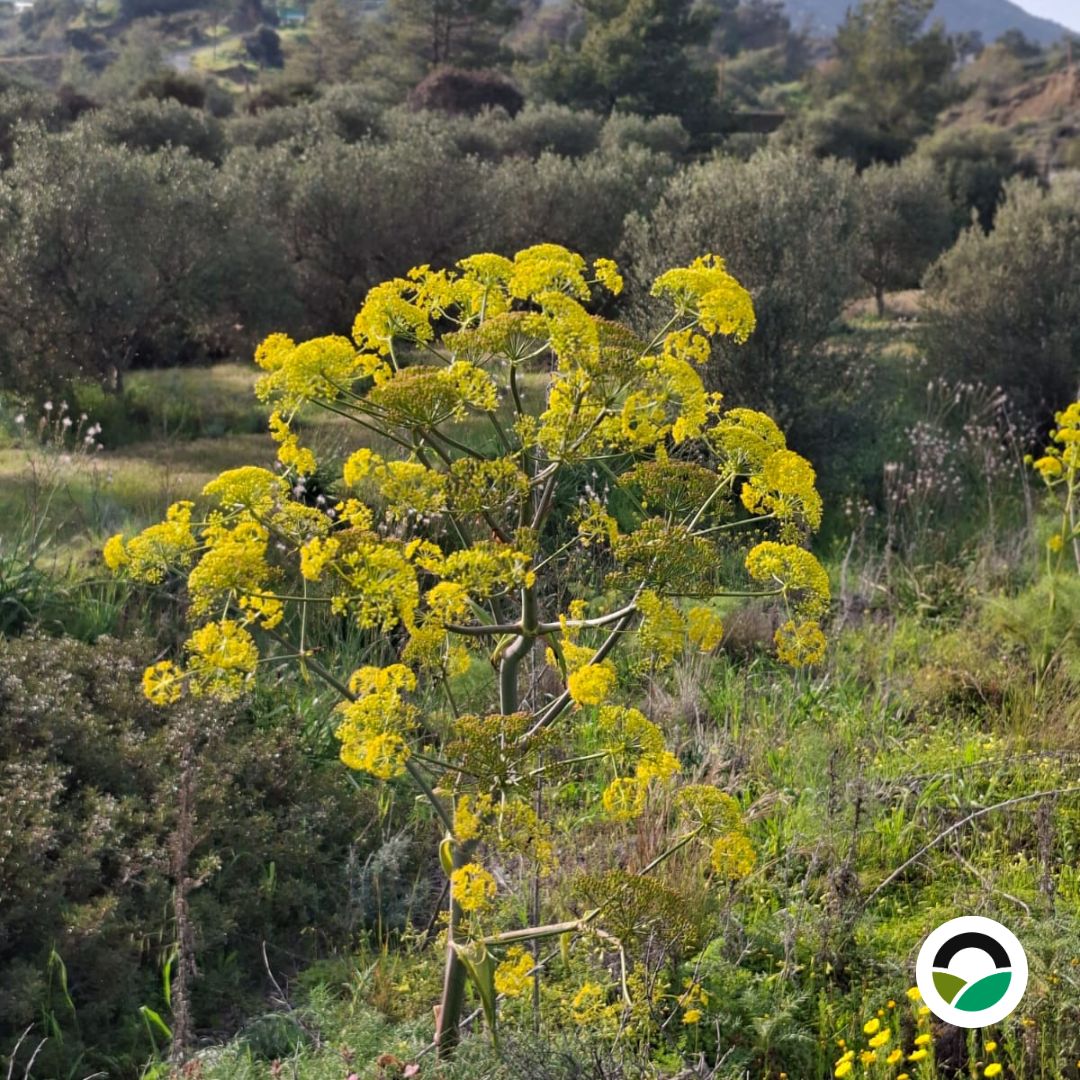
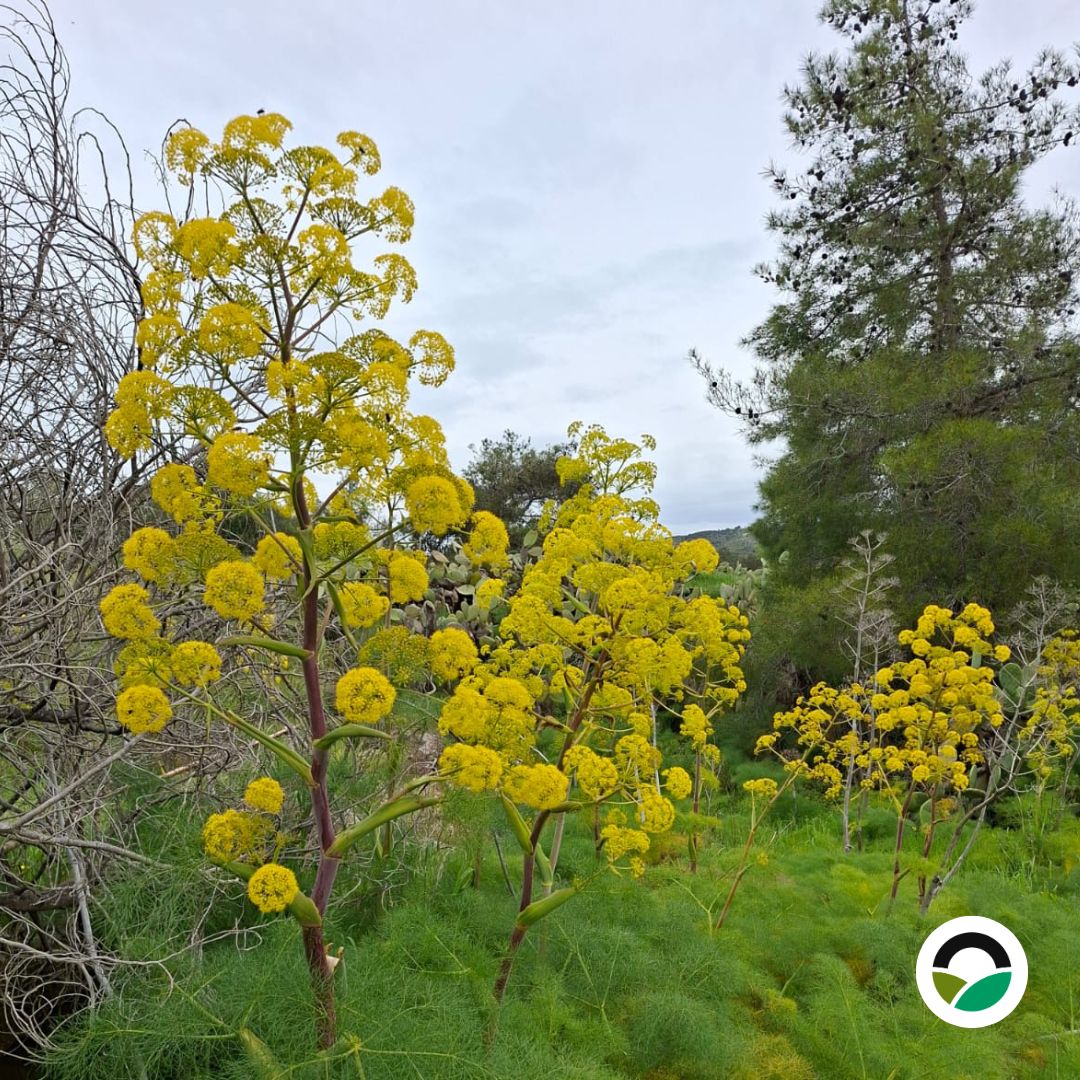
- tall, robust hollow stems
- finely divided feathery leaves
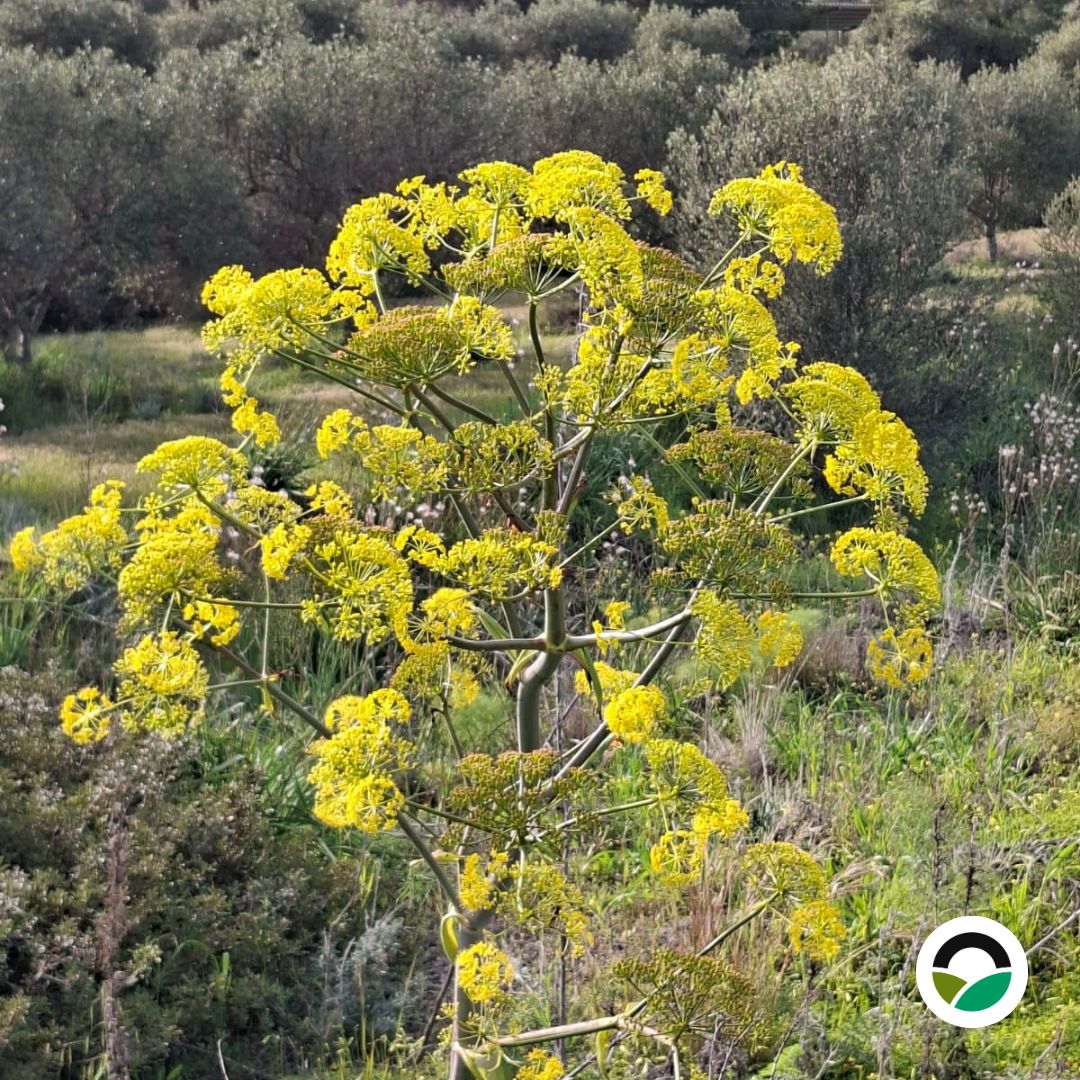
- large compound umbrella-shaped flower clusters
- bright yellow inflorescences
- strong vertical structure
These characteristics allow the plant to stand out clearly among surrounding vegetation.
Habitat and distribution
Ferula communis is widely distributed across Mediterranean regions, including:
- Cyprus
- Greece
- Southern Italy
- Spain
- North Africa
- Middle East
It typically grows in:
- olive groves
- roadside slopes
- natural grasslands
- abandoned agricultural land
- rocky hillsides
The species prefers well-drained soils and sunny exposures.
Flowering and ecological role
During spring, giant fennel produces large clusters of small yellow flowers arranged in compound umbels. These structures attract a variety of insects, including:
- bees
- flies
- beetles
- small pollinators
By providing nectar and pollen, the plant supports seasonal insect activity and contributes to biodiversity in Mediterranean landscapes.
Seasonal cycle
Giant fennel follows a clear seasonal development:
- winter: basal leaf growth
- early spring: stem elongation
- mid spring: flowering
- late spring: seed formation
- summer: plant drying and structural persistence
After flowering, the stems gradually dry but often remain standing, adding structure to the habitat.
Toxicity and grazing
Although visually attractive, giant fennel contains toxic compounds. Grazing animals typically avoid the plant, which allows it to grow undisturbed in many areas. This contributes to its presence in semi-natural agricultural landscapes.
Observations at Mavronero
Several flowering individuals were observed across the Mavronero landscape, particularly along slopes near olive trees and natural vegetation. Their bright yellow umbels contrast strongly with surrounding greenery, marking the transition into full spring.
These spontaneous plants contribute to habitat diversity and provide resources for insects, illustrating how wild Mediterranean flora integrates naturally within agricultural environments.
