
Growing new plants does not always begin with seeds. Many Mediterranean herbs can be propagated from cuttings, allowing a single healthy plant to become many.
During the summer of 2026, several cuttings of true lavender (Lavandula angustifolia) were planted in the nursery at Mavronero Farm. The cuttings were kindly shared by a friend of one of the Mavronero team members, demonstrating how both plants and gardening knowledge can be passed from one person to another.
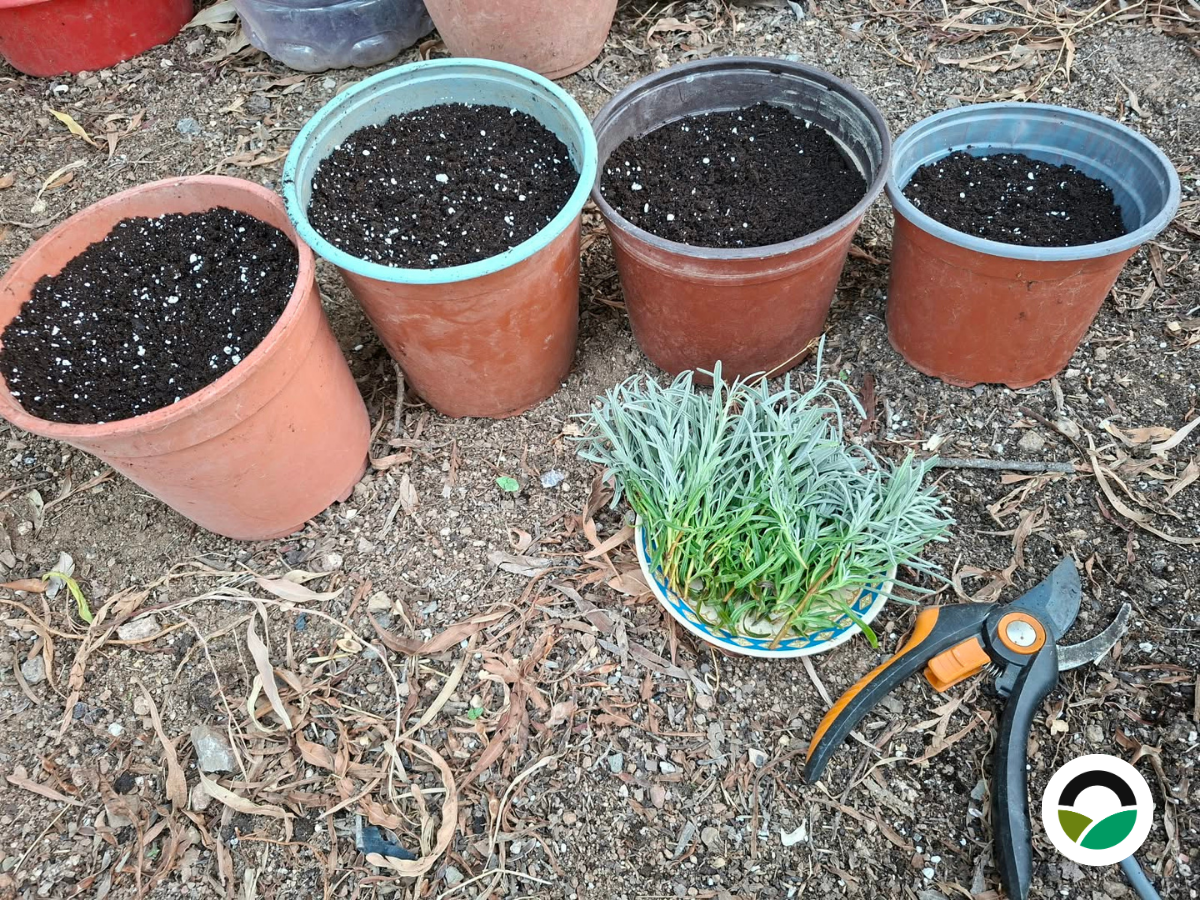
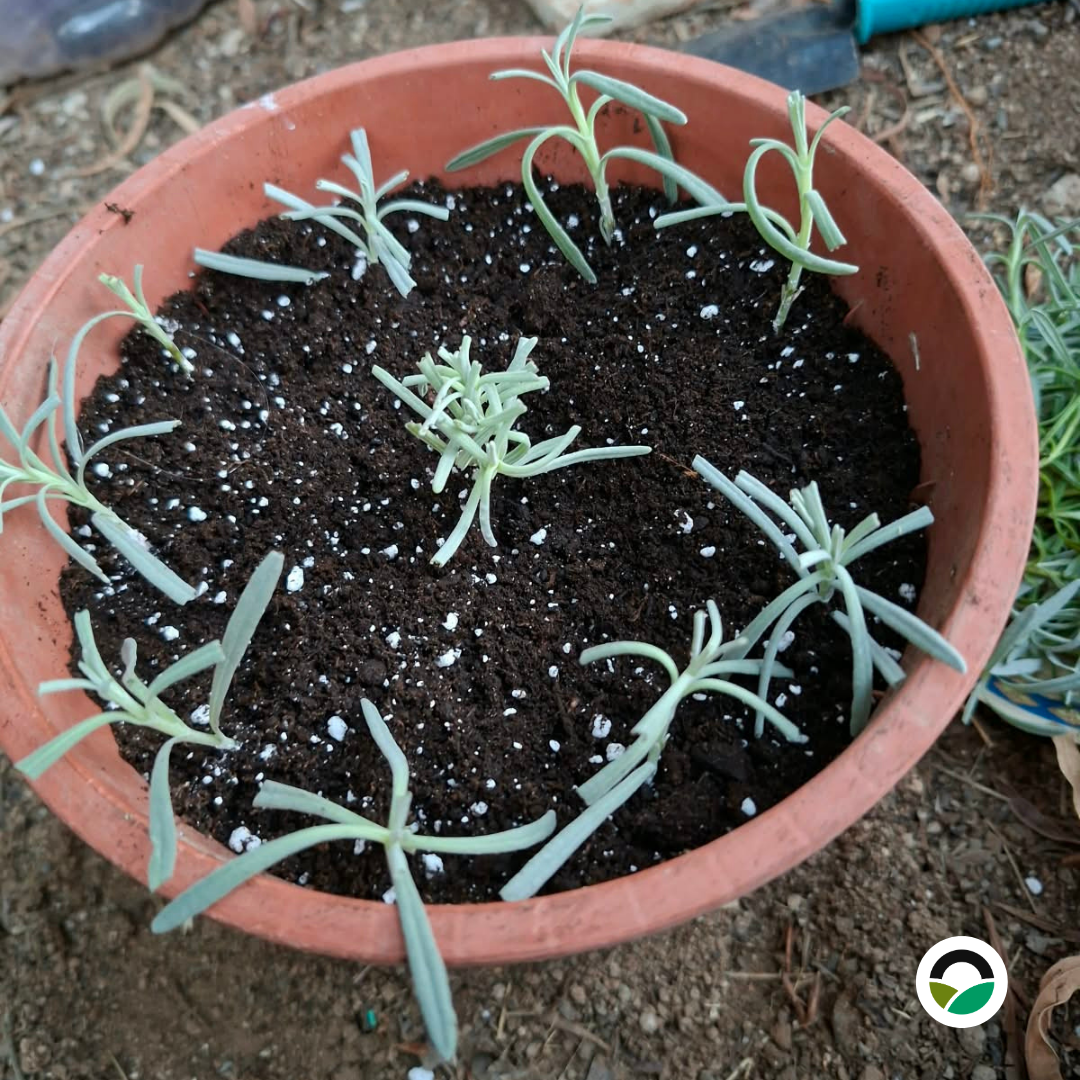
These photographs document the first stage of the propagation process, from preparing the cuttings to planting them in pots where they will hopefully develop roots over the coming weeks.
Propagating plants without seeds
Not all plants need to be grown from seed.
Many shrubs and aromatic herbs naturally produce new roots when healthy stem cuttings are placed under suitable conditions. This process is known as vegetative propagation and is widely used in horticulture to reproduce plants with consistent characteristics.
Unlike seed-grown plants, cuttings develop into genetically identical copies of the original plant, preserving its growth habit, fragrance and other desirable traits.
For herbs such as lavender, this is one of the most reliable methods of propagation.
Preparing lavender cuttings
Successful propagation begins by selecting healthy, vigorous stems from an established plant.
The lower leaves are removed before planting, leaving only the upper foliage. This reduces water loss while preventing buried leaves from rotting beneath the soil.
The cuttings are then inserted into a light, well-drained growing medium where the buried section of the stem can gradually produce new roots.
Although the process appears simple, patience is essential, as rooting can take several weeks depending on temperature, moisture and growing conditions.
Why true lavender?
True lavender (Lavandula angustifolia) is one of the best-known Mediterranean aromatic herbs.
Its fragrant flowers have traditionally been used to prepare herbal infusions, produce essential oils and attract beneficial insects to gardens and farms.
Beyond its practical uses, lavender is highly valued for supporting biodiversity. Its flowers provide abundant nectar for bees, butterflies and many other pollinating insects throughout the flowering season.
Every successful new lavender plant therefore contributes both to the farm and to the surrounding ecosystem.
The nursery at Mavronero
Plant propagation is an important part of creating resilient landscapes.
The nursery provides a protected environment where young plants can establish healthy root systems before being transplanted into their permanent locations across the farm.
Growing plants in this way reduces the need to purchase new material while encouraging the gradual expansion of native and beneficial species.
Each rooted cutting represents another future plant capable of supporting pollinators, enriching habitats and increasing botanical diversity.
Interesting facts
True lavender (Lavandula angustifolia)
- Native to the Mediterranean region.
- Commonly propagated from stem cuttings rather than seeds.
- Produces aromatic flowers used for herbal tea and essential oil.
- Forms genetically identical plants when propagated by cuttings.
- Highly attractive to bees, butterflies and other pollinating insects.
- Prefers full sun and well-drained soils.
- Usually develops roots within several weeks under suitable conditions.
- Can live for many years as a perennial shrub.
Growing biodiversity one plant at a time
Every mature lavender plant began as either a seed or a small cutting.
By learning simple propagation techniques, it becomes possible to multiply valuable plants, support pollinators and create healthier landscapes without relying solely on commercially produced nursery stock.
At Mavronero Farm, even small activities such as propagating herbs become opportunities to learn about nature while helping biodiversity grow one plant at a time.
Conclusion
Plant propagation is more than a gardening technique, it is a practical way to restore biodiversity and strengthen resilient ecosystems.
Each successfully rooted cutting represents another flowering plant, another source of nectar for pollinators and another contribution to regenerative agriculture.
Sometimes, creating a healthier landscape begins with nothing more than a single stem and the patience to let it grow.
