
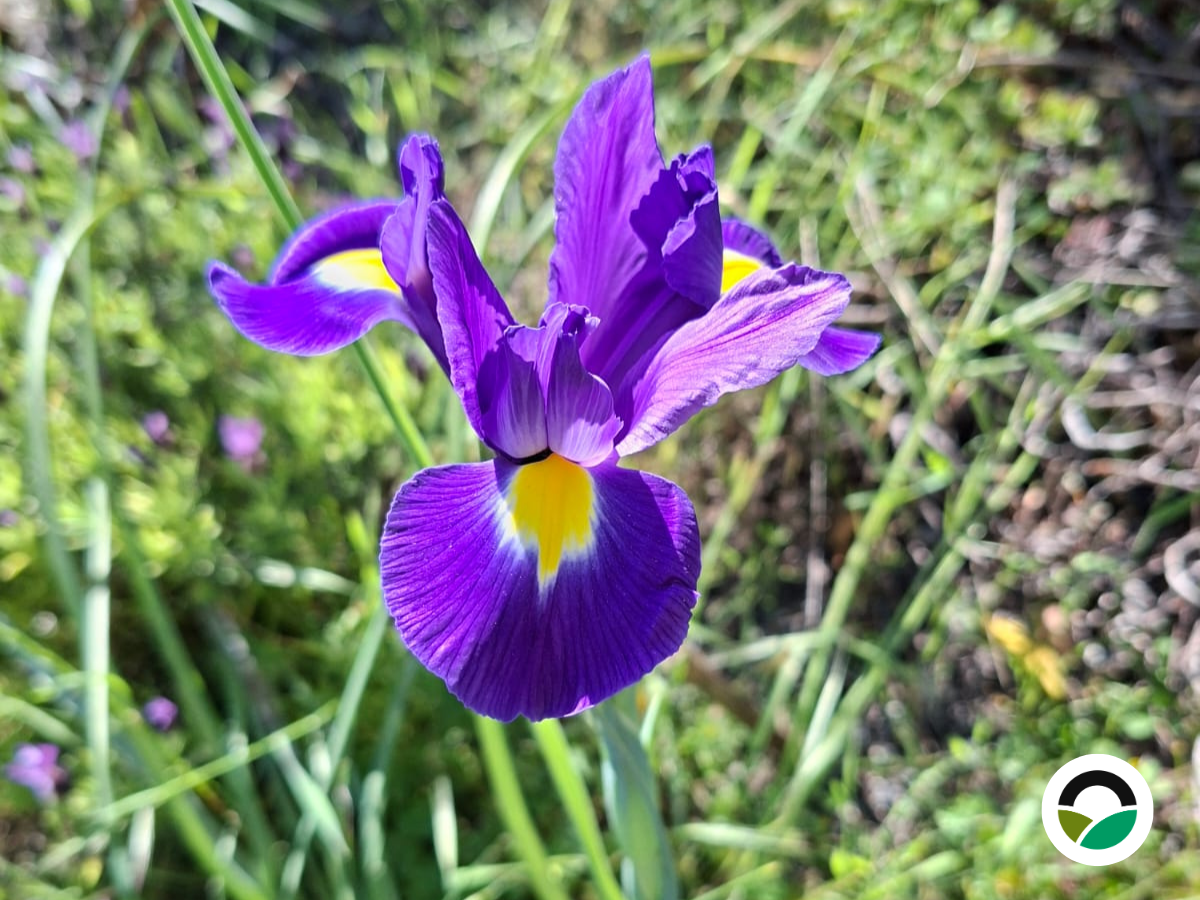
Morphological characteristics
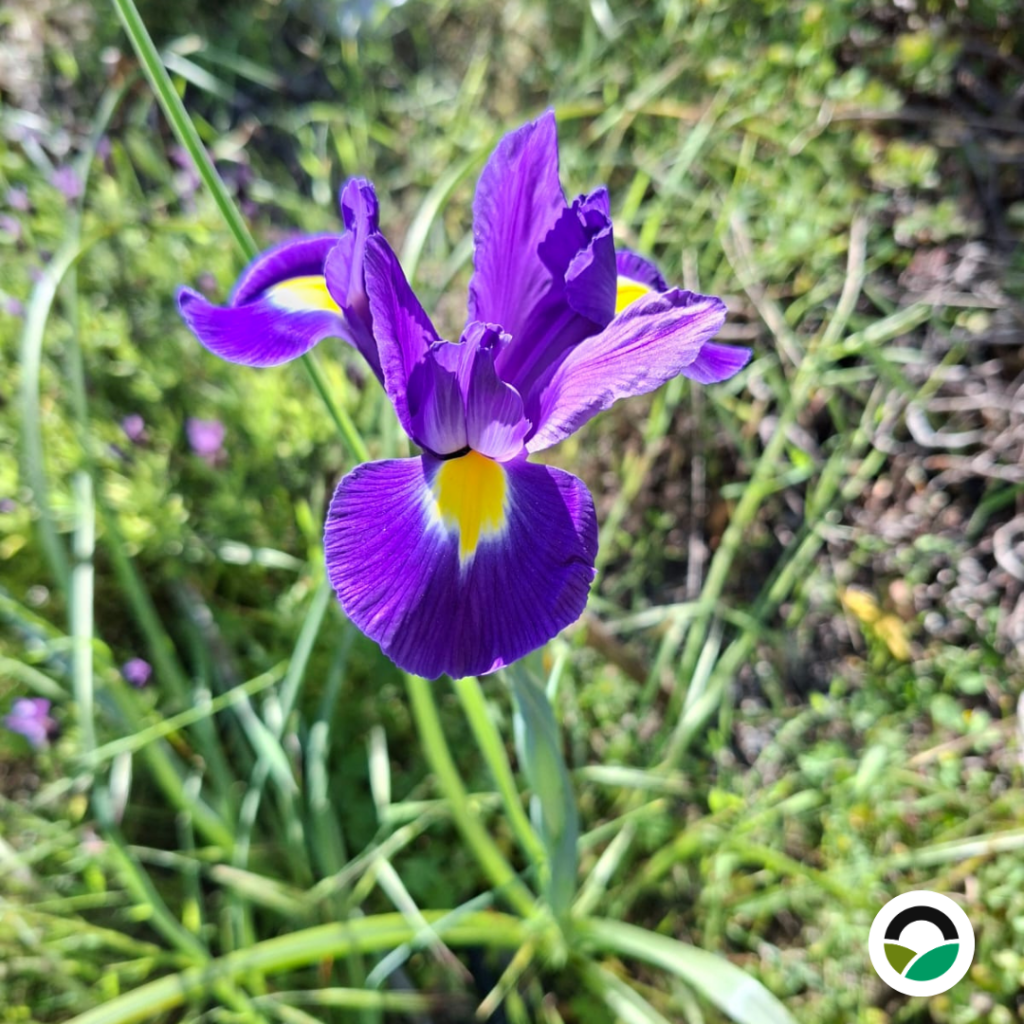
Irises (Iris spp.) are perennial herbaceous plants characterized by a highly distinctive floral structure composed of three upright petals (standards) and three downward-curving sepals (falls). These elements often display contrasting coloration, functioning as visual guides that direct pollinators toward nectar sources.
Key characteristics include:
- perennial growth supported by underground rhizomes
- sword-shaped leaves arranged in basal fans
- large, bilaterally symmetrical flowers with strong color contrast
- nectar guides adapted for insect pollination
- structural adaptations for efficient pollen transfer
These features contribute both to their reproductive success and their strong visual presence within Mediterranean landscapes.
Habitat and distribution
At Mavronero, irises are primarily observed in transitional zones between cultivated areas and natural vegetation. Their presence is closely associated with:
- well-drained soils
- areas with high sun exposure
- low to moderate soil disturbance
- edges of agricultural plots and semi-natural habitats
Their distribution pattern is not random, but reflects gradual expansion from initial planting or natural establishment points. Over time, clusters form as rhizomes extend horizontally beneath the soil surface.
Ecological role
Irises contribute to ecosystem functioning in several ways, particularly during the spring season when biological activity increases.
Their ecological functions include:
- providing nectar and visual cues for pollinators, especially bees
- supporting early-season pollination networks
- contributing to plant diversity in mixed vegetation systems
- stabilizing soil through rhizome structures
- enhancing habitat complexity at the ground level
Although not dominant species, their presence supports the broader ecological balance of the system.
Life cycle and seasonal dynamics
The life cycle of irises follows a clear seasonal rhythm adapted to Mediterranean climates:
- early spring: vegetative growth and leaf development
- mid-spring: flowering phase and peak pollinator interaction
- late spring: seed formation and energy storage in rhizomes
- summer: dormancy during dry conditions
- autumn–winter: underground persistence and resource conservation
This cyclical pattern allows irises to respond efficiently to environmental conditions while ensuring long-term survival.
Observations at Mavronero
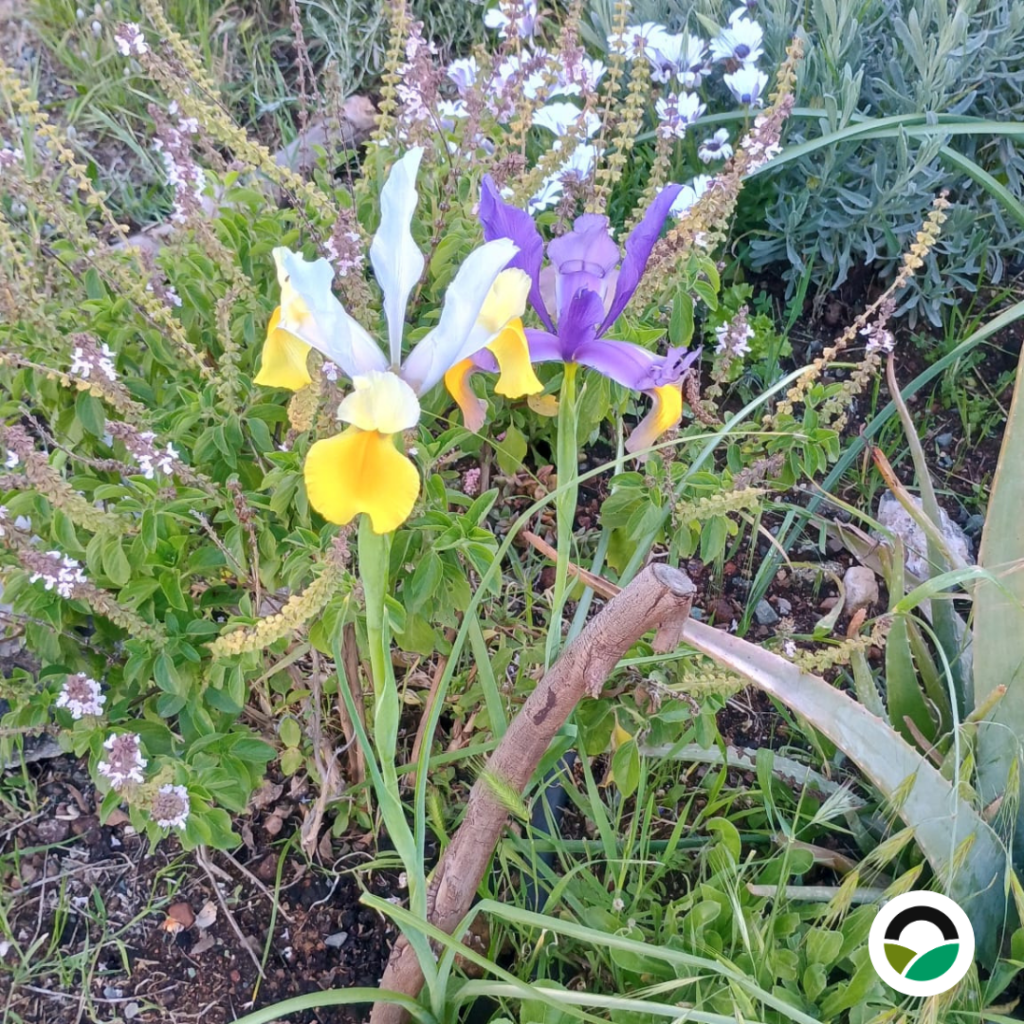
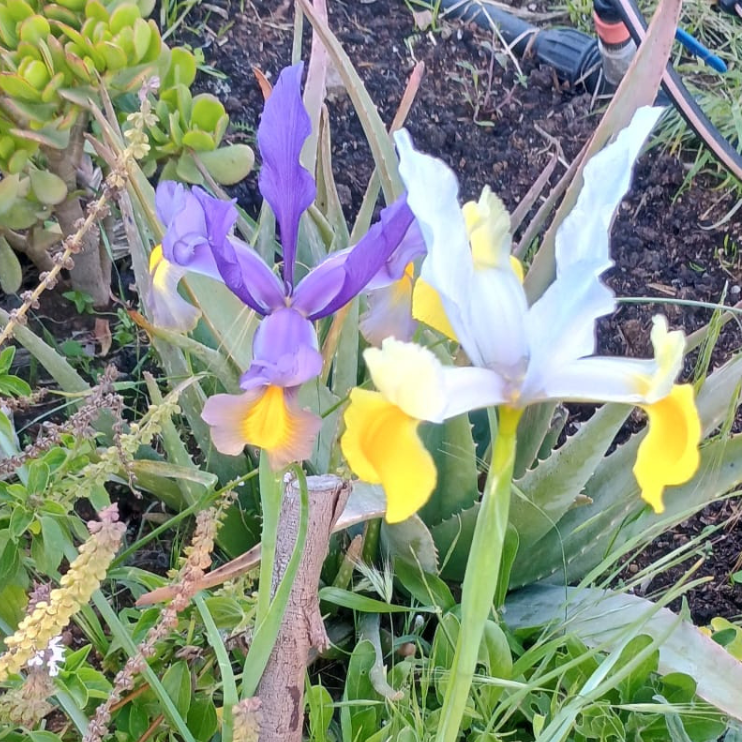
Field observations indicate the presence of multiple iris individuals displaying different color variations, including violet, yellow, and pale tones. These plants are mainly concentrated near the farmhouse and adjacent cultivated areas.
Notable observations include:
- increasing number of flowering individuals over time
- formation of small clusters expanding annually
- coexistence with both cultivated plants and spontaneous vegetation
- absence of intensive management or artificial propagation
These patterns suggest that irises are successfully adapting and expanding under current environmental conditions.
Integration within the ecosystem
Irises illustrate how perennial species can integrate into a semi-managed landscape without requiring continuous intervention. Their dependence on stable soil conditions and seasonal cycles makes them sensitive indicators of environmental balance.
At Mavronero, their coexistence with cultivated areas demonstrates:
- compatibility between agricultural activity and biodiversity
- resilience of plant communities under low-intensity management
- gradual naturalization of ornamental or introduced species
This integration supports a system where productivity and ecological stability are not mutually exclusive.
Conclusion
The presence of irises (Iris spp.) at Mavronero reflects more than a seasonal flowering event. It represents a process of gradual establishment and expansion driven by rhizome growth, environmental suitability, and ecological interaction.
Their increasing abundance indicates stable conditions and highlights the importance of allowing natural processes to unfold over time. As perennial species, irises contribute to the continuity and resilience of the landscape, reinforcing the ecological value of low-intervention management practices.
