
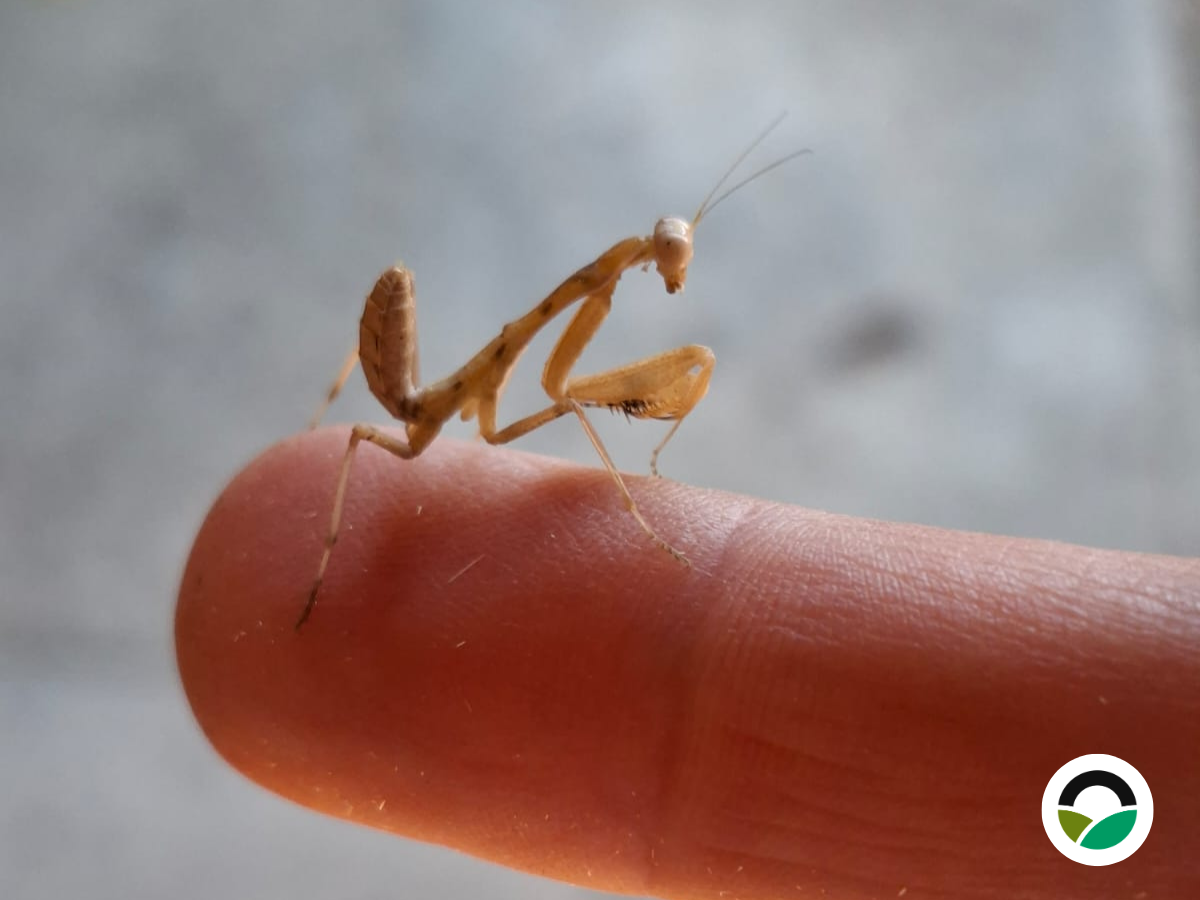
One of the joys of regenerative farming is that even routine tasks can lead to unexpected wildlife encounters.
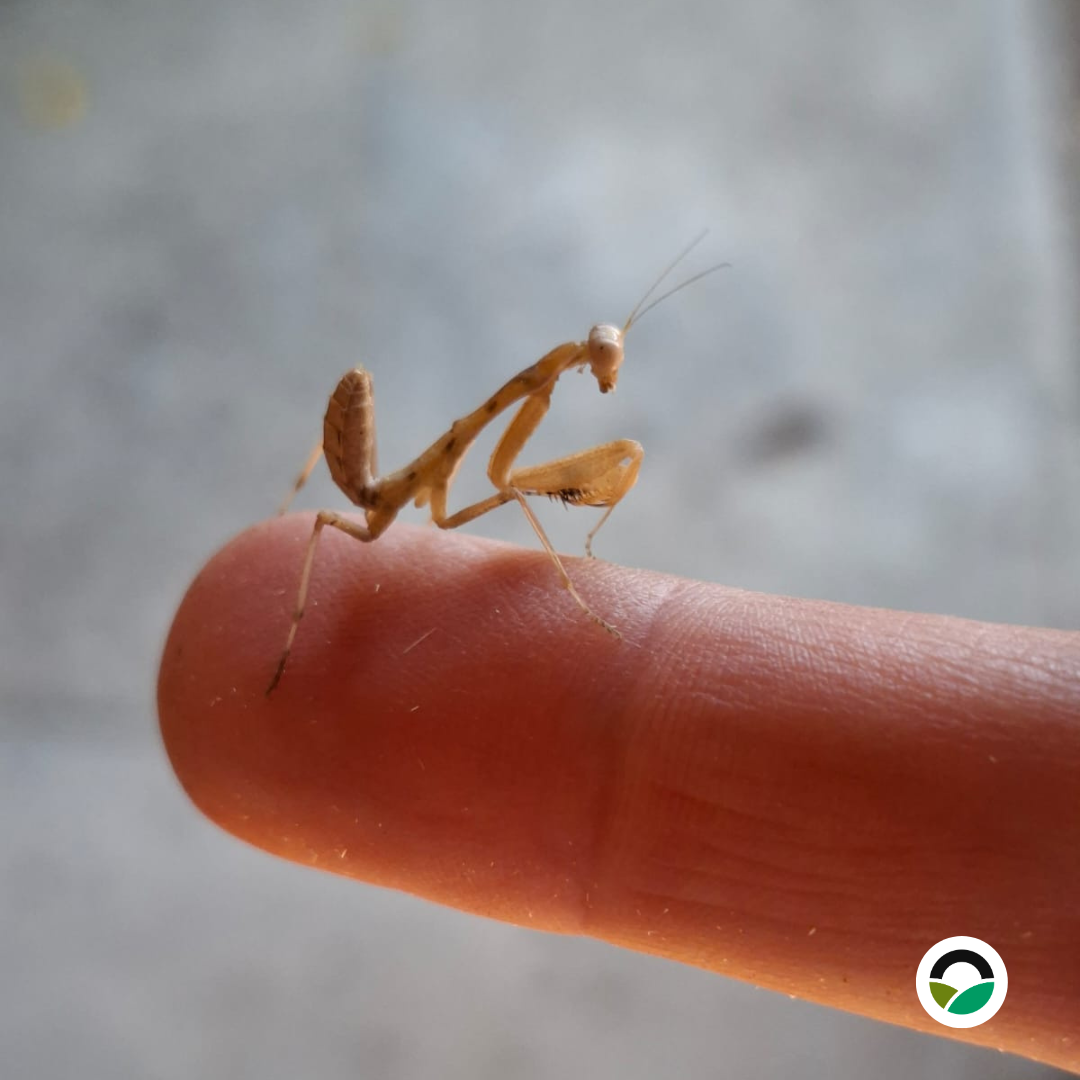
While collecting ripe wild carrot (Daucus carota) seeds at Mavronero Farm, a tiny juvenile praying mantis unexpectedly dropped into our seed jar as we gently shook the seed heads. After taking a closer look, and a few photographs, we carefully returned it to a nearby plant, where it could continue its important role in the ecosystem.
Encounters like this remind us that healthy farms are shared with countless species, many of which quietly contribute to maintaining ecological balance.
Natural pest control from an early age
Praying mantises (order Mantodea) are among the most effective natural predators found in Mediterranean ecosystems.
Even as juveniles, known as nymphs, they are active hunters. Unlike caterpillars or other insects that undergo complete metamorphosis, mantis nymphs resemble miniature adults and begin hunting almost immediately after hatching.
Using their powerful raptorial front legs, they capture a wide variety of prey including flies, aphids, moths, small grasshoppers, mosquitoes and other insects that inhabit agricultural landscapes.
Their presence contributes to naturally regulating insect populations, helping maintain healthier ecosystems without relying on chemical pesticides.
Masters of camouflage
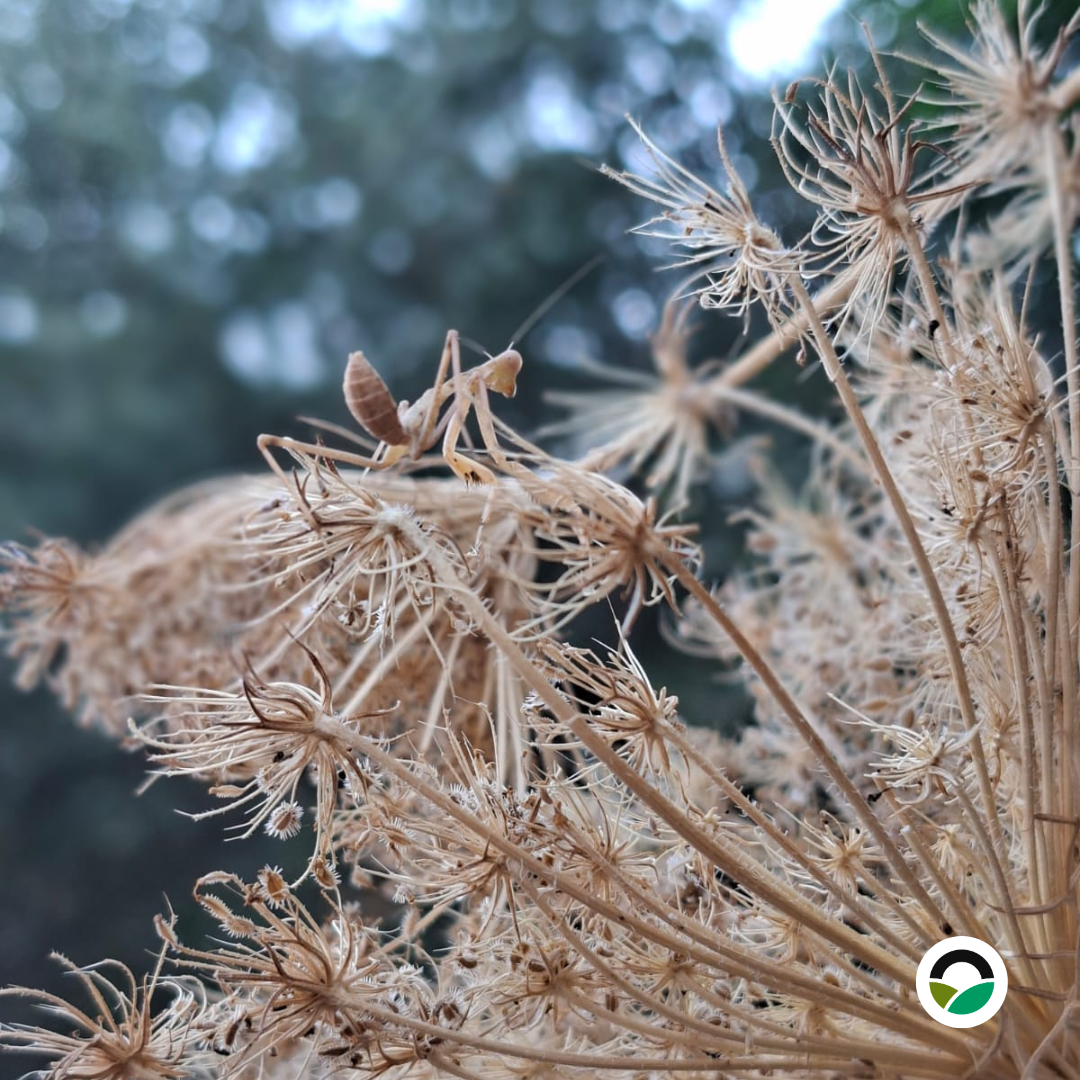
One of the praying mantis’ greatest adaptations is its extraordinary camouflage.
Depending on the species and habitat, mantises can blend almost perfectly with green vegetation, dry grasses or even flowers, allowing them to remain almost invisible to both predators and prey.
Rather than actively chasing insects, they rely on patience. Remaining perfectly still, they wait until prey comes within reach before striking with remarkable speed and precision.
This ambush strategy makes them highly efficient predators while requiring very little energy.
Why predators matter in regenerative farming
Healthy farms are supported not only by pollinators but also by predators.
Predatory insects help create balanced food webs by naturally limiting populations of herbivorous insects. While praying mantises are generalist hunters and do not target only pest species, they contribute to overall ecological stability by increasing biodiversity and supporting natural population dynamics.
Regenerative agriculture encourages these ecological relationships by reducing pesticide use and providing habitats where beneficial insects can thrive throughout the year.
Every predator is part of a larger network that keeps ecosystems functioning naturally.
Observations at Mavronero
The juvenile mantis appeared while we were harvesting wild carrot seeds for future propagation around the farm.
As the dry seed heads were shaken into a collection jar, the tiny hunter unexpectedly landed inside among the seeds. After observing it briefly, we carefully released it onto a nearby plant, allowing it to continue hunting naturally.
Moments like these remind us that biodiversity is often found in the smallest details. Every field, hedgerow and wildflower patch supports countless interactions that are easy to overlook but essential for a resilient ecosystem.
Interesting facts
Praying mantis (Order Mantodea)
- Juvenile mantises, called nymphs, begin hunting immediately after hatching.
- Mantises are ambush predators that rely on camouflage rather than chasing prey.
- Their specialised front legs are adapted for rapidly capturing insects.
- A single mantis may consume many different insect species throughout its life.
- Maintaining natural habitats on farms helps support populations of predatory insects alongside pollinators.
Conclusion
Finding a juvenile praying mantis during seed collection was a small but meaningful reminder that regenerative farming is about far more than growing crops.
Every healthy habitat supports a community of organisms that contribute to the resilience of the whole ecosystem. By protecting biodiversity and allowing natural ecological processes to thrive, farms become more productive, balanced and sustainable over time.
Sometimes, the smallest visitors tell the biggest stories about the health of the landscape.
