
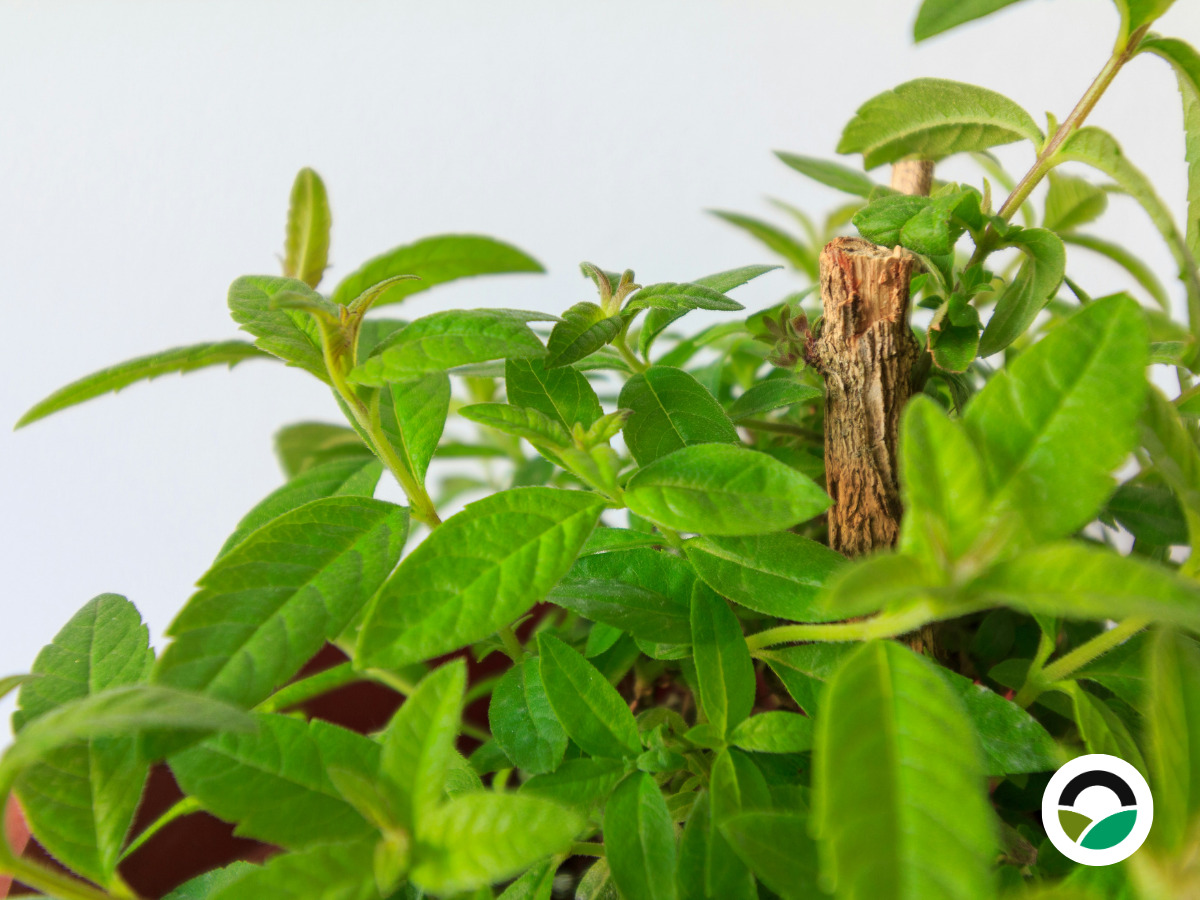
A refreshing citrus aroma
Lemon verbena is an aromatic shrub known for the distinctive lemon-like fragrance of its leaves. Originally native to parts of South America, it is now cultivated in many regions of the world for its aromatic foliage and use in herbal infusions.
Its fresh citrus aroma makes it a popular ingredient in herbal teas, which can be enjoyed on their own or combined with other suitable aromatic plants.
Unlike many herbs traditionally associated with Mediterranean landscapes, lemon verbena originates from a subtropical region. Growing it in Mediterranean climates therefore requires attention to local conditions, particularly during colder periods.
What is lemon verbena?
Lemon verbena (Aloysia citrodora) is a perennial aromatic shrub belonging to the family Verbenaceae. According to the Royal Botanic Gardens, Kew, its native range extends from southern Bolivia to northwestern Argentina. The species is now cultivated well beyond its original distribution. Plants of the World Online
The plant develops elongated green leaves, often arranged in groups of three along its stems. When rubbed or crushed, they release a strong citrus-like fragrance.
This characteristic aroma comes from volatile compounds in the leaves, including citral. The plant also contains other naturally occurring compounds that have attracted scientific interest.
Lemon verbena is primarily valued for its fragrant foliage, which can be used fresh or dried in culinary preparations and herbal infusions.
Lemon verbena in herbal tea traditions
Lemon verbena has a long history of use as an aromatic herbal drink, particularly in South America, where it is also known by names such as cedrón and yerba luisa.
Its leaves are used to prepare infusions with a characteristic citrus flavour. Depending on local traditions and personal preferences, the drink may be enjoyed on its own or combined with other aromatic herbs.
The leaves can be used fresh or dried. Drying reduces their moisture content and can change the intensity and character of their aroma, influencing the flavour of the finished infusion.
Lemon verbena is also recognised in European herbal medicine. The European Medicines Agency has assessed its leaves as a traditional herbal medicinal product for specific uses, distinguishing these traditional applications from uses supported by established clinical evidence. European Medicines Agency (EMA)
How is lemon verbena tea prepared?
Lemon verbena tea is prepared by steeping its leaves in hot water. The resulting infusion has a fresh, citrus-like aroma and can be enjoyed as a warm drink.
Ingredients
- 1–2 g of dried lemon verbena leaves
- 200 ml of freshly boiled water
Preparation
- Place the dried leaves in a cup or teapot.
- Pour 200 ml of freshly boiled water over the leaves.
- Cover and allow the leaves to infuse before straining.
- Enjoy the infusion warm.
This recipe follows the European Medicines Agency’s traditional-use preparation for an infusion intended to aid sleep. The EMA also documents different preparations for other traditional uses, so the quantity and frequency of use should not be treated as interchangeable across all purposes. European Medicines Agency (EMA)
What does scientific research tell us?
Lemon verbena has been investigated for its chemical composition and potential biological properties. Research has examined both extracts and individual compounds, but the results need to be interpreted according to the type of preparation studied.
A distinctive aromatic profile
The characteristic citrus fragrance of lemon verbena is associated with volatile compounds, including citral. These substances contribute to the plant’s aroma and make its leaves suitable for aromatic preparations.
The composition of lemon verbena can vary according to growing conditions, the maturity of the leaves and how the plant material is processed.
Naturally occurring plant compounds
Researchers have identified a range of naturally occurring compounds in lemon verbena, including phenolic compounds such as verbascoside.
Scientific studies have investigated the antioxidant activity and other biological properties of these compounds and of extracts prepared from the plant.
However, results obtained in laboratory experiments or studies using concentrated extracts cannot automatically be applied to a conventional cup of lemon verbena tea. The concentration and composition of these preparations can differ considerably. PubMed
Traditional use and scientific evidence
The European Medicines Agency recognises lemon verbena leaf as a traditional herbal medicinal product for the relief of mild symptoms of mental stress, to aid sleep, and for the symptomatic treatment of mild gastrointestinal complaints, including bloating and flatulence.
These uses are recognised on the basis of long-standing traditional use. They should not be interpreted as proof that every preparation has the same effects or that lemon verbena has been established as an effective treatment through robust clinical trials. European Medicines Agency (EMA)
Distinguishing traditional knowledge from clinical evidence helps provide a more accurate understanding of the plant and its potential applications.
Growing lemon verbena
Lemon verbena is cultivated for its aromatic leaves and can develop into a substantial shrub under favourable conditions.
Its growth depends on local climate, soil conditions and seasonal care. In Mediterranean environments, the warm growing season can provide suitable conditions, although protection may be needed when temperatures drop.
General cultivation considerations include:
- Sunlight: Choose a sunny location to support healthy growth and aromatic foliage.
- Soil: Use well-drained soil to avoid prolonged waterlogging around the roots.
- Watering: Water appropriately during active growth, taking local weather and soil moisture into account.
- Seasonal protection: Protect plants from unsuitable cold conditions, especially during winter.
- Pruning: Remove damaged growth and maintain the plant as needed.
These general considerations can help guide the cultivation of lemon verbena in gardens and aromatic herb collections.
Harvesting and preserving the leaves
Lemon verbena leaves are valued for their fragrance, making harvesting and storage important for preserving their aromatic quality.
Leaves intended for culinary use or herbal infusions should come from correctly identified plants and be clean and free from contamination.
Drying the leaves under suitable conditions helps reduce moisture before storage. Once completely dry, they should be kept in a clean, airtight container away from direct sunlight, heat and excessive humidity.
The aroma may change during drying and storage, so the quality of the final infusion depends partly on how the leaves are handled.
Responsible use of herbal infusions
Lemon verbena has a recognised history of traditional use, but its suitability depends on the preparation, the quantity consumed and the individual.
The European Medicines Agency notes that its safety during pregnancy and breastfeeding has not been established and that use during these periods is not recommended. Its medicinal use in children has also not been established because of insufficient data. People with known hypersensitivity to lemon verbena or other plants in the Verbenaceae family should avoid it. European Medicines Agency (EMA)
Anyone considering regular medicinal use, particularly when taking medication or managing an existing health condition, should seek advice from a qualified healthcare professional.
Herbal infusions should not replace prescribed medical treatment.
Interesting facts about lemon verbena
- South American origins: Lemon verbena is native to southern Bolivia and northwestern Argentina.
- A member of Verbenaceae: It belongs to the same botanical family as other plants in the genus Verbena, although it is classified in the separate genus Aloysia.
- A distinctive fragrance: Its leaves release a strong lemon-like aroma when rubbed or crushed.
- Several common names: It is known as cedrón and yerba luisa in parts of its native and cultivated range.
- A recognised traditional herbal product: Lemon verbena leaf has been assessed by the European Medicines Agency for specific traditional uses.
- A subject of scientific research: Researchers have investigated its aromatic and phenolic compounds, although findings from extracts and laboratory studies do not necessarily translate into effects from drinking an infusion.
Conclusion
Lemon verbena is an aromatic plant valued for its fresh citrus fragrance and its long-standing use in herbal infusions.
Originally native to South America, it has become a familiar cultivated herb in many parts of the world. Its distinctive leaves connect botanical diversity with culinary traditions and the everyday use of aromatic plants.
Scientific research continues to investigate its chemical composition and biological properties, while European herbal assessments document specific uses based on traditional experience. Understanding the distinction between these forms of evidence helps us appreciate the plant without overstating what is known about its effects.
At Mavronero Farm, documenting aromatic plants such as lemon verbena provides an opportunity to explore their botanical characteristics, cultivation requirements and place within wider herbal traditions.
