
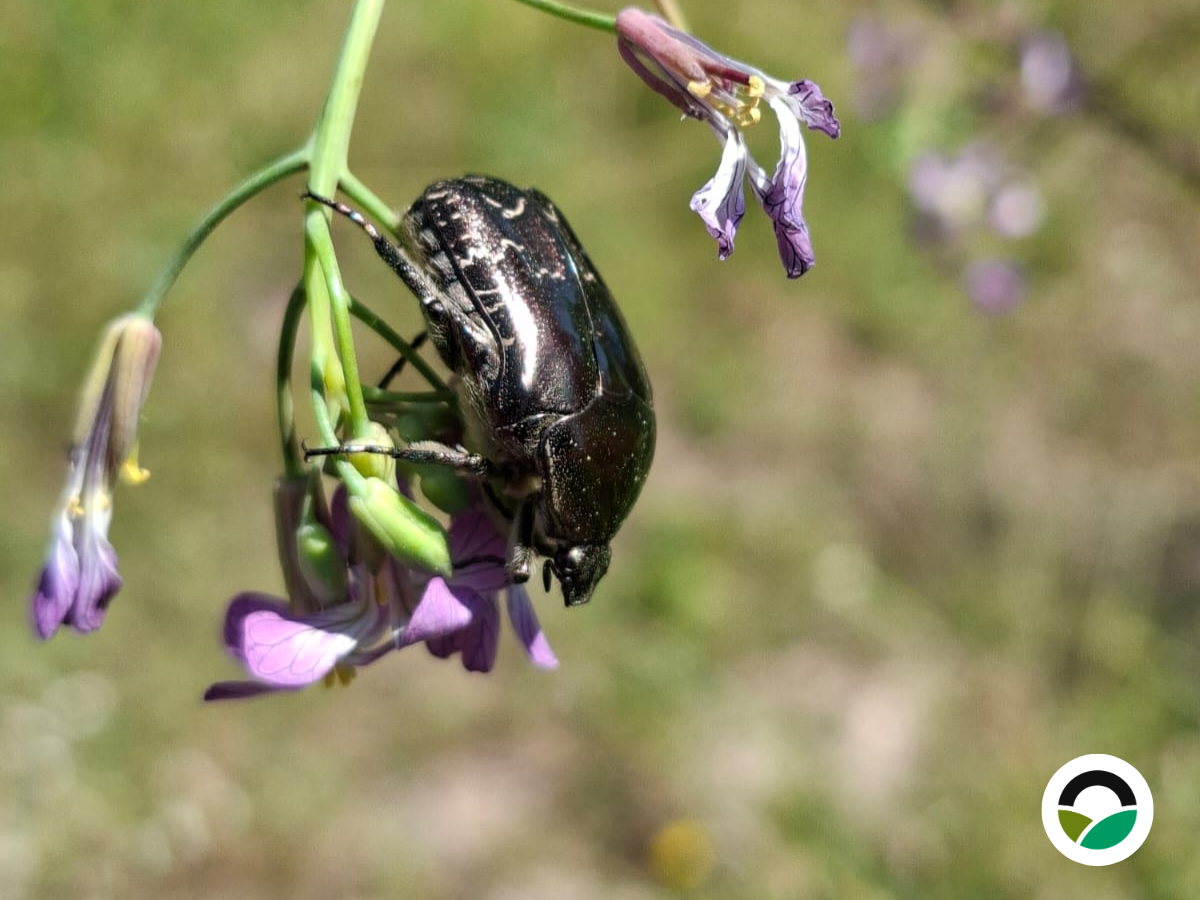
Mediterranean flower chafer beetles (Cetoniinae spp.) form part of the diverse invertebrate communities associated with flowering vegetation across Mediterranean ecosystems.
These beetles are commonly observed interacting with seasonal flowering plants within grasslands, cultivated olive landscapes, herbaceous vegetation systems, and semi-natural Mediterranean habitats.
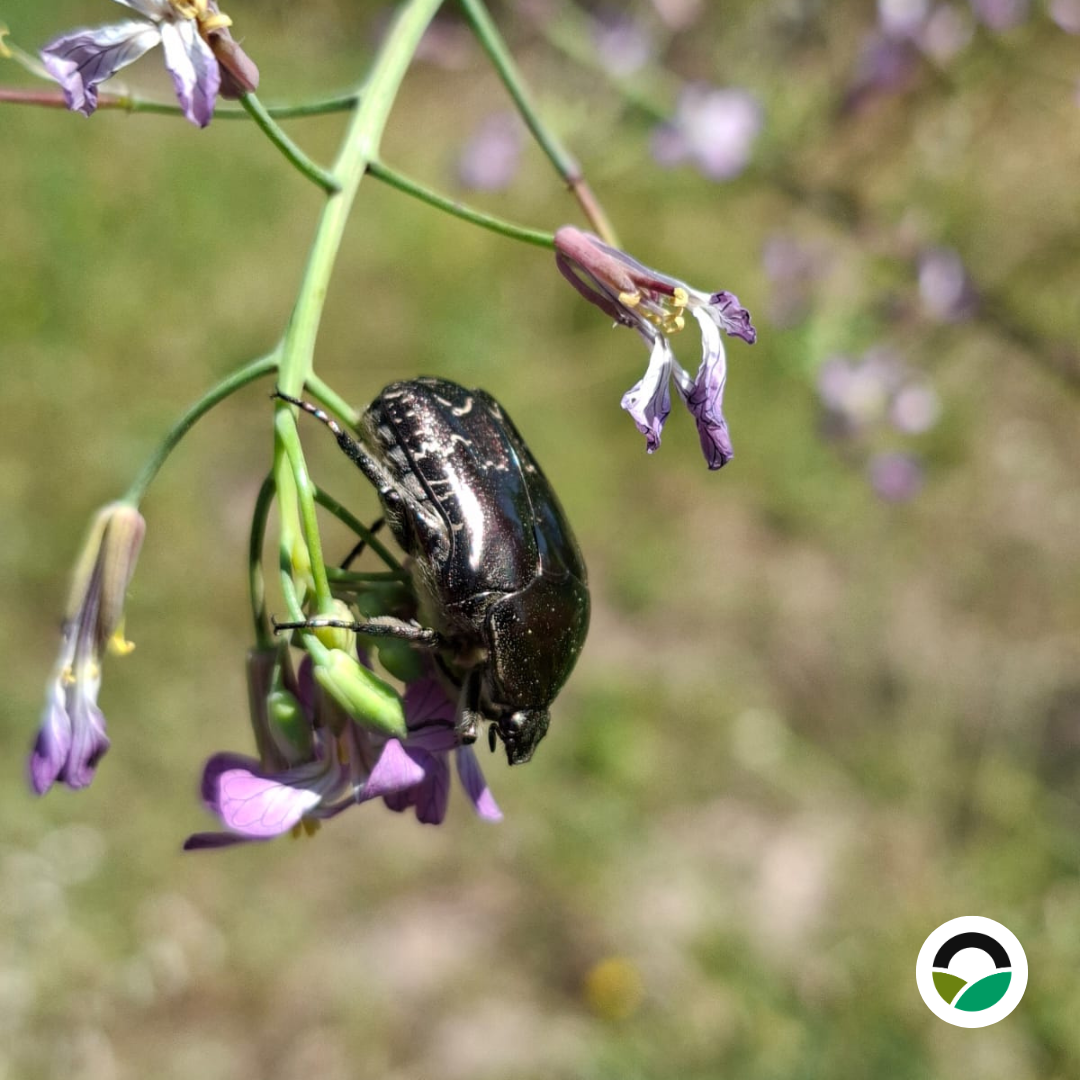
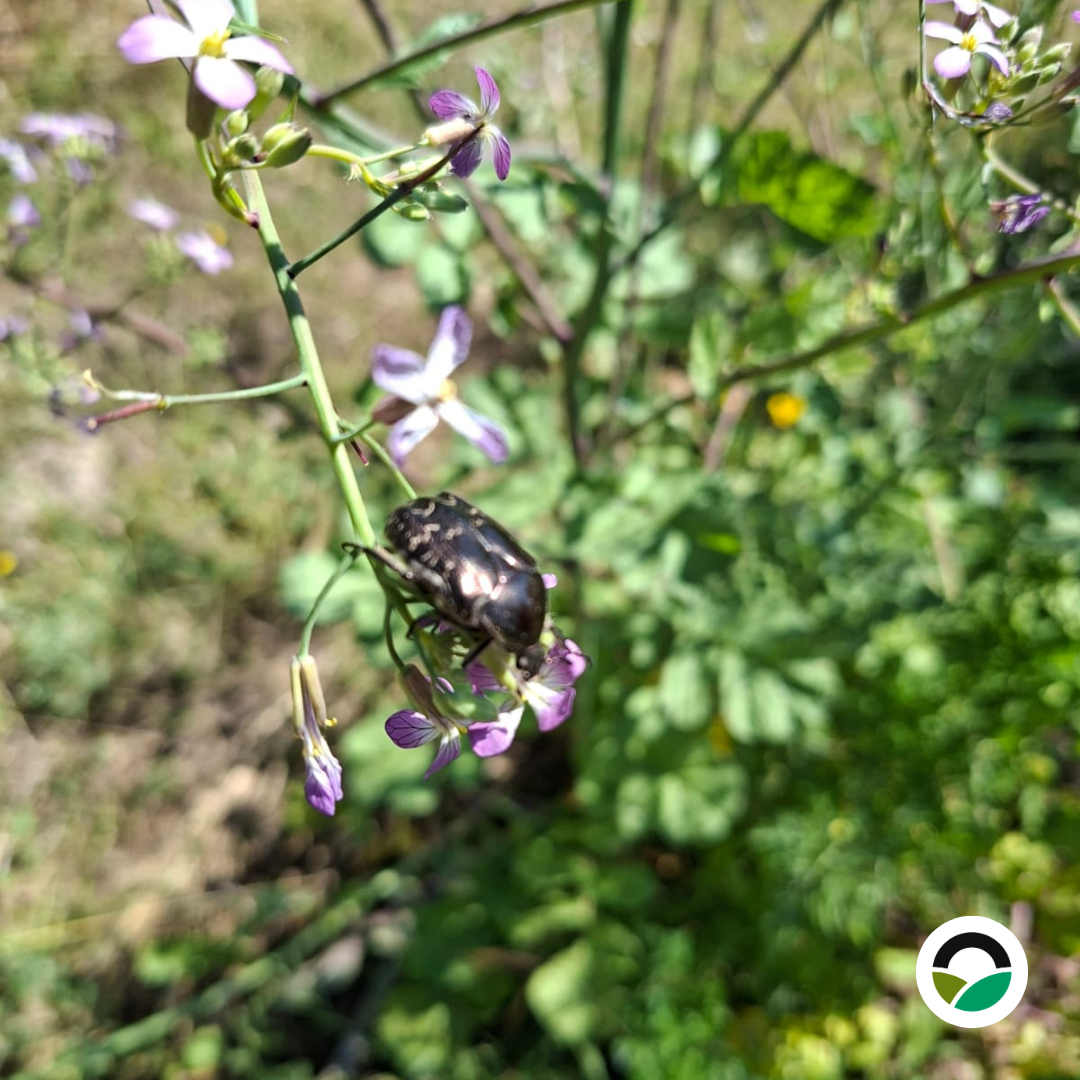
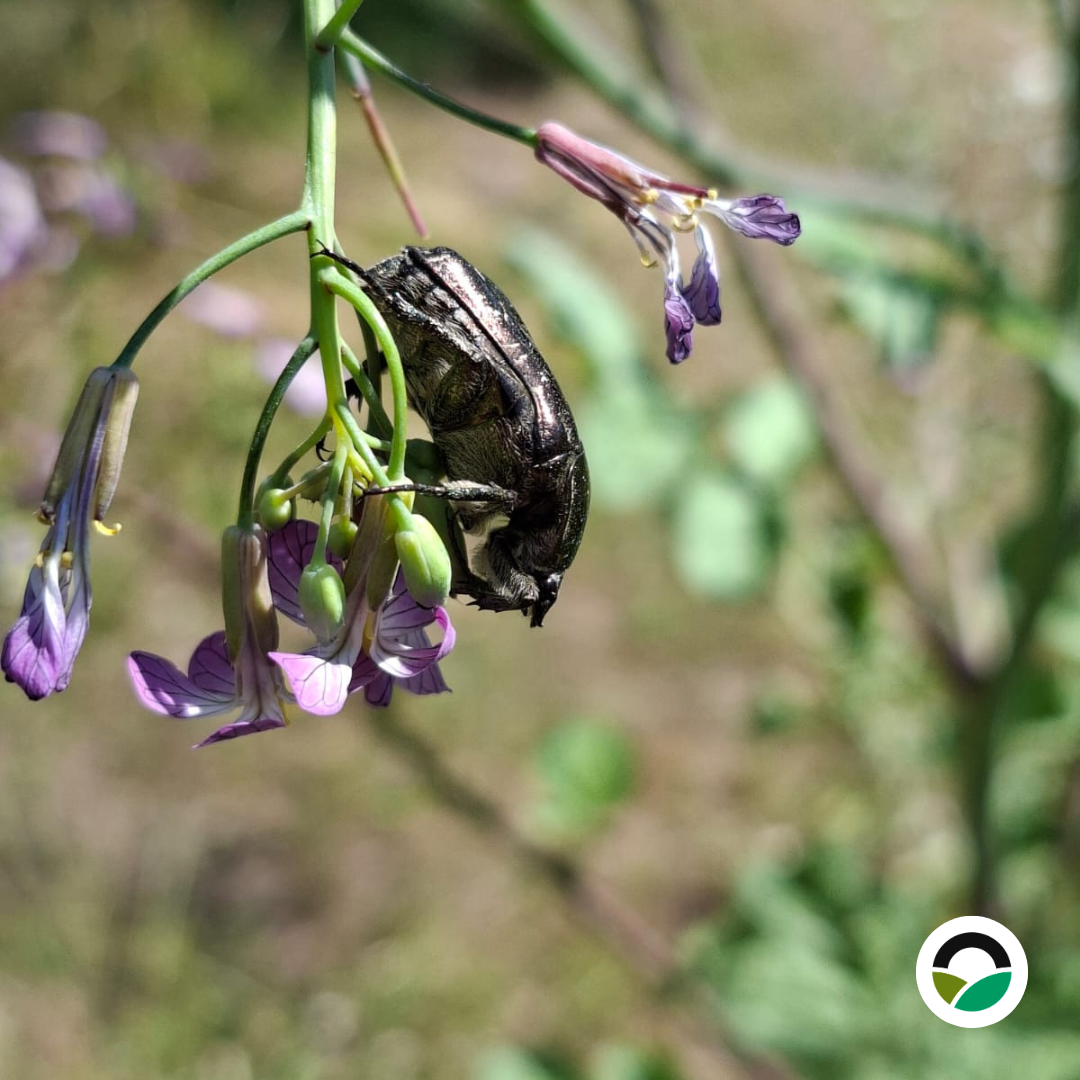
At Mavronero, metallic flower chafer beetles were observed feeding and moving among flowering brassicaceae species developing naturally within the surrounding cultivated landscape.
Their presence reflects broader ecological relationships involving flowering vegetation, seasonal insect activity, biodiversity continuity, and low-intervention Mediterranean agricultural environments.
Mediterranean flower chafer beetles
Flower chafer beetles belong to the scarab beetle family (Scarabaeidae), specifically the subfamily Cetoniinae.
Many Mediterranean species display metallic or reflective exoskeleton coloration ranging from bronze and copper tones to dark violet, black, or green iridescent surfaces. These reflective structures are characteristic of many flower chafer species adapted to warm open habitats and flowering vegetation systems.
Adult flower chafer beetles are strongly associated with flowering plants where they feed on:
- pollen
- nectar
- floral tissues
- soft plant material
- organic matter associated with flowers
Unlike highly specialised pollinators, flower chafer beetles interact more broadly with flowering ecosystems through feeding behaviour and movement between seasonal flowering plants.
Their activity frequently increases during Mediterranean spring flowering periods when herbaceous vegetation and wild flowering species become more abundant across cultivated and semi-natural habitats.
Ecological role within Mediterranean ecosystems
Flower chafer beetles participate in broader ecological interactions involving flowering vegetation and seasonal biodiversity dynamics.
Their movement among flowers contributes to insect-plant relationships developing within Mediterranean ecosystems during periods of intense seasonal flowering activity.
These ecological interactions may involve:
- feeding relationships with flowering plants
- temporary pollen transfer
- seasonal habitat use
- interactions with herbaceous vegetation systems
- insect biodiversity dynamics
- ecological adaptation within Mediterranean environments
Mediterranean ecosystems support highly interconnected ecological systems where insects, flowering plants, vegetation succession, soil conditions, and seasonal environmental changes continuously influence one another.
Within low-intervention agricultural landscapes, naturally developing flowering vegetation may provide temporary feeding resources and habitat structure for many insect species throughout seasonal flowering periods.
Flower chafer beetles within cultivated landscapes
Flower chafer beetles are frequently associated with Mediterranean agricultural environments where flowering vegetation develops alongside cultivated land.
At Mavronero, flowering brassicaceae species growing naturally between cultivated areas created temporary flowering habitats supporting insect activity within the surrounding olive landscape.
These environments contribute to ecological continuity between cultivated systems and surrounding biodiversity networks involving insects, flowering plants, pollinators, and herbaceous vegetation communities.
Mediterranean cultivated landscapes historically supported diverse ecological interactions shaped by seasonal vegetation cycles and relatively low-intensity land management practices.
The persistence of flowering insects such as flower chafer beetles within these environments reflects the importance of habitat continuity and seasonal vegetation diversity within Mediterranean ecosystems.
Environmental observation at Mavronero
Environmental observation activities at Mavronero document biodiversity relationships developing throughout cultivated and surrounding Mediterranean habitats.
Rather than separating agricultural systems from surrounding ecological processes, ongoing observations examine how flowering vegetation, insect activity, native plant species, and seasonal environmental conditions interact across the landscape.
Documented environmental observations include:
- native flowering plants
- Mediterranean orchids
- seasonal flowering geophytes
- pollinator activity
- flowering insect interactions
- herbaceous vegetation systems
- biodiversity continuity within cultivated environments
These observations support broader environmental documentation focused on:
- biodiversity preservation
- ecological continuity
- low-intervention land management
- seasonal environmental adaptation
- coexistence between cultivation and surrounding ecosystems
Conclusion
Mediterranean flower chafer beetles (Cetoniinae spp.) form part of the broader ecological complexity of Mediterranean flowering ecosystems surrounding Mavronero.
Their interaction with seasonal flowering vegetation reflects the interconnected relationships between insects, flowering plants, cultivated landscapes, and biodiversity dynamics within Mediterranean environments.
Through environmental observation and low-intervention agricultural practices, these ecological relationships remain visible within the evolving cultivated landscape at Mavronero.
