
The Old World Swallowtail (Papilio machaon) is one of the most recognizable butterfly species found across Europe, North Africa, and parts of Asia. Although the adult butterfly is widely admired for its distinctive yellow-and-black wings, its caterpillar stage plays an equally important role within Mediterranean ecosystems.
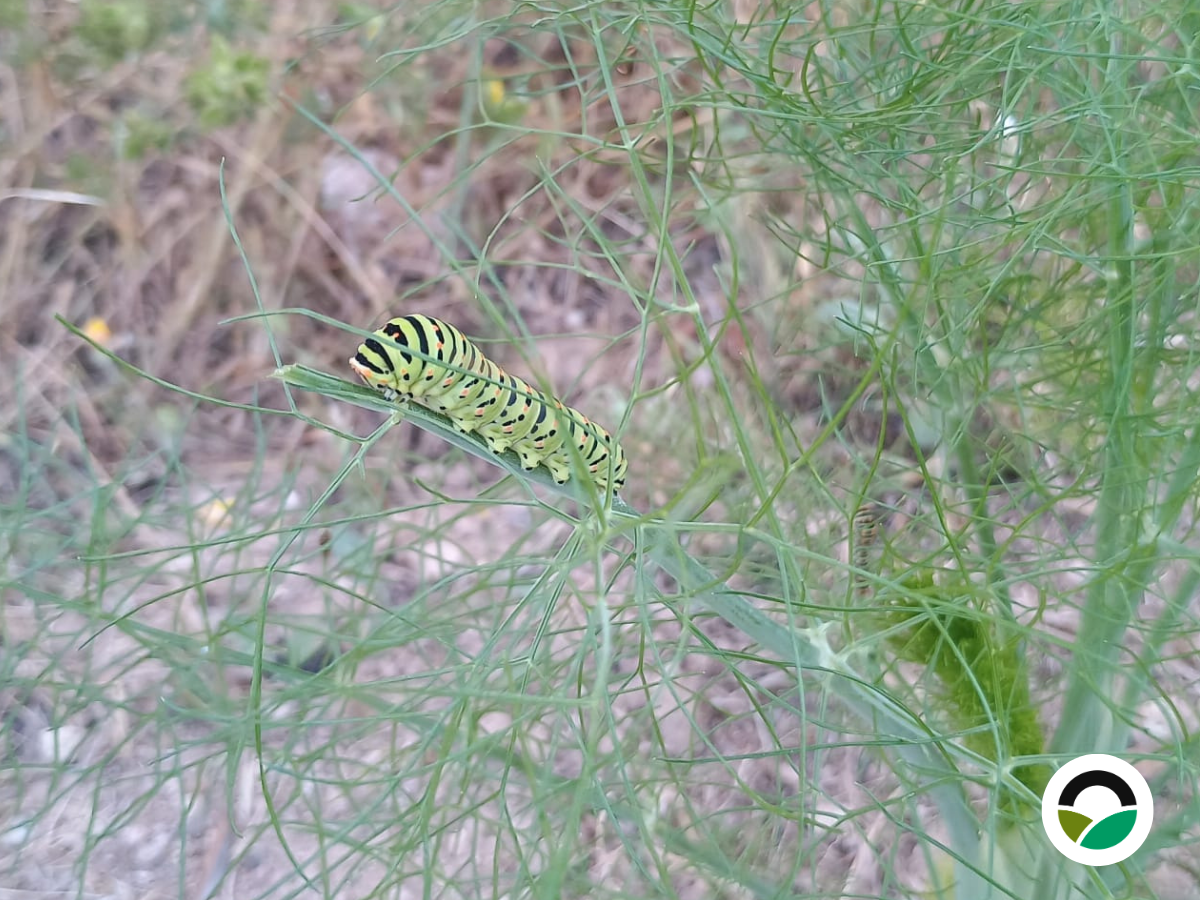
At Mavronero, a swallowtail caterpillar was recently observed feeding on fennel (Foeniculum vulgare), providing an opportunity to document an important stage in the life cycle of one of Cyprus’ most familiar butterfly species.
The life cycle of the Old World Swallowtail
Like all butterflies, Papilio machaon undergoes complete metamorphosis, progressing through four distinct life stages:
- egg
- caterpillar (larva)
- chrysalis (pupa)
- adult butterfly
The caterpillar stage is dedicated primarily to feeding and growth. During this period, larvae consume large quantities of plant material, storing the energy required for pupation and eventual transformation into adult butterflies.
The individual observed at Mavronero was feeding on fennel, a plant commonly used as a larval host by swallowtails throughout the Mediterranean region.
Host plants and feeding behaviour
Old World Swallowtail caterpillars are closely associated with plants belonging to the Apiaceae family. Common host plants include:
- fennel (Foeniculum vulgare)
- wild carrot (Daucus carota)
- parsley (Petroselinum crispum)
- dill (Anethum graveolens)
- other native umbellifers
Female butterflies select these plants as suitable locations for egg laying because they provide the food resources required by developing larvae.
The relationship between butterflies and their host plants illustrates the importance of plant diversity within agricultural and semi-natural landscapes. Without suitable host plants, many butterfly populations would be unable to complete their life cycles.
Appearance and defence mechanisms
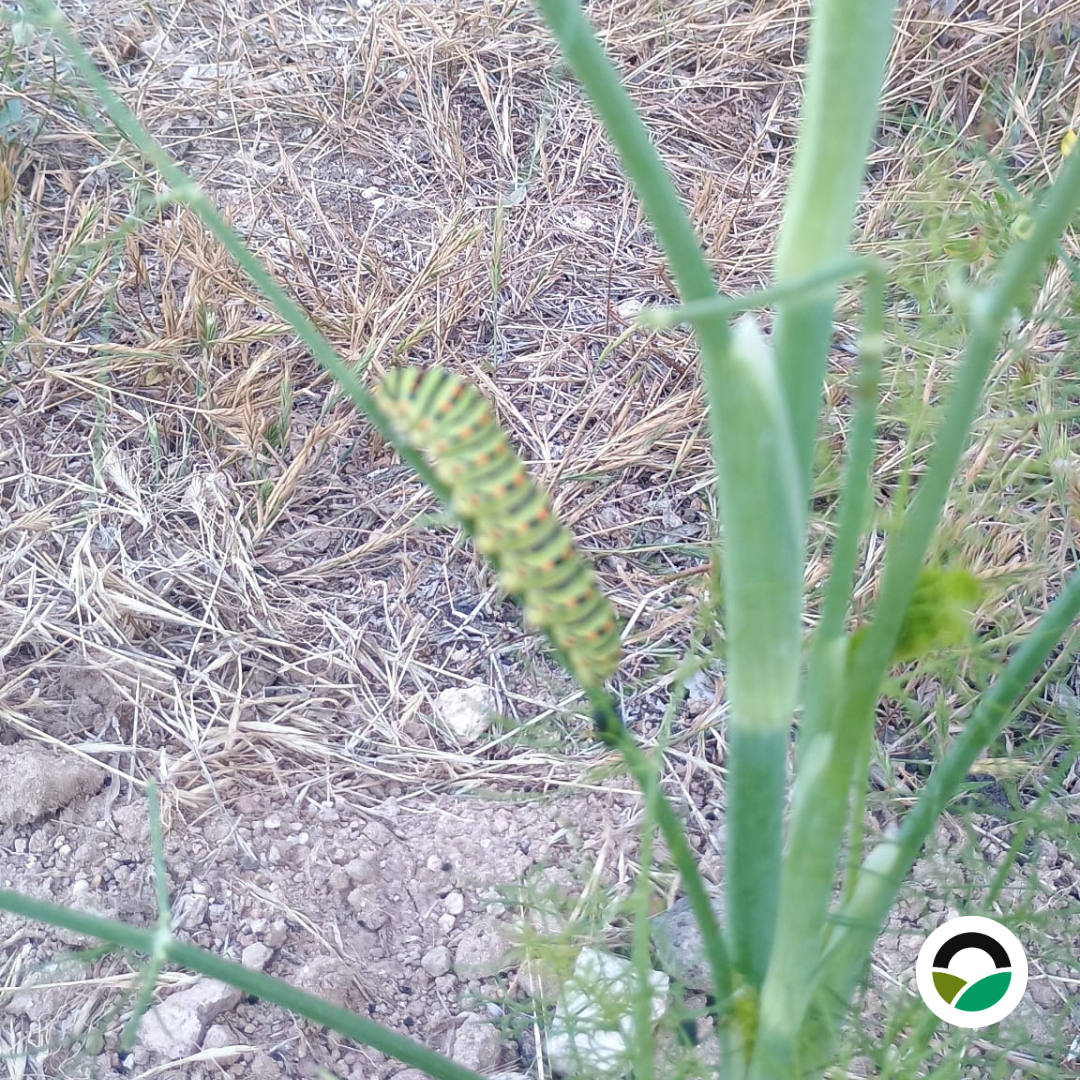
The swallowtail caterpillar is easily recognized by its bright green body marked with black bands and orange spots.
These markings help the caterpillar blend into surrounding vegetation while also serving as a warning pattern to potential predators.
When threatened, swallowtail caterpillars possess a specialised defensive organ known as an osmeterium. This forked, orange structure can be rapidly extended from behind the head and releases a strong odour designed to deter predators such as birds and small reptiles.
This adaptation represents one of several defence mechanisms that increase the caterpillar’s chances of surviving until adulthood.
Ecological role and biodiversity value
Butterflies contribute to Mediterranean ecosystems in multiple ways throughout their life cycles.
Their ecological roles include:
- supporting pollinator communities
- contributing to food web dynamics
- serving as prey for birds, reptiles, and predatory insects
- acting as indicators of habitat quality
- reflecting the availability of native vegetation
The presence of swallowtail caterpillars often indicates that suitable host plants remain available within the landscape and that ecological connections between plants and insects are functioning successfully.
Butterfly habitat within Mediterranean agricultural landscapes
Mediterranean agricultural environments frequently contain a mosaic of cultivated fields, field margins, wild vegetation, herbaceous habitats, and native flowering plants.
This habitat diversity provides resources for numerous insects throughout different stages of their development.
At Mavronero, observations continue documenting biodiversity associated with:
- native flowering plants
- pollinator activity
- butterfly life cycles
- seasonal vegetation development
- ecological interactions within cultivated landscapes
- habitat continuity across agricultural environments
These observations help build a broader understanding of how biodiversity persists within working agricultural systems.
Environmental observations at Mavronero
The observation of a swallowtail caterpillar feeding on fennel highlights the ecological value of maintaining diverse vegetation within Mediterranean farming landscapes.
Rather than functioning solely as production systems, agricultural environments can support complex ecological relationships involving plants, insects, birds, reptiles, and other wildlife.
By documenting species throughout different life stages, environmental monitoring at Mavronero contributes to a deeper understanding of seasonal biodiversity patterns and the interactions that sustain Mediterranean ecosystems.
Conclusion
The Old World Swallowtail caterpillar (Papilio machaon) represents an important stage in the life cycle of one of the Mediterranean region’s most iconic butterflies.
Its dependence on host plants such as fennel demonstrates the close relationship between plant diversity and insect biodiversity. Observations such as this help document the ecological processes that connect vegetation, pollinators, herbivorous insects, and wider wildlife communities within agricultural landscapes.
At Mavronero, continued monitoring of species like Papilio machaon contributes to the long-term understanding of biodiversity within Mediterranean farming environments.
