
Parsley is one of the world’s most familiar culinary herbs, yet its complete life cycle is rarely observed.
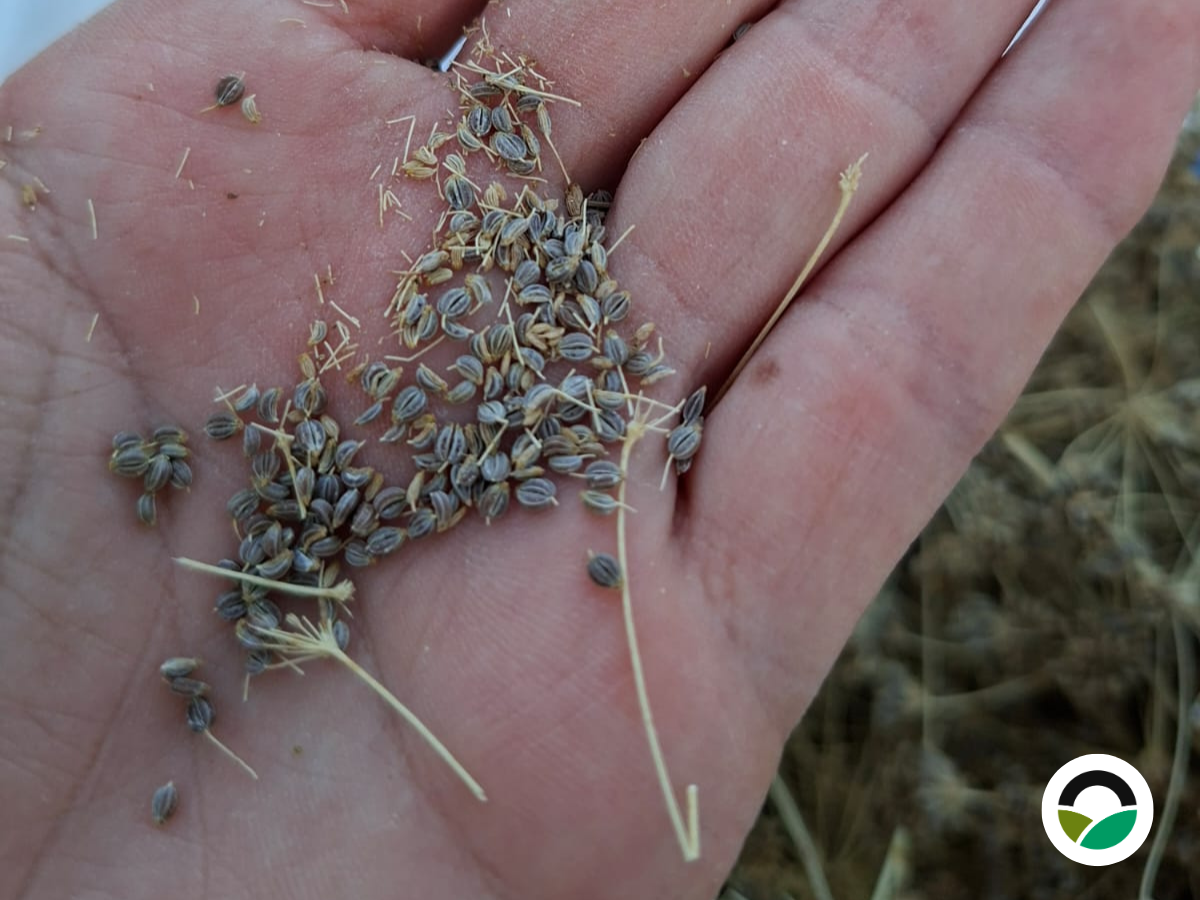
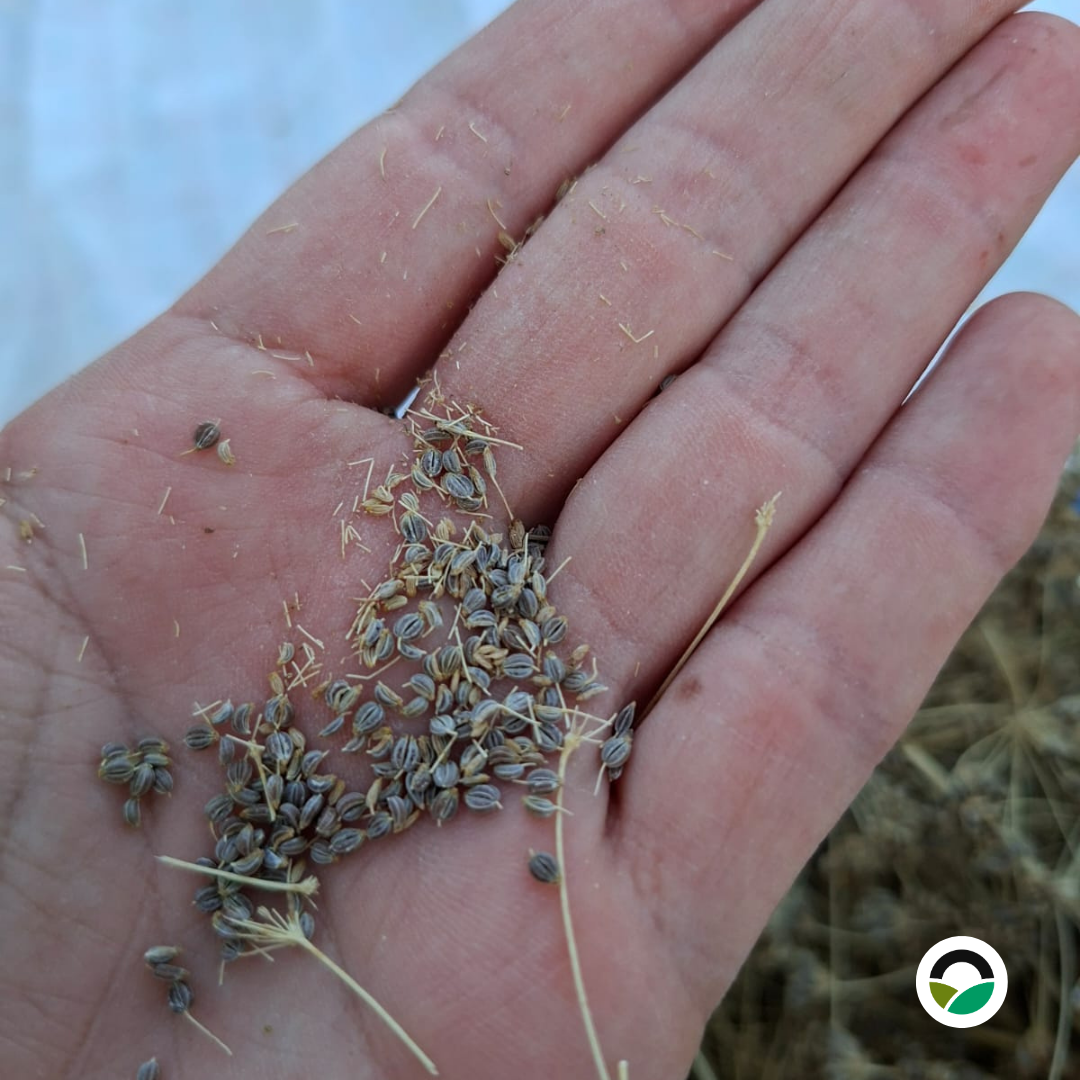
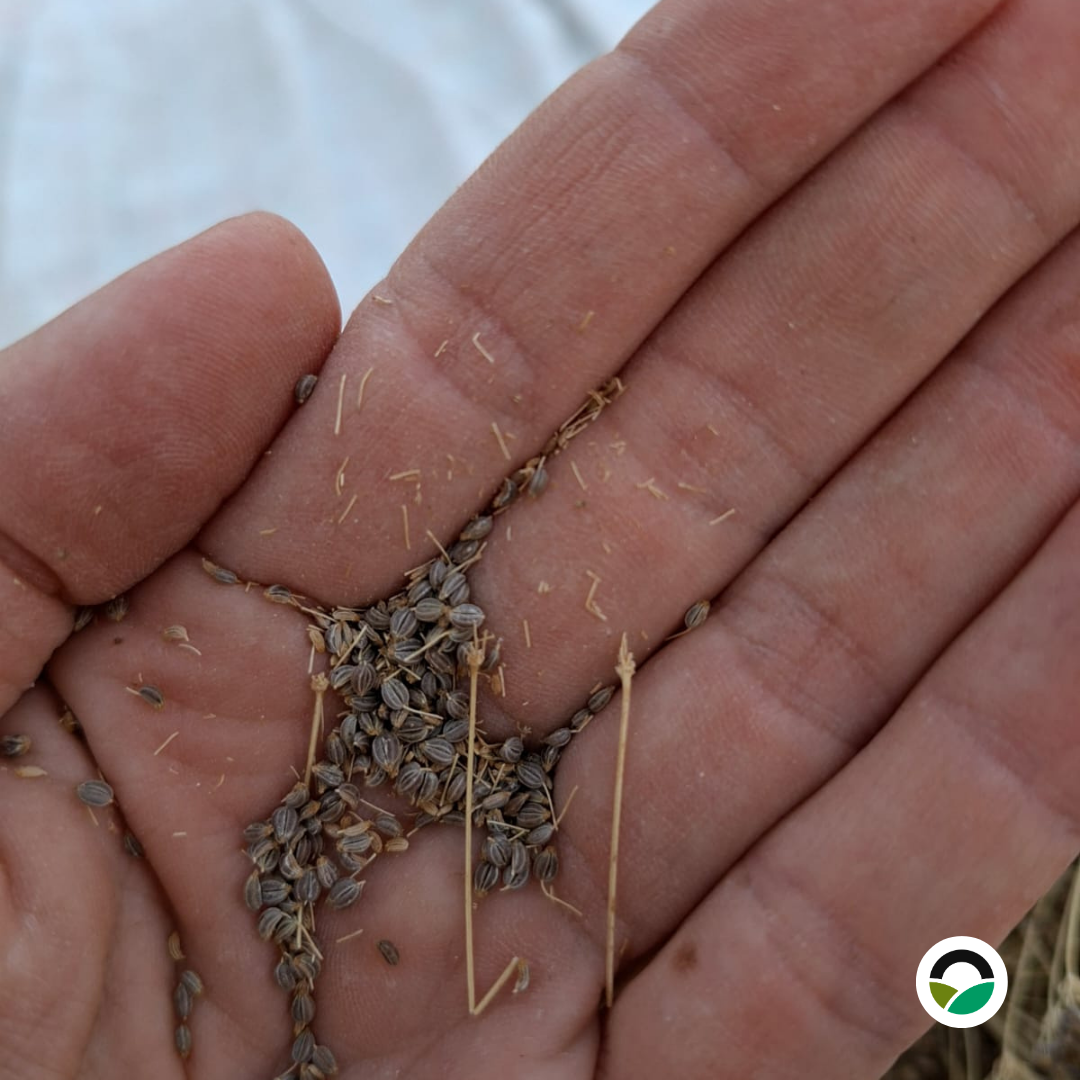
During the summer of 2026, we documented the harvesting of mature parsley (Petroselinum crispum) seeds at Mavronero Farm. After flowering in spring, the plants gradually produced dry seed heads that are now providing the next generation of plants.
Seed collection is an essential stage in regenerative agriculture. By harvesting viable seeds and allowing the remaining umbels to continue maturing naturally, we help preserve healthy plant populations while supporting future cultivation.
A Mediterranean herb with a long history
Parsley (Petroselinum crispum) belongs to the Apiaceae family, together with carrots, fennel and celery.
Native to the central and eastern Mediterranean, parsley has been cultivated for thousands of years as both a culinary and medicinal plant. Today it is grown worldwide, but it still thrives naturally under Mediterranean conditions.
As a biennial species, parsley spends its first year producing leaves before flowering during its second growing season. Once pollinated, each flower develops into a small ribbed seed containing the embryo of a new plant.
From flowers to seeds
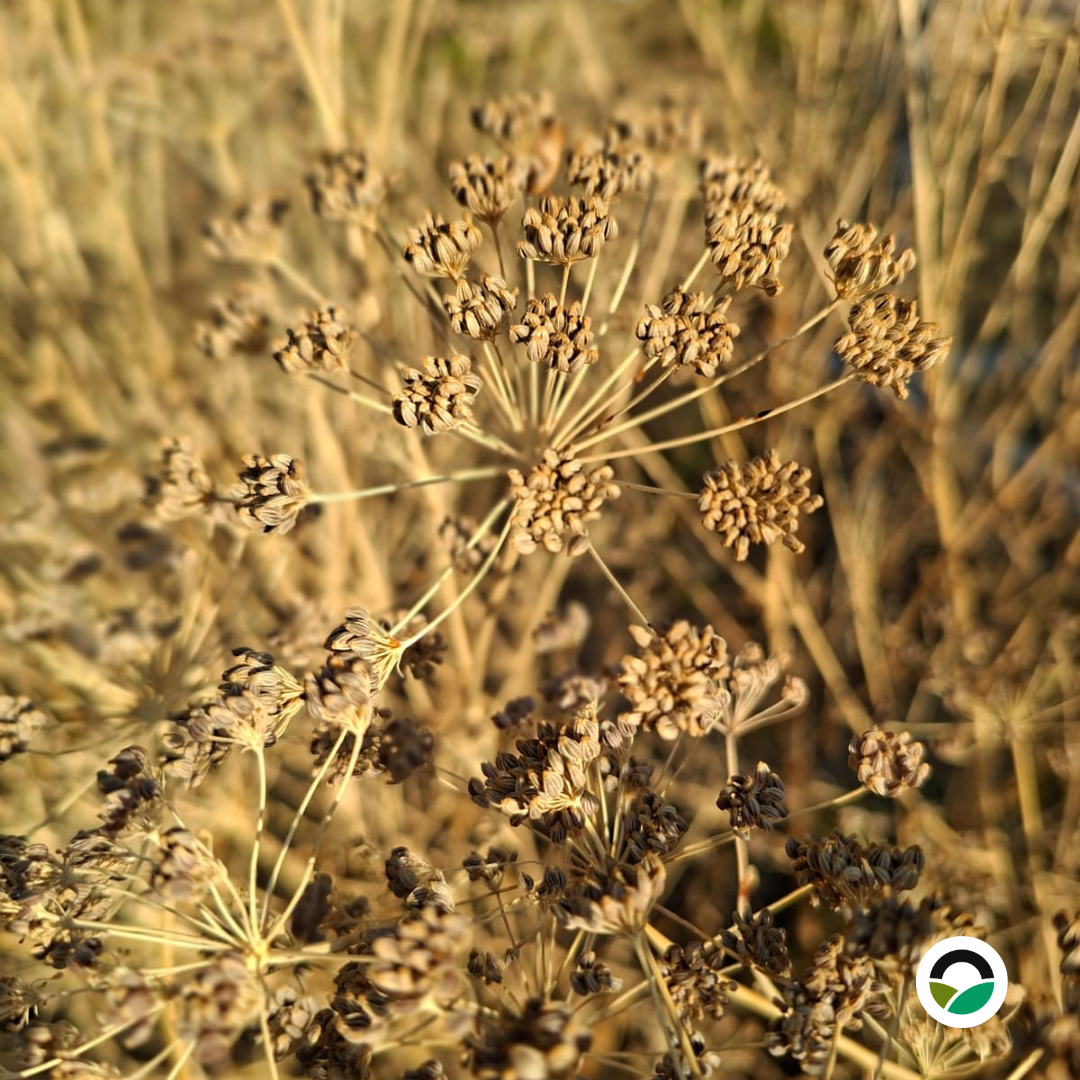
After flowering, parsley’s umbrella-shaped flower clusters, known as umbels, slowly dry as the seeds mature.
The seeds gradually change colour from green to greyish-brown while their moisture content decreases. Only when they are fully dry do they become suitable for harvesting and long-term storage.
Not every umbel matures at the same time. Harvesting in several stages allows the remaining seeds to complete their development naturally, improving overall seed quality and viability.
This careful timing helps maximise germination while respecting the plant’s natural life cycle.
Why seed saving matters
Saving seeds is one of agriculture’s oldest and most sustainable practices.
Collecting seeds from healthy plants preserves locally adapted genetics that have developed under the environmental conditions of a particular region. These plants are often better suited to local climates, soils and seasonal weather patterns than non-local varieties.
Producing seeds on-site also reduces dependence on external suppliers and strengthens long-term agricultural resilience.
Every harvested seed represents the potential for another generation of plants.
Supporting biodiversity and regenerative farming
Seed production is more than simply preparing for the next planting season.
Flowering parsley provides nectar and pollen for bees, hoverflies and many other beneficial insects before producing seeds that contribute to the natural regeneration of plant populations.
Allowing plants to complete their full life cycle supports ecological processes that benefit both cultivated crops and surrounding wildlife.
Regenerative farming recognises that healthy ecosystems depend on protecting every stage of a plant’s development, from germination to seed production.
Observations at Mavronero
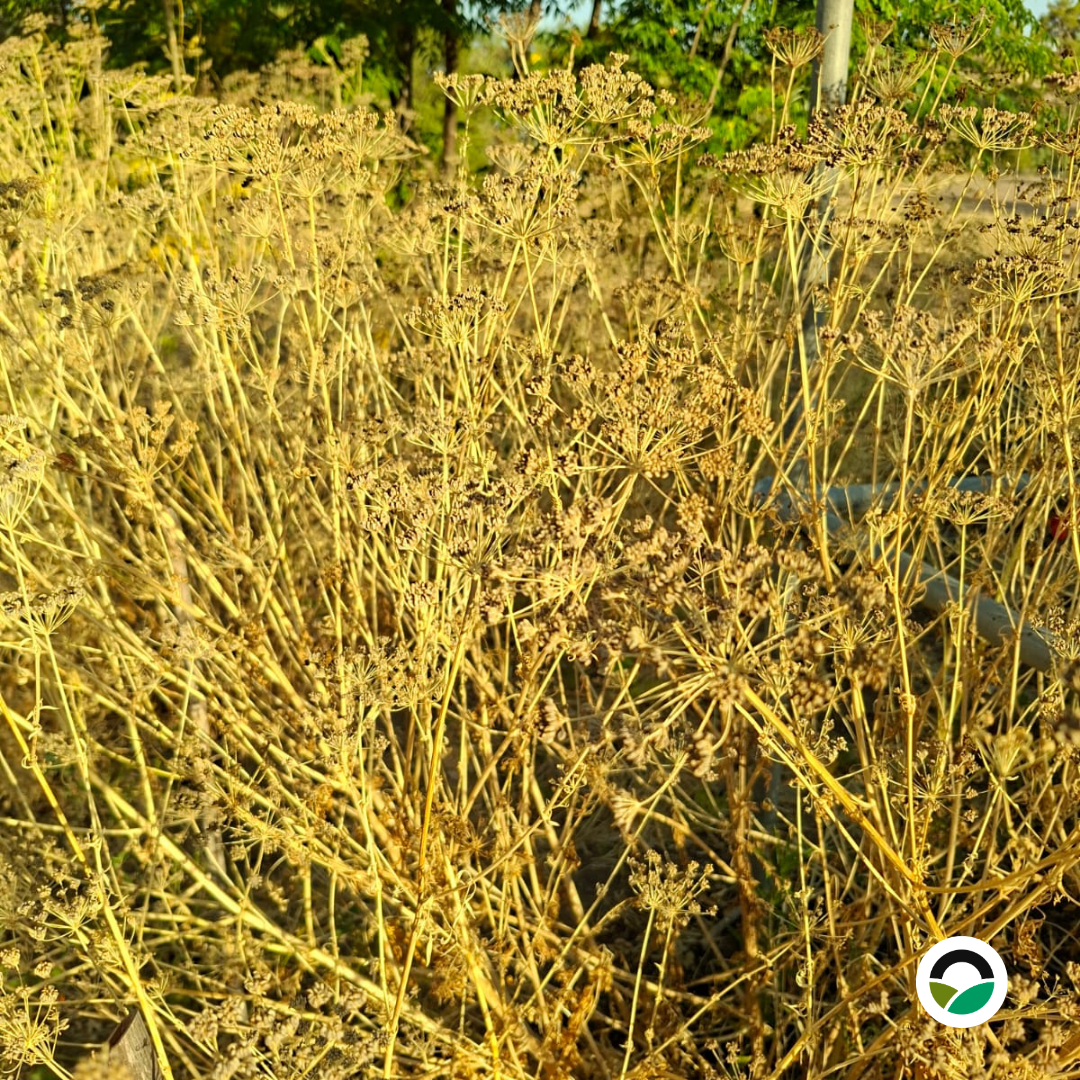
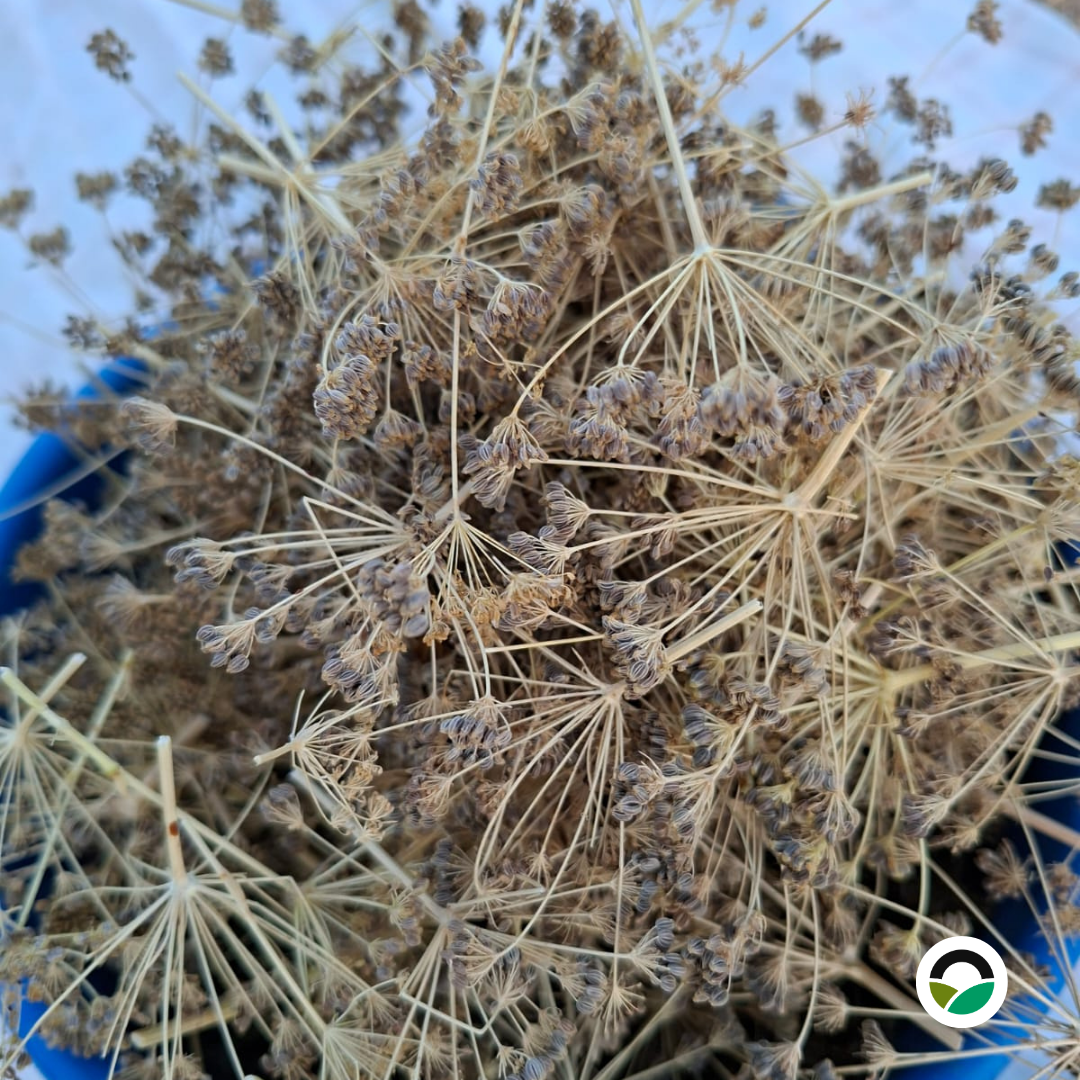
These photographs document the summer harvest of mature parsley seeds at Mavronero Farm.
The dried umbels were collected only after the seeds had naturally matured. Some flower heads had already reached full maturity, while others remained on the plants to continue drying.
After collection, the seeds were carefully separated from the dried umbels and cleaned in preparation for storage.
Recording these seasonal processes helps us better understand the complete life cycle of Mediterranean plants while preserving valuable seed resources for future cultivation.
Interesting facts
Parsley (Petroselinum crispum)
- Native to the central and eastern Mediterranean region.
- Member of the Apiaceae family.
- A biennial plant that flowers during its second year.
- Produces umbrella-shaped flower clusters called umbels.
- Seeds mature gradually throughout summer.
- Pollinated by bees, hoverflies and many other beneficial insects.
- Seed saving preserves locally adapted plant genetics.
- Widely cultivated as both a culinary and medicinal herb.
Preserving tomorrow’s harvest
Healthy farms depend not only on producing food but also on preserving the plants that will produce future harvests.
Collecting seeds helps maintain genetic diversity, strengthens local adaptation and supports resilient agricultural systems capable of responding to changing environmental conditions.
By allowing plants to complete their natural reproductive cycle, regenerative farming protects both biodiversity and long-term food security.
At Mavronero Farm, every seed collected represents an investment in future landscapes that are productive, resilient and ecologically balanced.
Conclusion
The parsley harvest does not end with its leaves.
The production and careful collection of seeds complete the plant’s life cycle while ensuring that future generations can continue to grow under the same Mediterranean conditions.
Every seed carries the potential for new growth, reminding us that conserving biodiversity begins with understanding and protecting nature’s own processes.
