
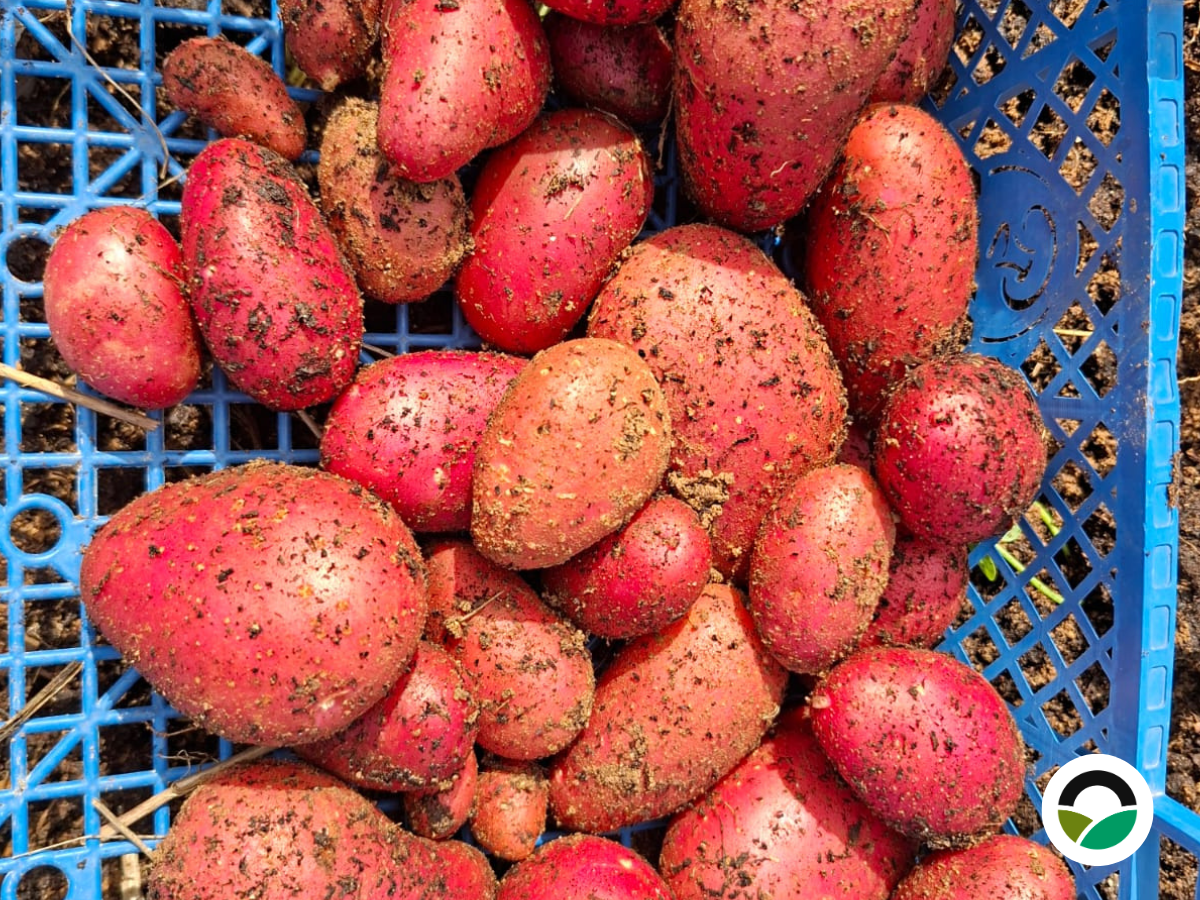
Freshly harvested pink potatoes collected from a raised bed at Mavronero.
(Solanum tuberosum)
This week at Mavronero, we harvested our pink potatoes after the plants naturally reached the end of their growing cycle. The foliage gradually turned yellow and dry — a clear sign that the potatoes underground had matured and were ready to be collected.
Once the plants had fully dried, we emptied the raised bed and gently uncovered the potatoes. Harvesting is always a rewarding moment, as the results remain hidden beneath the soil until the very end of the season.
The harvest revealed a variety of pink potatoes in different sizes, all developed underground throughout the growing period. Raised beds provide loose, well-drained soil, which helps potatoes expand evenly and makes harvesting easier.
Botanical identity of potatoes
Family: Solanaceae
Species: Solanum tuberosum
Growth form: Herbaceous perennial grown as an annual crop
Potatoes belong to the Solanaceae family, which also includes tomatoes, peppers, and eggplants. The edible part of the plant is a tuber — a swollen underground stem used by the plant to store nutrients.
Pink potatoes are simply varieties with red or pink skin pigmentation. Their flesh is usually white or pale yellow, and they tend to hold their shape well during cooking.
Characteristic features include:
- underground tuber formation
- compound green leaves during growth
- white or pale purple flowers (depending on variety)
- skin pigmentation ranging from light pink to deep red
- plants that die back naturally at maturity
Growth cycle of potatoes
Potatoes follow a clear seasonal development:
- early growth: green foliage emerges from planted tubers
- mid-season: plants expand and begin tuber formation underground
- late season: foliage yellows and dries
- harvest: tubers are collected once plants die back
Allowing the plants to dry completely helps the potato skins thicken, improving storage life after harvest.
Harvesting potatoes in raised beds
Raised beds provide ideal conditions for potato cultivation:
- loose soil allows tubers to expand
- good drainage prevents rot
- easier harvesting with minimal damage
- better soil temperature regulation
At Mavronero, the raised bed was carefully emptied, and the potatoes were collected by hand to avoid bruising. After harvesting, the bed can now rest before being prepared for the next crop rotation.
Culinary use of pink potatoes
Pink potatoes are versatile in the kitchen. Their firm texture makes them suitable for roasting, boiling, or salads. They hold their shape well and develop a slightly creamy interior when cooked.
Here are a few simple recipes using freshly harvested pink potatoes:
Roasted Mediterranean Pink Potatoes
Ingredients:
- pink potatoes
- olive oil
- garlic
- rosemary or thyme
- salt and pepper
Preparation:
Wash and cut the potatoes into halves. Toss with olive oil, crushed garlic, herbs, salt, and pepper. Roast at 200°C until golden and crispy on the outside and tender inside.
Pink Potato Salad with Herbs
Ingredients:
- boiled pink potatoes
- olive oil
- lemon juice
- fresh parsley
- spring onions
- salt
Preparation:
Boil the potatoes whole, let them cool slightly, then slice. Mix with olive oil, lemon juice, chopped parsley, and spring onions. Season to taste.
Pan-Fried Pink Potatoes
Ingredients:
- boiled pink potatoes
- olive oil
- onion
- paprika
- salt
Preparation:
Slice boiled potatoes and fry in a pan with olive oil and chopped onion. Sprinkle with paprika and cook until lightly crispy.
Seasonal cycle at Mavronero
Harvesting the pink potatoes marks the completion of this crop cycle. The raised bed will now be prepared for future planting, maintaining soil health through rotation.
Moments like this highlight the natural rhythm of cultivation at Mavronero — planting, growing, harvesting, and preparing for the next season.
Fresh harvests not only provide food but also connect us directly with the seasonal changes in the landscape.
Observations at Mavronero
The variety of sizes in this harvest reflects natural growth conditions. Some potatoes developed larger where soil was deeper, while smaller ones formed near the surface.
The bright pink skins contrast beautifully with the soil, making the harvest visually striking and satisfying to collect.
With the raised bed now cleared, we look forward to planning the next crops for the upcoming season.
Sources
FAO – Potato cultivation guidelines
