
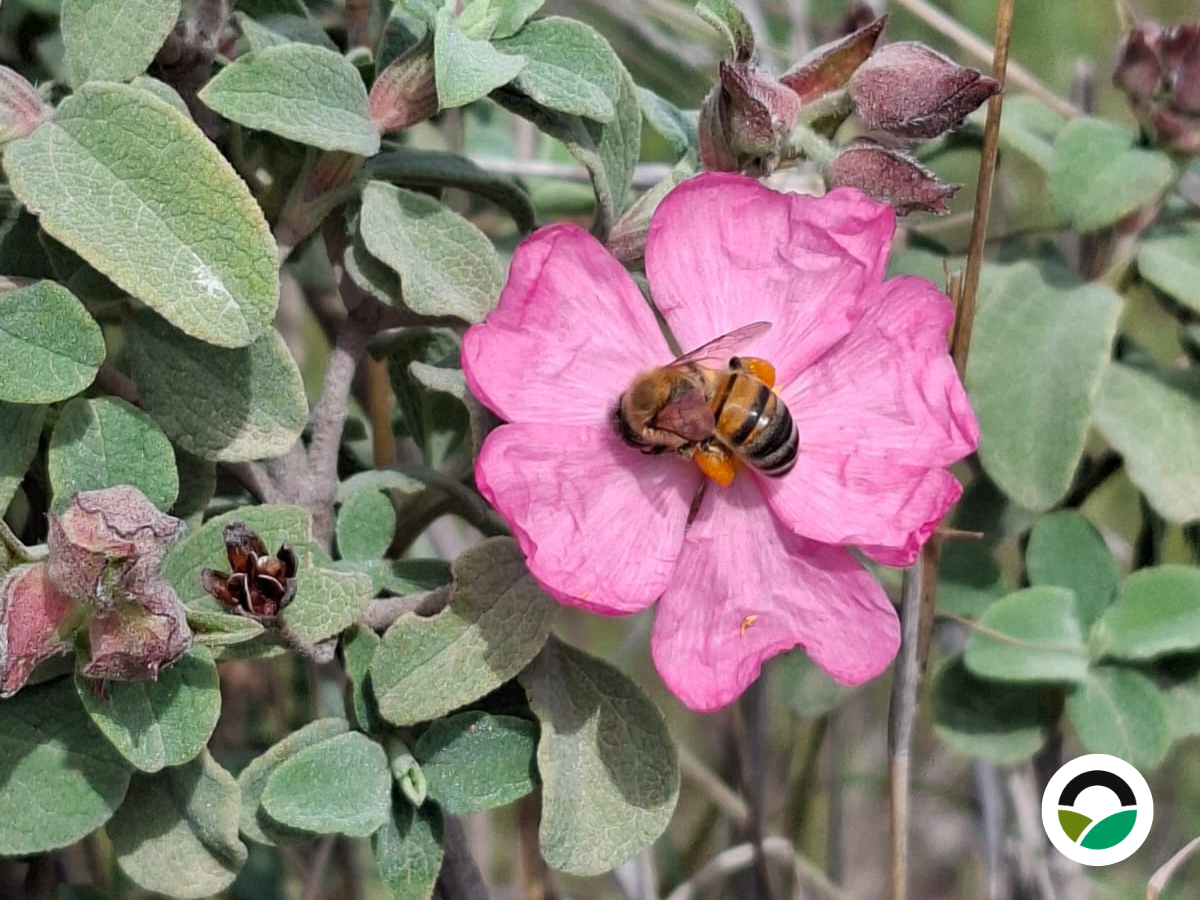
Few plants capture the colours of the Mediterranean spring as vividly as the pink rockrose (Cistus creticus).
During the spring of 2026, we documented this native shrub flowering naturally throughout Mavronero Farm. Its bright pink blossoms attracted numerous bees and other pollinating insects, highlighting the important ecological role native flora plays in supporting biodiversity.
Beyond its striking appearance, Cistus creticus is exceptionally adapted to the Mediterranean climate and forms an essential component of healthy shrubland ecosystems.
A characteristic Mediterranean shrub
Pink rockrose (Cistus creticus) belongs to the Cistaceae family, a group of shrubs well adapted to dry Mediterranean environments.
Native to the Mediterranean Basin, including Cyprus, southern Europe and parts of western Asia, it naturally grows on rocky hillsides, open scrublands and nutrient-poor soils.
The shrub forms dense evergreen clumps with soft grey-green leaves covered in fine hairs that help reduce water loss under intense summer conditions.
Its large pink flowers, each lasting only a single day, bloom abundantly from spring into early summer, ensuring a continuous supply of pollen for many pollinating insects.
Adapted to drought and poor soils
Like many Mediterranean shrubs, Cistus creticus has evolved remarkable adaptations for surviving long, hot summers.
Its hairy leaves reflect sunlight while reducing evaporation, allowing the plant to conserve moisture during prolonged dry periods.
An extensive root system enables the shrub to access water stored deep within rocky soils where many other species struggle to survive.
Once established, pink rockrose requires little or no irrigation and can thrive in harsh environments where rainfall is limited.
These adaptations make it an important pioneer species, helping stabilise soils and supporting the natural regeneration of Mediterranean vegetation.
Supporting pollinators
Although each flower blooms for only a short time, pink rockrose produces abundant pollen throughout its flowering season.
Bees, solitary bees, hoverflies and many other insects regularly visit the flowers, making the shrub an important early-season food source.
Unlike many flowering plants, Cistus creticus produces little nectar, so its ecological value lies primarily in its abundant pollen production.
By sustaining diverse pollinator communities, pink rockrose contributes to the healthy functioning of Mediterranean ecosystems.
Why native shrubs matter in regenerative farming
Regenerative agriculture extends beyond cultivated crops by protecting and encouraging native vegetation.
Shrubs such as pink rockrose improve ecological resilience by stabilising soils, supporting pollinators and providing habitat for countless organisms throughout the year.
Maintaining naturally occurring native plants strengthens ecological processes that improve biodiversity, reduce landscape degradation and create healthier farming systems.
Documenting these species helps us better understand how natural ecosystems function alongside agricultural production.
Observations at Mavronero
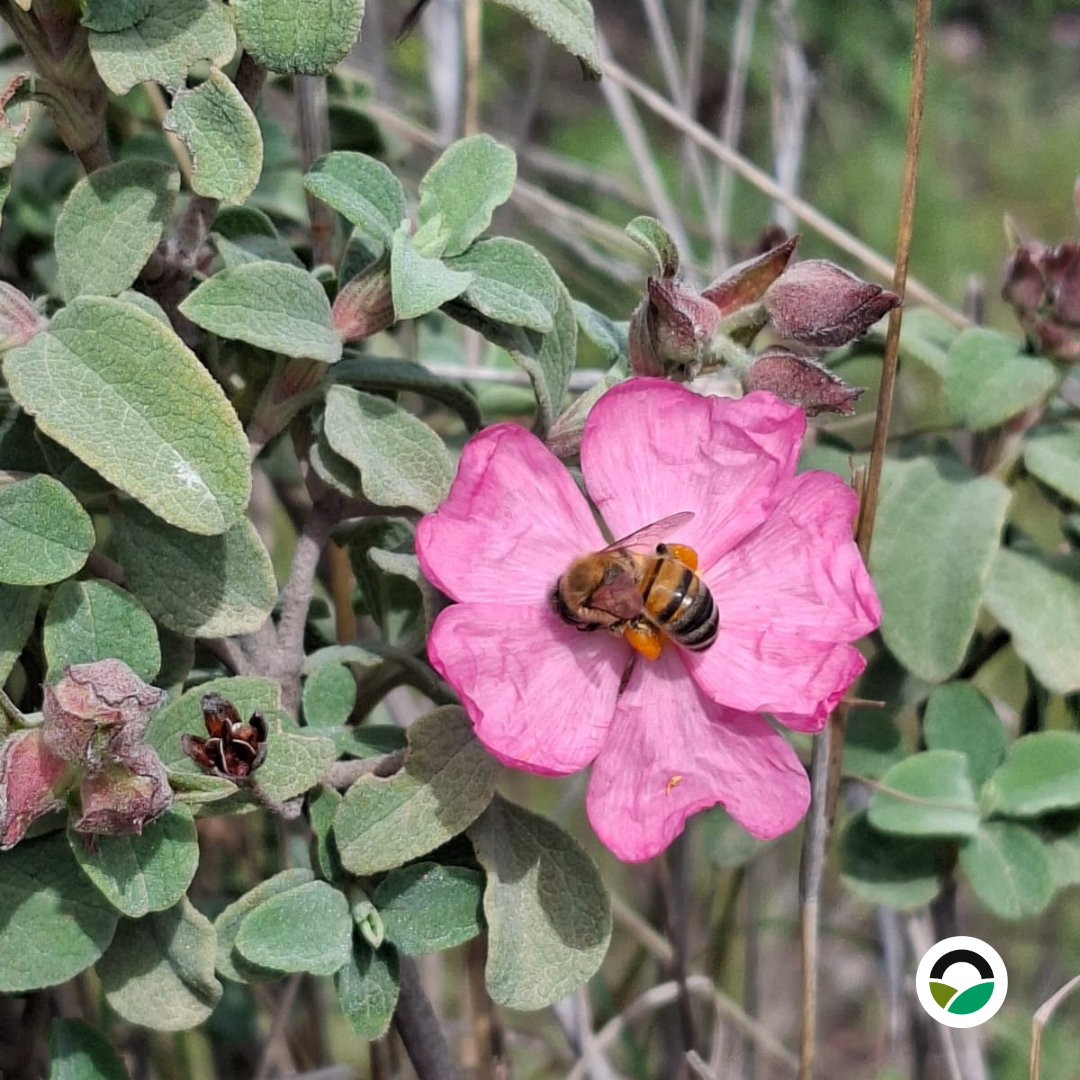
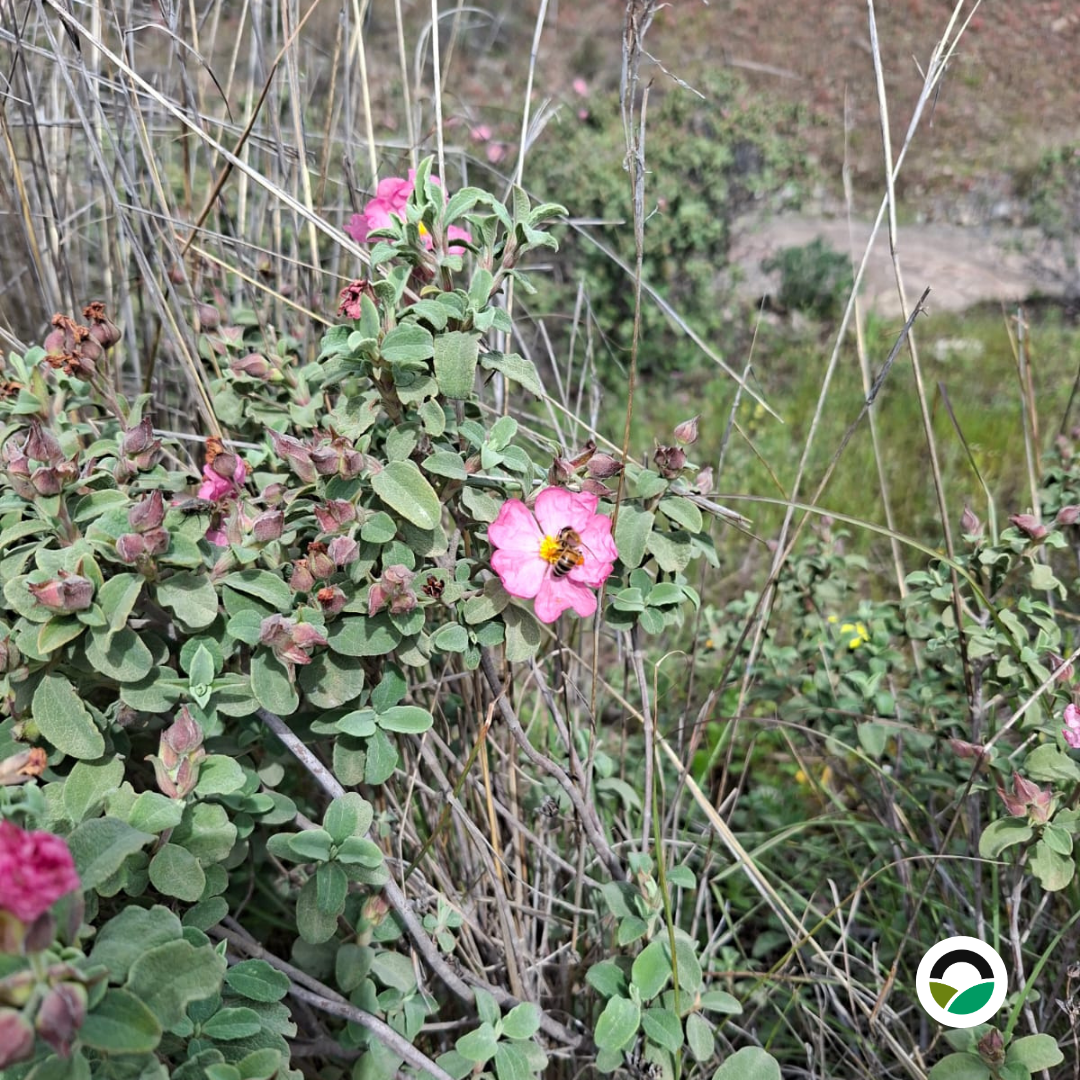
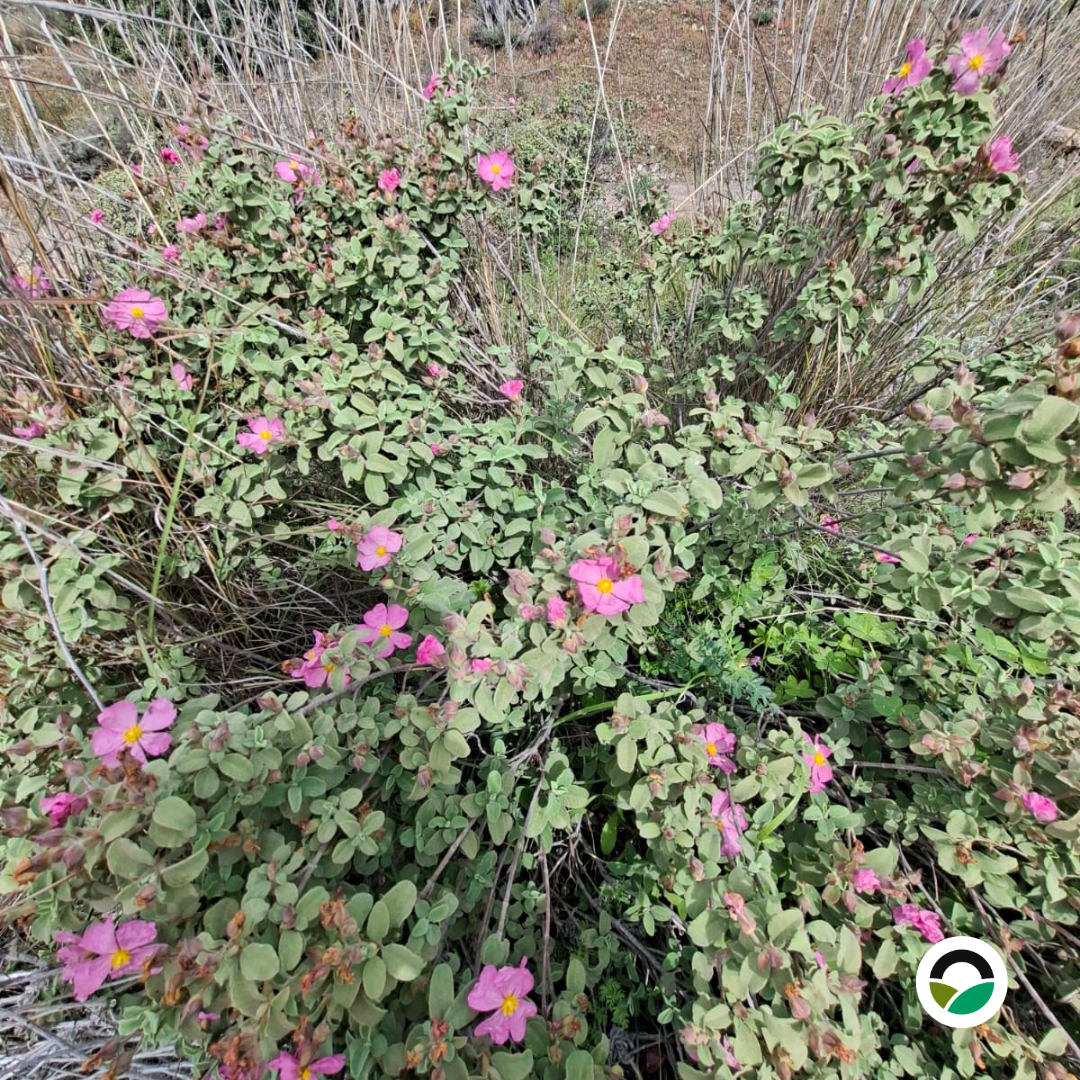
These photographs were taken during the spring of 2026 while documenting seasonal biodiversity at Mavronero Farm.
Several flowering pink rockrose shrubs were growing naturally throughout the surrounding Mediterranean vegetation without irrigation or human management.
Numerous bees were observed collecting pollen from the flowers, illustrating the importance of native shrubs as seasonal food sources for pollinating insects.
Recording these observations allows us to follow the natural rhythms of Mediterranean ecosystems while documenting the biodiversity that regenerative farming seeks to protect.
Interesting facts
Pink rockrose (Cistus creticus)
- Native to the Mediterranean Basin, including Cyprus.
- Member of the Cistaceae family.
- Flowers mainly from spring to early summer.
- Produces abundant pollen for bees and native pollinators.
- Highly drought tolerant once established.
- Thrives naturally on rocky, sandy and nutrient-poor soils.
- Hairy leaves help reduce water loss during summer.
- An important pioneer shrub in Mediterranean scrublands.
Native shrubs and resilient landscapes
Mediterranean ecosystems have evolved over thousands of years under seasonal drought, poor soils and periodic disturbance.
Native shrubs such as pink rockrose are fundamental to these ecosystems, supporting pollinators, improving soil stability and maintaining biodiversity.
Allowing these species to flourish alongside cultivated areas strengthens ecological resilience while preserving the natural processes that sustain Mediterranean landscapes.
At Mavronero Farm, every seasonal observation contributes to a deeper understanding of the native flora that supports regenerative agriculture.
Conclusion
The vibrant pink flowers of Cistus creticus are among the most recognisable signs of Mediterranean spring.
Far more than an ornamental shrub, pink rockrose provides essential resources for pollinators and demonstrates the remarkable adaptations that allow native plants to thrive in challenging environments.
By protecting species such as Cistus creticus, we help preserve the biodiversity and ecological resilience upon which healthy Mediterranean ecosystems depend.
