
At Mavronero, cultivation begins long before plants are introduced into the field environment. The earliest stages of seed handling, substrate preparation, watering strategy, and nursery management are understood as biologically significant phases that influence the entire developmental trajectory of the crop.
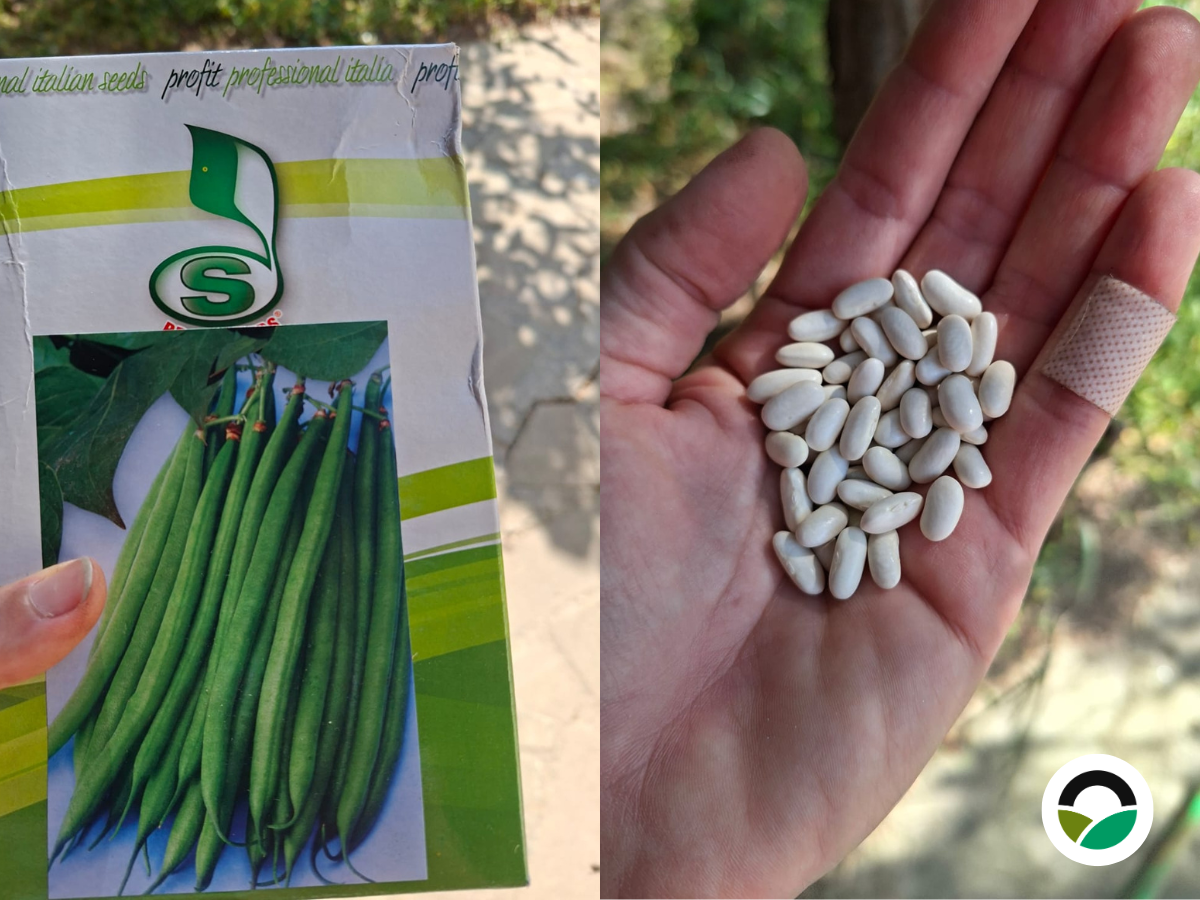
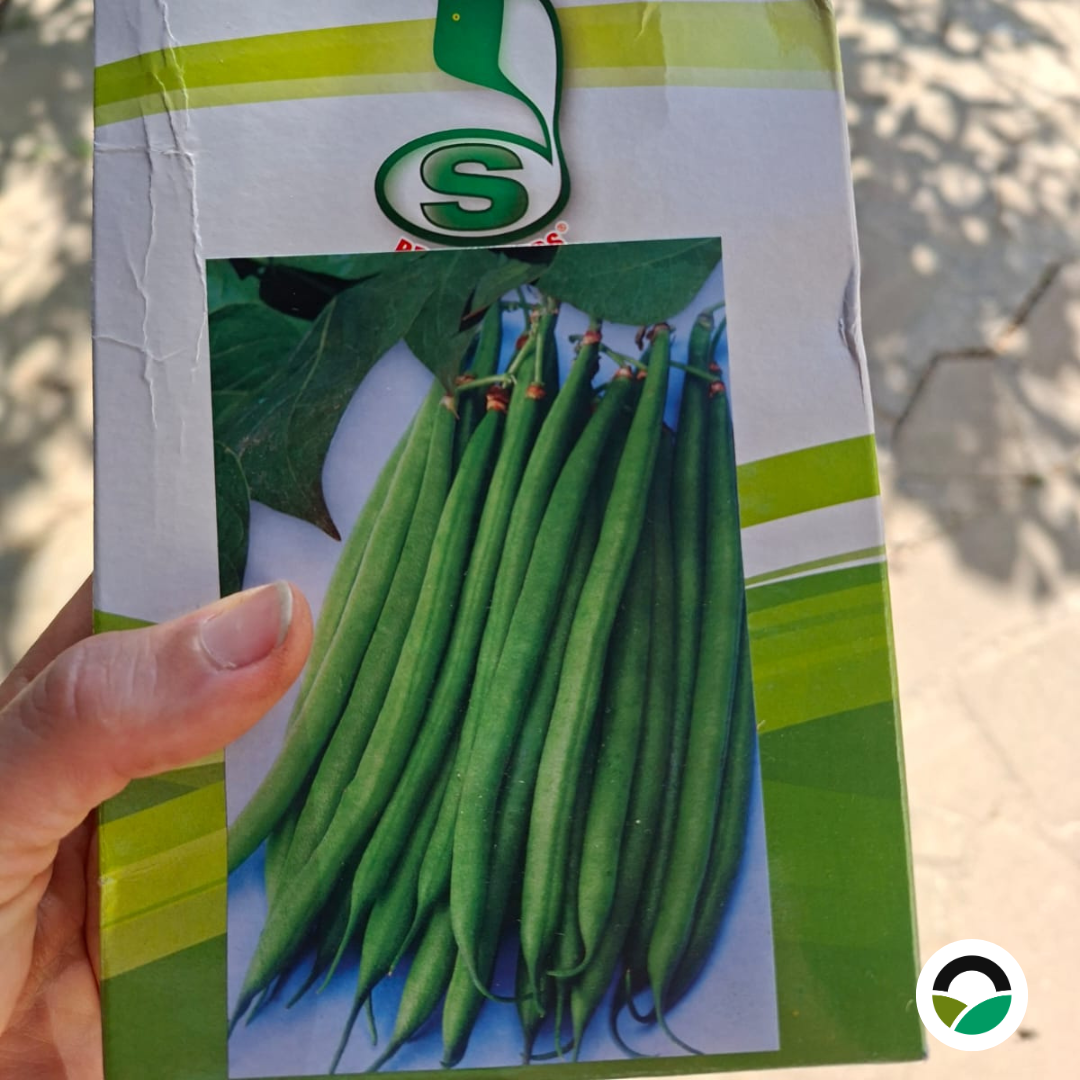
As part of the current seasonal cycle, seeds of the climbing green bean variety “Blue Lake” have recently been planted within the nursery system. Although the procedure itself is relatively simple, the process incorporates several interconnected factors related to substrate structure, moisture retention, aeration, resource management, and early root establishment.
Rather than treating sowing as an isolated technical step, the approach at Mavronero considers seed planting as the beginning of a continuous ecological interaction between the plant, the growing medium, water availability, microbial activity, and environmental conditions.
Botanical characteristics of climbing green beans
Green beans (Phaseolus vulgaris) belong to the Fabaceae family and are annual leguminous plants cultivated globally for their edible immature pods. The “Blue Lake” variety used in this planting is a climbing type characterized by vigorous vertical growth, extended production periods, and high adaptability under warm seasonal conditions.
Unlike dwarf bean varieties, climbing beans produce elongated stems that continue developing throughout the growing season and require structural support as vegetative growth accelerates. This growth habit allows more efficient vertical use of cultivation space while improving light exposure and airflow around the plant canopy.
From a physiological perspective, legumes also play an important ecological role due to their association with nitrogen-fixing bacteria. Through symbiotic interactions with rhizobia bacteria in the root zone, legumes contribute to nitrogen cycling within cultivation systems, supporting soil fertility over time.
Although nitrogen fixation becomes more relevant during later developmental stages, healthy early root establishment remains fundamental for successful plant performance throughout the crop cycle.
Seed preparation and planting considerations
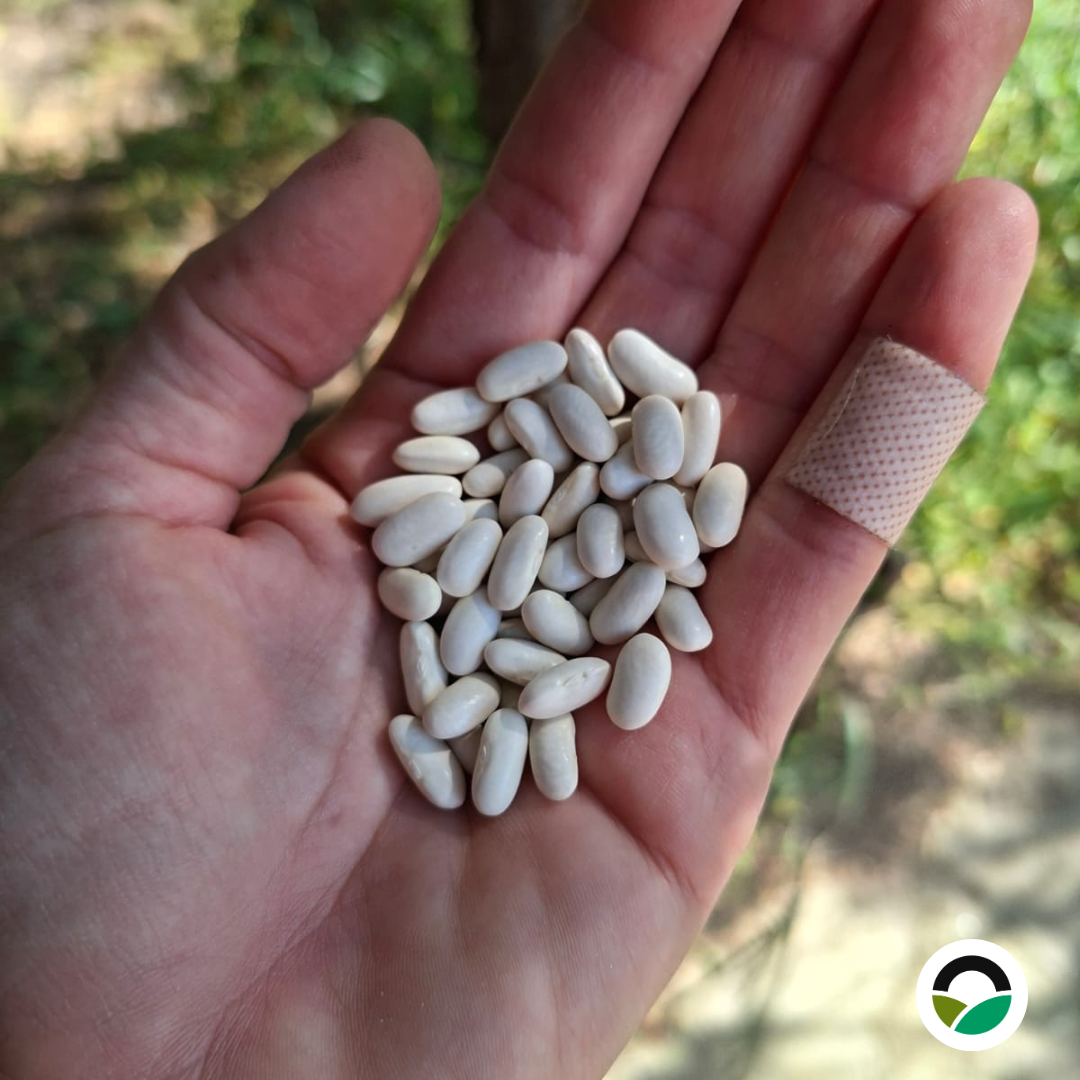
The seeds used during this planting stage were introduced directly into the substrate without pre-germination treatment.
In some cultivation systems, bean seeds may be soaked overnight before planting in order to accelerate water absorption and stimulate more rapid germination. This process softens the seed coat and activates the metabolic pathways involved in embryonic development.
However, direct sowing into adequately moist substrate conditions often provides sufficient hydration for successful germination without the need for additional handling steps. At Mavronero, this batch was planted directly into the trays in order to observe development under standard nursery conditions.
One or two seeds were placed into each cavity of the tray, allowing enough space for initial root and shoot emergence while maintaining an organized and manageable nursery structure.
Following placement, the seeds were lightly covered with substrate and thoroughly watered to ensure complete moisture penetration throughout the growing medium.
Substrate composition and physical properties
A carefully prepared substrate mixture was used during planting, composed of organic substrate, perlite, and mushroom compost.
Although often treated simply as a medium for holding plants upright, substrate composition has direct implications for water dynamics, oxygen availability, microbial interactions, nutrient retention, and root architecture during the earliest stages of plant development.
Each component of the mixture contributes distinct physical and biological properties:
Organic substrate
The organic substrate functions as the primary structural base of the mixture. Its fibrous composition supports water retention while maintaining enough porosity for oxygen exchange around developing roots.
Stable moisture conditions are especially important during germination, as the seed requires continuous hydration in order to activate enzymatic processes responsible for cellular expansion and root emergence.
Perlite
Perlite is incorporated primarily to improve aeration and drainage within the substrate profile.
By increasing pore space, perlite helps prevent excessive compaction and allows oxygen to remain available around the root zone. Oxygen availability is particularly important during early development because germinating seeds and newly forming roots exhibit high respiratory activity.
Insufficient aeration can reduce metabolic efficiency and negatively affect root establishment during the first stages of growth.
Mushroom compost
Mushroom compost contributes organic matter and additional biological complexity to the substrate mixture.
Beyond its nutritional contribution, organic compost materials also influence microbial activity, water-holding capacity, and substrate structure. The incorporation of decomposed organic matter supports the gradual development of a biologically active root environment that may benefit long-term plant establishment.
The interaction between moisture retention, aeration, and organic matter creates a balanced substrate environment capable of supporting both germination and early vegetative development.
Reuse of nursery materials within the cultivation system
The trays used for this planting process were reused from previous herb deliveries already integrated into the nursery infrastructure.
At Mavronero, material reuse is approached not only as a practical decision but also as part of a broader cultivation philosophy centered around reducing unnecessary inputs and extending the functional lifespan of existing materials wherever possible.
Within nursery systems, trays provide several important operational functions:
- maintaining spatial organization of seedlings
- simplifying watering and monitoring
- improving handling efficiency
- facilitating movement between nursery and field environments
- reducing disturbance during early developmental stages
The reuse of trays also allows propagation activities to remain flexible and resource-efficient without requiring constant replacement of functional materials.
Water management during germination
Immediately after sowing, the trays were thoroughly soaked to ensure uniform moisture distribution throughout the substrate.
Water availability during germination represents one of the most critical environmental factors affecting seed activation. Once hydrated, the seed begins absorbing water through a process known as imbibition, triggering metabolic activity within the embryo.
This initiates a sequence of physiological processes including:
- enzyme activation
- mobilization of stored carbohydrates
- cellular expansion
- radicle emergence
- early root development
However, excessive water saturation without adequate aeration can reduce oxygen availability within the substrate and negatively affect seed viability.
For this reason, the balance between water retention and drainage becomes especially important during the first days following planting.
Nursery environment and early developmental conditions
Following watering, the trays were transferred onto nursery shelves where the seeds remain under protected but naturally exposed conditions.
The nursery functions as a transitional developmental environment situated between indoor propagation and full outdoor cultivation. During this stage, plants remain protected from excessive environmental stress while still adapting to fluctuating natural conditions such as temperature variation, airflow, humidity, and daylight cycles.
This intermediary phase supports gradual acclimatization while allowing closer observation of germination rates, substrate behavior, moisture stability, and overall seedling health.
As germination progresses, the first visible structures will include:
- radicle emergence
- hypocotyl elongation
- cotyledon expansion
- formation of the first true leaves
These stages represent critical transitions in plant development as the seedling gradually shifts from reliance on internal seed reserves toward active photosynthesis and external nutrient uptake.
Ecological significance within the cultivation approach
Although the planting of green bean seeds may appear technically simple, the process reflects broader ecological principles integrated throughout the cultivation system at Mavronero.
Early-stage cultivation decisions influence multiple later outcomes including:
- root system structure
- plant resilience
- water-use efficiency
- nutrient acquisition
- transplant adaptation
- overall crop stability
By combining reusable materials, biologically active substrates, low-intervention handling, and careful environmental observation, the nursery system becomes more than a space for seed germination alone. It functions as an active developmental phase where plant-environment interactions begin shaping the future performance of the crop.
This approach also reflects a gradual movement away from highly standardized cultivation models toward systems that prioritize adaptability, observation, and ecological integration.
Conclusion
The planting of “Blue Lake” climbing green bean seeds marks another stage in the continued development of nursery and propagation practices at Mavronero.
Through the combined use of balanced substrate preparation, controlled moisture management, reusable nursery materials, and low-intervention cultivation methods, the process establishes favorable conditions for early seedling development while remaining aligned with broader ecological cultivation principles.
As the seeds germinate and progress through their first developmental stages, continued observation of root establishment, vegetative growth, and environmental response will contribute to the ongoing refinement of the cultivation system.
At Mavronero, even the earliest phases of planting are understood not as isolated technical procedures, but as part of a larger biological and ecological continuum that extends throughout the entire lifecycle of the crop.
