
An aromatic herb with a long history
Sage is one of the best-known aromatic herbs of the Mediterranean region. Valued for its distinctive fragrance and flavour, it has been used in traditional cooking and herbal preparations for generations.
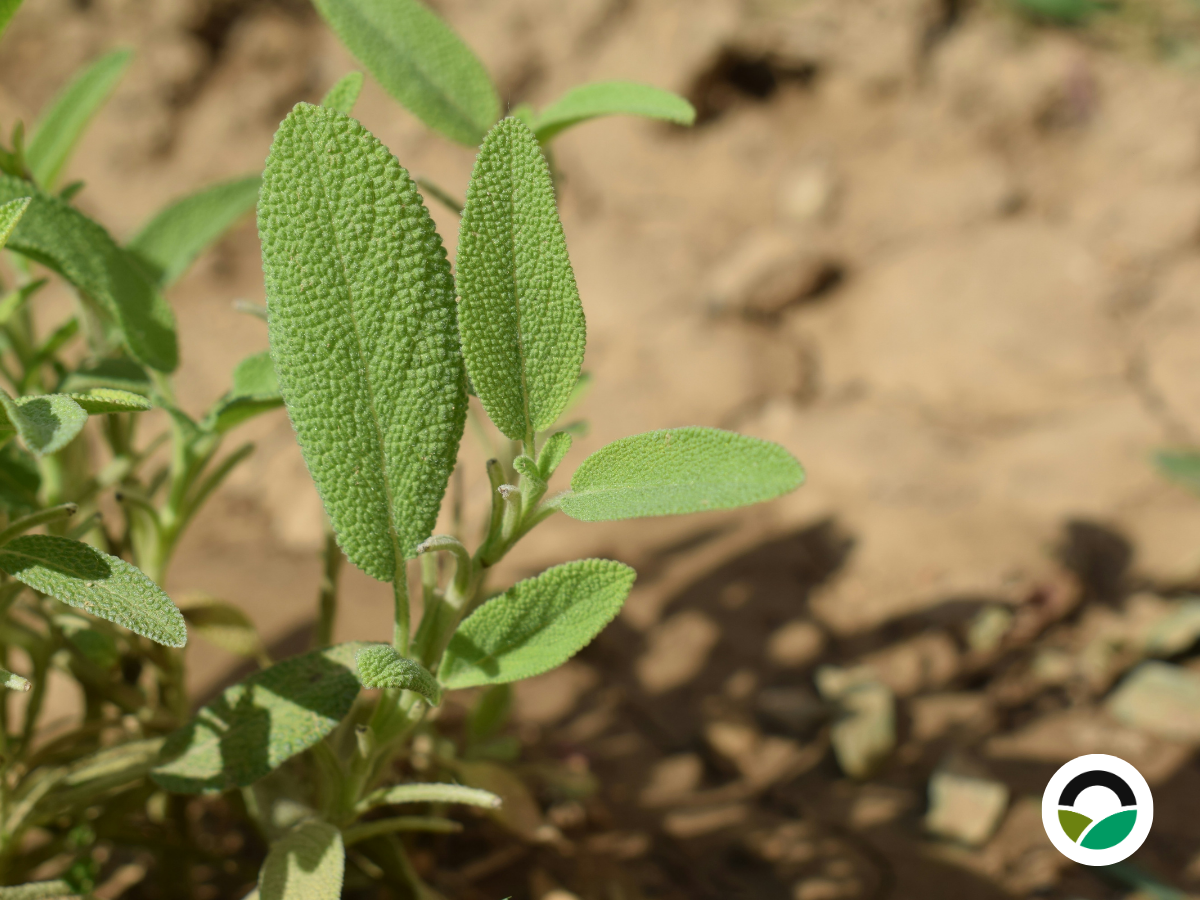
Its textured leaves and characteristic aroma make it a recognisable member of the mint family. Beyond its culinary role, sage has also attracted scientific interest because of the naturally occurring compounds found in its leaves.
Understanding sage means exploring both its place in traditional plant knowledge and the botanical characteristics that make it such a distinctive aromatic herb.
What is sage?
Common sage (Salvia officinalis) is a perennial aromatic subshrub belonging to the family Lamiaceae.
Native to parts of the Mediterranean region, it is cultivated in many countries for its aromatic leaves. The plant typically has grey-green foliage, a strong fragrance and flowers that can range from pale blue to violet.
Sage is adapted to relatively dry growing conditions once established, although its performance depends on soil drainage, climate and cultivation practices. Its leaves contain essential oils and other naturally occurring compounds responsible for its characteristic aroma.
Sage in traditional Mediterranean cooking
Sage has a long history as a culinary herb. Its distinctive, earthy flavour makes it suitable for a variety of dishes, including:
- Vegetable dishes and roasted vegetables.
- Sauces and marinades.
- Traditional meat dishes.
- Herb mixtures and seasonings.
- Aromatic preparations using fresh or dried leaves.
The intensity of its flavour means that relatively small amounts can have a noticeable effect on a dish.
Sage is also used in traditional herbal infusions across parts of Europe and the Mediterranean, where it has long been valued as an aromatic plant.
Sage as a herbal tea
Sage leaves have traditionally been used to prepare herbal infusions. The resulting drink has a distinctive herbal aroma and slightly earthy, savoury flavour.
A simple sage infusion can be prepared using dried sage leaves and freshly boiled water. The quantity of plant material and the preparation method influence the strength of the resulting drink.
How to prepare sage tea
Ingredients
- 1–2 g of dried sage leaves.
- 150 ml of freshly boiled water.
Preparation
- Place the dried sage leaves in a cup or heat-resistant teapot.
- Pour 150 ml of freshly boiled water over the leaves.
- Cover and allow the leaves to infuse for approximately 5–10 minutes.
- Strain the infusion to remove the leaves.
- Allow it to cool to a comfortable drinking temperature before serving.
The infusion can be enjoyed on its own, allowing the herb’s natural aroma and flavour to come through.
Important: This recipe describes a traditional herbal infusion, not a treatment for a medical condition. Sage essential oil and concentrated extracts should never be substituted for ordinary sage leaves in this recipe.
What are the potential benefits of sage tea?
Sage has attracted scientific interest because of its chemical composition and its history of traditional use. However, it is important to distinguish between traditional applications, laboratory findings and effects demonstrated in human studies.
Naturally occurring plant compounds
Sage contains a variety of naturally occurring compounds, including rosmarinic acid and volatile constituents that contribute to its aroma.
The composition of the leaves can vary according to the plant’s growing conditions, the part of the plant used and the preparation method.
Laboratory research has investigated the biological activity of some of these compounds. Such studies help scientists understand the plant’s chemistry, but laboratory findings do not necessarily demonstrate the same effects when people drink sage tea.
Traditional herbal use
Sage has a long history of use in European herbal traditions.
The European Medicines Agency has assessed preparations made from sage leaves for specific traditional herbal uses, including certain digestive complaints and minor inflammations of the mouth and throat.
These assessments concern particular preparations and uses. They should not be interpreted as proof that every homemade sage infusion produces the same effects.
Traditional use is an important part of herbal knowledge, but it is not equivalent to strong clinical evidence of effectiveness.
What does the science tell us?
Research into sage includes laboratory investigations and studies of specific preparations.
Results cannot automatically be transferred between ordinary infusions, concentrated extracts and essential oils, as these products can differ considerably in composition and concentration.
Further research may help clarify the effects and safety of particular sage preparations. Until stronger evidence is available, claims that sage tea prevents or treats diseases should be avoided.
Important considerations for sage infusions
Although sage is widely used as a culinary herb, its composition means that some precautions are important.
Common sage contains thujone, a naturally occurring compound that can be harmful at sufficiently high exposures. The amount present can vary, and concentrated sage essential oil is particularly different from an ordinary water-based infusion.
For this reason:
- Use sage leaves intended for culinary or herbal infusion purposes.
- Do not ingest sage essential oil as a substitute for tea.
- Avoid assuming that stronger or more concentrated preparations are more beneficial.
- Seek professional advice before using sage medicinally during pregnancy or breastfeeding, or if you take medication.
- Do not use a traditional herbal drink as a replacement for prescribed medical treatment.
The European Medicines Agency provides further information about sage leaf preparations, their traditional uses and relevant safety considerations.
Growing sage in Mediterranean climates
Common sage is well suited to many Mediterranean growing conditions. Its aromatic foliage, relatively low maintenance requirements and tolerance of dry conditions once established make it a useful addition to herb gardens.
Its cultivation generally benefits from:
- Well-drained soil: Sage does not thrive in persistently waterlogged conditions.
- Adequate sunlight: A sunny position supports healthy growth and aromatic foliage.
- Careful watering: Allow the soil to dry somewhat between waterings once the plant is established.
- Suitable spacing: Good air circulation helps maintain healthy foliage.
- Regular observation: Monitoring plant growth helps identify problems before they become more serious.
Although established plants can tolerate relatively dry conditions, young plants require appropriate care while their root systems develop.
In Mediterranean climates, selecting a sunny location with good drainage is particularly important. Heavy soils that retain excessive moisture may need improvement, or the plant can be grown in a container with suitable drainage.
Regular harvesting of young leaves can also encourage bushier growth.
Growing sage successfully means understanding the balance between sunlight, drainage, watering and the seasonal conditions of the local environment.
Interesting facts about sage
- Common sage belongs to the mint family, Lamiaceae.
- Its botanical name is Salvia officinalis.
- The plant is recognised by its aromatic, grey-green leaves.
- Sage flowers can range from pale blue to violet and attract pollinating insects.
- Its leaves contain essential oils and other naturally occurring compounds.
- It is widely used in Mediterranean cooking.
- Sage has a long history of traditional herbal use in Europe.
- Different sage preparations can have different compositions and safety considerations.
Conclusion
Sage is a distinctive aromatic herb that connects Mediterranean horticulture, culinary traditions and traditional herbal practices.
Its fragrant leaves have made it a familiar ingredient in kitchens for generations, while its chemical composition continues to attract scientific interest.
A simple sage infusion offers a way to appreciate the herb’s characteristic aroma and flavour. Understanding its traditional uses also means recognising the difference between historical knowledge and scientifically demonstrated effects.
At Mavronero Farm, documenting aromatic plants helps connect botanical knowledge with practical growing experience and the wider traditions associated with Mediterranean herbs.
By learning more about plants such as sage, we can better appreciate the relationship between Mediterranean landscapes, cultivated herbs and the traditions that have developed around them.
