
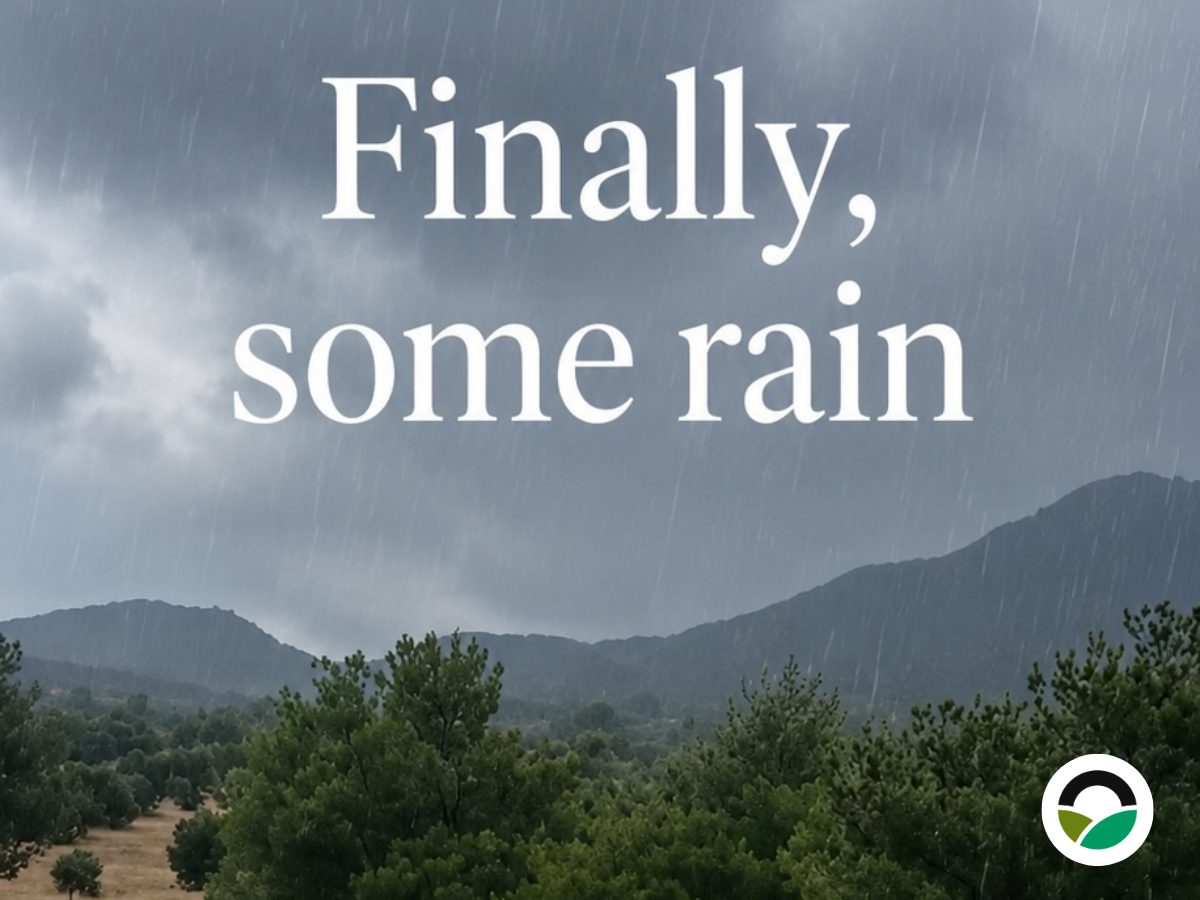
After a prolonged period of dry weather, Mavronero recently received a welcome spring rainfall.
Although the rainfall was relatively brief, it provided valuable moisture for the farm’s soils, crops, and surrounding habitats. In Mediterranean environments, where rainfall becomes increasingly limited as summer approaches, even short rain events can play an important role in supporting agricultural productivity and ecological processes.
The arrival of rain serves as a reminder of the close relationship between weather, farming, and biodiversity.
The importance of spring rain
Seasonal rainfall in Mediterranean landscapes
Mediterranean climates are characterised by mild, wetter winters followed by long, dry summers. As temperatures rise during late spring, rainfall becomes less frequent and water availability gradually declines.
Spring rain can provide several important benefits:
- replenishment of soil moisture
- support for active plant growth
- reduced water stress for crops
- improved conditions for soil organisms
- temporary relief from high temperatures
Even a single rainfall event can help maintain favourable growing conditions before the arrival of the hottest months of the year.
Benefits for agriculture
Supporting crop development
Many crops at Mavronero are currently in active growth stages, including vegetables, fruit trees, and newly established plantings.
Additional natural rainfall can help:
- improve water availability for roots
- support flowering and fruit development
- reduce irrigation requirements
- encourage healthy plant growth
- improve overall crop resilience
Natural rainfall often reaches the soil differently than irrigation systems, helping moisture penetrate broader areas of the landscape.
Benefits for biodiversity
Water and wildlife
Rainfall benefits not only cultivated plants but also the many organisms that share the agricultural environment.
Moist conditions can support:
- pollinator activity
- soil invertebrates
- native vegetation
- bird populations
- ecological interactions throughout the landscape
Temporary increases in moisture can create favourable conditions for numerous species that depend on seasonal environmental changes.
Rain and soil health
Supporting living soils
Healthy agricultural soils contain diverse communities of microorganisms, fungi, insects, and other organisms.
Rainfall contributes to soil health by:
- increasing soil moisture
- supporting biological activity
- improving nutrient cycling
- reducing surface dryness
- helping maintain productive growing conditions
These processes contribute to the long-term sustainability of agricultural systems.
Conclusion
The recent spring rain at Mavronero provided a valuable boost for both agriculture and biodiversity.
While relatively short, the rainfall contributed moisture to the soil, supported crop development, and benefited the wider ecosystem that surrounds the farm.
As the growing season continues, observations such as these highlight the importance of seasonal weather patterns and the role they play in sustaining productive and biodiverse Mediterranean agricultural landscapes.
