
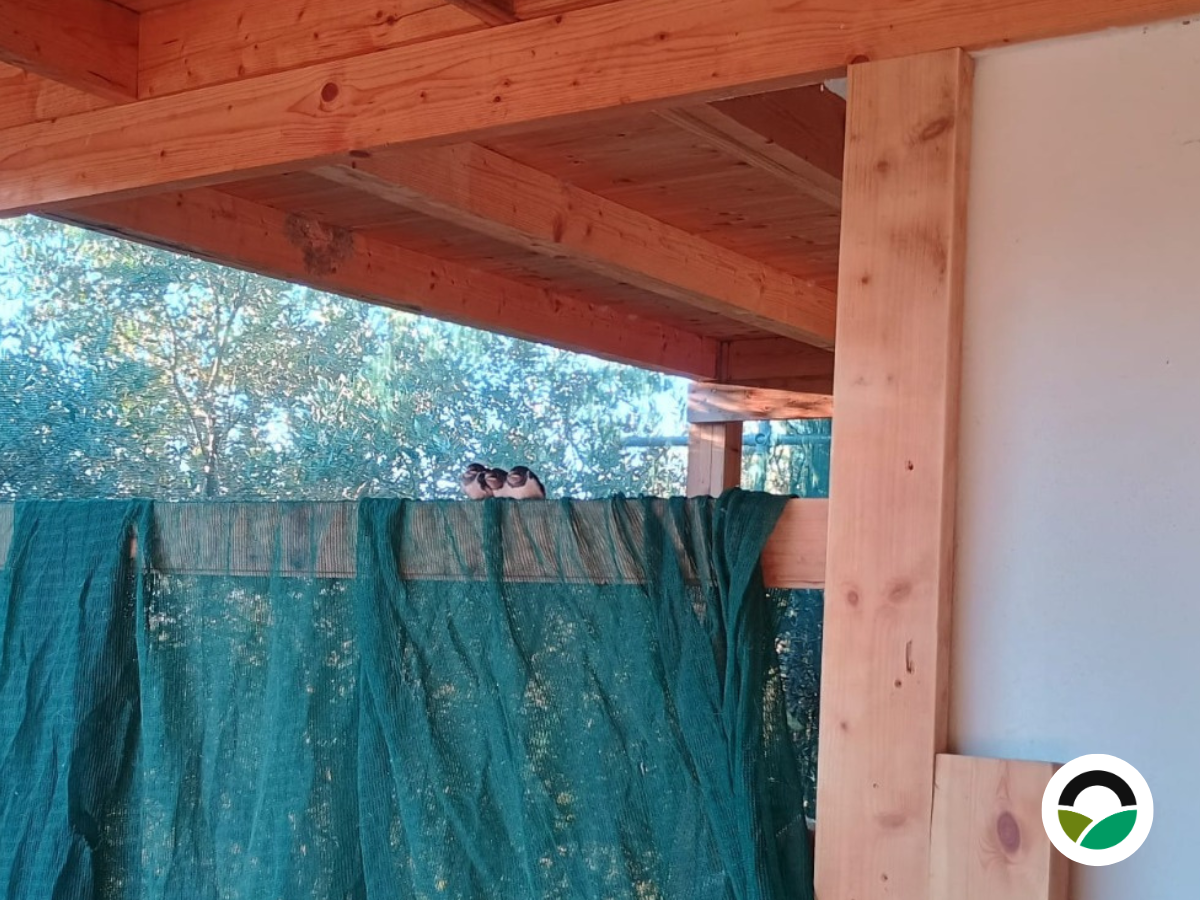
Swallows regularly nest around the Mavronero farmhouse during the spring and early summer breeding season. These migratory birds are closely associated with open agricultural landscapes, traditional rural buildings, and environments where insect populations remain active throughout warmer seasonal periods.
At Mavronero, two swallow nests developed around the farmhouse structure during the nesting season. Adult birds could frequently be observed flying continuously around the building while feeding their chicks throughout the day.
Swallows commonly select sheltered architectural structures for nesting, including roof beams, barns, porches, farmhouses, and semi-open wooden constructions. These locations provide protection from weather conditions while remaining close to open flight corridors and feeding areas.
The surrounding olive landscape, herbaceous vegetation, and low-intervention agricultural environment provide suitable conditions for aerial insect activity, which forms the primary food source for swallows and their developing chicks.
Swallows within Mediterranean agricultural landscapes
Swallows are strongly connected to traditional cultivated environments across Mediterranean regions. Their seasonal arrival often coincides with increasing insect abundance during spring and early summer.
These birds contribute to broader ecological dynamics involving:
- aerial insect populations
- seasonal migration cycles
- agricultural landscape biodiversity
- nesting habitat continuity
- coexistence between wildlife and rural structures
Traditional rural environments historically provided nesting opportunities through open buildings, exposed beams, tiled roofs, and accessible sheltered spaces. In many Mediterranean landscapes, swallows continue to depend on these structures for successful nesting and breeding activity.
At Mavronero, swallow activity forms part of wider seasonal wildlife observations taking place across cultivated and semi-natural environments surrounding the farmhouse and olive groves.
Nest collapse and chick survival
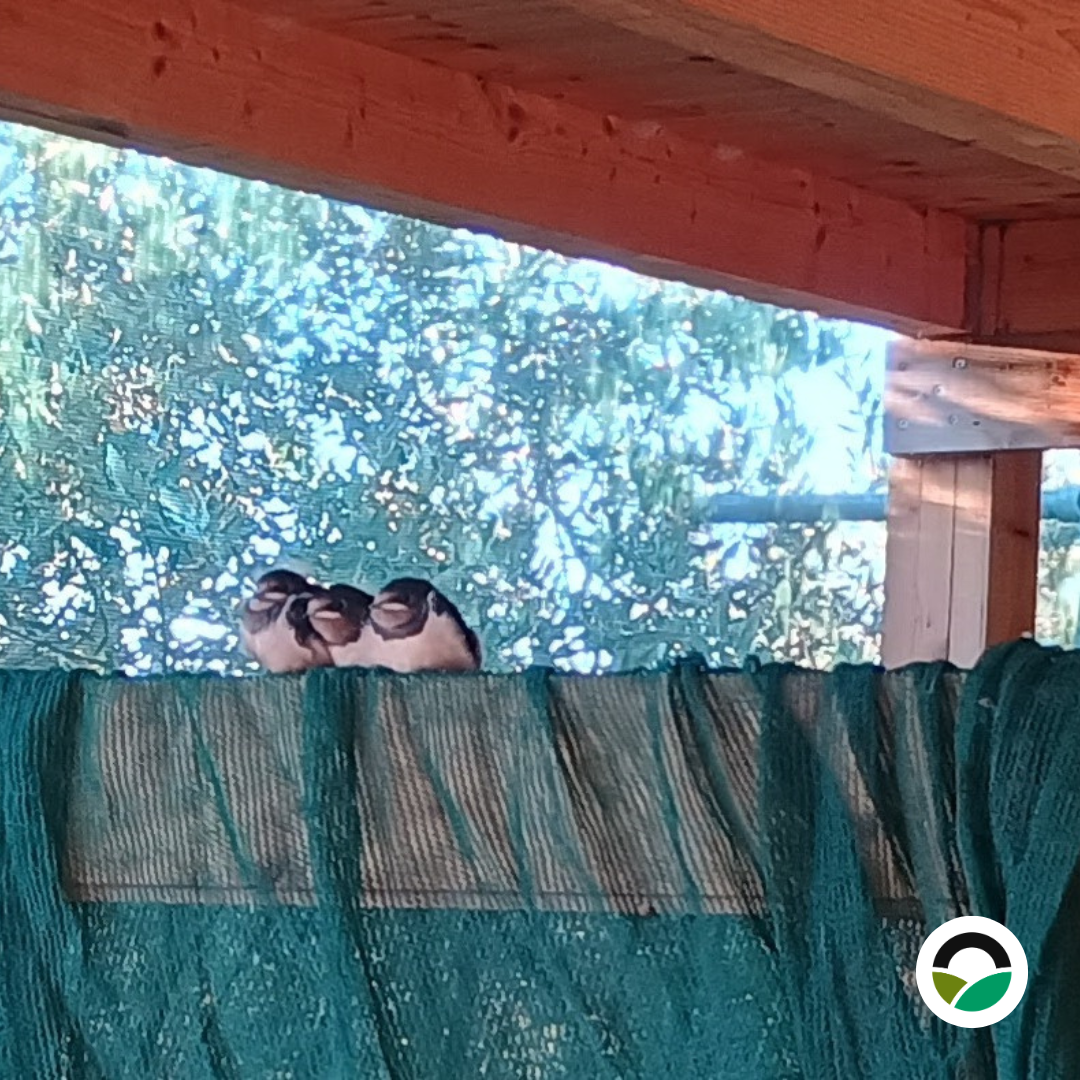
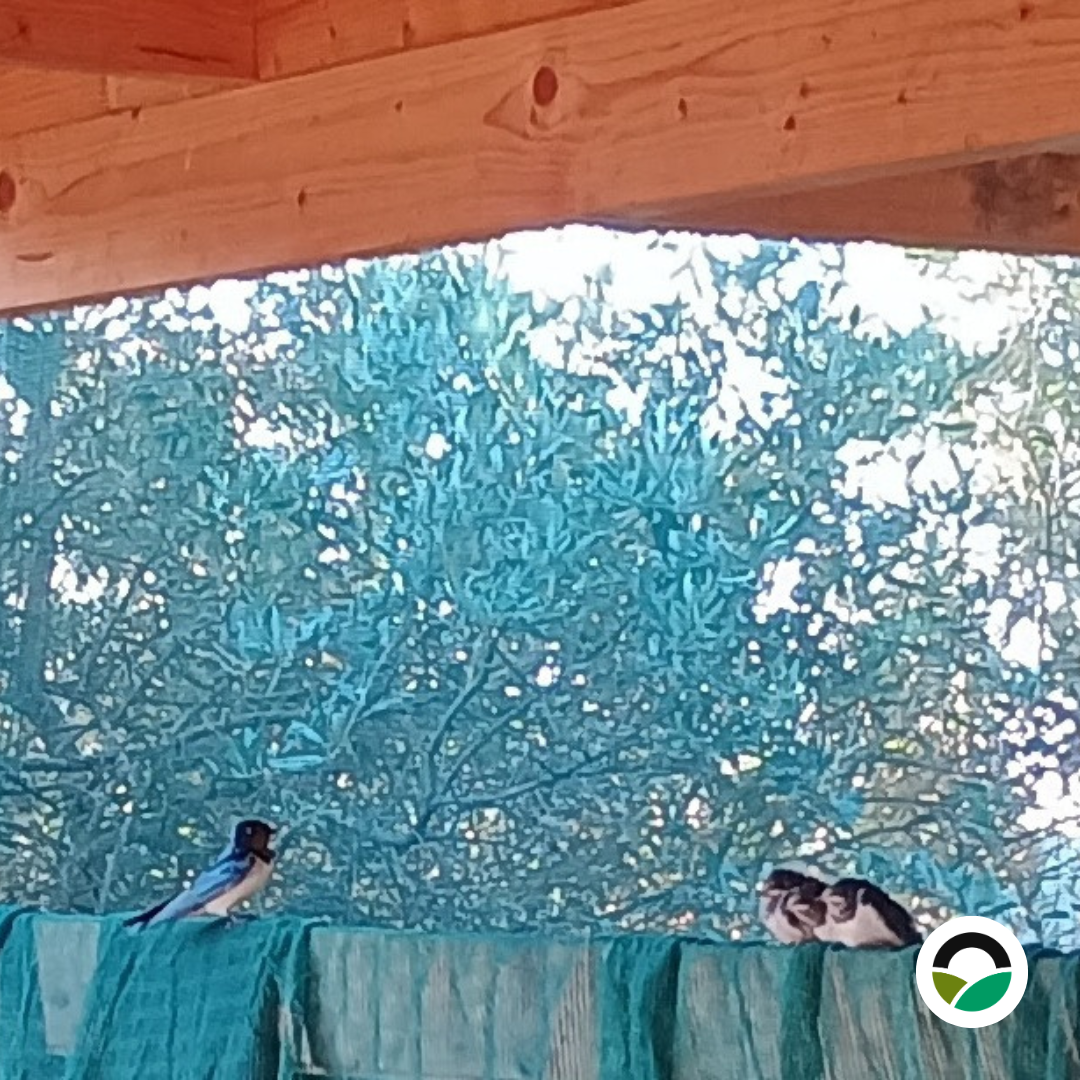
During the nesting period, one of the swallow nests unfortunately collapsed. However, two chicks had already developed sufficiently to leave the nest and were later observed resting together nearby while continuing to receive food from the parent birds.
Young swallows often remain close to nesting areas after fledging, waiting nearby while adult birds continue feeding them during the final stages of development before full independence.
These observations reflect the vulnerability and adaptability of seasonal wildlife developing within cultivated Mediterranean landscapes.
Environmental coexistence at Mavronero
The presence of nesting swallows highlights the ecological relationships that continue to develop within low-intervention agricultural environments.
Rather than separating cultivation from surrounding ecological activity, the Mavronero landscape supports interactions between rural structures, vegetation systems, insects, birds, and seasonal environmental cycles.
Environmental observations at Mavronero continue documenting biodiversity activity connected to:
- bird nesting behaviour
- pollinator and insect activity
- native flowering vegetation
- seasonal ecological adaptation
- habitat continuity within cultivated landscapes
Through ongoing observation and relatively low-intensity land management practices, these seasonal wildlife interactions remain visible throughout the evolving Mediterranean landscape surrounding Mavronero.
Conclusion
Swallows remain an important part of Mediterranean agricultural ecosystems and traditional rural landscapes.
The nesting activity observed at the Mavronero farmhouse reflects broader ecological relationships involving seasonal migration, insect abundance, cultivated environments, and habitat continuity within Mediterranean ecosystems.
Even small observations around rural buildings can provide insight into the ongoing coexistence between wildlife and cultivated landscapes.
