
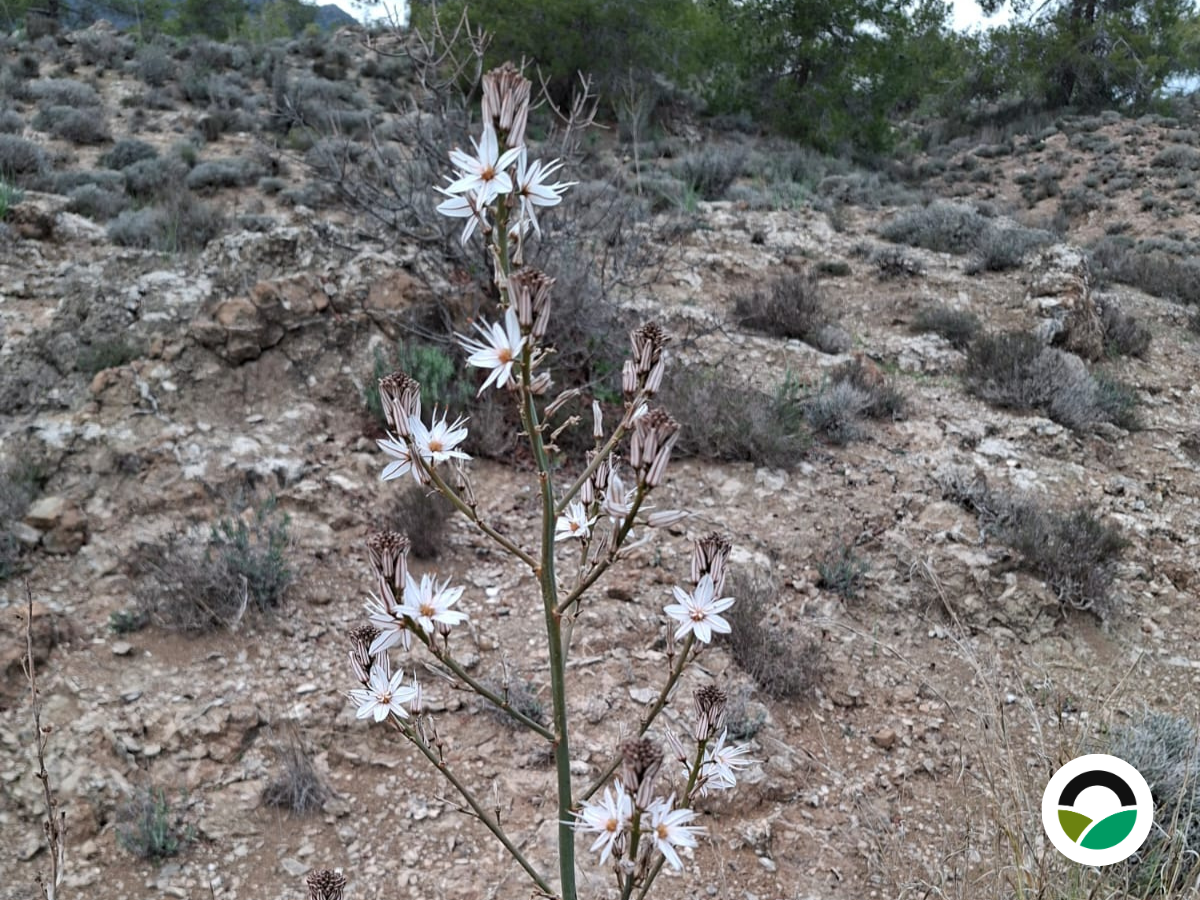
This season, Tall Asphodel (Asphodelus ramosus) is flowering at Mavronero.
A native Mediterranean geophyte, it emerges in open, dry landscapes shaped by seasonal rainfall and prolonged summer drought. Its appearance is part of a long-established ecological rhythm rather than an introduced element.
Botanical identity
- Family: Asphodelaceae
- Species: Asphodelus ramosus
- Growth form: Perennial geophyte with underground tubers
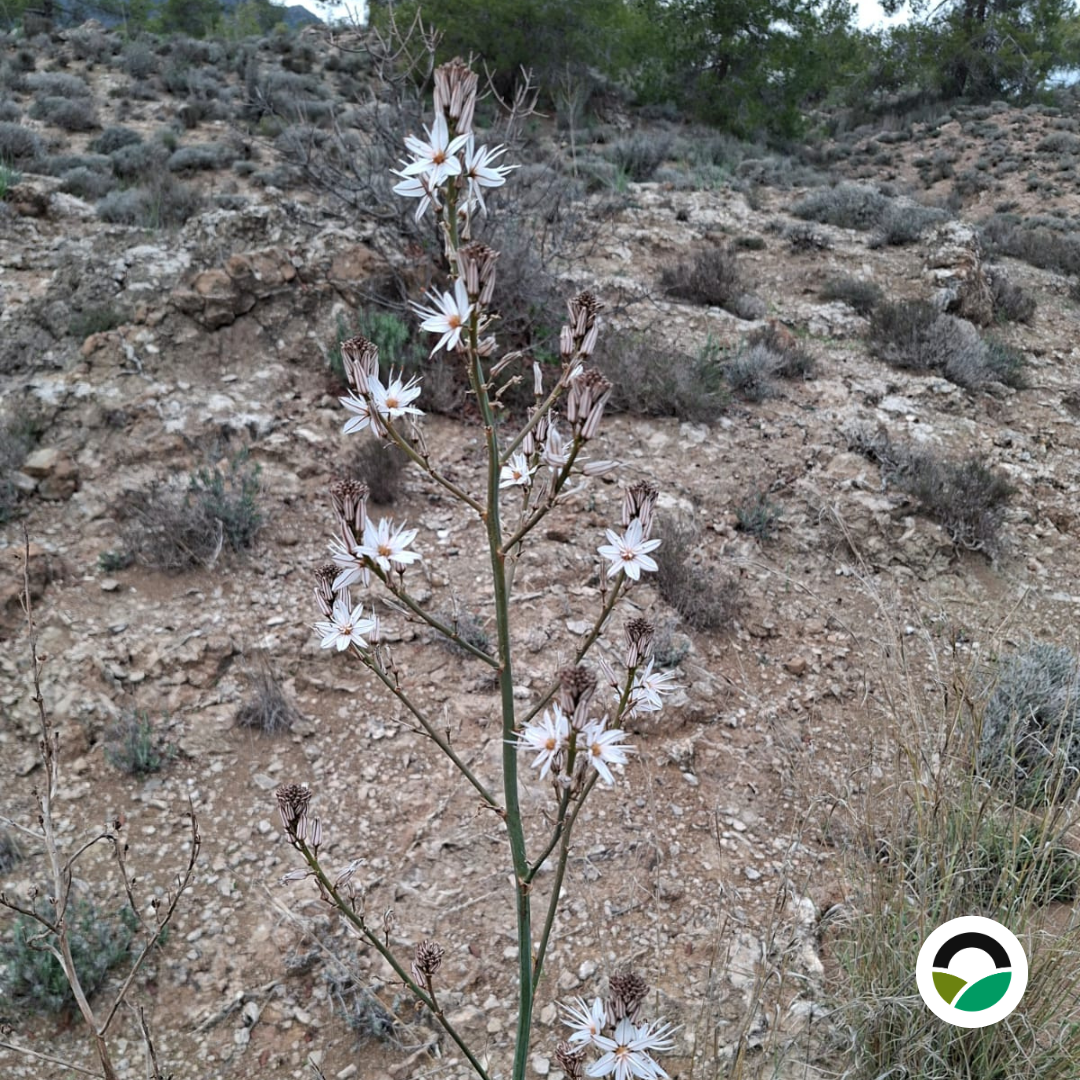
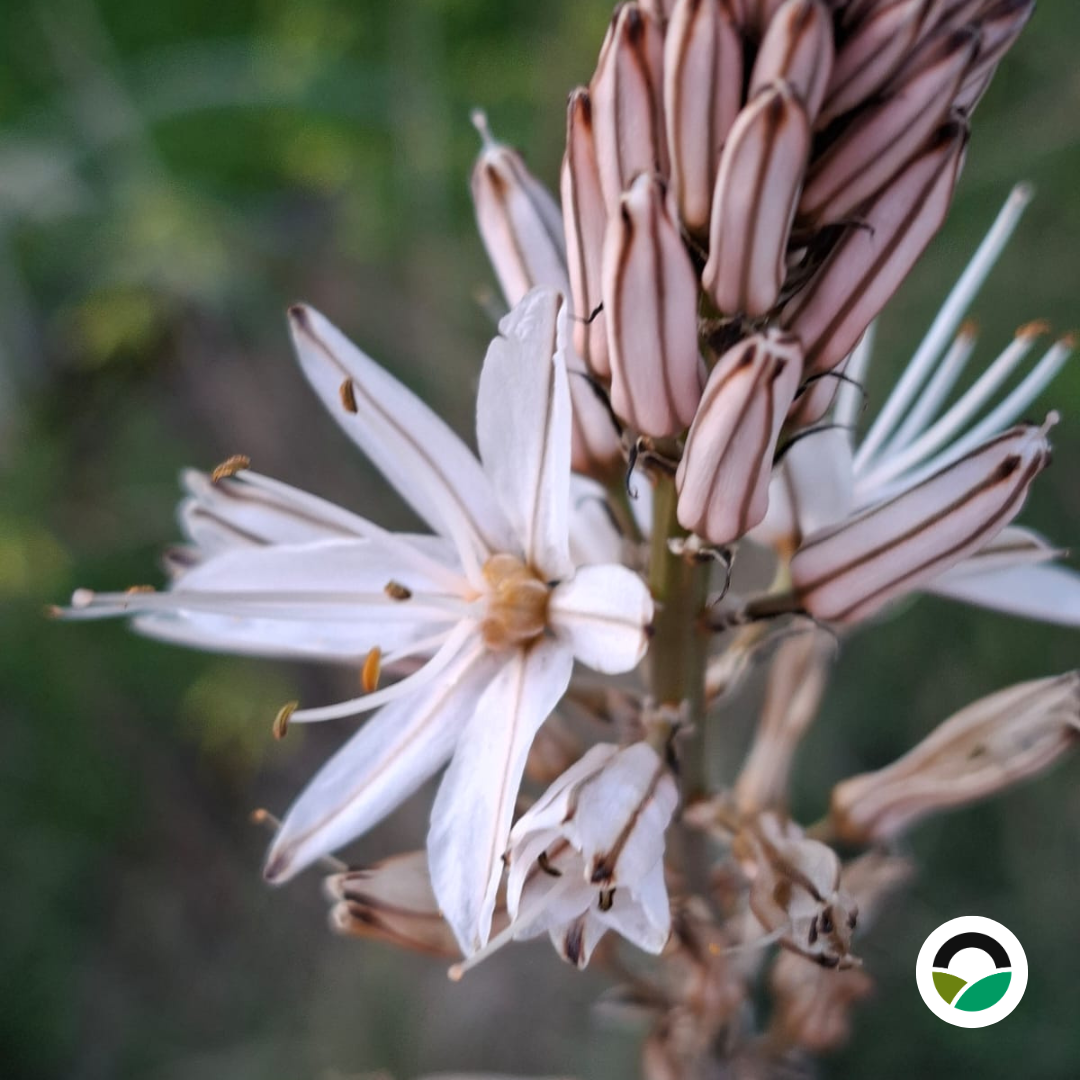
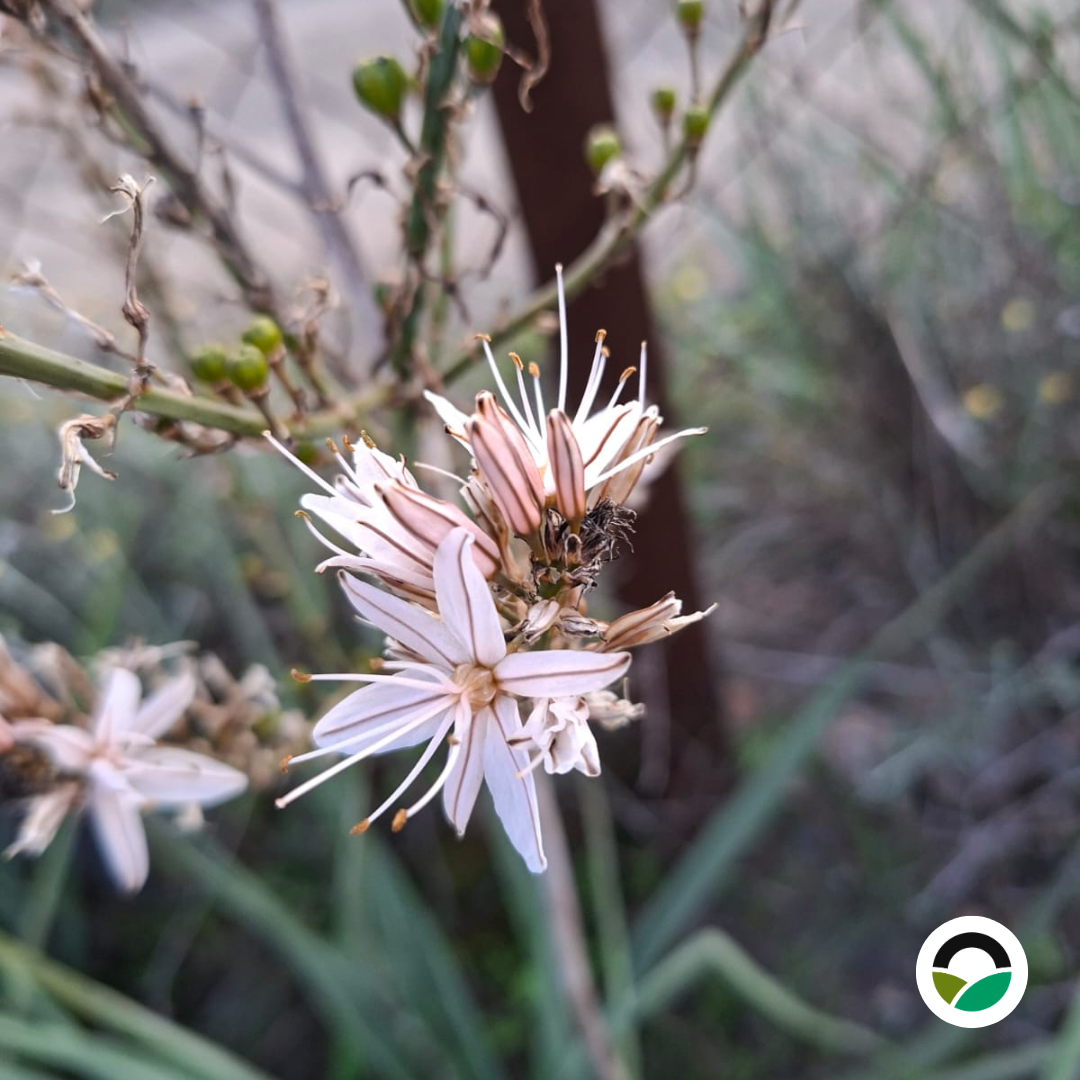
Tall Asphodel develops from a system of fleshy underground tubers that store starch and water. During late winter and early spring, it produces long, upright flowering stems bearing star-shaped white flowers marked by a darker central stripe.
Characteristic features include:
- Linear, strap-like basal leaves emerging in winter
- Tall, branching flowering stems
- Six-petaled white flowers with a brown midrib
- Spring flowering before full summer drought
Once flowering and seed production are complete, the aerial parts dry out entirely. The plant survives underground through the hottest and driest months.
Ecological adaptation
Tall Asphodel is strongly adapted to Mediterranean conditions:
- Shallow, calcareous soils
- Seasonal winter moisture
- High solar exposure
- Nutrient-poor substrates
Its underground tubers function as survival organs, allowing the plant to accumulate energy during the wet season and remain dormant during drought.
Ecologically, it contributes to:
- Soil stabilisation through root structure
- Seasonal nectar resources for insects
- Structural diversity in open Mediterranean vegetation
Unlike more delicate understory species, Tall Asphodel is structurally assertive and tolerant of moderate environmental stress.
Historical and cultural context
The tubers of Tall Asphodel are rich in starch. Historically, in parts of the Mediterranean, they were processed as:
- A food source after careful preparation
- A thickening agent
- A base for fermentation and alcohol production
In ancient Greek tradition, asphodel was associated with the afterlife and described as growing in the fields of Hades. The plant therefore carries both ecological and cultural significance.
Landscape context at Mavronero
At Mavronero, Tall Asphodel appears without irrigation, fertilisation, or planting. It follows the seasonal pattern of rainfall and temperature, emerging in winter and flowering before drought intensifies.
Its presence reflects a landscape functioning within climatic limits.
It does not require intensification. It responds to seasonality.
Why it matters
Tall Asphodel represents Mediterranean resilience expressed through biological timing.
It stores energy underground, waits through adversity, and re-emerges when conditions allow.
Visible in flower for only a short period, yet shaped by long-term adaptation, it reminds us that sustainable landscapes are defined by rhythm rather than intervention.
Sources
- Royal Botanic Gardens, Kew. Plants of the World Online – Asphodelus ramosus L.
- Davis, P.H. (Ed.). (1984). Flora of Turkey and the East Aegean Islands, Vol. 8. Edinburgh University Press.
- Blondel, J., Aronson, J., Bodiou, J.-Y., & Boeuf, G. (2010). The Mediterranean Region: Biological Diversity in Space and Time. Oxford University Press.
