
A remarkable web builder in the Mediterranean landscape
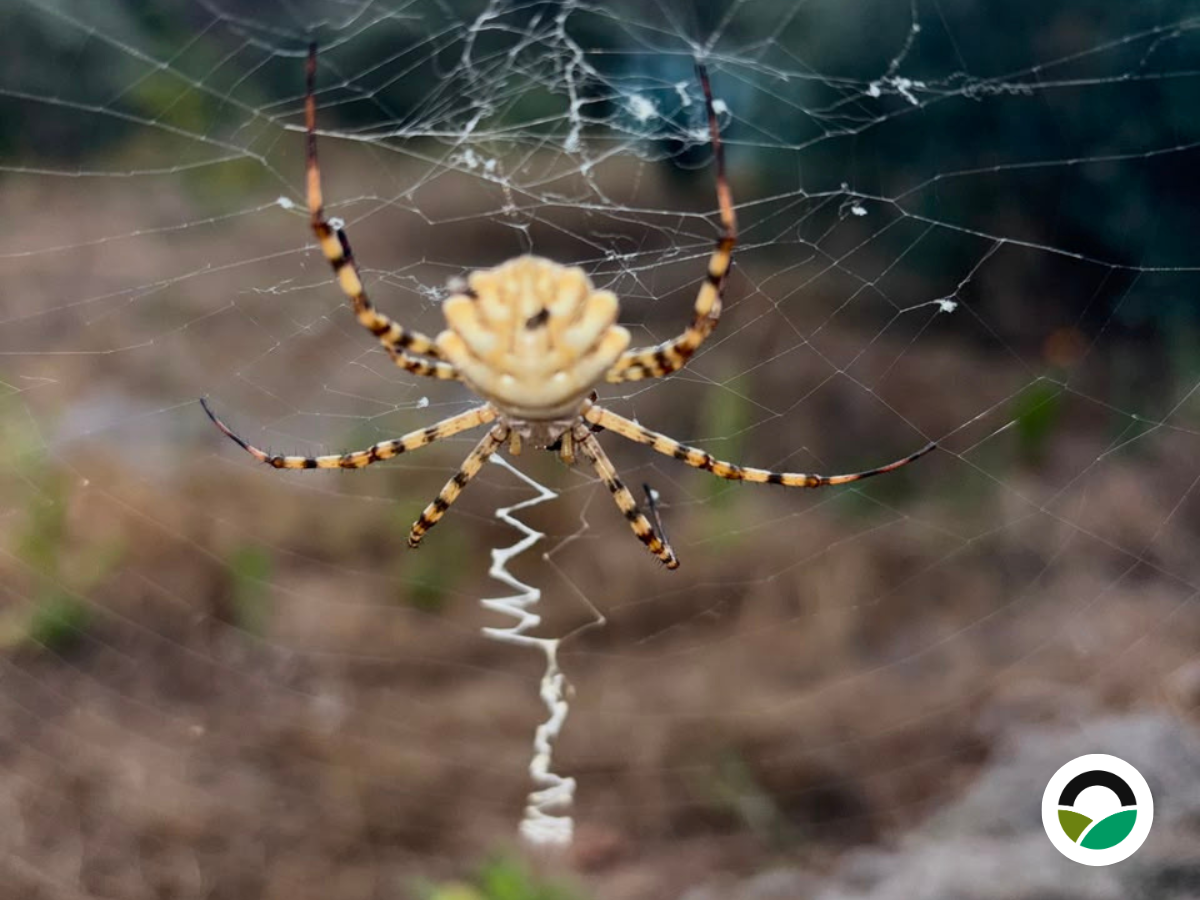
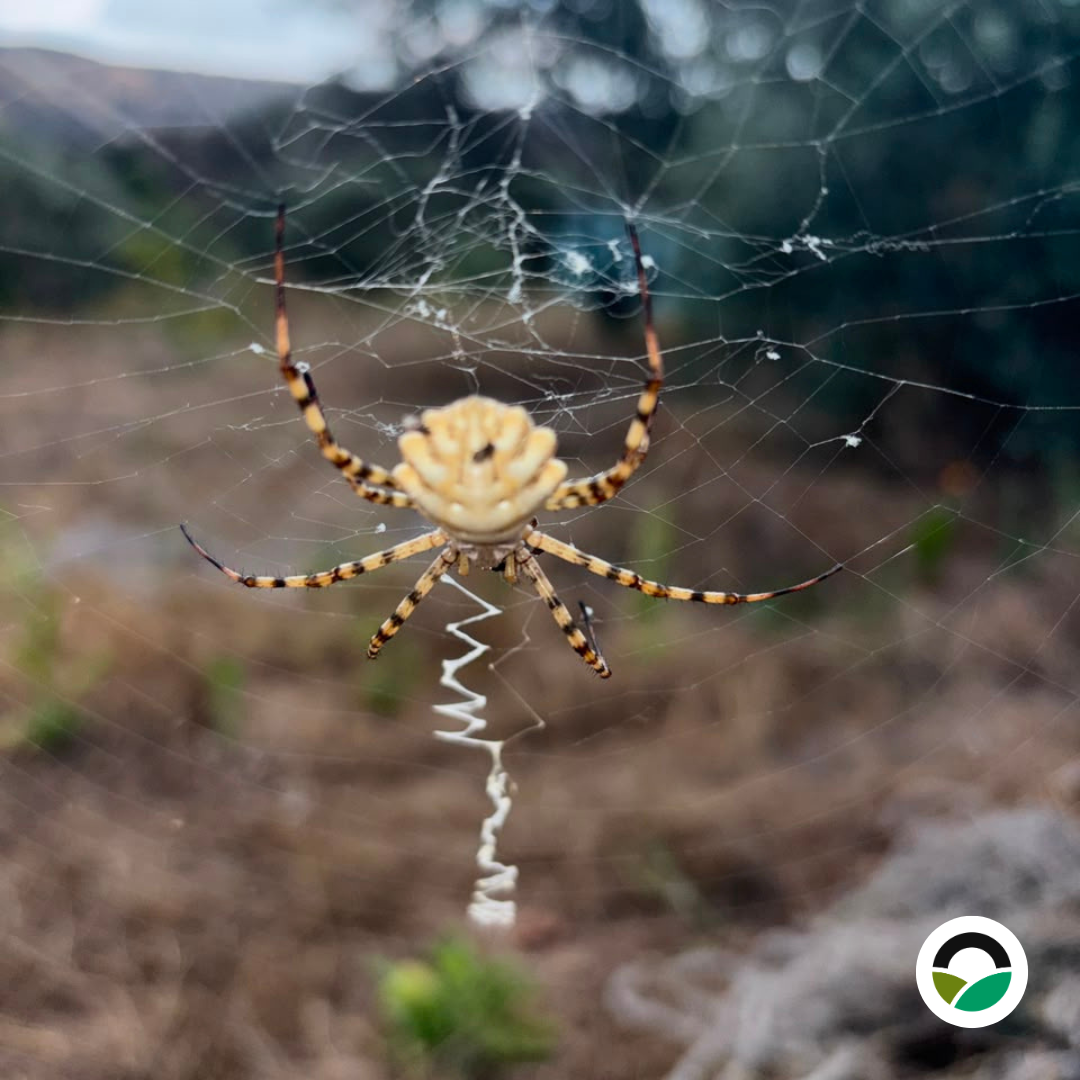
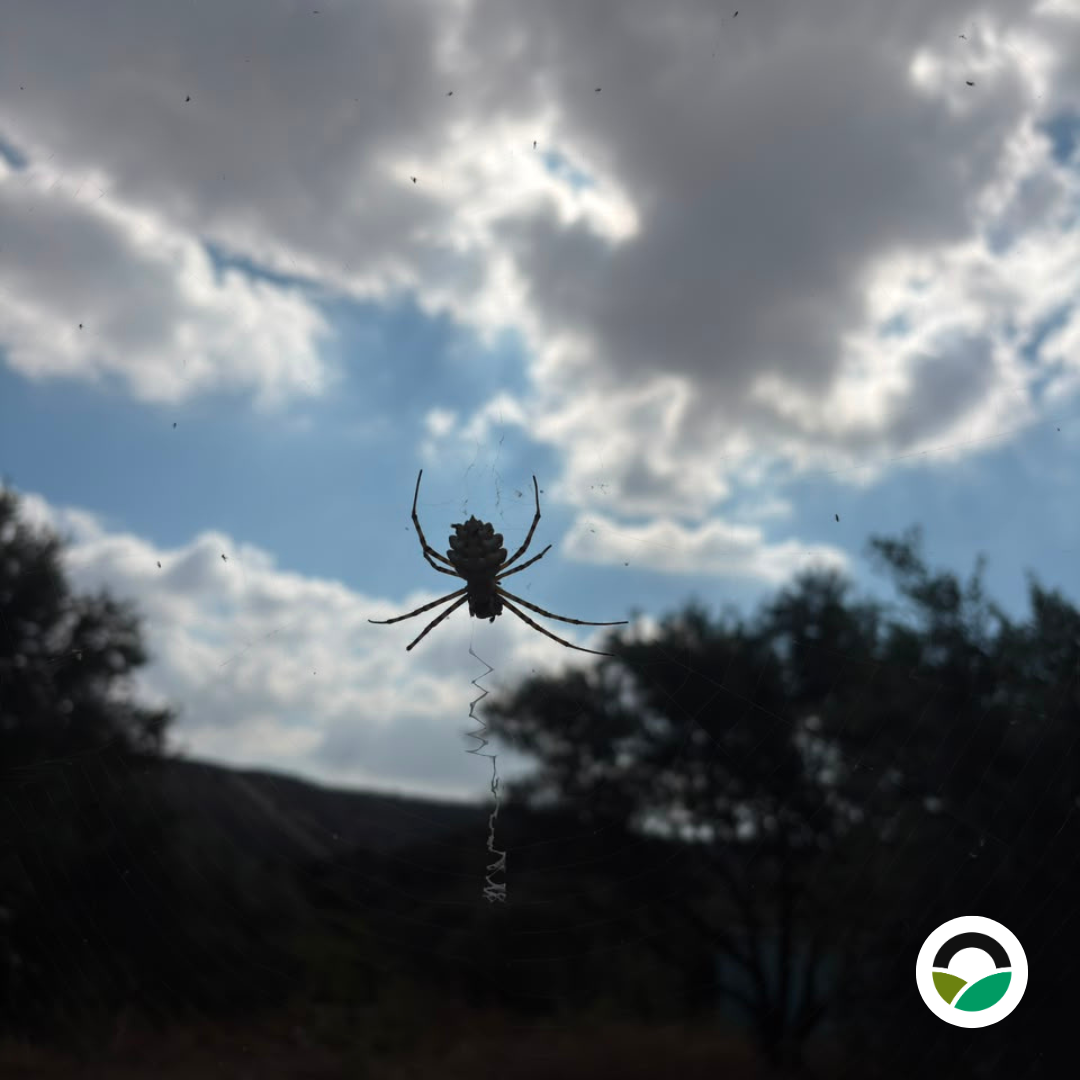
During recent observations at Mavronero, a wasp spider (Argiope bruennichi) was recorded among the farm’s natural vegetation.
This striking species is easily recognised by its distinctive yellow and black striped abdomen and the unusual zigzag structure, known as a stabilimentum, that appears in the centre of its web.
Although its appearance may seem intimidating, the wasp spider is harmless to humans and plays an important role in local ecosystems by helping regulate insect populations.
A specialist hunter
Wasp spiders do not actively hunt their prey. Instead, they construct large circular webs between grasses, shrubs, and other vegetation.
Flying insects become trapped in the web’s sticky silk, allowing the spider to quickly immobilise and consume them.
Their diet commonly includes:
- flies
- grasshoppers
- small beetles
- moths
- other flying insects
By feeding on a wide range of insects, these spiders contribute to the natural balance of agricultural and semi-natural habitats.
The mystery of the zigzag web
One of the most distinctive features of Argiope bruennichi is the white zigzag band woven into the centre of its web.
Scientists believe this structure may serve several purposes, including:
- making the web more visible to larger animals and reducing accidental damage
- attracting certain insects by reflecting ultraviolet light
- helping stabilise the web structure
Although researchers continue to study its exact function, the stabilimentum remains one of the most recognisable features of the species.
Is the wasp spider dangerous?
Despite its striking appearance, the wasp spider (Argiope bruennichi) is generally harmless to humans.
Like most spiders, it possesses venom that is used to immobilise and digest insect prey. However, this venom is adapted to small invertebrates and does not pose a significant risk to people.
The species is non-aggressive and prefers to remain undisturbed within its web. Bites are extremely rare and usually occur only if the spider is handled directly or accidentally trapped against the skin.
When bites do occur, symptoms are typically mild and may include:
- temporary pain at the bite site
- slight redness
- minor swelling
- local irritation
These effects are generally comparable to a mild insect sting and usually disappear within a short period of time.
Although its yellow-and-black markings resemble those of a wasp, the wasp spider is not considered medically significant and is regarded as a beneficial species within natural and agricultural ecosystems.
A species expanding across Europe
Historically associated with warmer regions of southern Europe, the wasp spider has expanded its range significantly during recent decades.
Today it can be found across much of Europe, including areas where it was once uncommon.
Its success is often linked to the availability of open habitats rich in insect life, making diverse agricultural landscapes suitable environments for the species.
Supporting biodiversity on the farm
The presence of wasp spiders at Mavronero reflects the ecological diversity found within the farm’s mosaic of cultivated areas, wild vegetation, and natural habitats.
Predators such as spiders form an important part of healthy ecosystems, helping maintain natural population balances while contributing to overall biodiversity.
Observations like these highlight how even small creatures play significant roles within Mediterranean agricultural landscapes.
Conclusion
The wasp spider (Argiope bruennichi) is one of the most distinctive invertebrates found in Europe. Its striking appearance, intricate web, and role as a natural insect predator make it an important component of local biodiversity.
By documenting species such as this, Mavronero continues to record and share the wildlife that contributes to the ecological richness of the surrounding landscape.
Sources
The information presented in this article is based on direct observations made at Mavronero and supported by the following references:
- Spiders of Britain and Northern Europe
- Natural History Museum – information on European spider species and ecology
- European Society of Arachnology – species distribution and behavioural information
- IUCN – biodiversity and species conservation resources
- Scientific literature on Argiope bruennichi ecology, web construction, and range expansion in Europe
