
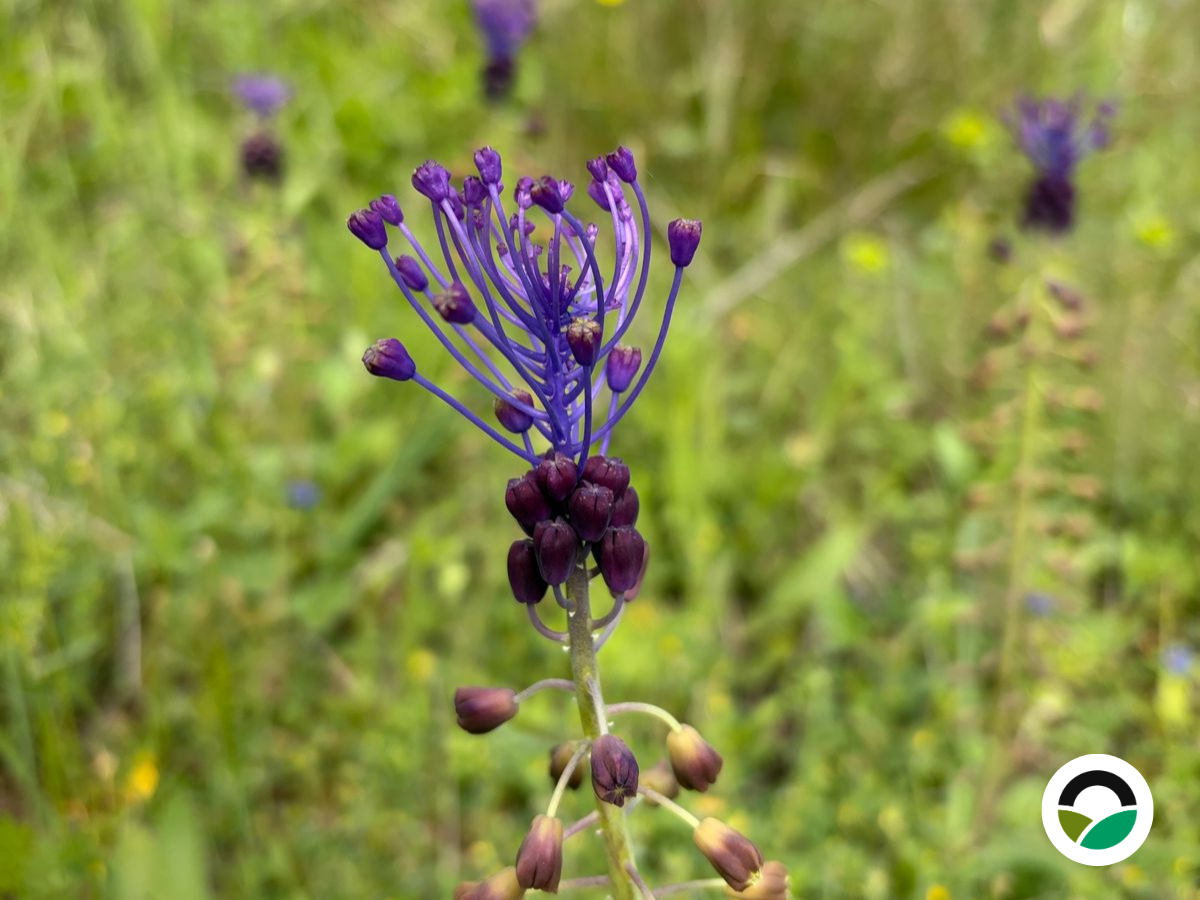
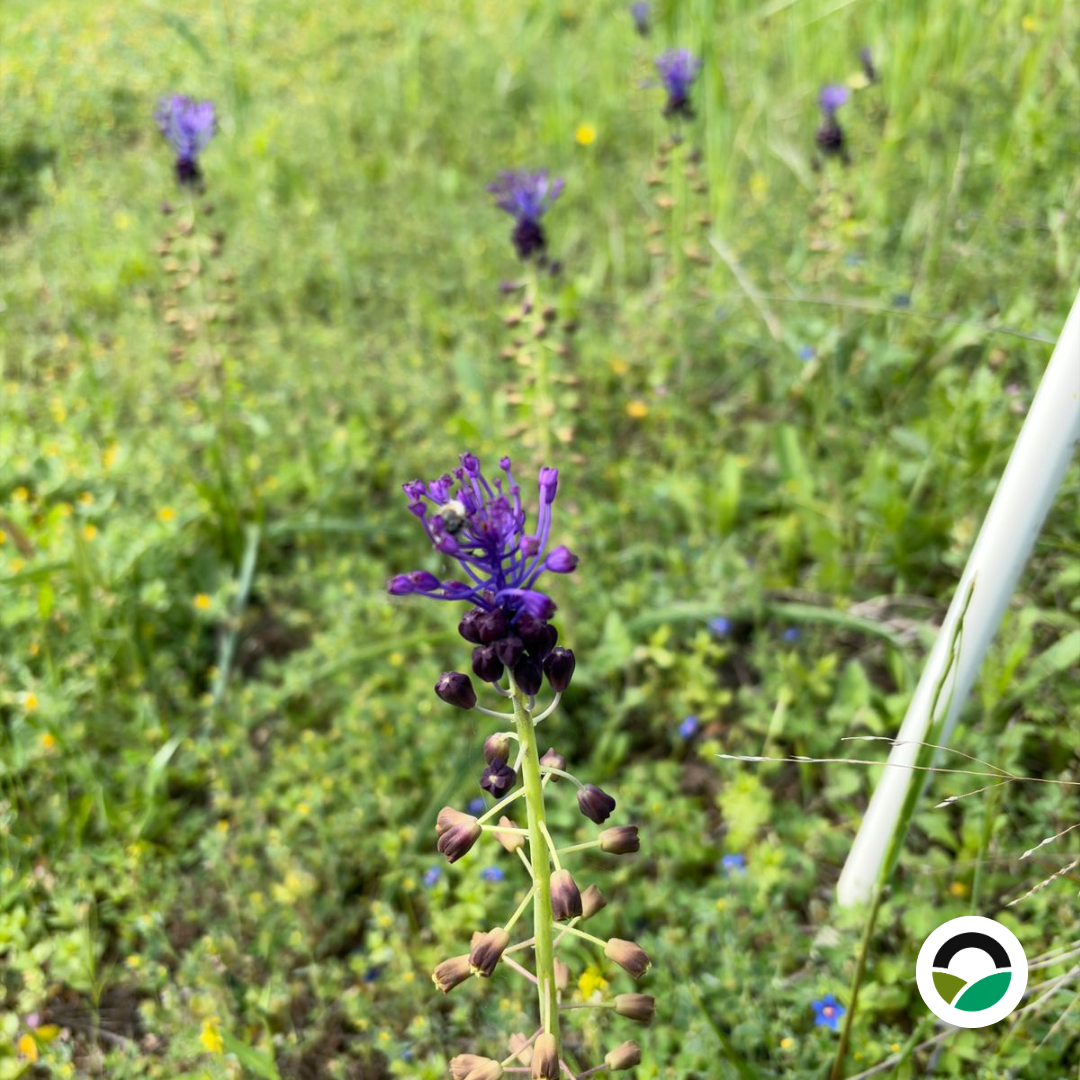
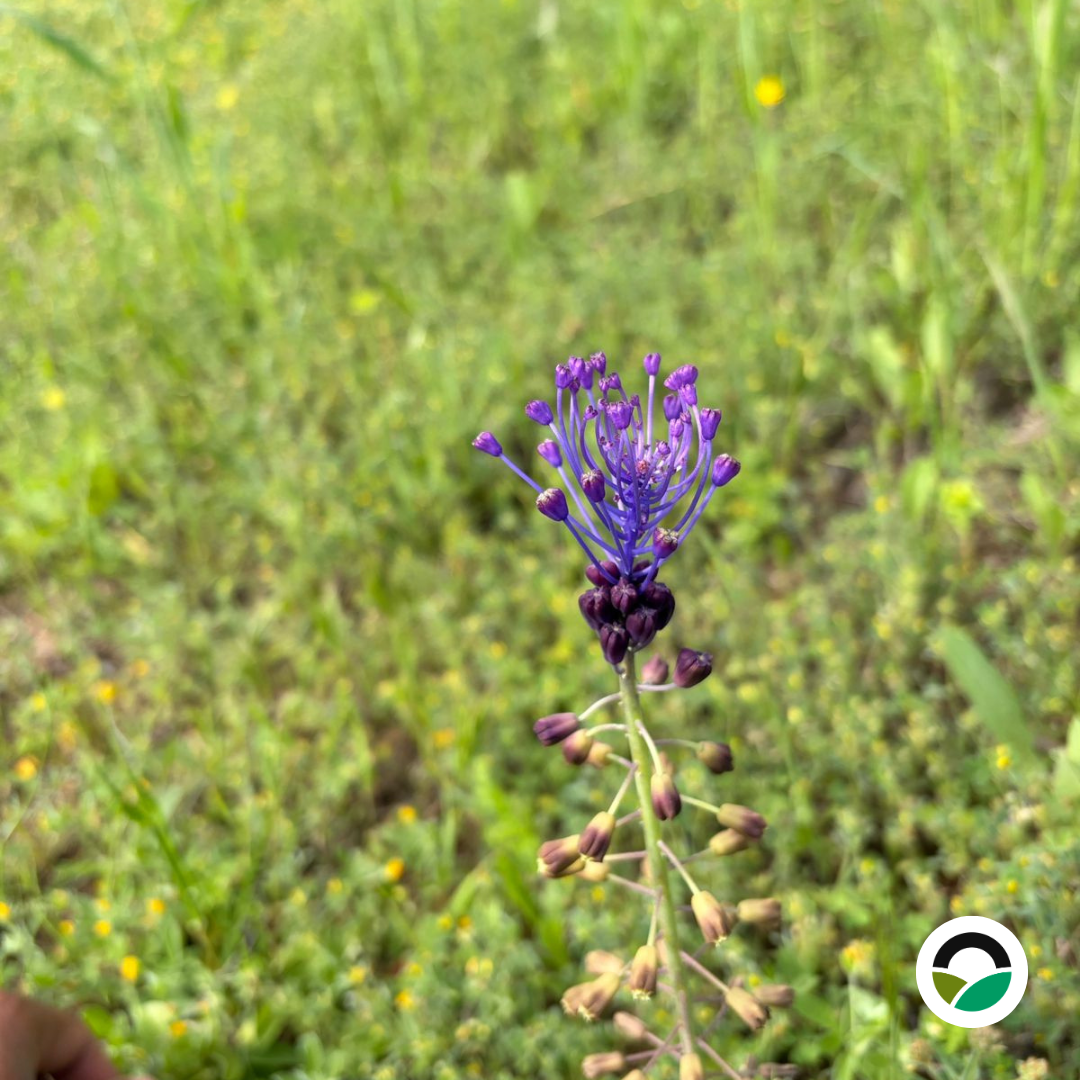
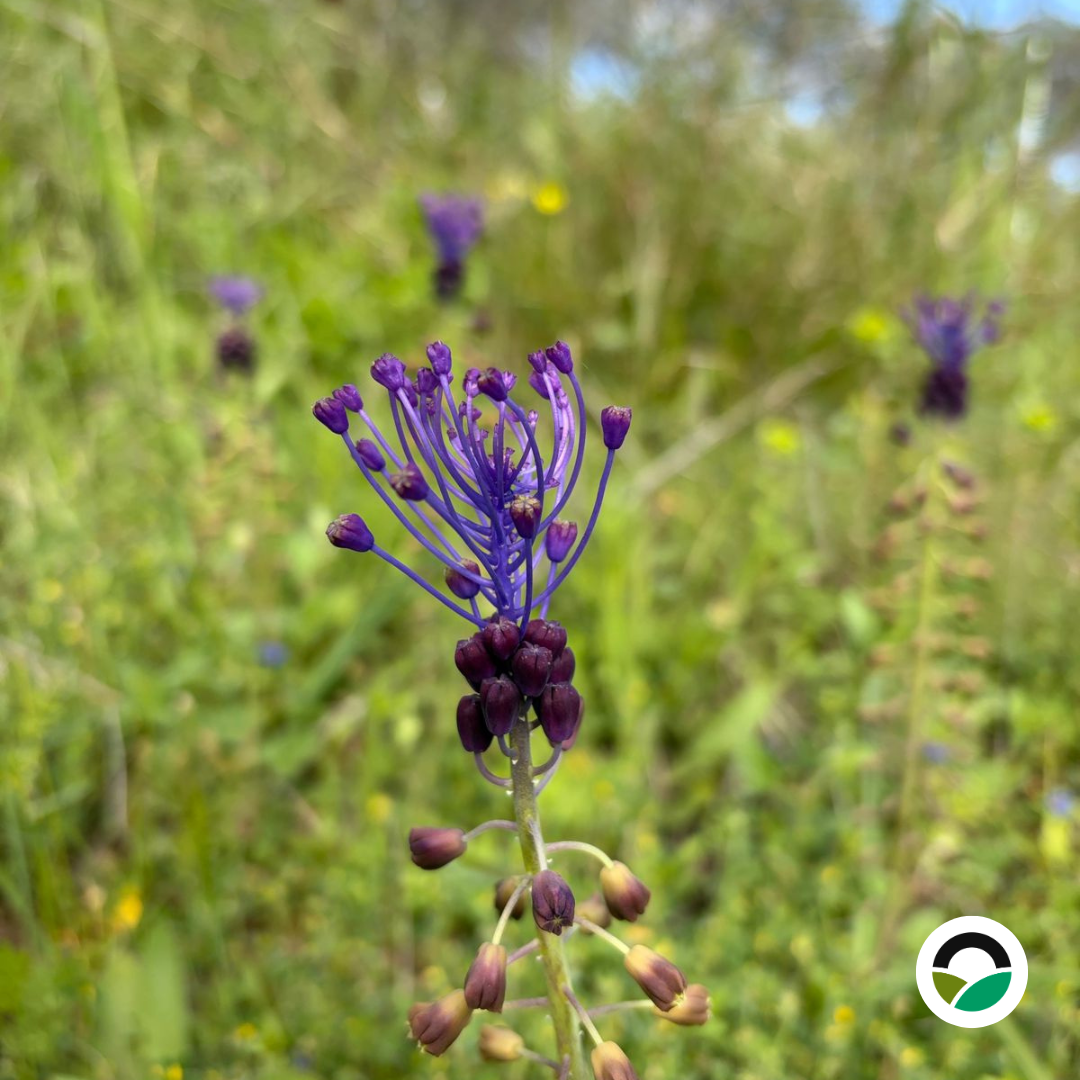
Wild Mediterranean hyacinths can be observed flowering across surrounding grassland areas and semi-natural vegetation systems at Mavronero.
These flowering plants emerge during spring within Mediterranean environments shaped by seasonal rainfall, soil moisture variation, sunlight exposure, and annual vegetation cycles. Their appearance contributes to the broader ecological diversity of cultivated and uncultivated Mediterranean landscapes.
At Mavronero, environmental observation activities document native flowering species developing alongside olive cultivation, wild vegetation, pollinator habitats, and low-intervention agricultural areas.
Mediterranean wild hyacinths
Wild Mediterranean hyacinths are bulb-forming geophyte species associated with seasonal flowering cycles typical of Mediterranean ecosystems.
Their annual development depends strongly on environmental conditions including:
- winter and spring rainfall
- soil moisture availability
- seasonal temperature variation
- sunlight exposure
- surrounding vegetation structure
- ecological continuity within grassland habitats
These flowering plants generally emerge during spring after seasonal rainfall periods, producing characteristic violet-blue flowering structures above elongated stems.
Within Mediterranean ecosystems, geophyte species play important ecological roles by responding rapidly to seasonal environmental conditions and contributing to temporary bursts of flowering diversity across rural landscapes.
Seasonal flowering within Mediterranean landscapes
Mediterranean ecosystems are highly seasonal environments influenced by alternating wet and dry periods throughout the year.
Spring flowering species such as wild hyacinths develop during relatively short ecological windows where moisture, sunlight, and temperature conditions allow rapid plant growth and flowering activity.
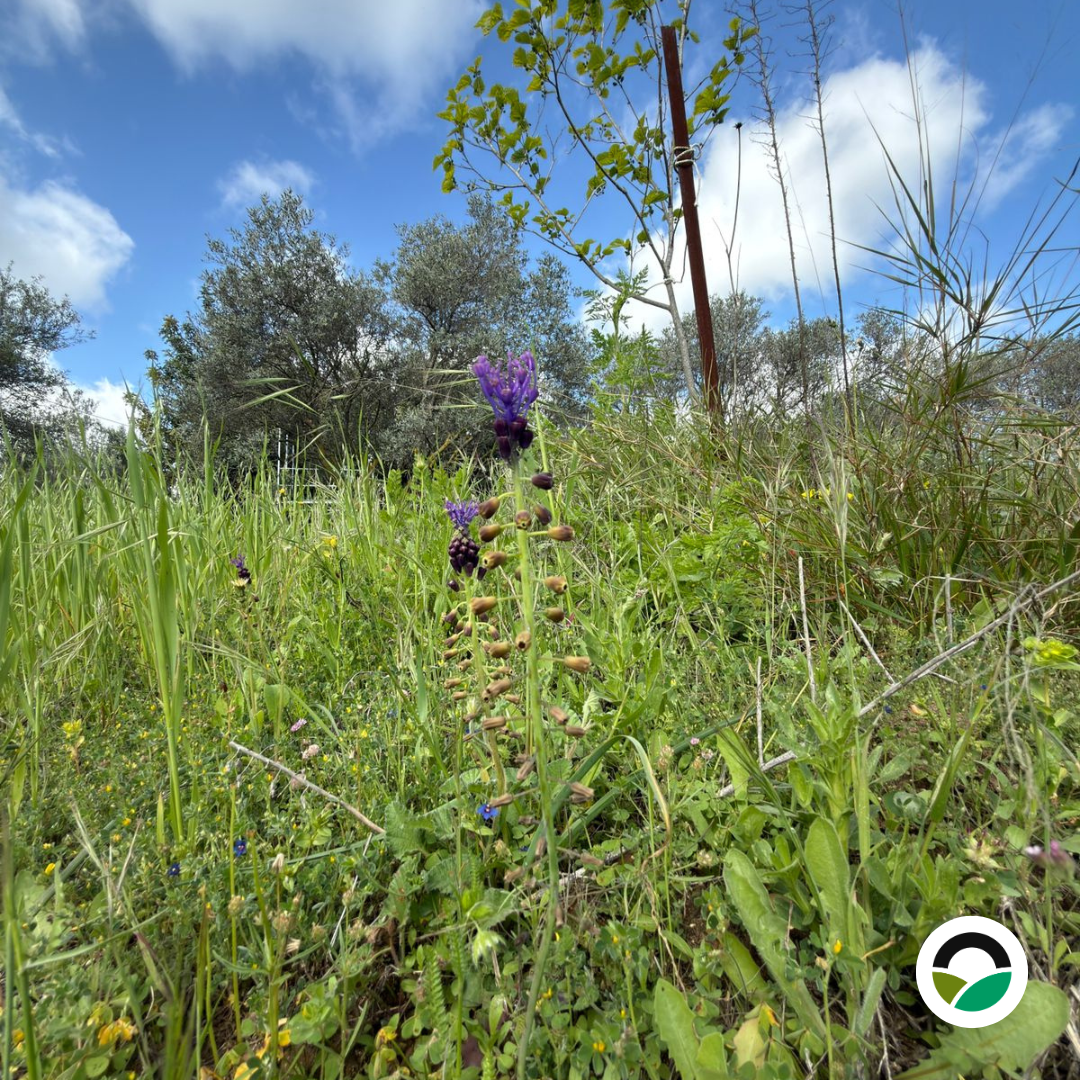
At Mavronero, wild hyacinths develop within environments characterised by:
- olive cultivation landscapes
- semi-natural grasslands
- seasonal herbaceous vegetation
- low-intervention agricultural areas
- mixed native plant communities
- open Mediterranean habitats
The coexistence of cultivated areas and naturally developing vegetation contributes to broader ecological interactions involving pollinating insects, flowering plants, soil systems, and habitat continuity.
Ecological relationships and biodiversity continuity
Wild flowering geophytes are closely linked to biodiversity dynamics within Mediterranean ecosystems.
Their flowering periods coincide with increased spring pollinator activity and broader seasonal vegetation development throughout surrounding habitats.
Environmental observations at Mavronero document relationships between flowering species, seasonal vegetation cycles, and ecological adaptation within cultivated landscapes.
These observations contribute to broader understanding of:
- seasonal biodiversity dynamics
- habitat connectivity
- vegetation succession
- ecological resilience
- environmental continuity
- relationships between cultivated and semi-natural systems
Low-disturbance environments frequently support greater continuity between agricultural activity and surrounding ecological processes, allowing native flowering species to persist over time.
Environmental observation at Mavronero
Environmental observation forms part of ongoing seasonal documentation activities at Mavronero focused on Mediterranean biodiversity and ecological continuity.
Rather than separating cultivation areas from surrounding vegetation systems, observation activities examine how cultivated landscapes interact with broader environmental conditions throughout the year.
Environmental observations include native Mediterranean orchids, flowering grasses, pollinator activity, wild herbs, and seasonal flowering geophytes such as wild hyacinths.
These observations support a cultivation approach centred on:
- low-intervention land management
- biodiversity preservation
- seasonal ecological adaptation
- habitat continuity
- environmental resilience
- coexistence between cultivation and surrounding ecosystems
Conclusion
The flowering of wild hyacinths at Mavronero reflects the seasonal ecological dynamics of Mediterranean environments where cultivated landscapes and native vegetation systems continue to coexist.
Their presence contributes to broader biodiversity continuity within Mediterranean grassland habitats and demonstrates the importance of seasonal environmental conditions in shaping flowering cycles and ecological interactions.
Through environmental observation and low-intervention land management, these native flowering species remain part of the evolving ecological relationships surrounding cultivated Mediterranean landscapes.
