
At Mavronero, cultivation activities exist alongside broader ecological processes that continue throughout the surrounding Mediterranean landscape. Seasonal plant observation forms part of this ongoing relationship between agricultural activity, environmental conditions, and local biodiversity.
This interaction becomes particularly visible during the spring flowering period, when multiple native plant species emerge across cultivated and semi-wild areas. Among these species, wild orchids occupy a distinct ecological position due to their environmental sensitivity, specialized reproductive strategies, and close relationship with stable habitat conditions.
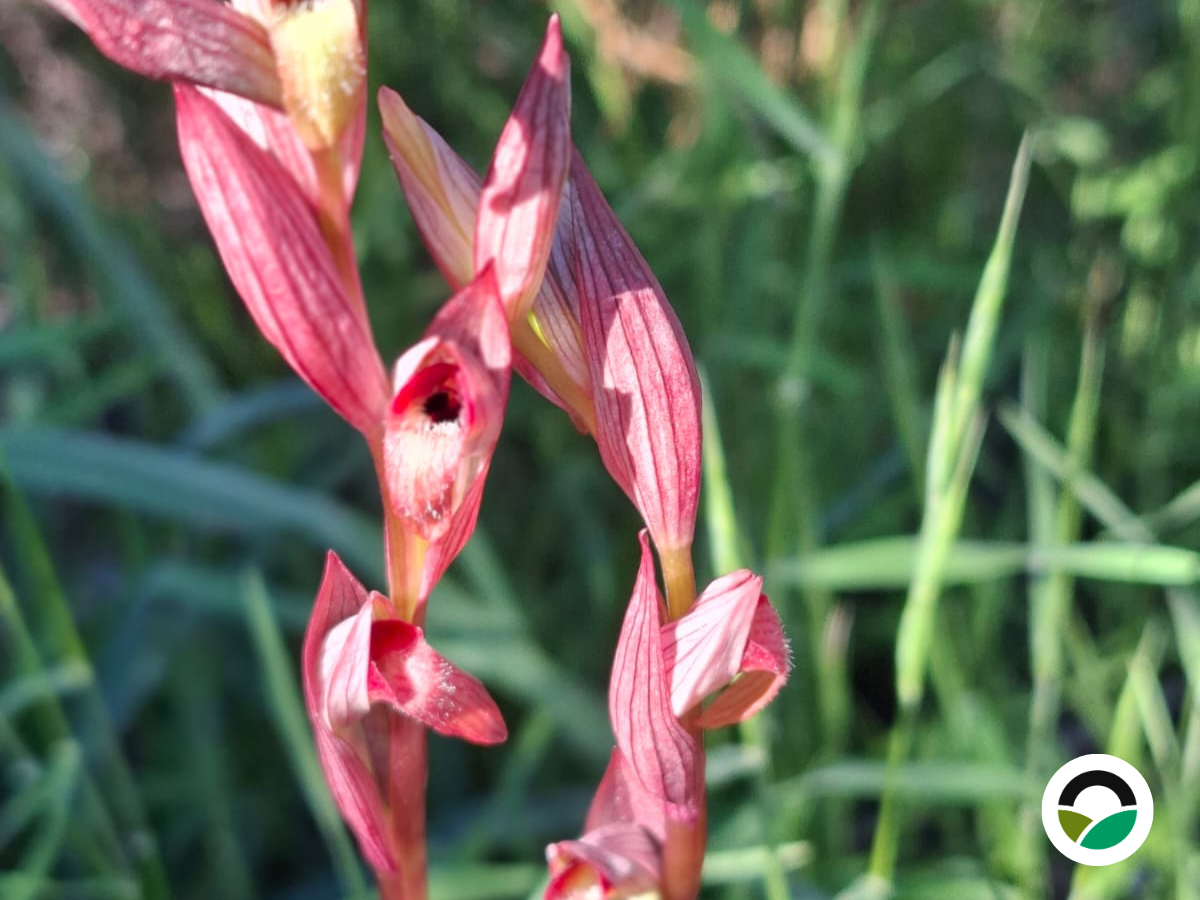
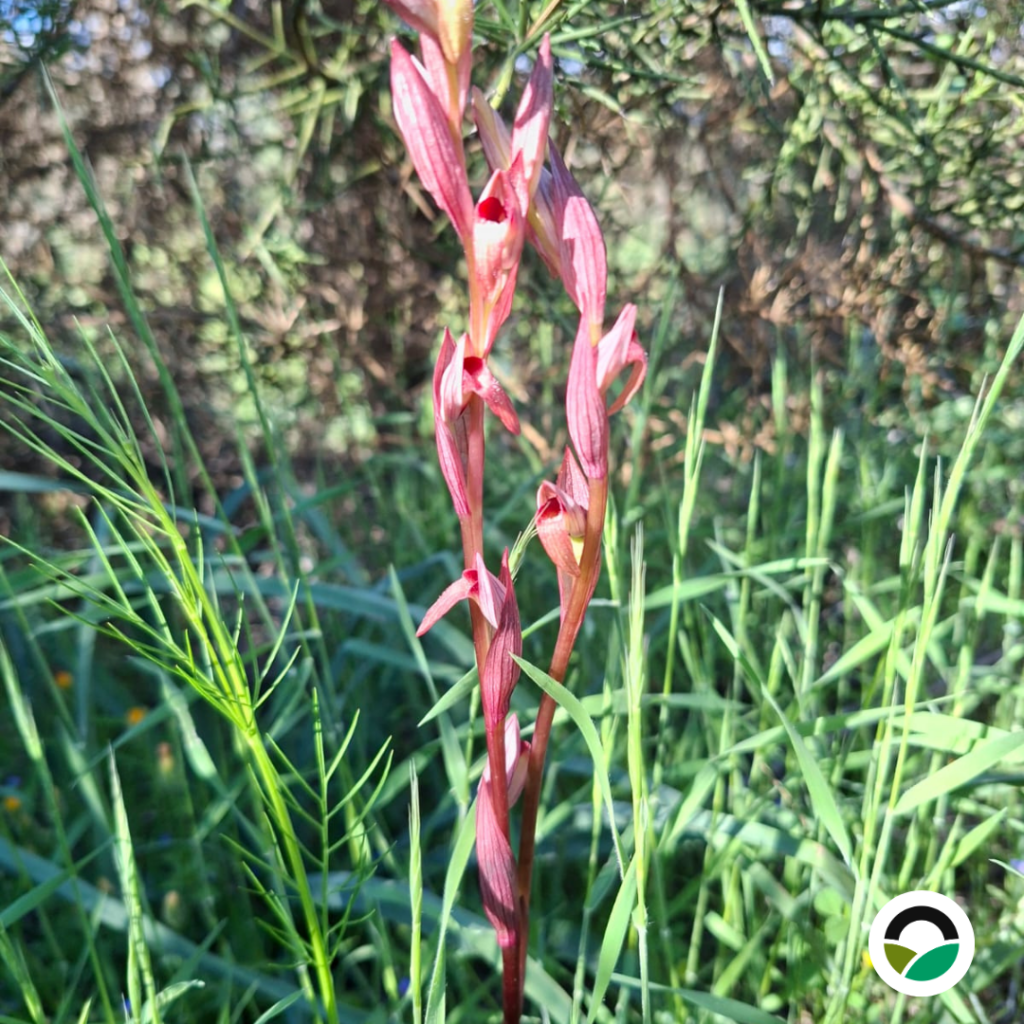
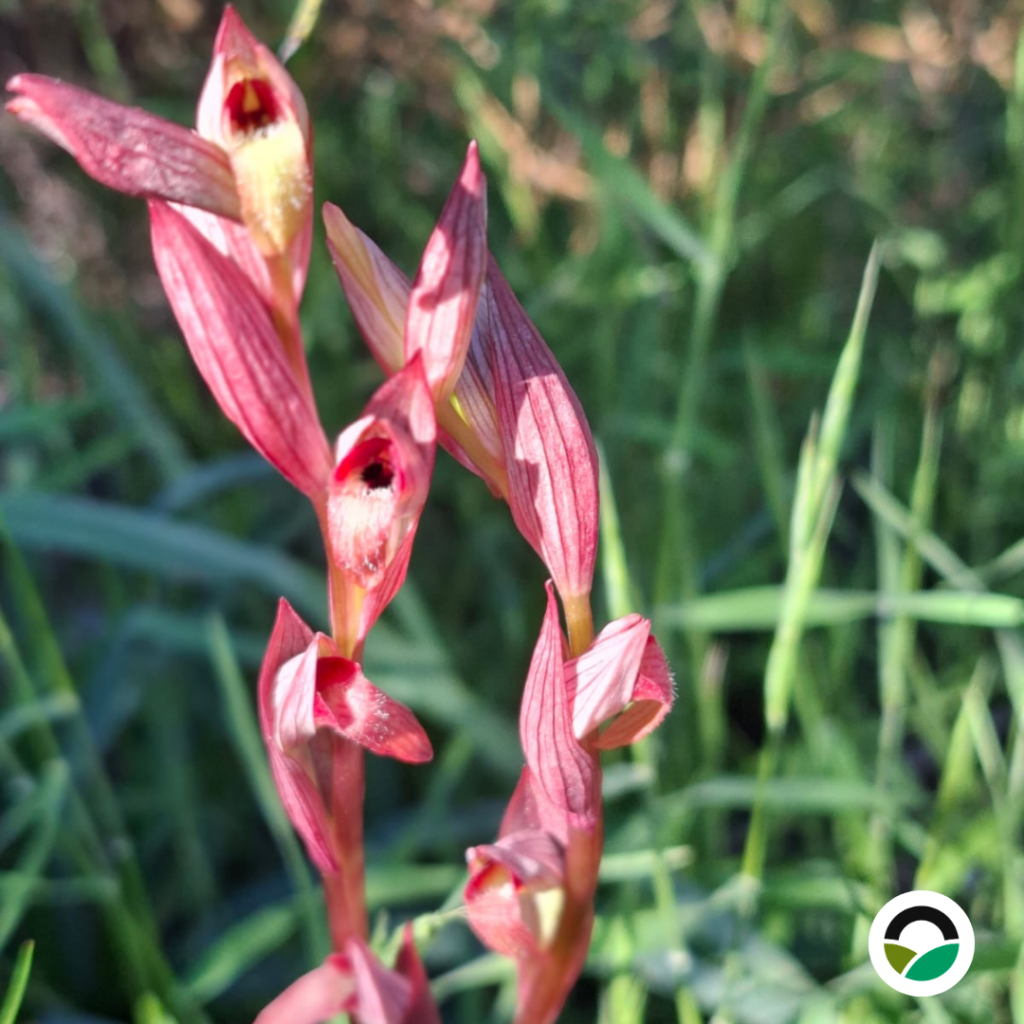
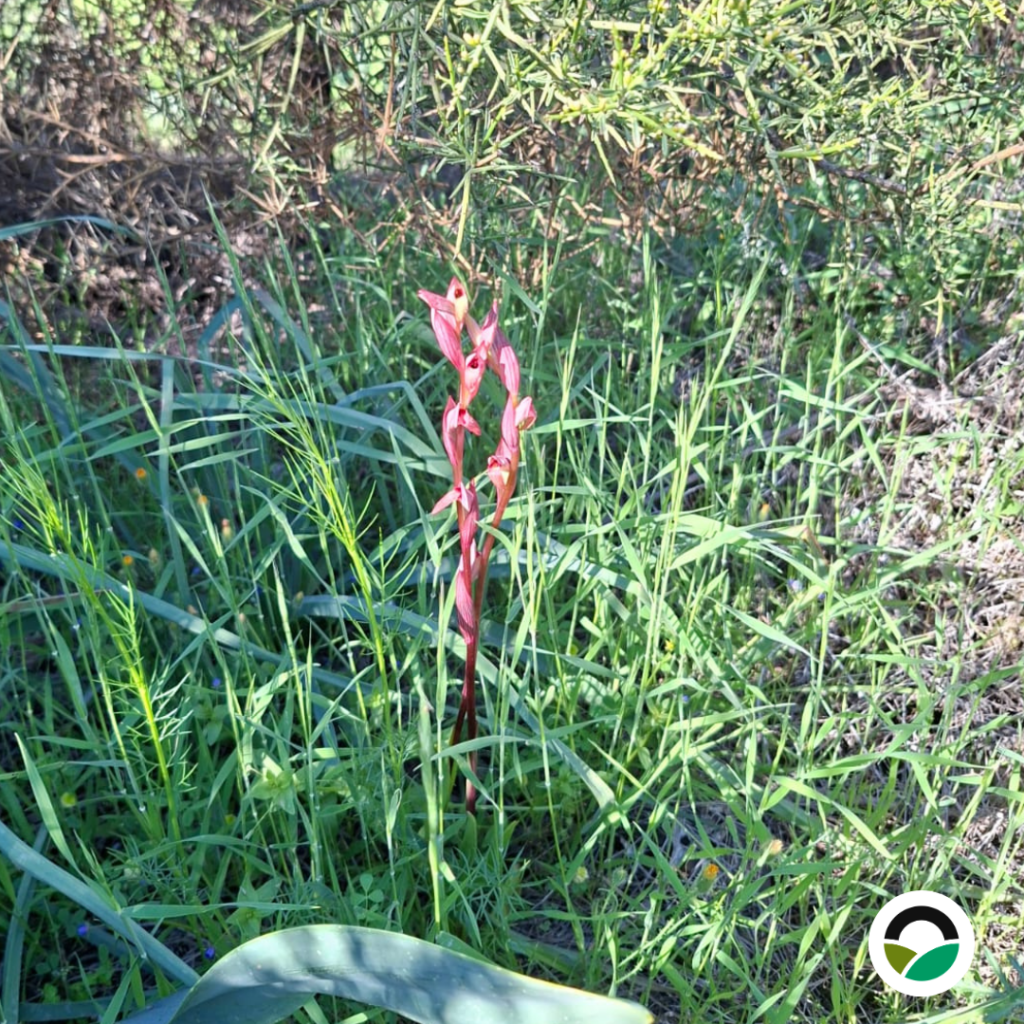
Recently, orchids belonging to the genus Serapias were observed flowering within the vegetation surrounding the cultivation areas at Mavronero. The orchids appeared naturally among grasses and low seasonal vegetation during routine field observation activities.
Although visually striking, the presence of Mediterranean orchids reflects broader ecological dynamics involving soil conditions, moisture availability, biodiversity, pollinator activity, and long-term environmental continuity.
Serapias orchids as Mediterranean terrestrial orchids
The genus Serapias belongs to the Orchidaceae family and includes several terrestrial orchid species distributed throughout Mediterranean ecosystems.
Unlike ornamental orchids commonly cultivated indoors, wild Mediterranean orchids develop under highly specific ecological conditions and often depend on stable interactions with surrounding environmental systems.
Species within the genus Serapias are typically associated with grasslands, woodland edges, open shrublands, and low-intensity agricultural landscapes where seasonal vegetation cycles remain relatively undisturbed.
The observed orchids displayed the elongated tubular floral structures characteristic of the genus, with vertically arranged flowers and reddish to pink pigmentation. These floral structures are associated with specialized pollination mechanisms found among Mediterranean orchids.
Terrestrial orchids generally require balanced environmental conditions involving soil aeration, seasonal moisture, sunlight exposure, and biological interactions within the surrounding vegetation system.
For this reason, orchid populations are often considered environmentally sensitive indicators within Mediterranean ecosystems.
Ecological relationships and habitat sensitivity
Wild orchids maintain complex ecological relationships throughout their life cycle.
Many Mediterranean orchid species depend on specific fungal associations within the soil during germination and early developmental stages. Pollination strategies may also involve highly specialized interactions with local insect populations.
Because of these ecological dependencies, orchid populations are particularly sensitive to:
- soil disturbance
- excessive land modification
- habitat fragmentation
- intensive agricultural activity
- changes in seasonal moisture conditions
- reduction of surrounding biodiversity
Low-intervention landscapes may therefore support the persistence of orchid populations by allowing ecological relationships to remain relatively stable over time.
At Mavronero, the surrounding landscape includes seasonal vegetation zones, semi-wild areas, native grasses, and uncultivated spaces that contribute to broader habitat diversity throughout the year.
Seasonal flowering within Mediterranean ecosystems
The flowering period of Mediterranean orchids is strongly influenced by environmental conditions including temperature, rainfall patterns, soil humidity, and seasonal sunlight exposure.
Spring conditions often provide the combination of moisture and temperature necessary for flowering development after winter dormancy periods.
The appearance of Serapias orchids during this seasonal phase contributes to the broader flowering diversity of the Mediterranean landscape, where multiple annual and perennial species emerge simultaneously across cultivated and uncultivated areas.
These flowering cycles also support pollinator activity and contribute to ecological interactions between insects, plants, and surrounding vegetation systems.
Rather than existing separately from agricultural landscapes, many native flowering species historically coexisted alongside low-intensity cultivation systems throughout Mediterranean rural environments.
Observation and environmental continuity
The recent observation of wild Serapias orchids at Mavronero forms part of ongoing seasonal field documentation focused on ecological continuity and biodiversity observation.
Small-scale observations of native flowering species provide insight into how environmental conditions evolve throughout the cultivation season and how different forms of vegetation interact within the same landscape.
Environmental observation also contributes to a broader understanding of:
- seasonal habitat variation
- flowering cycles
- pollinator presence
- vegetation diversity
- ecological adaptation within cultivated environments
At Mavronero, these observations support an approach centered on coexistence between cultivation activity and the surrounding Mediterranean ecosystem rather than strict separation between productive and ecological spaces.
Ecological significance within the cultivation landscape
Beyond their botanical interest, wild orchids represent part of the ecological complexity of Mediterranean rural systems.
Their presence reflects the interaction between climate, soil conditions, vegetation structure, seasonal rhythms, and long-term environmental stability.
Although orchid populations naturally fluctuate between years depending on environmental conditions, their continued appearance within low-disturbance landscapes demonstrates the importance of preserving habitat continuity and biodiversity across cultivated regions.
At Mavronero, the observation of native orchid species reinforces the broader relationship between ecological awareness, seasonal agricultural practices, and the preservation of Mediterranean environmental systems.
Conclusion
The flowering of wild Serapias orchids at Mavronero illustrates the ecological diversity that can persist within Mediterranean cultivation landscapes when seasonal environmental processes remain relatively undisturbed.
Through ongoing observation of native species, biodiversity patterns, and habitat conditions, the surrounding landscape becomes not only a place of cultivation but also part of a wider ecological system shaped by long-term environmental interaction.
The presence of Mediterranean orchids highlights the importance of ecological continuity, habitat diversity, and careful environmental observation within low-intervention agricultural environments.
