
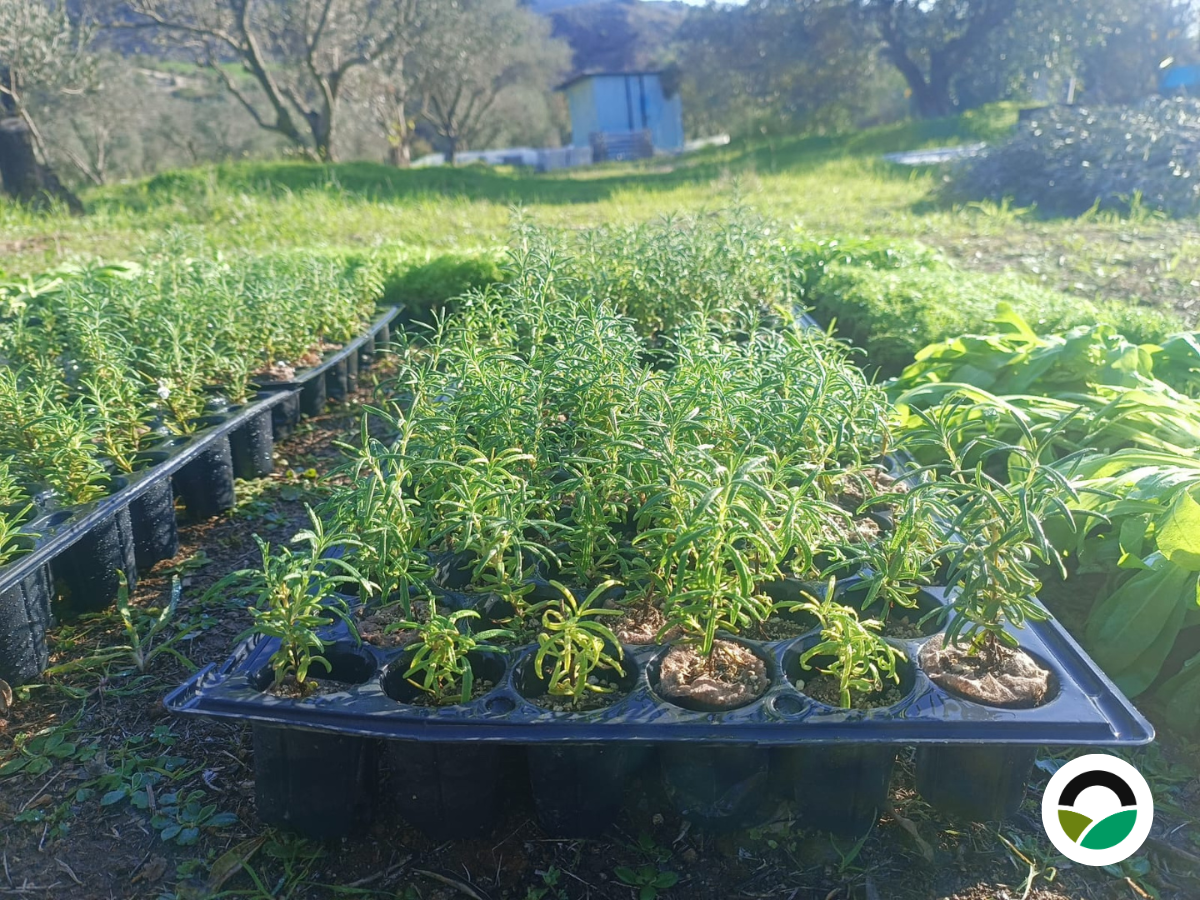
Establishing aromatic species on the hillside
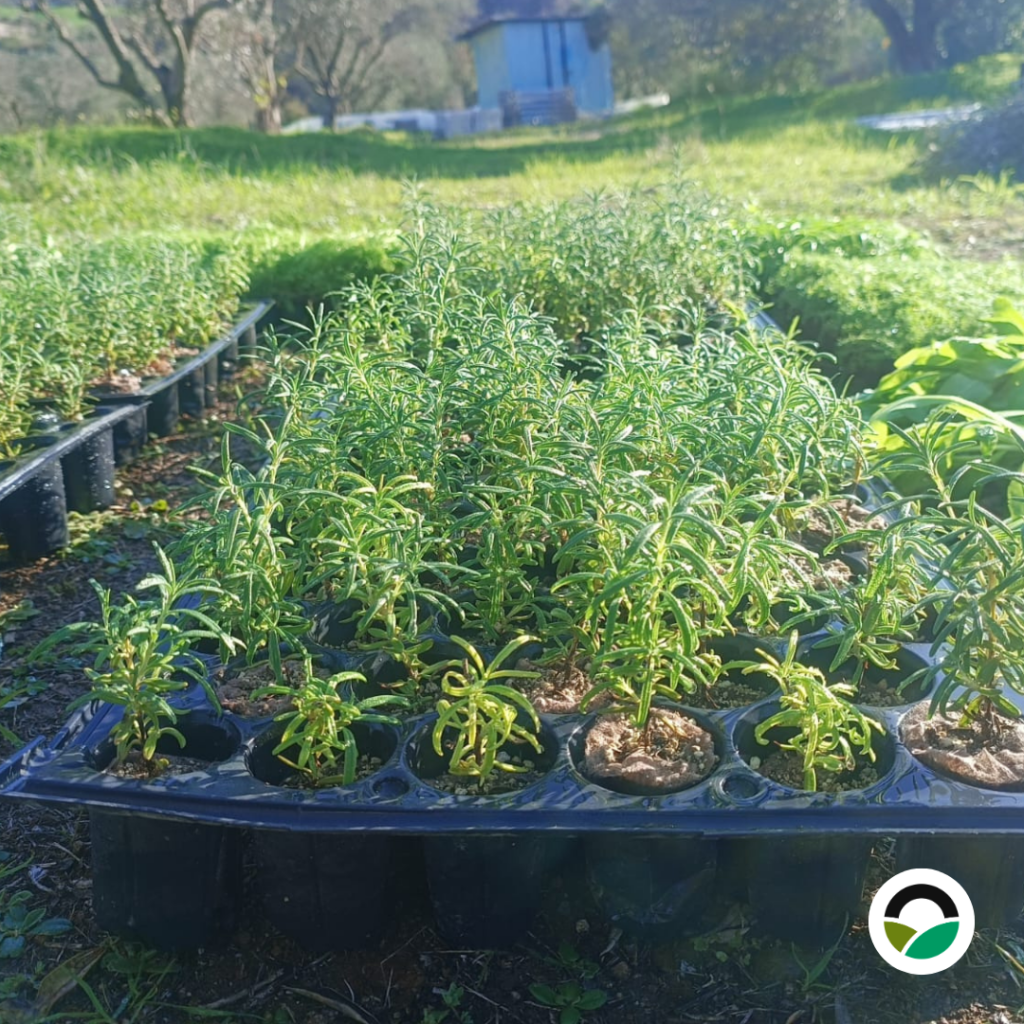
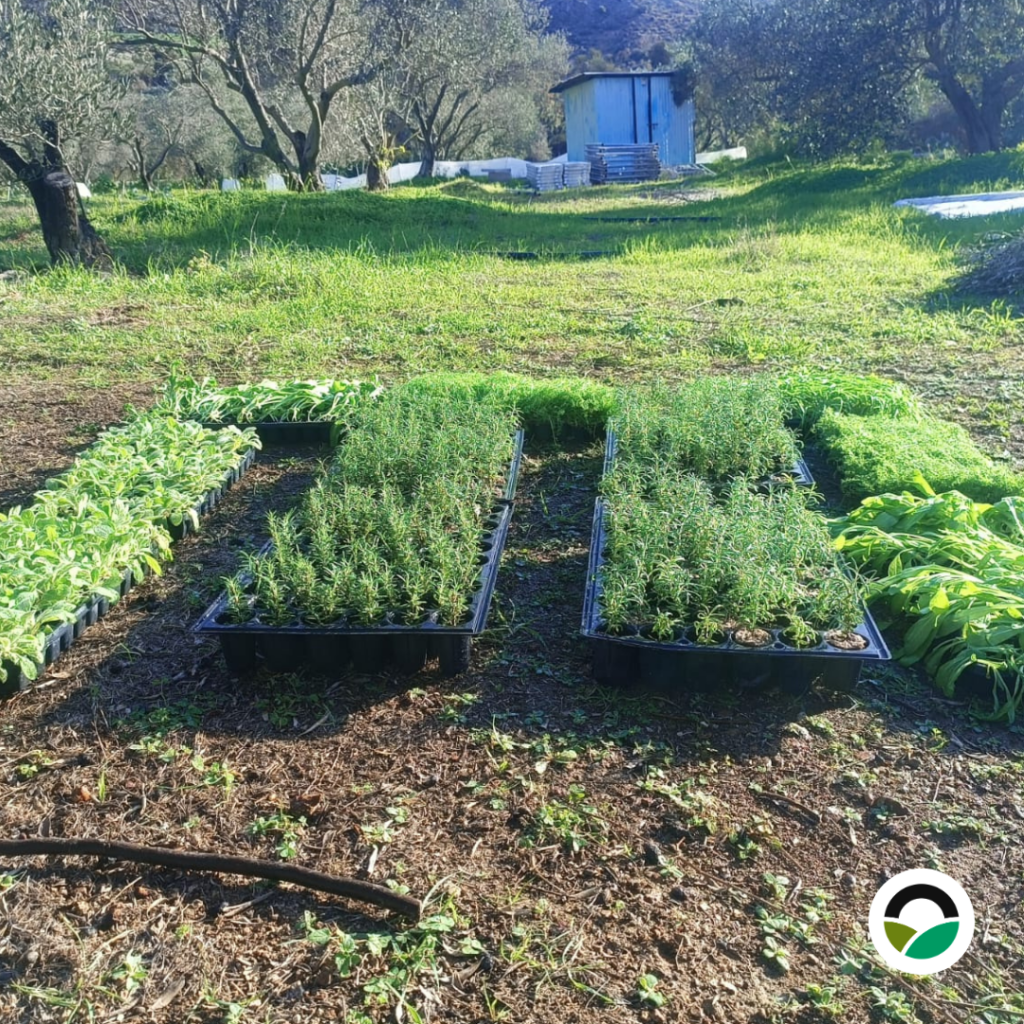
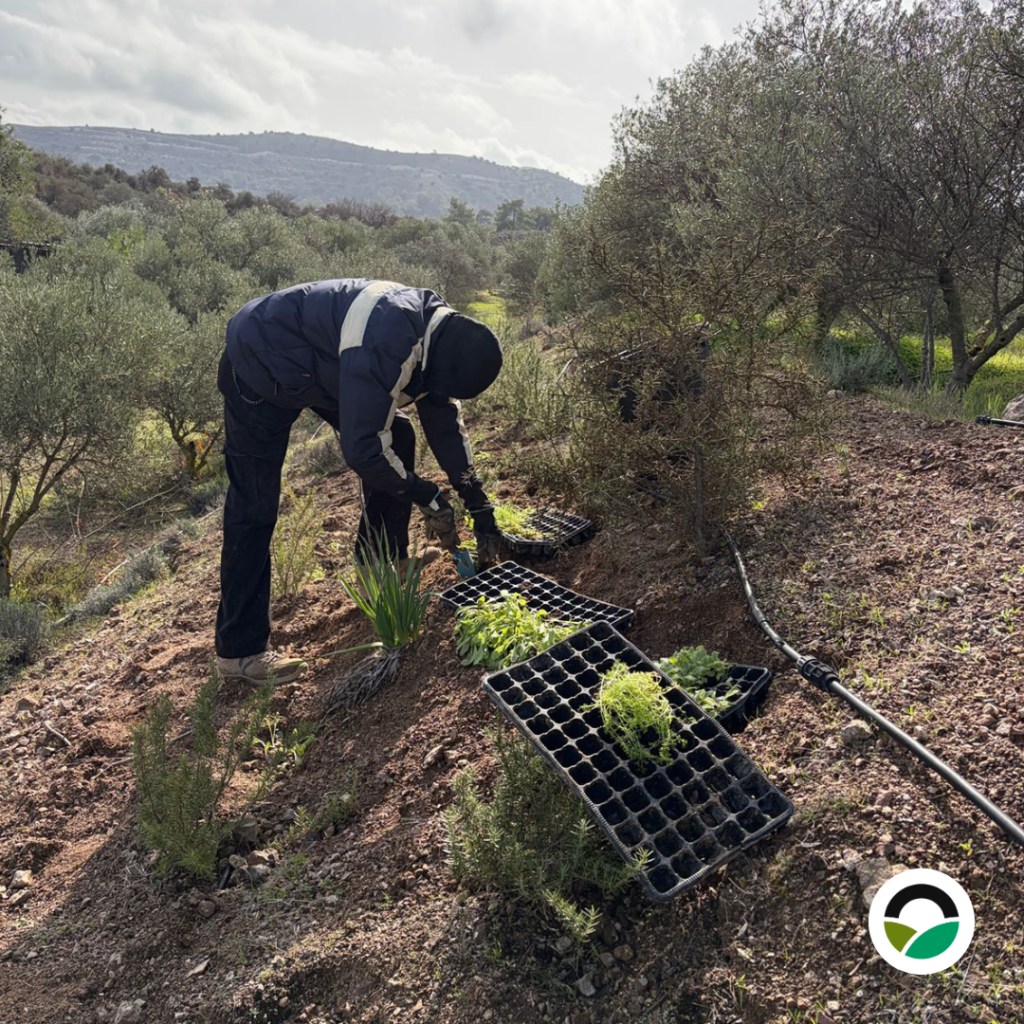
In January, a selection of aromatic and medicinal herbs was planted along a hillside section of the farm, integrated between existing olive trees.
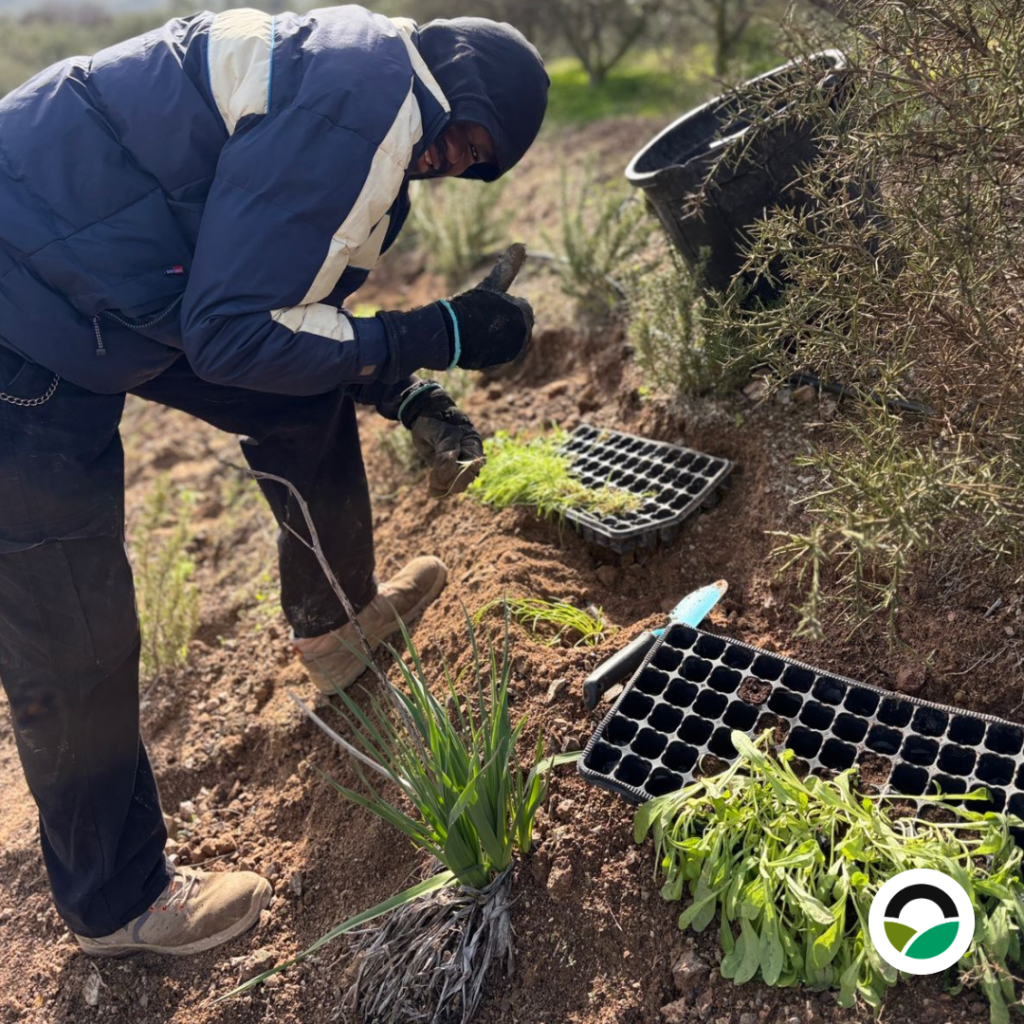
The planting was carried out manually, with young plants carefully positioned in prepared rows following the natural contour of the land. Rather than reshaping the terrain, the herbs were introduced into the existing landscape, respecting slope, soil structure, and drainage patterns.
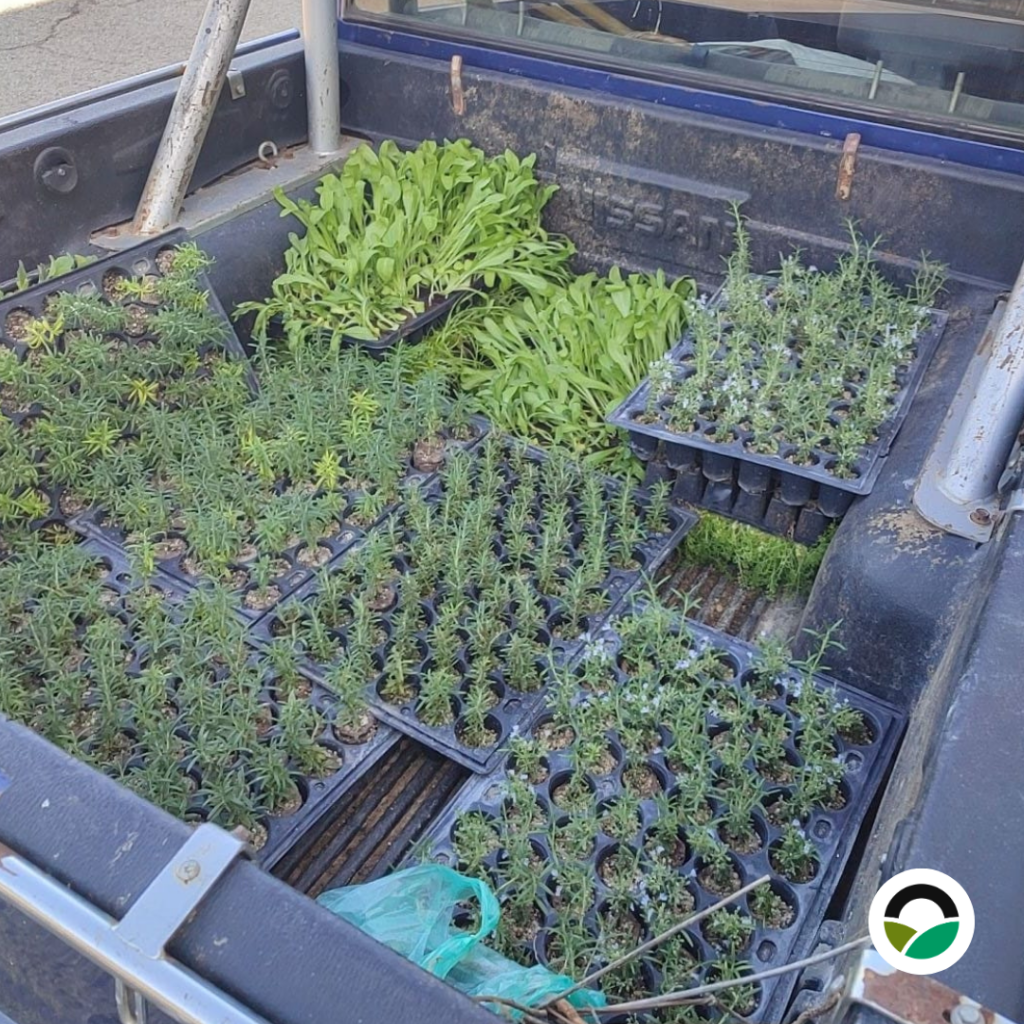
The species planted include:
- Rosemary (Rosmarinus officinalis)
- Mountain tea (Sideritis perfoliata)
- Calendula (Calendula officinalis)
- Licorice (Glycyrrhiza glabra)
- Chamomile (Matricaria chamomilla)
- Sea plantain (Plantago maritima)
These species are well suited to Mediterranean climates and capable of adapting to dry, mineral soils once established.
Planting process on Mediterranean soil
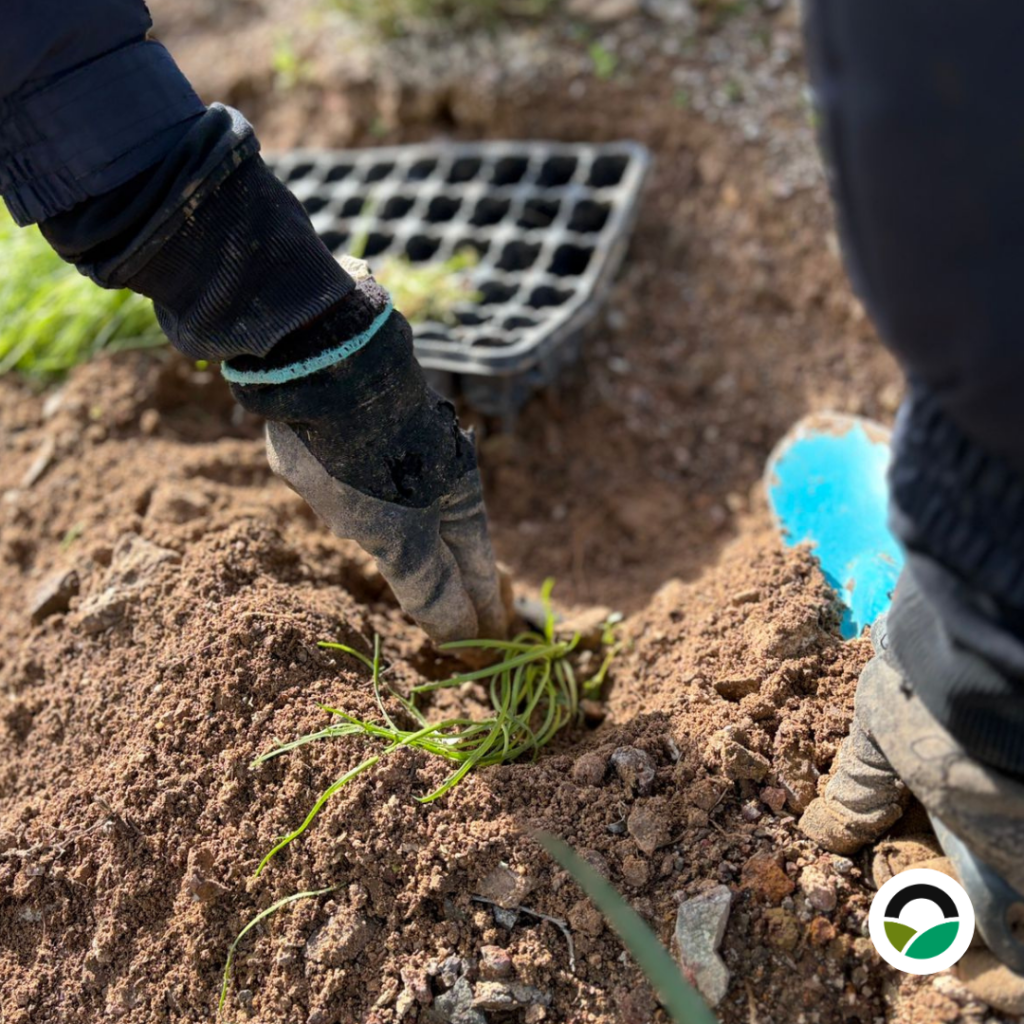
The hillside soil is dry and stony, typical of the region. Each plant was set by hand into individually prepared holes, ensuring proper root placement and contact with surrounding soil.
After positioning, the soil was gently compacted by hand to stabilize the plant. An initial watering was applied directly at the base to support early root settlement.
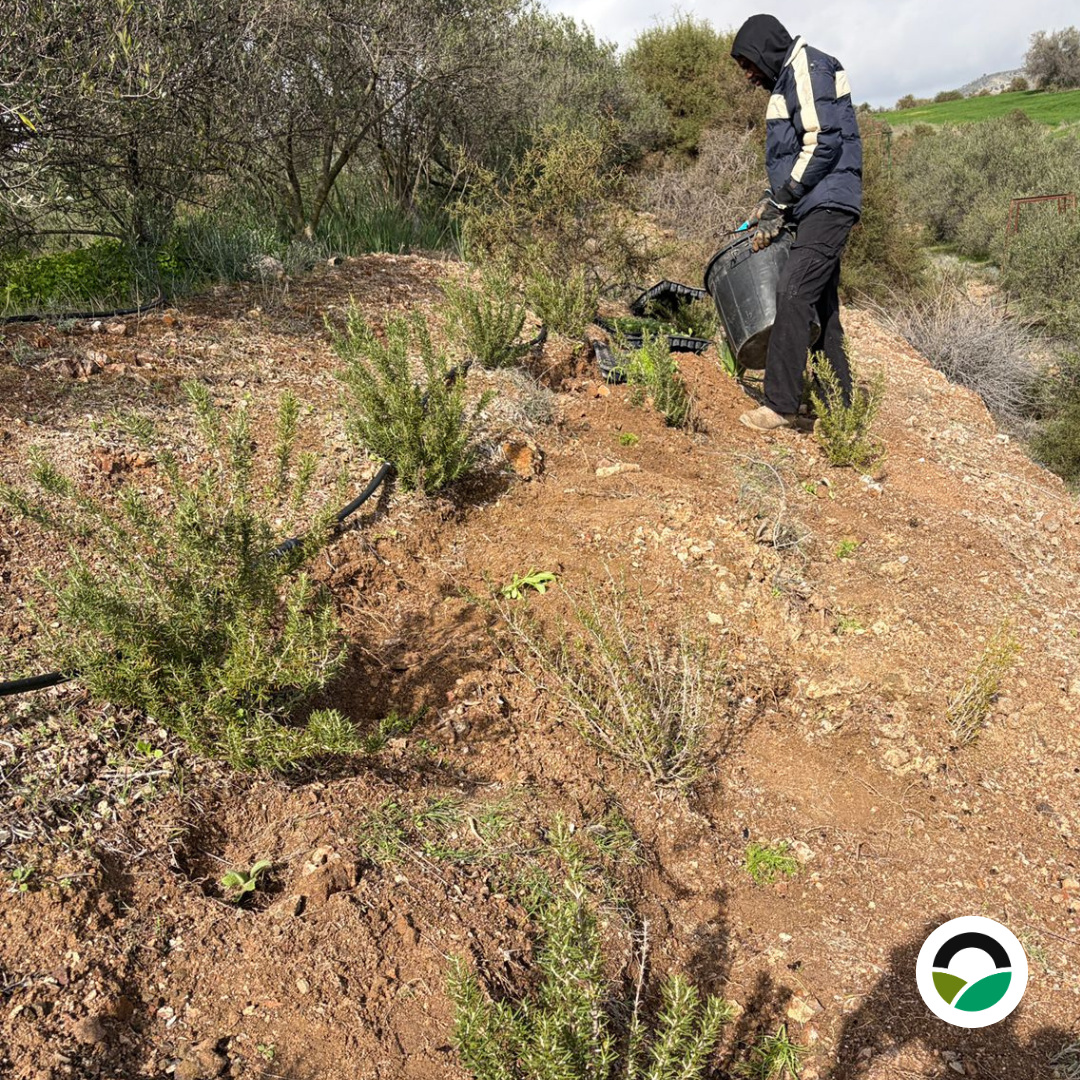
The spacing between plants allows for air circulation and future growth, while maintaining a structured planting line along the slope.
No intensive soil disturbance was carried out. The approach focused on minimal intervention, allowing plants to adapt gradually to their environment.
Integration within the olive landscape
The herbs were planted among established olive trees, contributing to a more diverse understory layer.
This layered structure supports:
- Increased plant diversity
- Ground coverage in open soil areas
- Habitat opportunities for insects
- Long-term soil stabilization on sloped terrain
By diversifying the vegetation between olive rows, the landscape becomes more structurally complex and ecologically resilient.
Winter conditions and establishment
January offers favorable conditions for planting in Cyprus. Cooler temperatures reduce stress on young plants, while seasonal rainfall supports root development.
Early establishment during winter allows the herbs to strengthen their root systems before the onset of summer heat.
The success of these plantings will depend on seasonal rainfall patterns and gradual adaptation over the coming months.
A gradual, long-term approach
At Mavronero, planting is not an isolated action but part of an evolving land management strategy.
Introducing aromatic and medicinal species into the olive landscape contributes to long-term diversification, soil stability, and ecological balance.
Rather than rapid transformation, the process unfolds gradually — shaped by climate, terrain, and time.
The January herb planting marks another step in this ongoing relationship with the land.
