
Healthy livestock begins with good nutrition.
At Mavronero Farm we are continually exploring natural, regenerative ways to improve the wellbeing of our animals. One of these practices is preparing fermented feed enriched with Mediterranean herbs such as oregano.
Although simple, this traditional technique offers several potential benefits for poultry while making use of natural ingredients and age-old farming knowledge.
What is fermented chicken feed?
Fermented feed is created by soaking grains and seeds in water for several days, allowing naturally occurring beneficial microorganisms to begin the fermentation process.
Unlike cooked or processed feed, fermentation is a natural biological process that partially breaks down the grains before they are eaten.
This traditional practice has been used by small-scale farmers for generations.
Why ferment grains and seeds?
During fermentation, beneficial bacteria begin transforming some of the starches and naturally occurring compounds found in grains.
This process may:
- improve digestibility
- increase the availability of certain nutrients
- encourage beneficial gut microorganisms
- reduce feed waste
- soften hard grains, making them easier to eat
Many poultry keepers also report that chickens find fermented feed highly palatable.
Adding oregano: a Mediterranean tradition
To our fermented seed mixture we added oregano, one of the Mediterranean’s best-known aromatic herbs.
For centuries oregano has been valued in traditional farming because of its naturally occurring essential oils, particularly compounds such as carvacrol and thymol.
Although it is not a replacement for good animal management or veterinary care, oregano has long been included as part of natural poultry diets and is widely appreciated for supporting overall flock health.
The hens’ first taste
Introducing any new feed requires careful observation.
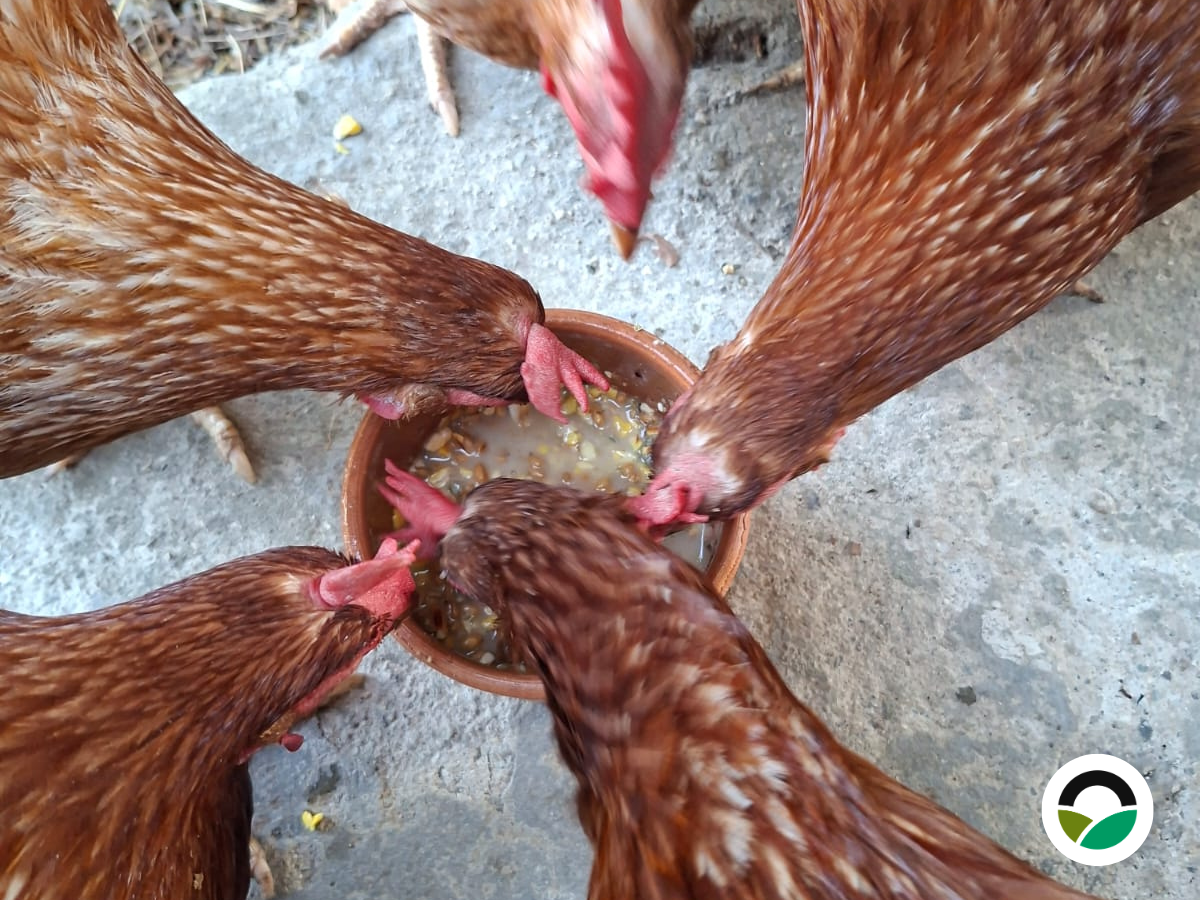
Our hens immediately gathered around the bowl and eagerly sampled the fermented mixture, showing strong interest from the very first offering.
Monitoring how animals respond to dietary changes is an important part of regenerative livestock management.
Nutrition as part of regenerative farming
Regenerative agriculture extends beyond soils and crops.
Healthy animals contribute manure that nourishes the soil, help recycle organic materials and become an integral part of the farm ecosystem.
Supporting their health through simple, natural feeding practices fits within the broader philosophy of reducing unnecessary inputs while working with natural biological processes.
Small improvements made consistently can contribute to healthier, more resilient farming systems over time.
Interesting facts
- Chickens naturally consume fermented foods in the wild as organic matter decomposes.
- Fermentation has been used in agriculture for thousands of years.
- Oregano is one of the most aromatic native herbs of the Mediterranean.
- Fermented feed generally contains more moisture than dry feed, which may also encourage water intake.
- Healthy gut microbiota plays an important role in poultry digestion and overall wellbeing.
- Traditional Mediterranean farms often relied on locally available herbs as part of everyday animal care.
Conclusion
At Mavronero Farm, introducing fermented seeds with oregano is another example of how traditional knowledge and regenerative farming can work together.
Rather than relying on complexity, we focus on simple practices inspired by nature, observing how healthy soils, native plants and well-cared-for animals become part of one connected ecosystem.
