
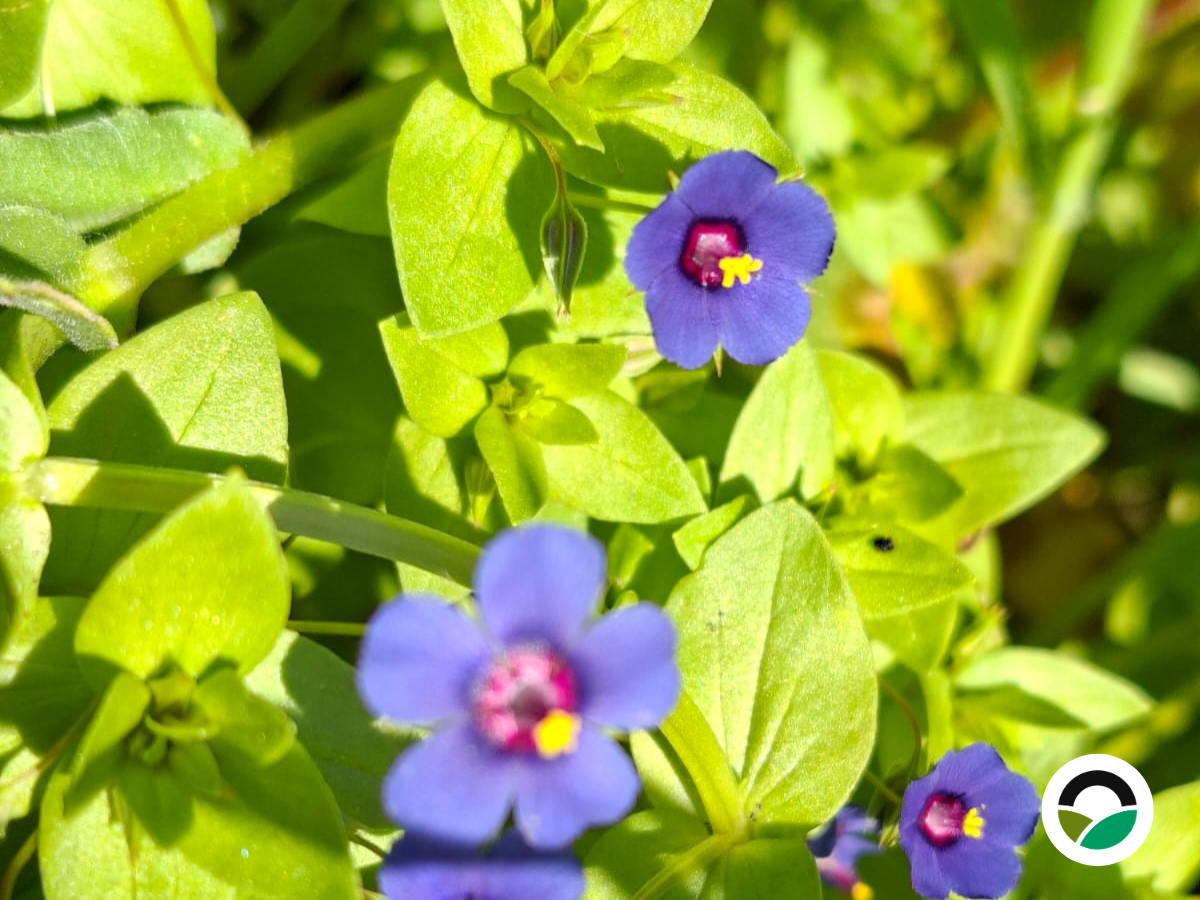
Wildflowers are an essential part of healthy ecosystems, even when they go unnoticed. One such species is the Blue Pimpernel (Anagallis arvensis), a delicate flowering plant that brightens Mediterranean landscapes with its vivid blue petals while quietly supporting local biodiversity.
Although often considered a common field flower, Blue Pimpernel provides valuable resources for pollinating insects and contributes to the ecological balance of natural and agricultural habitats.
A colourful native of Mediterranean landscapes
Blue Pimpernel is a low-growing annual herb belonging to the Primulaceae family. It thrives in sunny locations such as meadows, olive groves, field margins and open grasslands, where it flowers from spring into summer.
Its striking blue to violet petals, dark reddish centre and bright yellow stamens make it easy to recognise despite its small size.
Like many native wildflowers, it grows without cultivation and forms part of the natural vegetation that supports a wide range of wildlife.
The plant prefers sunny locations and is commonly found in:
- Meadows
- Field margins
- Olive groves
- Vineyards
- Roadsides
- Open grasslands
Its small size often allows it to grow unnoticed among taller vegetation, yet its vibrant flowers stand out to both insects and observant visitors.
An important resource for pollinators
Despite its modest appearance, Blue Pimpernel plays an important ecological role.
Its flowers provide nectar and pollen for a variety of small pollinating insects, helping sustain local pollinator populations throughout the flowering season. These insects are essential for maintaining healthy ecosystems and supporting the reproduction of many flowering plants.
Wildflowers such as Blue Pimpernel also increase plant diversity, creating more resilient habitats capable of supporting a wider range of wildlife.
Blue pimpernel at Mavronero Farm
At Mavronero Farm, Blue Pimpernel grows naturally among native vegetation, reflecting the farm’s commitment to organic farming and biodiversity conservation.
Rather than removing every wild plant, maintaining diverse ground vegetation creates habitats for insects, improves soil health and strengthens ecological resilience across the landscape.
Each flowering season offers another reminder that biodiversity is built not only by large trees and shrubs, but also by the countless small wildflowers that thrive beneath them.
Why small wildflowers matter
Native wildflowers are often overlooked because of their size, yet they perform vital ecological functions.
Blue Pimpernel helps:
- Support pollinating insects
- Increase plant diversity
- Improve ecosystem resilience
- Maintain healthy agricultural landscapes
- Enhance the natural beauty of Mediterranean habitats
Protecting these native species contributes to healthier soils, richer biodiversity and more sustainable farming systems.
Every flower counts
Conservation is often associated with protecting large animals or ancient forests, but healthy ecosystems also depend on small, common species that quietly perform essential roles every day.
The Blue Pimpernel is a perfect example. Its brilliant blue flowers may be tiny, but together they help sustain the intricate web of life that makes Mediterranean landscapes so unique.
At Mavronero Farm, every wildflower is recognised as an important part of that story—proving that sometimes the smallest plants have the greatest ecological impact.
Sources
- Royal Botanic Gardens, Kew. Plants of the World Online – Anagallis arvensis.
- European Environment Agency (EEA). Biodiversity and ecosystem health in Europe.
- Royal Horticultural Society (RHS). Wildflowers for pollinators.
- Food and Agriculture Organization of the United Nations (FAO). The importance of pollinators for sustainable agriculture.
