
Some of the most beautiful signs of a healthy ecosystem appear for only a short time.
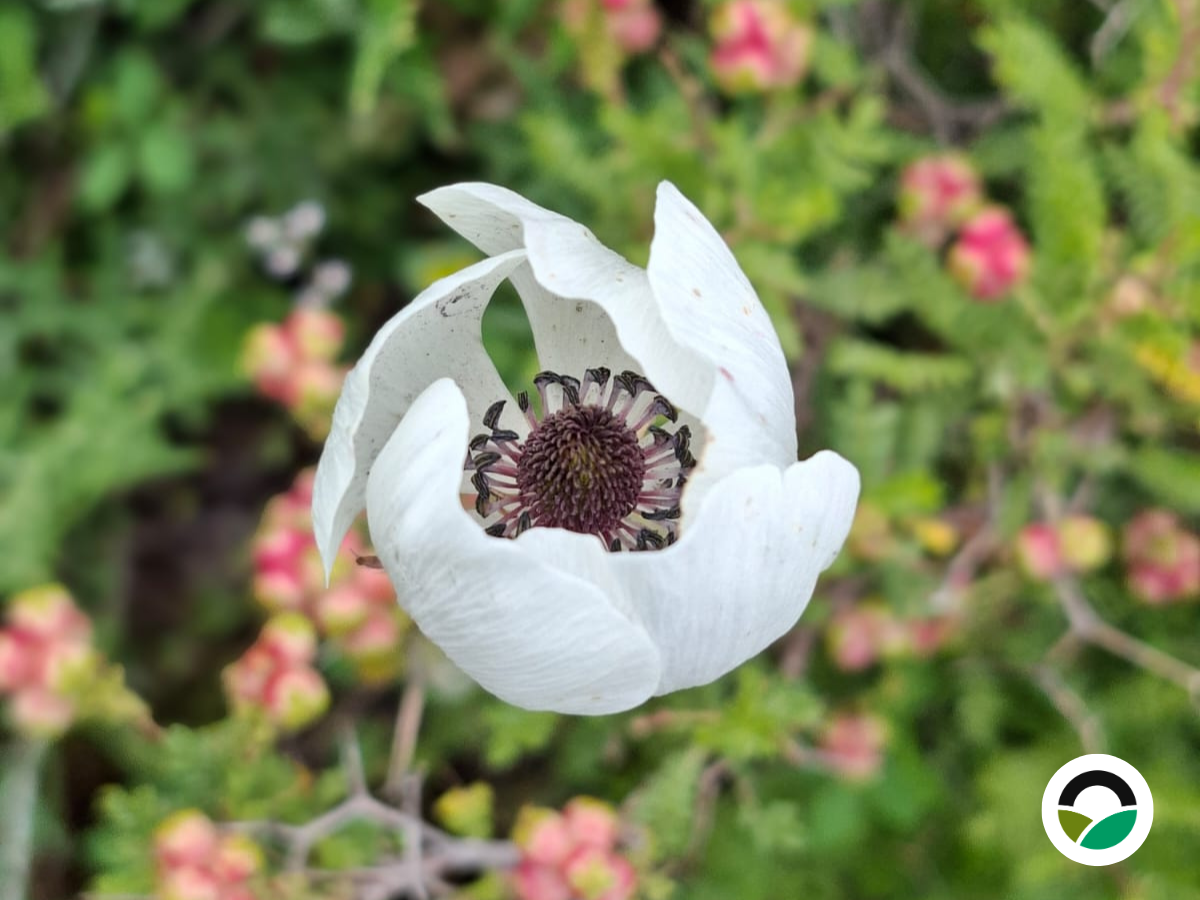
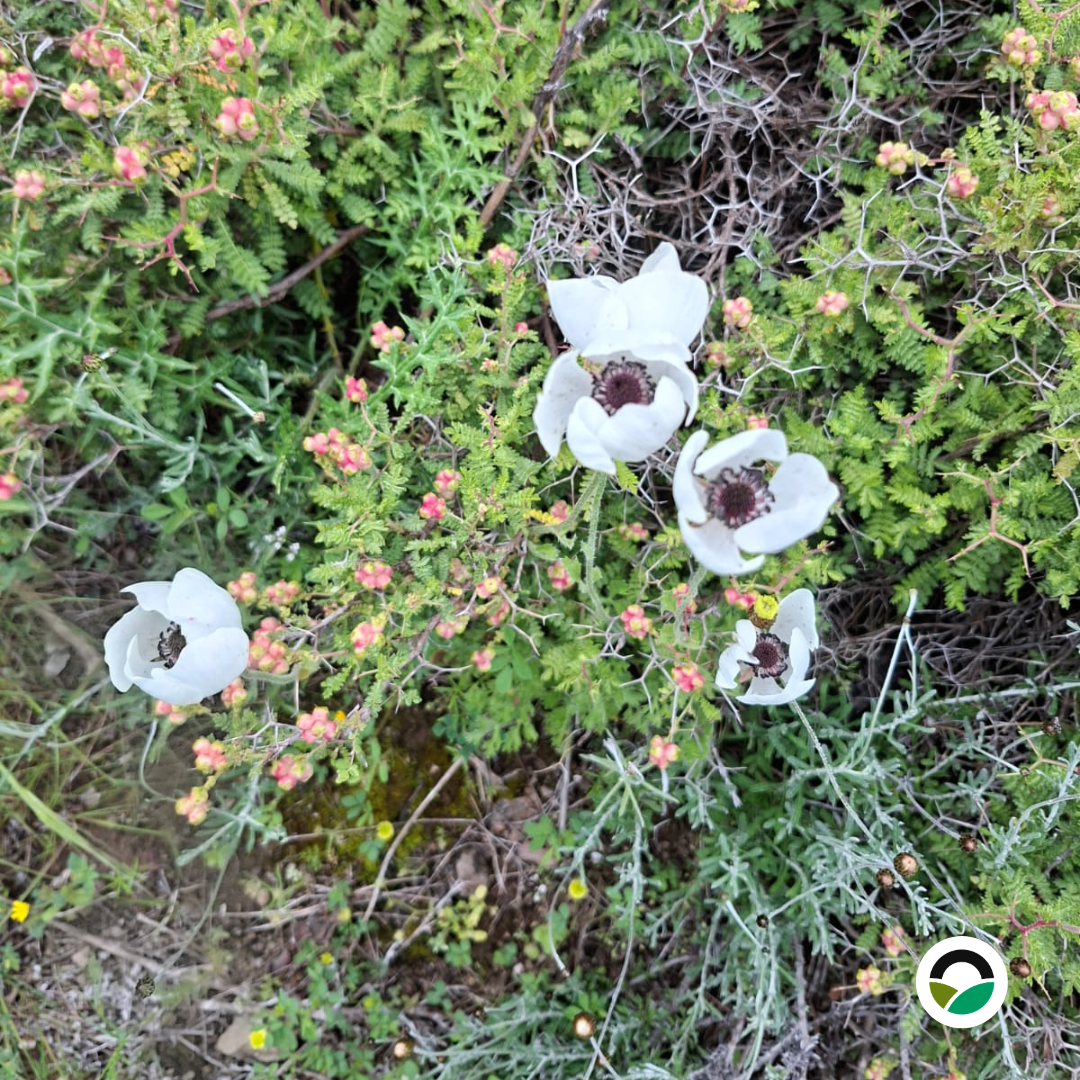
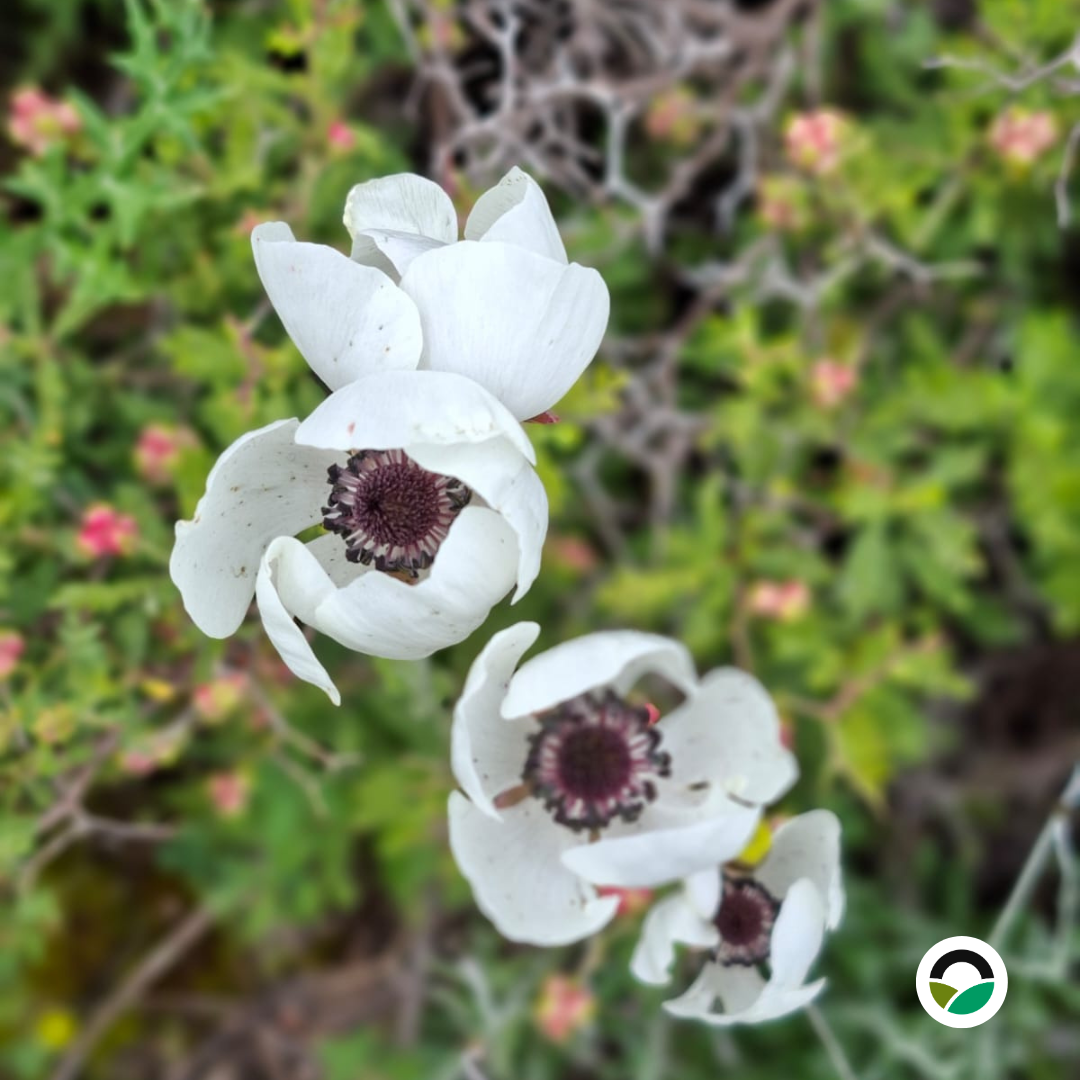
During spring 2026, we observed several white anemones (Anemone coronaria) flowering naturally around Mavronero Farm. Their elegant white petals and dark centres stood out among the surrounding Mediterranean vegetation, providing a reminder of the rich biodiversity that thrives across the landscape.
Although their blooming season is brief, these native wildflowers play an important ecological role by supporting pollinators and contributing to resilient Mediterranean ecosystems.
A native flower of the Mediterranean
The white anemone (Anemone coronaria) is one of the Mediterranean region’s most recognisable wildflowers.
Native to southern Europe, North Africa and western Asia, it grows naturally in grasslands, open woodlands, olive groves and rocky hillsides, where it is well adapted to seasonal rainfall and dry summer conditions.
Its striking flowers appear during late winter and spring before disappearing as temperatures rise, allowing the plant to survive the hot Mediterranean summer underground as a dormant tuber.
Supporting pollinators
Although each flower lasts only a short time, white anemones provide valuable nectar and pollen for a wide range of pollinating insects.
Bees, hoverflies and other early-season insects visit their flowers while searching for food after winter, making these plants an important part of local ecological networks.
Healthy pollinator populations depend on a continuous diversity of native flowering species throughout the seasons.
Why native wildflowers matter
Native plants have evolved alongside local wildlife for thousands of years.
Because they are naturally adapted to Mediterranean conditions, they require no irrigation or intensive management while continuing to provide habitat and food for insects and other wildlife.
Allowing wildflowers to grow naturally increases biodiversity, strengthens ecosystem resilience and supports healthier agricultural landscapes.
Observations at Mavronero
The photographs in this article were taken during spring 2026 while documenting the seasonal biodiversity of Mavronero Farm.
Several white anemones were found growing naturally among other native Mediterranean plants without any human intervention.
Observing these seasonal blooms helps us better understand the natural rhythms of the landscape while recording the rich diversity of flora that supports regenerative farming.
Interesting facts
White anemone (Anemone coronaria)
- Native to the Mediterranean region and western Asia.
- Flowers mainly during late winter and spring.
- Grows from an underground tuber that survives the dry summer months.
- Provides nectar and pollen for bees and other early-season pollinators.
- Frequently grows in olive groves, grasslands and rocky Mediterranean habitats.
Protecting Mediterranean biodiversity
Regenerative farming is not only about growing crops, it is also about protecting the native species that naturally belong to the landscape.
By allowing seasonal wildflowers to complete their life cycles, farms become valuable habitats for pollinators and countless other organisms that contribute to healthy ecosystems.
At Mavronero Farm, every observation of native flora helps build a deeper understanding of the biodiversity that makes Mediterranean landscapes so resilient.
Conclusion
The white anemone may bloom for only a few weeks each year, but its ecological value lasts far longer.
Supporting native wildflowers means supporting pollinators, healthier soils and more resilient ecosystems. Every seasonal bloom reminds us that biodiversity is one of the foundations of regenerative agriculture.
