
Built for Mediterranean conditions
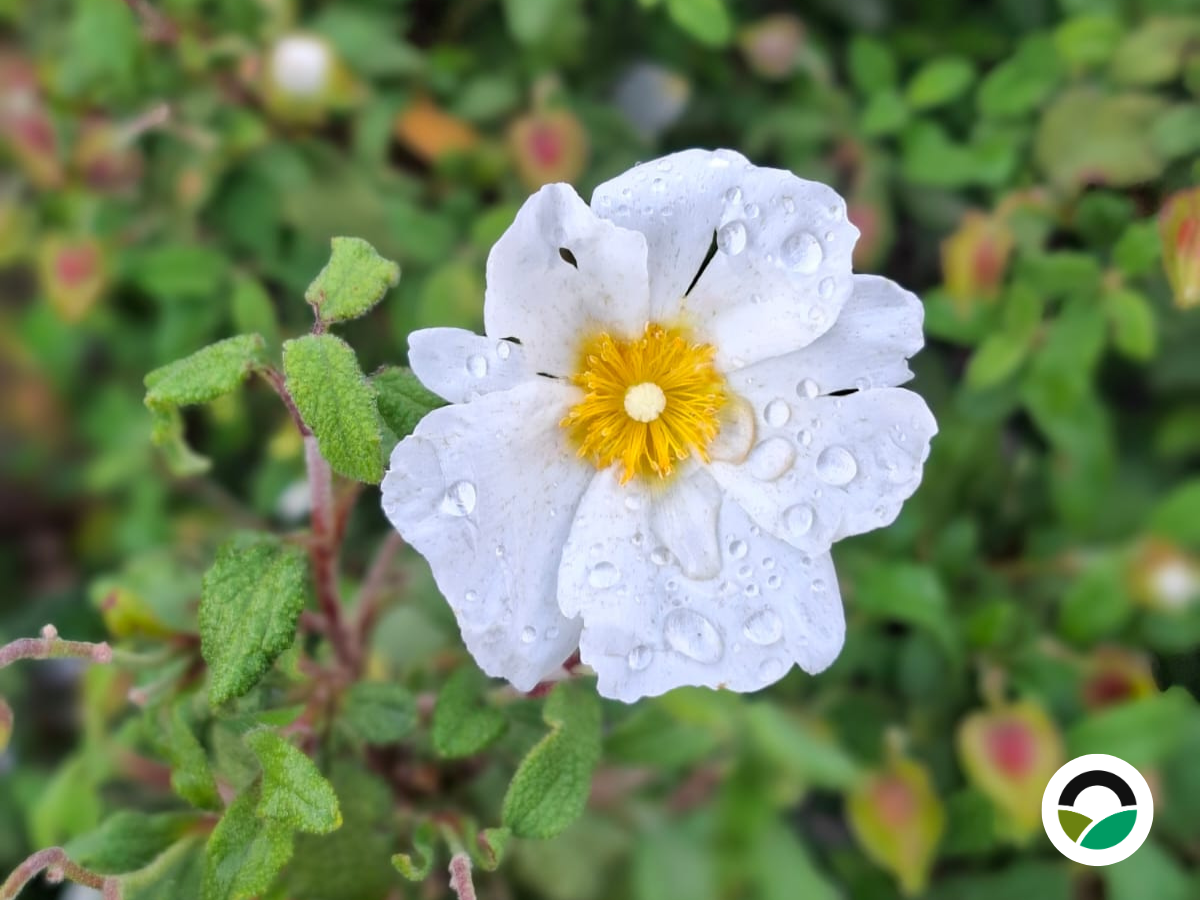
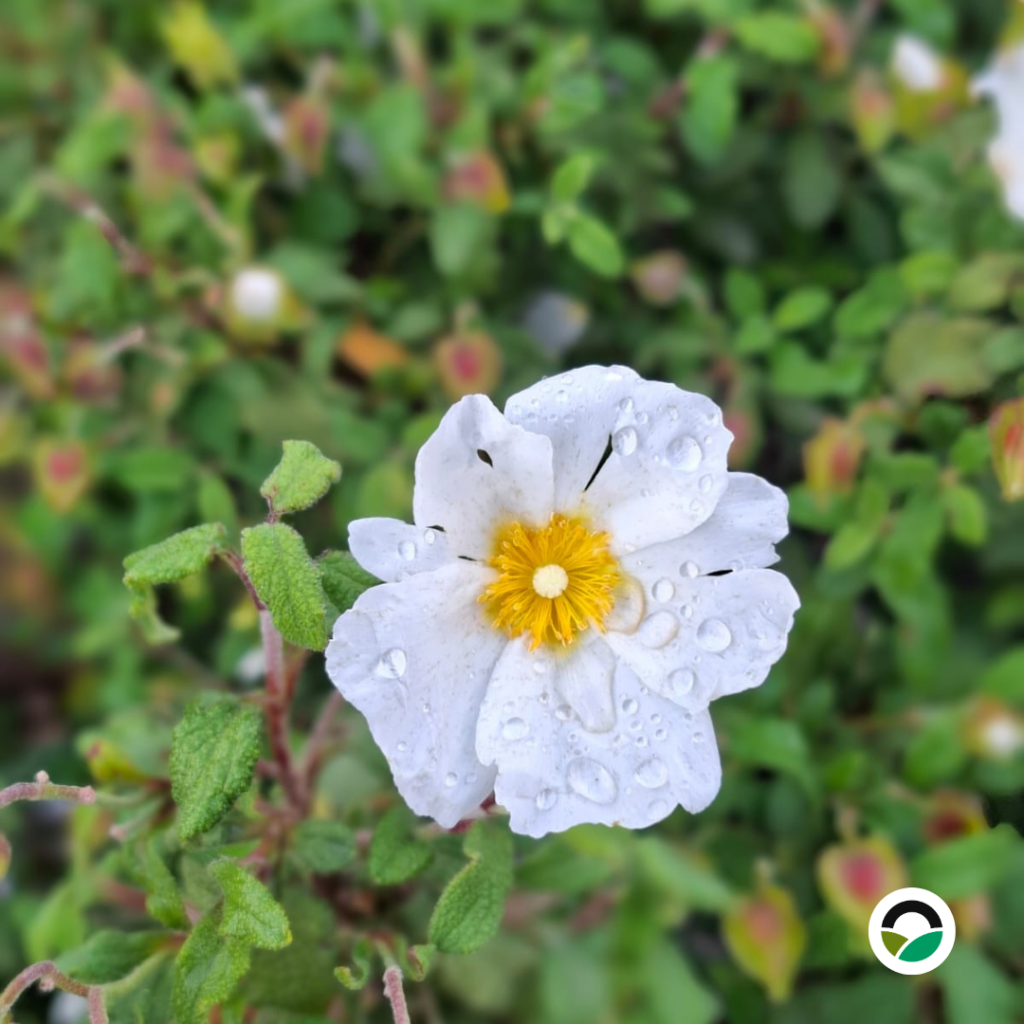
White rockrose (Cistus salviifolius) is exceptionally well adapted to environments where many other plants struggle.
It thrives in rocky, sandy and nutrient-poor soils while requiring very little water once established. Its small, slightly hairy leaves help reduce water loss during the hot summer months, while an extensive root system enables the shrub to survive prolonged drought.
These natural adaptations allow the species to flourish without irrigation, fertilisers or intensive management, making it an important component of resilient Mediterranean landscapes.
Supporting pollinators and wildlife
Despite the delicate appearance of its flowers, white rockrose plays a significant ecological role.
Its flowers provide pollen for bees, hoverflies, beetles and other pollinating insects during spring. These insects, in turn, support the reproduction of many flowering plants throughout the surrounding landscape.
The shrub’s dense evergreen branches also provide shelter for insects, reptiles, birds and other small animals, creating valuable habitat beyond the flowering season.
Native shrubs like Cistus salviifolius help maintain the ecological networks that healthy Mediterranean ecosystems depend on.
White rockrose as a herbal tea
Beyond its ecological importance, white rockrose has also attracted interest for its traditional uses. In some Mediterranean communities, Cistus salviifolius has been documented as a plant used in herbal infusions and as a substitute for conventional tea.
Its leaves contain naturally occurring plant compounds, including polyphenols, which have attracted scientific interest for their biological properties. Research into Cistus salviifolius and related species has investigated antioxidant activity and other effects in laboratory settings.
However, these findings do not establish that drinking white rockrose tea prevents or treats diseases. The composition and effects of an infusion can differ considerably from those of concentrated plant extracts used in scientific studies.
How is white rockrose tea prepared?
Herbal infusions are generally made by steeping suitable plant material in hot water. However, preparation methods vary depending on the species, the plant parts used and the traditional practice being followed.
For white rockrose, a specific recipe should only be shared once the plant material, its suitability for consumption and a reliable preparation method have been confirmed.
At Mavronero Farm, documenting traditional plant knowledge offers an opportunity to explore the relationship between Mediterranean flora and local practices while ensuring that information about consumption is accurate and responsible.
Potential benefits and scientific research
Naturally occurring plant compounds
White rockrose contains polyphenols and other plant compounds that researchers have investigated for their biological activity. Some of these compounds demonstrate antioxidant activity under laboratory conditions. However, further research is needed to establish what these findings mean for people consuming an infusion.
Traditional herbal use
Ethnobotanical research documents the traditional use of various Cistus species in herbal preparations. Such records help preserve knowledge of how plants have been used across generations, although traditional use alone does not prove a therapeutic effect.
Ongoing scientific interest
Researchers continue to investigate the chemical composition and biological properties of rockrose species. It is important to distinguish results obtained from laboratory experiments or concentrated extracts from evidence about the effects and safety of drinking tea prepared from the plant.
Responsible use of herbal infusions
Correct plant identification is essential before any wild plant is collected or used for consumption. The suitability of the species and the plant material must also be established.
Herbal infusions should not be presented as treatments for medical conditions without adequate clinical evidence. Anyone considering medicinal use, particularly during pregnancy, while breastfeeding or when taking medication, should consult a qualified healthcare professional.
Why native plants matter in regenerative farming
Regenerative agriculture is not only about improving soils and producing healthy food; it is also about protecting the native species that naturally sustain biodiversity.
Plants that have evolved within Mediterranean ecosystems often require fewer external inputs while providing food, shelter and habitat for wildlife. They contribute to healthier food webs, improve ecosystem resilience and help landscapes better withstand drought and climate variability.
Encouraging native vegetation alongside cultivated areas creates farms that work with natural processes rather than against them.
Observations at Mavronero
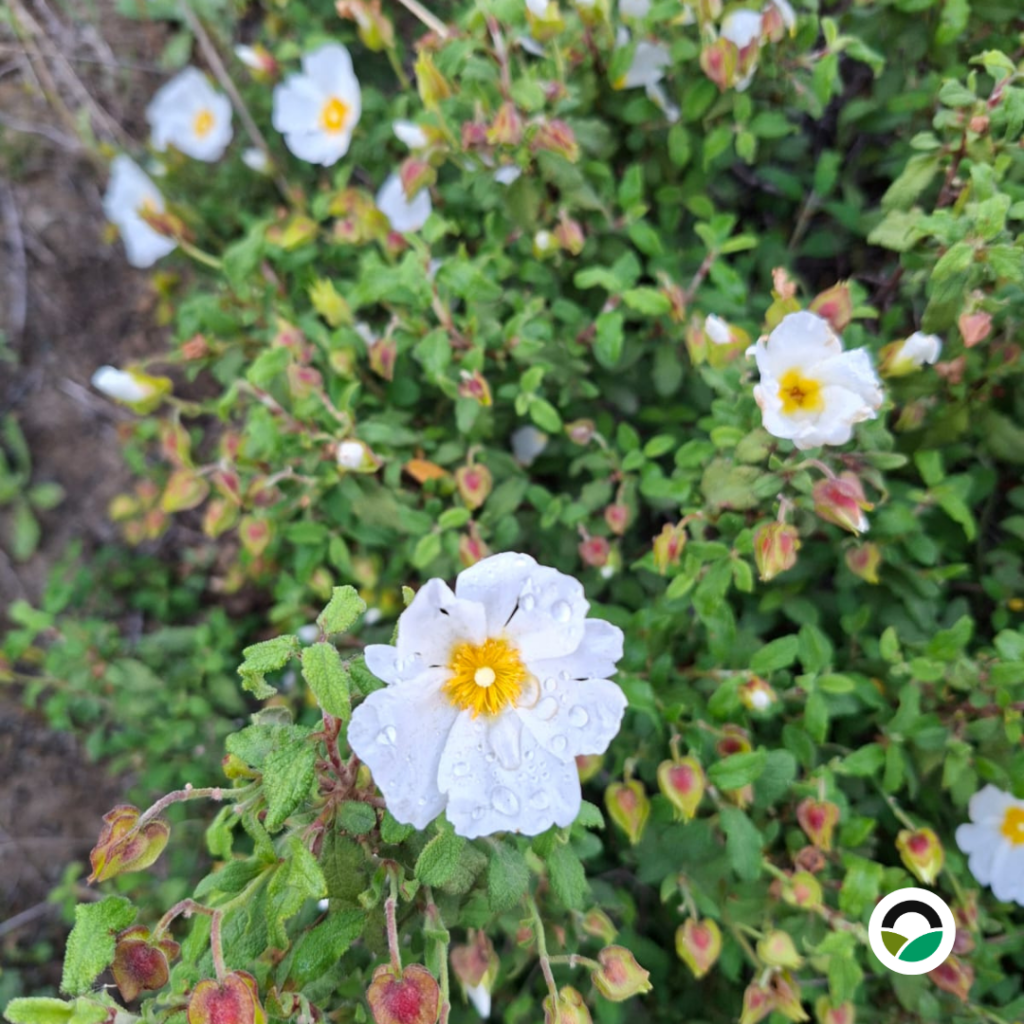
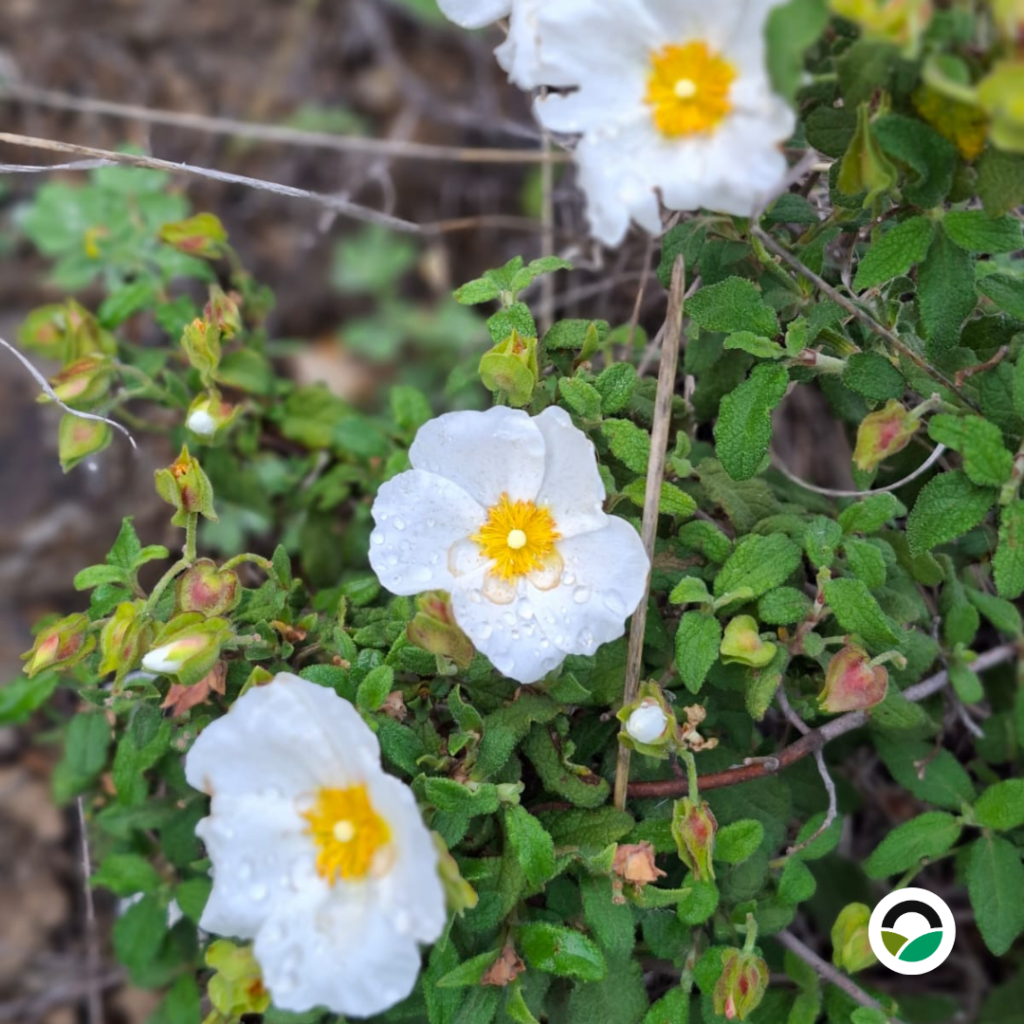
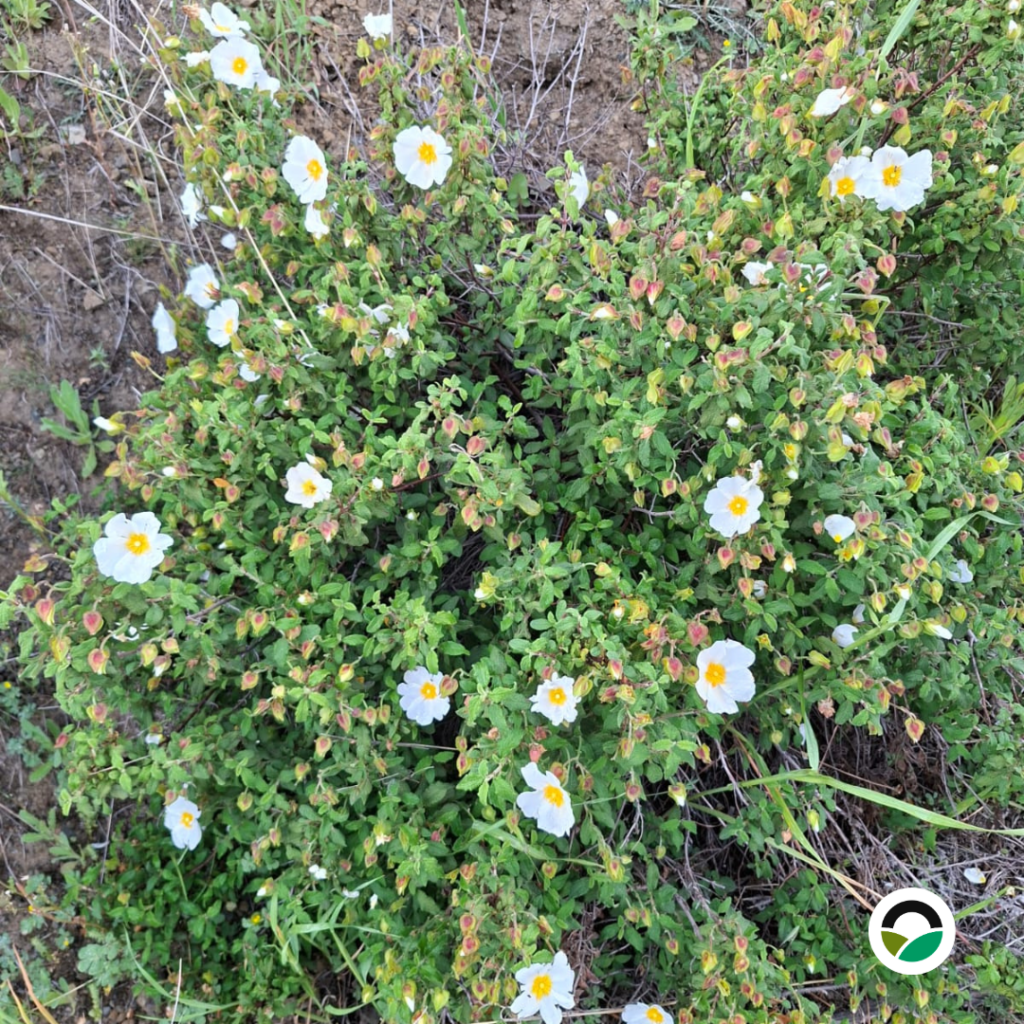
These photographs were taken during spring 2026 while documenting the seasonal biodiversity around Mavronero Farm.
Several white rockrose shrubs were observed flowering naturally without irrigation or human intervention, growing among other native Mediterranean plants adapted to the local environment.
Recording these seasonal events helps us better understand the natural rhythms of the landscape while highlighting the important role native flora plays in regenerative farming.
Interesting facts
White rockrose (Cistus salviifolius)
- Native range: The Mediterranean Basin, North Africa and western Asia.
- Flowering: Mainly during late winter and spring, depending on local conditions.
- Ecological role: Provides pollen for bees and other pollinating insects.
- Drought tolerance: Adapted to dry conditions once established.
- Soil preferences: Naturally occurs in rocky, sandy and nutrient-poor soils.
- Wildlife habitat: Its dense foliage provides shelter for insects, reptiles and other small animals.
- Natural habitat: A characteristic shrub of Mediterranean maquis and garrigue vegetation.
Building resilient Mediterranean landscapes
Healthy ecosystems are built from many interconnected native species.
Shrubs such as white rockrose help stabilise soils, provide habitat, support pollinators and strengthen the ecological resilience that regenerative farming depends on.
Observing and protecting naturally occurring vegetation allows farms to become part of the surrounding ecosystem rather than replacing it.
At Mavronero Farm, every seasonal observation contributes to a deeper understanding of the biodiversity that makes Mediterranean landscapes healthy, resilient and sustainable.
Conclusion
White rockrose may bloom for only a few weeks each year, but its ecological value extends across the seasons.
By supporting pollinators, providing habitat and thriving under challenging conditions, it demonstrates how native plants contribute to resilient Mediterranean ecosystems. Its documented traditional uses also illustrate the relationship between local plant knowledge and the cultural heritage of the region.
By studying and documenting these plants responsibly, we can better understand both their ecological importance and their place in Mediterranean traditions.
