
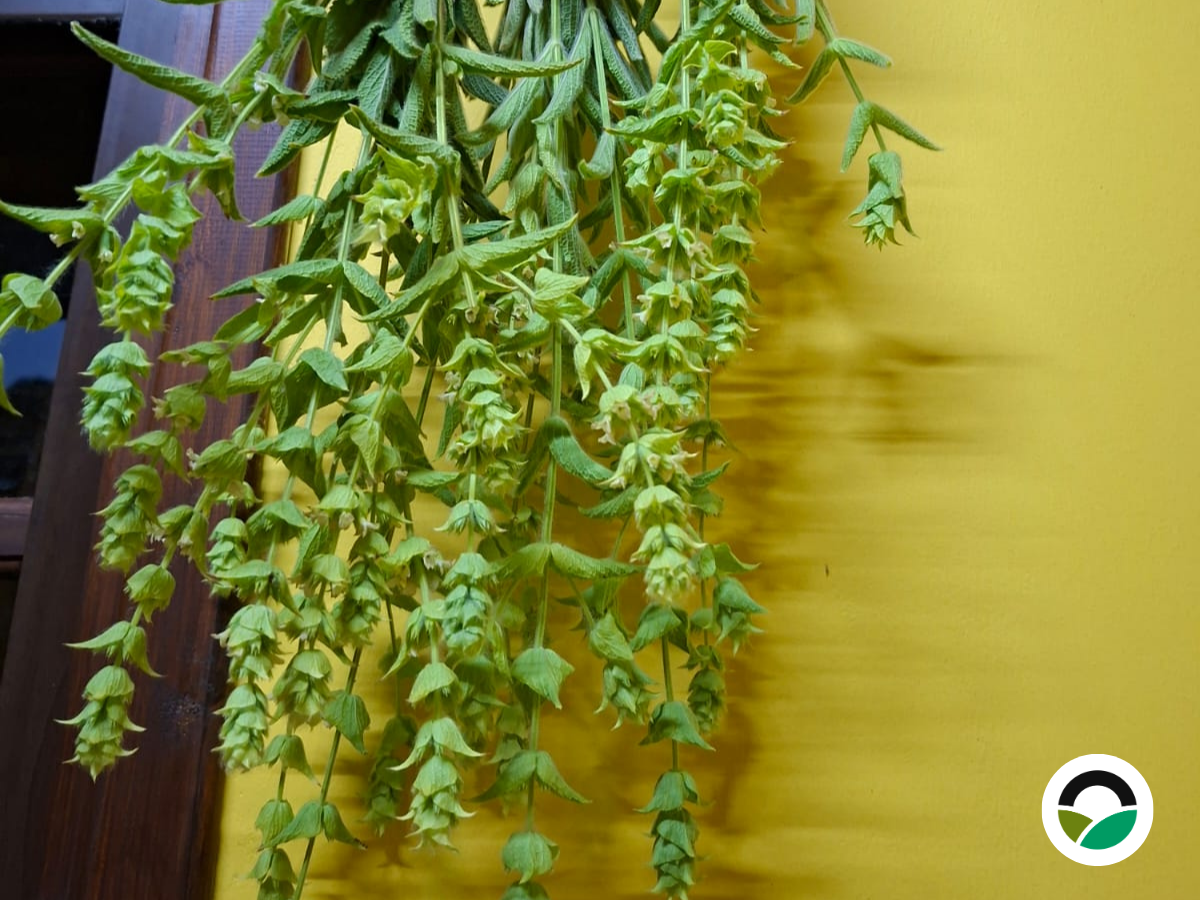
A characteristic plant of the Mediterranean
Mountain tea is a common name used for several aromatic plants belonging to the genus Sideritis, part of the mint family, Lamiaceae. These plants are associated with Mediterranean botanical diversity and have a long history of use in traditional herbal infusions.
The genus includes numerous species distributed across the Mediterranean and neighbouring regions. Although they share certain characteristics, individual species differ in their distribution, chemical composition and documented uses.
At Mavronero Farm, Sideritis perfoliata was included in the winter herb planting documented in January 2026. Its cultivation provides an opportunity to observe an aromatic plant and explore its place within Mediterranean horticultural traditions.
What is Sideritis perfoliata?
Sideritis perfoliata L. is an accepted botanical species belonging to the family Lamiaceae. According to the Royal Botanic Gardens, Kew, its native distribution extends from parts of the Balkan Peninsula to Israel, including Cyprus, Greece, Türkiye and the Levant. Plants of the World Online
The genus Sideritis contains many species, some of which are commonly known as mountain tea or ironwort. Several have traditionally been used to prepare herbal infusions.
However, the common name mountain tea does not refer to just one botanical species. Correct identification is essential when documenting a plant, particularly when discussing its traditional uses or suitability for consumption.
Understanding these distinctions helps preserve botanical accuracy while recognising the diversity of plants associated with Mediterranean herbal traditions.
Mountain tea and Mediterranean traditions
Herbal infusions have long been part of everyday life across the Mediterranean. Aromatic plants have been collected or cultivated and prepared as drinks, reflecting local knowledge of the surrounding flora.
Several Sideritis species are traditionally used to prepare mountain tea. Their aerial parts, including flowering stems and leaves, are used in preparations that vary according to the species and regional tradition.
The European Medicines Agency has assessed the traditional medicinal use of four species: Sideritis scardica, Sideritis clandestina, Sideritis raeseri and Sideritis syriaca. Its assessment concerns these particular species and should not automatically be extended to other members of the genus. European Medicines Agency (EMA)
This distinction is important when documenting Sideritis perfoliata and exploring its relationship with the broader tradition of mountain tea.
How is mountain tea prepared?
Mountain tea is easy to prepare at home. The dried leaves, flowers and delicate stems are placed in a cup or teapot, covered with freshly boiled water and left to infuse for around 5–10 minutes. The plant material is then strained out before serving.
The exact flavour depends on the amount of dried herb used and the infusion time. A shorter infusion produces a milder drink, while leaving the herbs for longer creates a stronger flavour.
What does scientific research tell us?
Mountain tea has attracted scientific interest because of the natural compounds found in different Sideritis species. Researchers have explored these plants to better understand their properties and their traditional uses.
Natural compounds and their properties
Some Sideritis species contain natural compounds that have shown antioxidant activity in laboratory studies. These findings help scientists learn more about the plants and their chemical composition.
However, this does not necessarily mean that drinking mountain tea provides the same effects. The properties of an infusion can vary depending on the species used and how it is prepared.
Traditional use and scientific research
Mountain tea has been enjoyed for generations in different parts of the Mediterranean, particularly in Greece, where it is part of a long-standing tradition of herbal infusions.
The European Medicines Agency has assessed four species of Sideritis: Sideritis scardica, Sideritis clandestina, Sideritis raeseri and Sideritis syriaca. Its assessment concerns these specific species, so the same uses cannot automatically be attributed to Sideritis perfoliata. European Medicines Agency (EMA)
Understanding which species is being discussed is important when exploring the traditional uses of mountain tea. Further research would help us learn more about the specific properties and potential uses of Sideritis perfoliata.
Growing aromatic plants at Mavronero
The winter herb planting documented at Mavronero in January 2026 included mountain tea alongside other aromatic plants.
Cultivating aromatic species creates opportunities to observe their growth and development under local conditions. It also allows the farm to document the diversity of plants being introduced into cultivation and their place within Mediterranean horticultural traditions.
Recording planting activities and seasonal changes helps build a clearer picture of how different species develop over time.
Interesting facts about mountain tea
- A name shared by several species: Mountain tea is a common name used for different plants within the genus Sideritis.
- Part of the mint family: Sideritis belongs to the Lamiaceae family, which also includes familiar aromatic plants such as sage, rosemary and thyme.
- A Mediterranean connection: Sideritis perfoliata is native to a region extending from parts of the Balkans to the eastern Mediterranean, including Cyprus.
- Different species, different evidence: Traditional uses documented for one Sideritis species cannot automatically be attributed to another.
- Botanical identification matters: Knowing the exact species is essential when documenting plants and discussing their traditional uses.
Conclusion
Mountain tea connects Mediterranean botanical diversity with generations of traditional plant knowledge.
The genus Sideritis includes several species associated with herbal infusions, but their characteristics and documented uses are not necessarily identical. Understanding these differences is essential when exploring the relationship between traditional practices and scientific research.
At Mavronero Farm, the planting of Sideritis perfoliata provides an opportunity to observe an aromatic plant in cultivation and document its development within the local environment.
By combining careful observation with reliable botanical information, we can explore Mediterranean plant diversity while distinguishing established knowledge from questions that require further research.
