
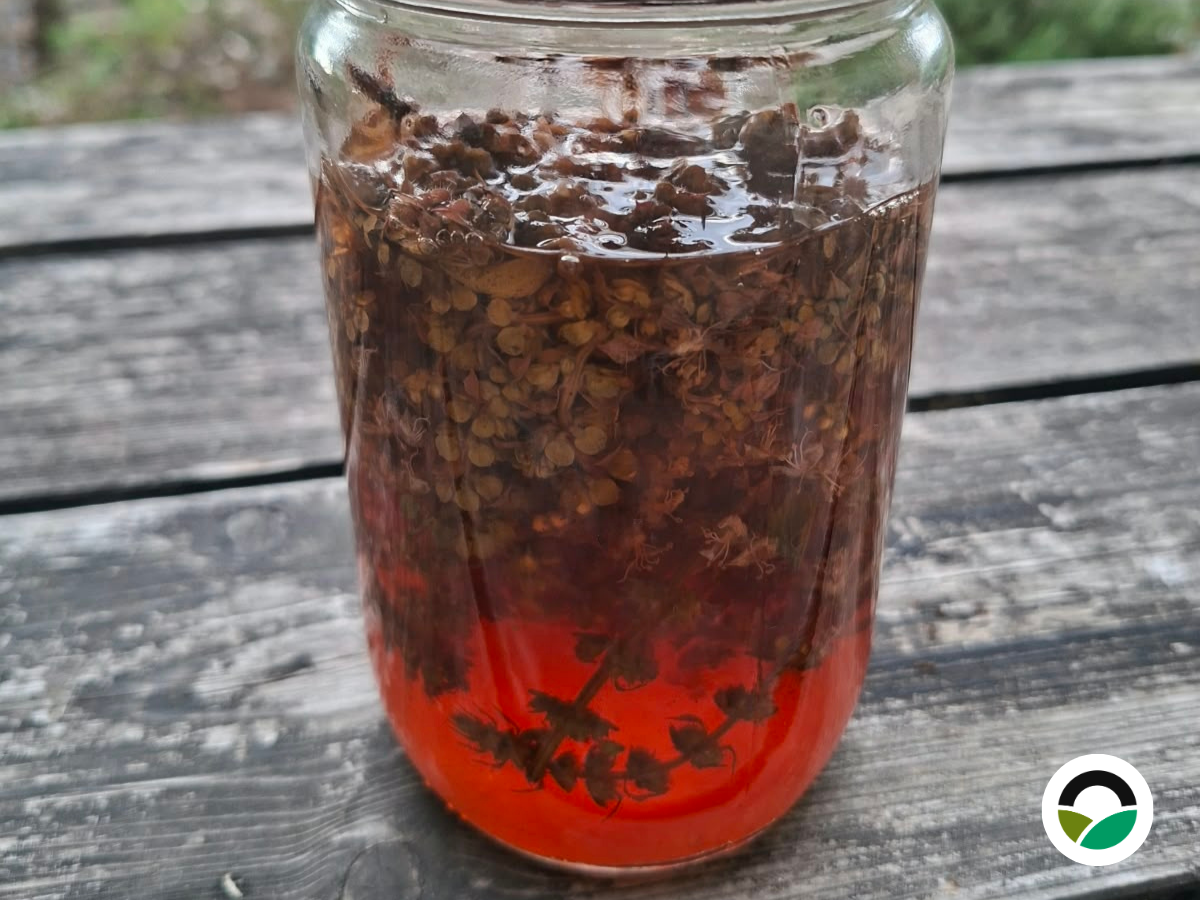
At Mavronero Farm, we enjoy discovering new ways to use the plants growing around us. Sometimes, inspiration comes from a simple recipe that encourages us to look at familiar garden ingredients differently.
This time, we decided to try making basil flower vinegar, following a recipe shared by Nettles and Petals.
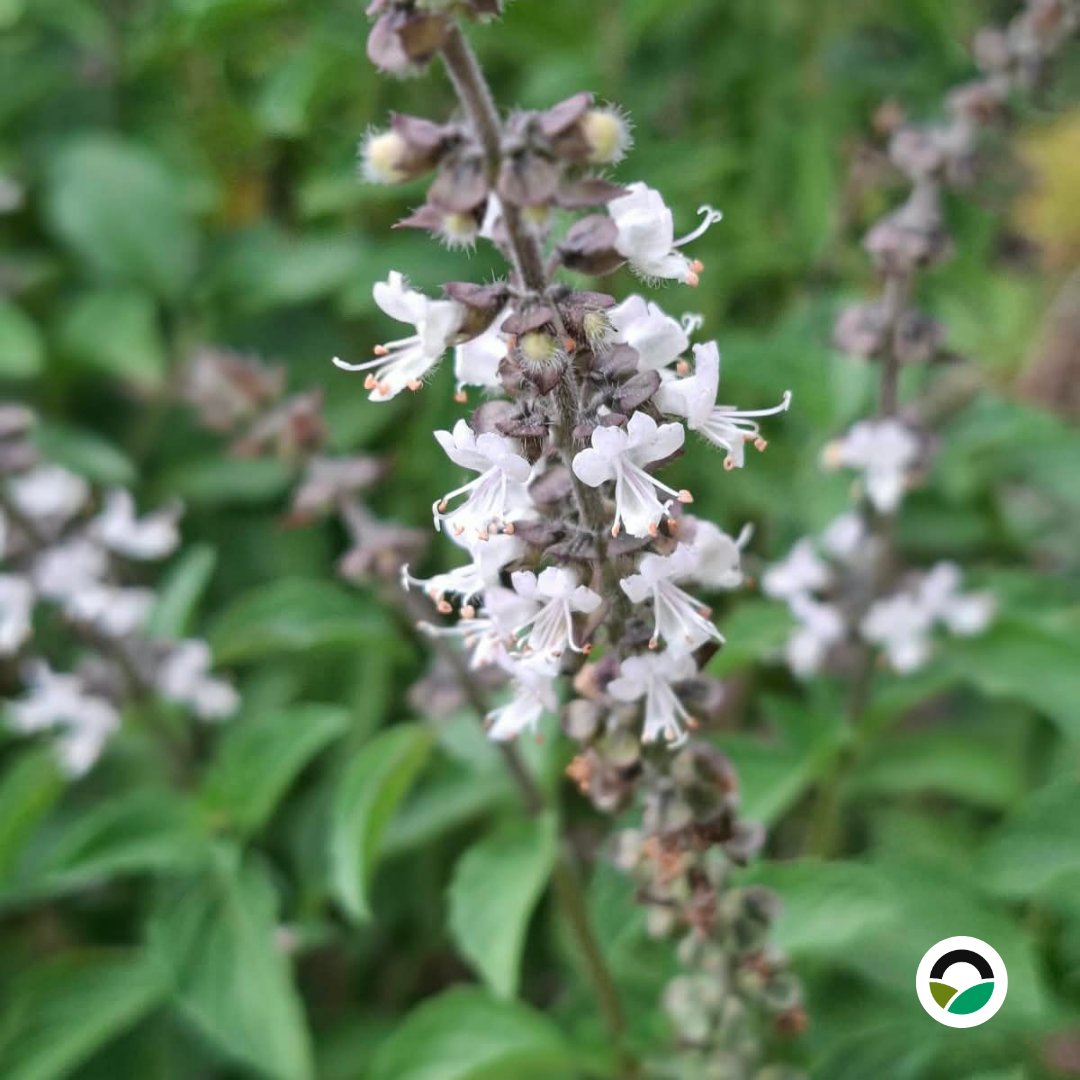
Basil is widely appreciated for its fragrant leaves, but its flowers are aromatic too. Rather than discarding them, they can be used to create an infused vinegar with a distinctive flavour and an attractive colour.
We tried it ourselves, and the result was delicious!
Why use basil flowers?
Basil flowers have an aroma reminiscent of the leaves and can be used in simple culinary experiments.
Removing flower spikes can also encourage basil plants to direct more growth towards their leaves, depending on the plant’s growing conditions and how it is maintained.
Instead of throwing the blossoms away, making infused vinegar offers another way to use them.
It is a simple experiment that connects gardening with food preparation and encourages us to make the most of the herbs growing around us.
How to make basil flower vinegar
Inspired by the recipe from Nettles and Petals, this preparation requires just two main ingredients: basil flowers and vinegar.
Ingredients
- Fresh basil flowers.
- Vinegar, such as organic apple cider vinegar.
- A clean glass jar with a tightly fitting lid.
The quantities do not need to be exact. The amount of basil flowers used will influence the intensity of the final flavour.
Method
1. Collect the basil flowers
Harvest the basil flower spikes you want to use. This is also an opportunity to maintain your basil plants if you want to encourage further leaf growth.
2. Fill a clean jar
Place the flowers inside a clean glass jar. The quantity is flexible, depending on how much vinegar you want to prepare and how pronounced you would like the flavour to be.
3. Add the vinegar
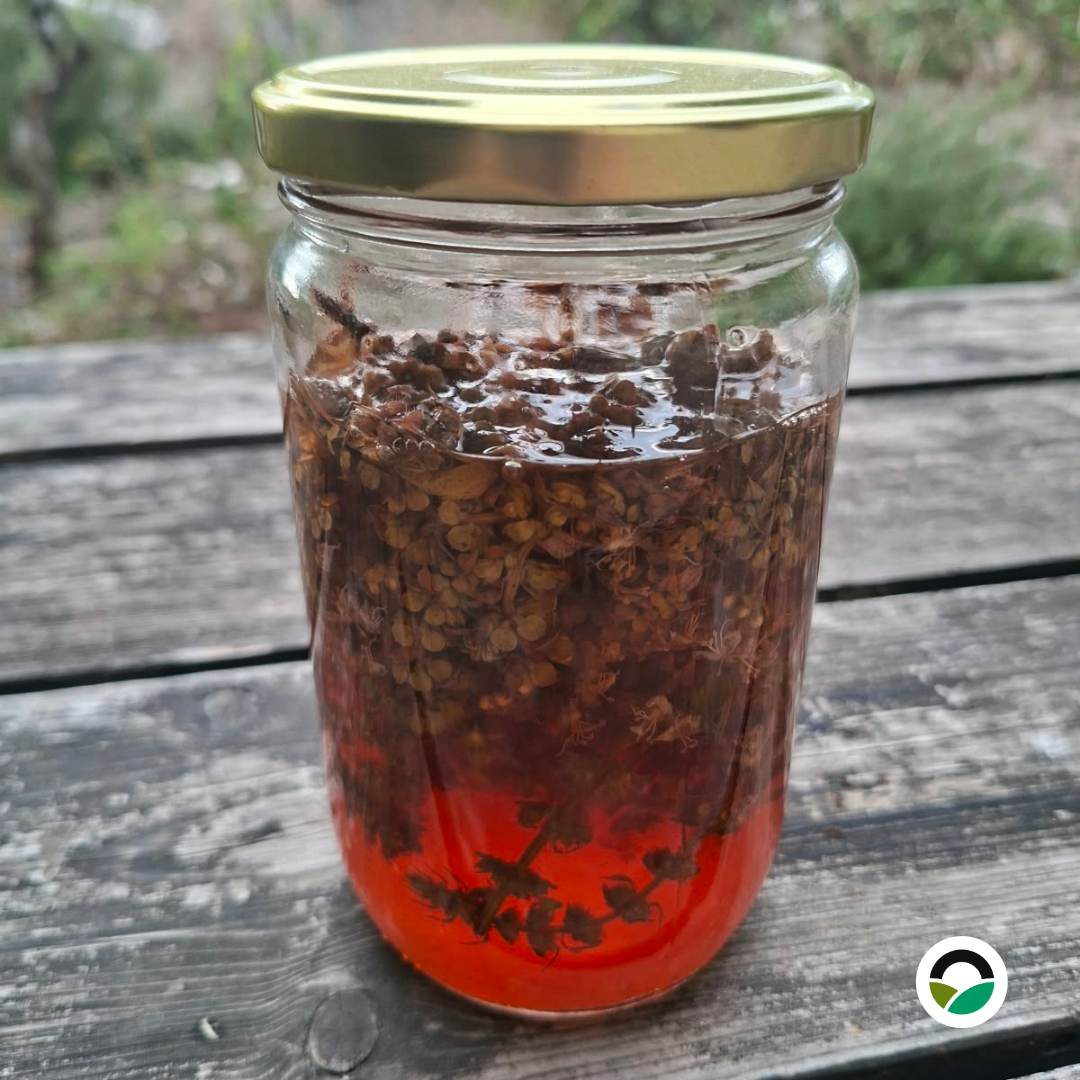
Pour the vinegar over the flowers until they are completely submerged and the jar is filled.
Organic apple cider vinegar is one option, although other suitable vinegars can also be used.
4. Leave to infuse
Close the jar tightly and place it somewhere away from direct sunlight. Leave the mixture to infuse for approximately one to two weeks.
According to the original recipe, the infusion should not be left for longer than two weeks, as the flavour may become bitter.
5. Strain and bottle
Once the infusion is ready, strain the liquid through a fine sieve or tea filter to remove the plant material.
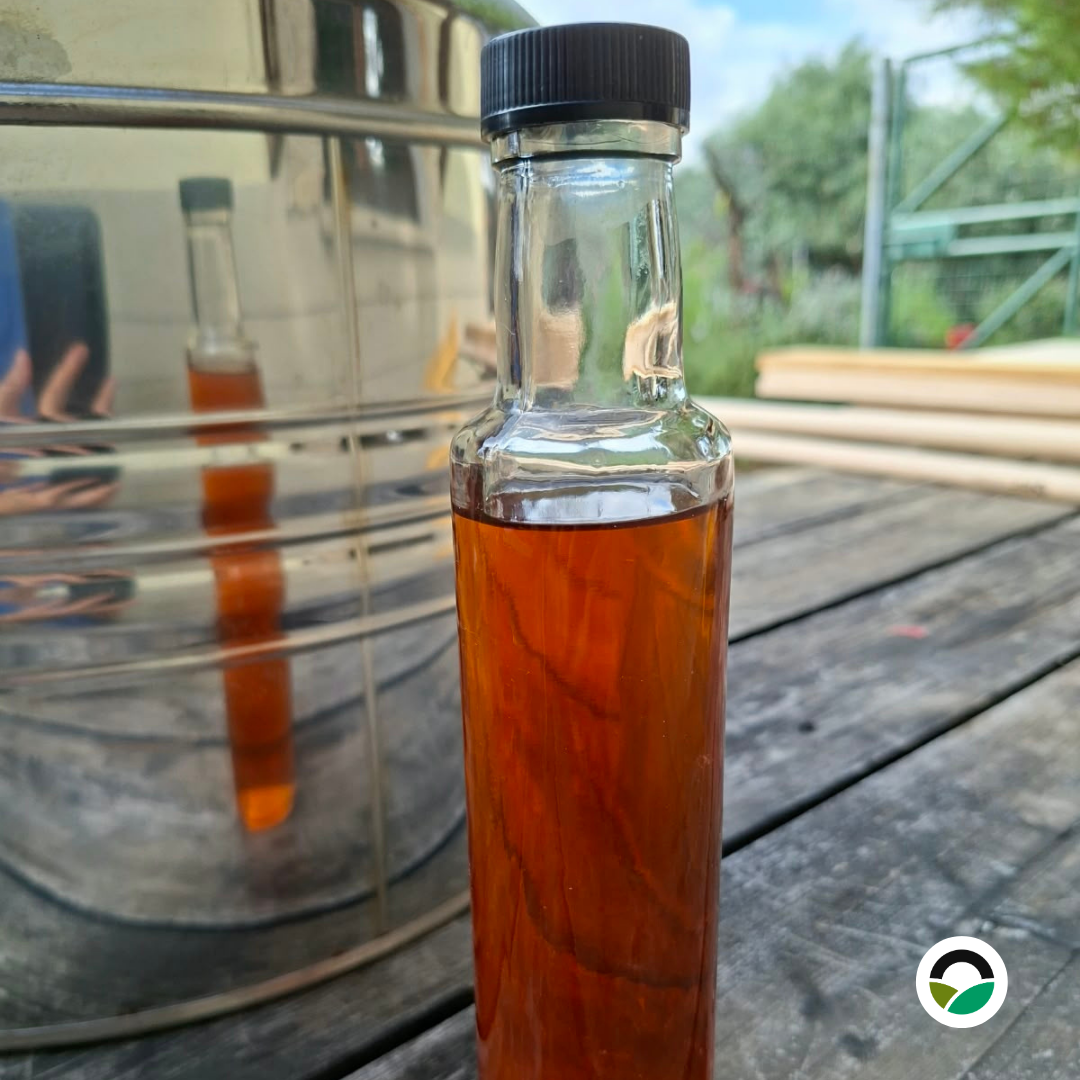
Transfer the infused vinegar into a clean bottle.
How basil flowers influence the colour
One of the most interesting aspects of this experiment is the colour the vinegar can develop.
According to Nettles and Petals, using a clear vinegar with green basil flowers can produce a subtle pink tint. Adding purple basil flowers, either alongside green flowers or on their own, can result in a deeper pink or ruby-red colour.
This makes the infusion an interesting way to explore how different plant varieties can influence the appearance of a homemade preparation.
The final colour may vary depending on the flowers and vinegar used.
A small experiment with a delicious result
At Mavronero Farm, our basil flower vinegar turned out to be a lovely experiment. The preparation developed a rich amber-red appearance, and we were particularly pleased with its aroma and taste.
It is a reminder that gardening can offer inspiration beyond the growing process itself. Flowers that might otherwise be overlooked can become ingredients for simple culinary experiments.
Trying recipes like this encourages us to observe what grows around us, experiment with familiar herbs and discover new ways to use them.
Have you ever tried making vinegar with basil flowers? We would love to hear about your experiences and favourite ways to use garden herbs.
Recipe credit
This experiment was inspired by Nettles and Petals, who shared the basil flower vinegar recipe.
Original video: Basil Flower Vinegar – Nettles and Petals on Facebook
