
Some wildlife observations offer more than a glimpse of an individual animal. They can also inspire questions about how insects grow, develop and adapt to their surroundings.
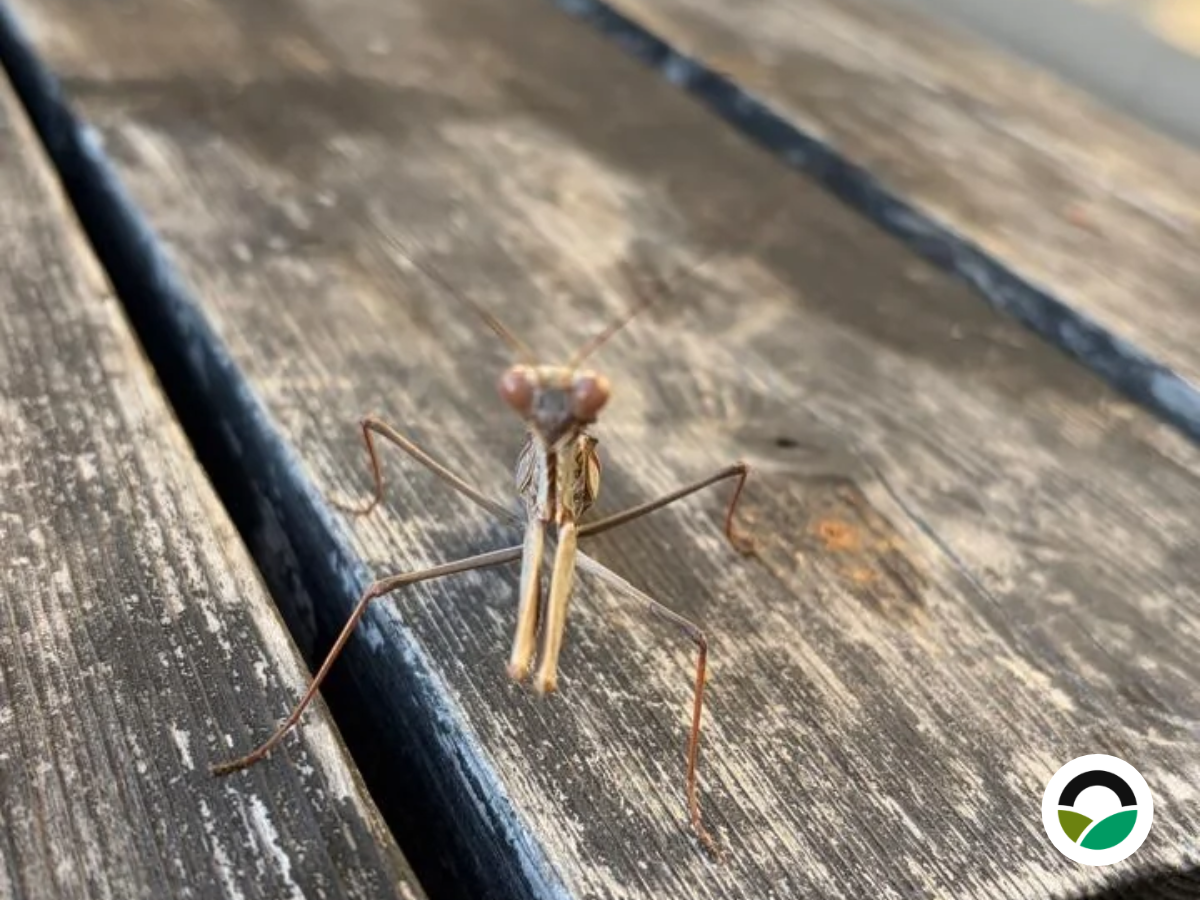
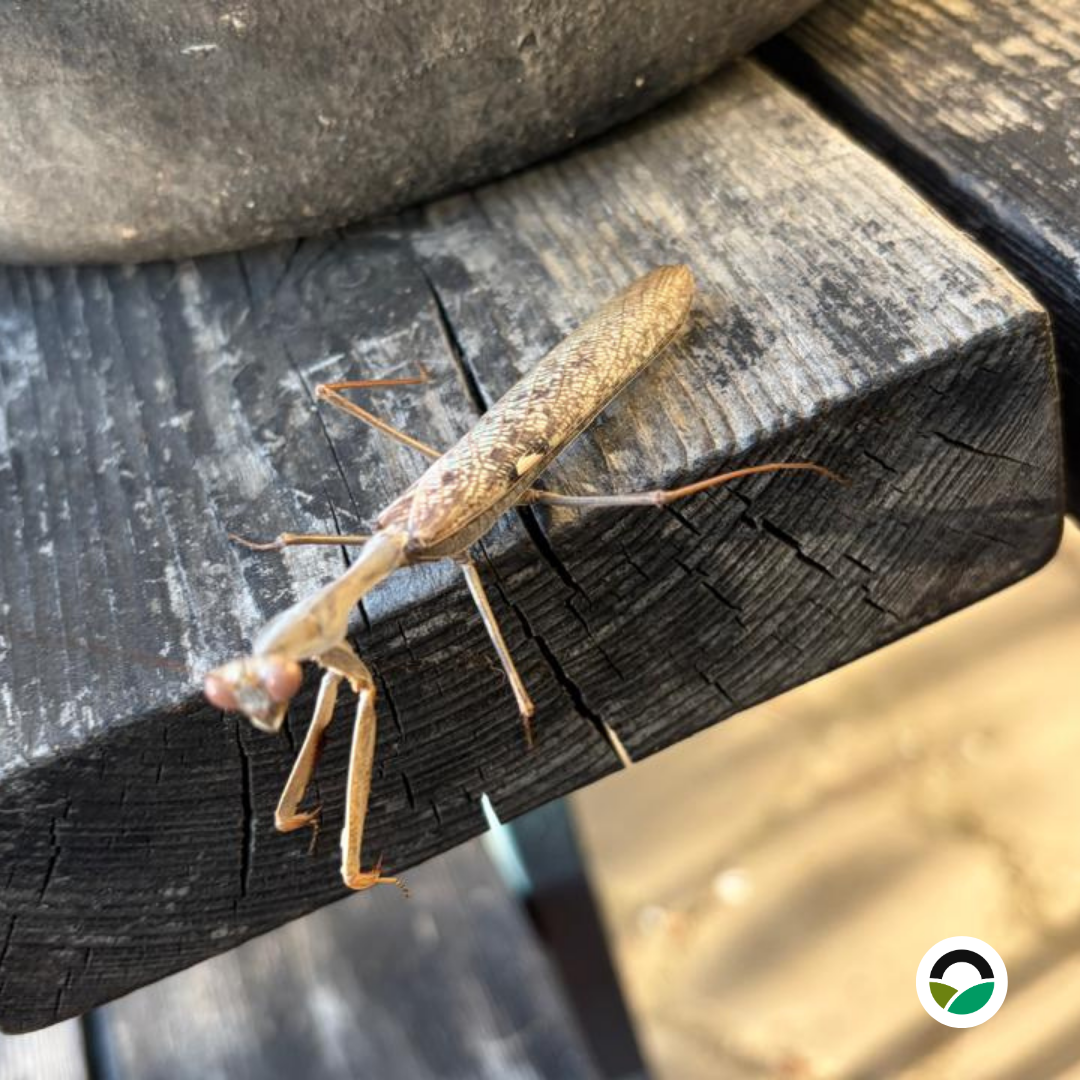
At Mavronero Farm, we have encountered praying mantises on two different occasions. The first was a tiny juvenile that appeared unexpectedly while we were collecting wild carrot (Daucus carota) seeds. More recently, we photographed another mantis resting on the wooden table outside the farmhouse. This second individual had long, developed wings and a slender brown body.
Although we cannot confirm that the two individuals belong to the same species, their contrasting appearances provide an opportunity to explore one of the most interesting aspects of mantis biology: the transition from a young, wingless nymph to a winged adult.
From a tiny nymph to a winged insect
Praying mantises belong to the insect order Mantodea. Unlike butterflies and moths, they do not undergo complete metamorphosis. Instead, they develop through a process known as incomplete metamorphosis, in which the young resemble smaller versions of the adults.
Their life cycle has three main stages:
- Egg: The female lays eggs within a protective structure called an ootheca, which is attached to vegetation or another suitable surface.
- Nymph: After hatching, the young mantis resembles a miniature adult but lacks fully developed wings. It grows through a series of moults, shedding its outer exoskeleton as its body increases in size.
- Adult: Following its final moult, the mantis has reached its adult form. In winged species, the wings are now fully developed.
The juvenile we encountered during seed collection had the compact appearance typical of a young mantis. The more recently photographed individual appears to have developed wings, suggesting a later stage of development.
These observations are separate encounters, however, and we cannot establish the exact age, species or developmental history of either individual from the photographs alone.
How do praying mantises develop their wings?
One of the most noticeable changes during mantis development is the gradual appearance of the wings.
In young nymphs, the wings are absent externally or are not yet developed into functional wings. As the insect grows and moults, wing buds become increasingly visible and develop further.
After the final moult, the wings reach their adult form in winged species. Their presence can therefore help distinguish an adult mantis from a juvenile, although identification also depends on the species and, in some cases, the sex of the individual.
This gradual transformation is a defining feature of incomplete metamorphosis. Rather than passing through a pupal stage, the mantis develops progressively through successive nymphal stages.
Why do mantises look so different from one another?
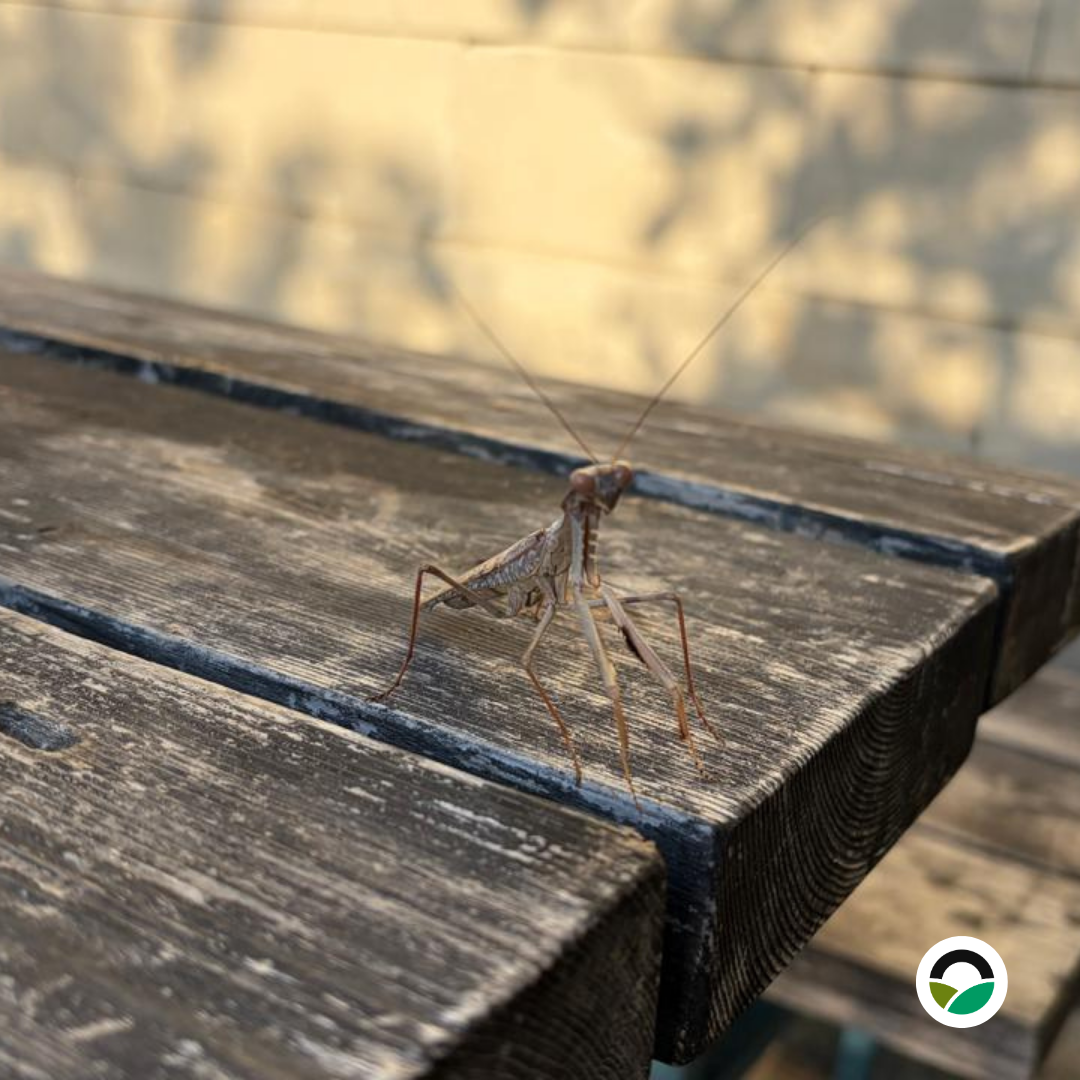
Praying mantises can vary considerably in colour, body shape and size. Green, brown and other muted tones occur among different species, and some species show variation between individuals.
Colour alone does not reliably identify a mantis. Body proportions, the shape of the wings, markings and other anatomical features may be needed for accurate identification.
The brown mantis photographed on the farmhouse table has a slender body, long antennae and developed wings. These characteristics are consistent with a winged mantis, but the photographs do not provide enough evidence to assign it confidently to a particular species.
This is an important part of wildlife observation: recording what can be seen clearly while leaving uncertain details open for further investigation.
A predator at every active stage
Praying mantises are predators throughout their active development. Nymphs begin hunting small prey soon after hatching, while adults continue to feed on other animals, particularly insects.
Their front legs are specially adapted for grasping prey. Enlarged and equipped with spines, they fold together when not in use and can extend rapidly to capture an animal within reach.
Mantises commonly use an ambush strategy. Rather than pursuing prey over long distances, they often remain still or move slowly until an opportunity to strike appears.
Their diet is varied and depends on their size, species and surroundings. They may capture flies, moths, grasshoppers and other small animals. They are generalist predators, however, and do not distinguish between insects considered pests and those that provide other ecological benefits.
Their presence forms part of the wider food web, in which predators, herbivores and other organisms interact.
What these observations tell us about biodiversity at Mavronero
The two mantis encounters happened during ordinary moments at the farm: one while collecting seeds for future propagation, and another around the farmhouse.
They illustrate how wildlife can be encountered in different parts of a cultivated landscape, from vegetation used for seed collection to the outdoor spaces where people spend time.
Recording these encounters helps us build a picture of the organisms sharing the farm. It also reminds us to distinguish between direct observations and scientific conclusions: a photograph can document an insect’s appearance, while further evidence may be needed to identify its species or understand its behaviour.
At Mavronero, these small discoveries encourage us to look more closely at the natural processes unfolding around us.
Continue reading: our first praying mantis encounter
In an earlier observation, we discovered a tiny juvenile praying mantis while collecting seeds from wild carrot. After taking a closer look and photographing it, we carefully returned it to a nearby plant.
Read the original article: Juvenile praying mantis: a tiny guardian of the farm.
Conclusions
Praying mantises develop through incomplete metamorphosis, growing from wingless nymphs into adults through successive moults. The gradual development of their wings is one of the most visible changes during this process.
Our observations at Mavronero — a tiny juvenile encountered during seed collection and a winged mantis photographed at the farmhouse — offer a starting point for exploring this fascinating life cycle.
Although we have not confirmed the species of the recently photographed individual, the encounter highlights the value of observing, documenting and learning from the wildlife around the farm.
